Culture
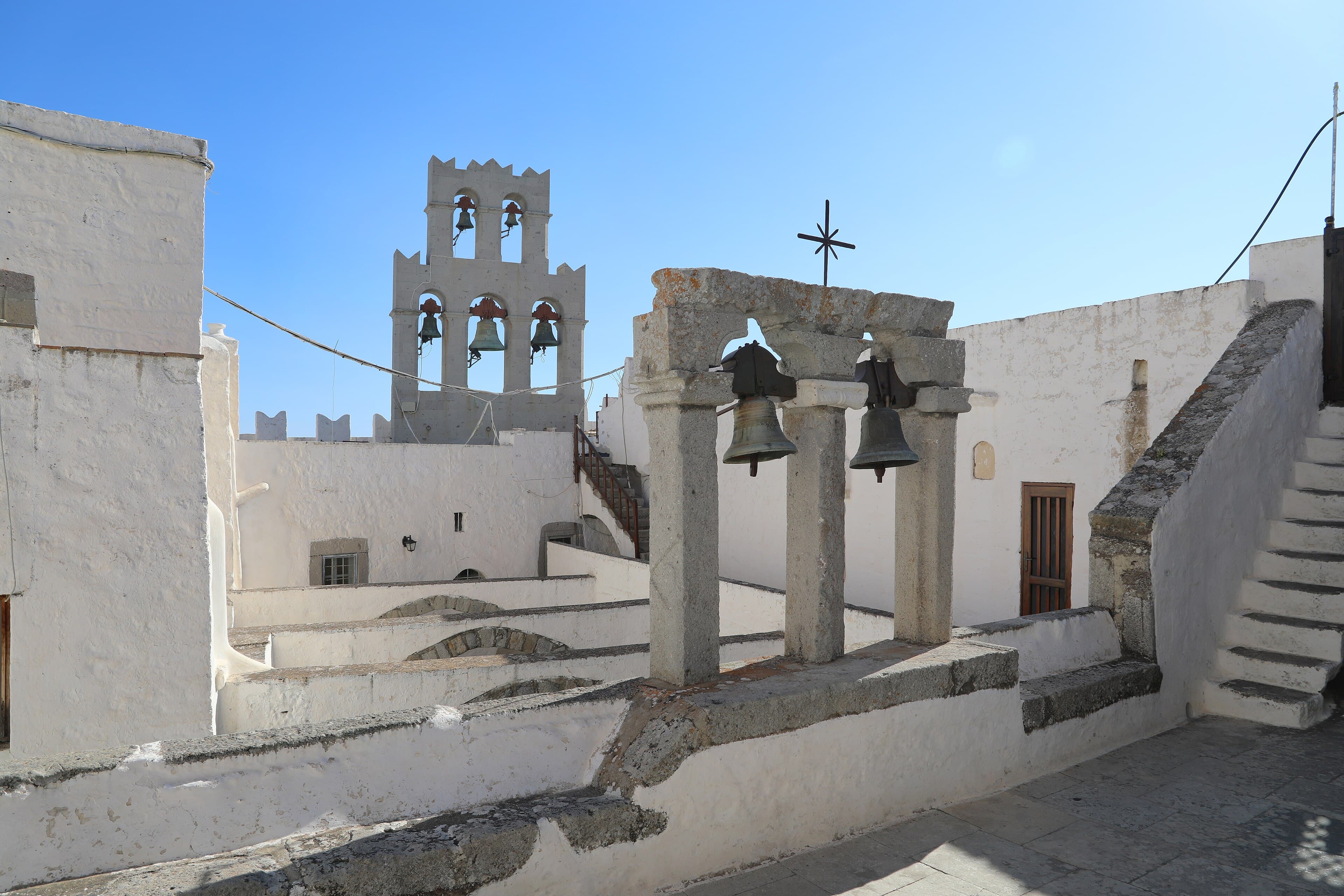
The monastery at opening time
Go when the gate opens to see the courtyards, the church and the treasury before the cruise passengers arrive. Cover your shoulders and knees.
Chora

Patmos · Things to do
Beaches, trails, festivals, food and wine: the experiences that make this island its own.
Experiences
Ideas for every kind of day, from a lazy swim to a full-day hike.
Culture
Go when the gate opens to see the courtyards, the church and the treasury before the cruise passengers arrive. Cover your shoulders and knees.
Chora
Hike
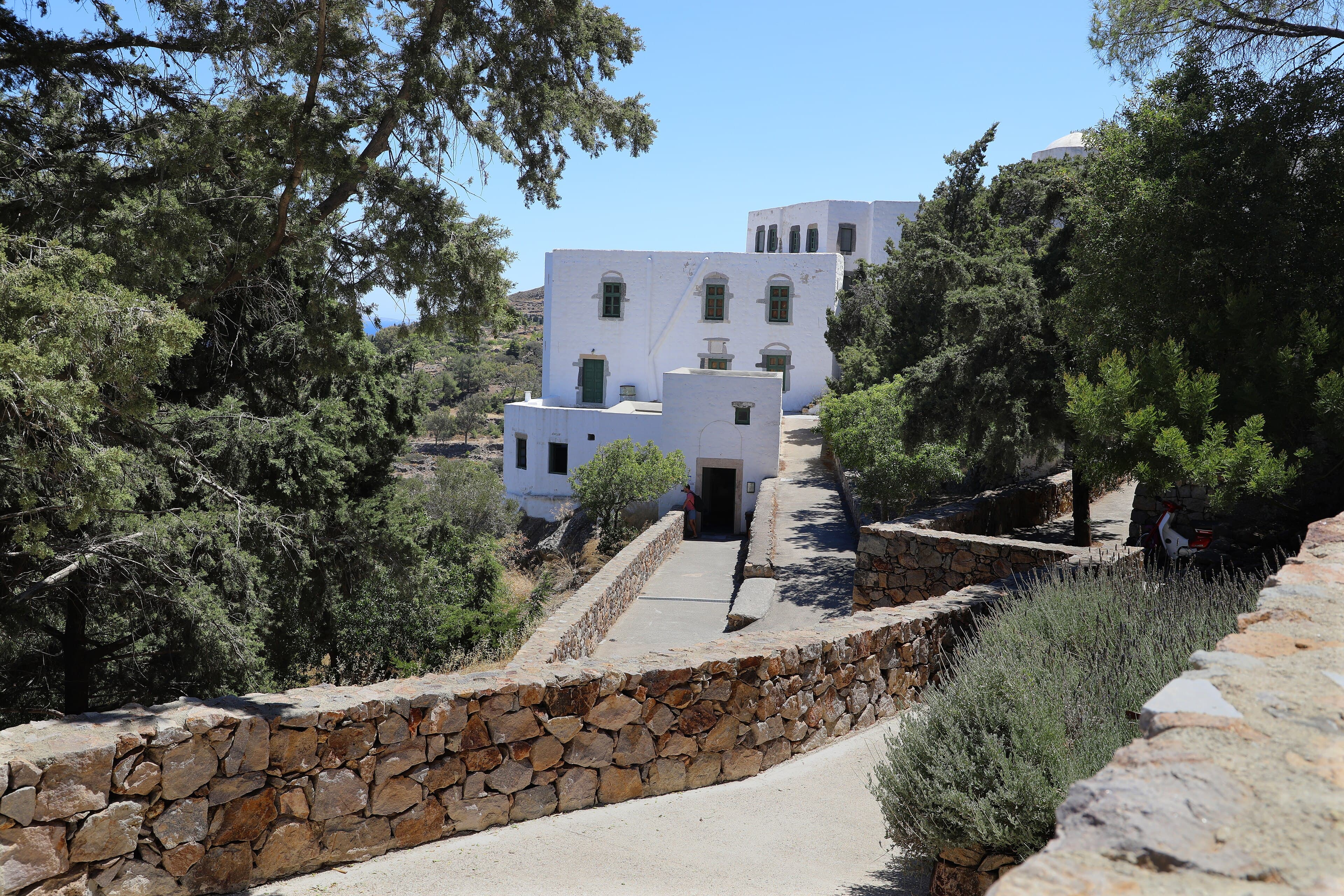
The old cobbled path climbs from Skala through the pines, past the Cave of the Apocalypse, to Chora, about 45 minutes up. Take it in the cool of the morning.
Skala to Chora
Beach
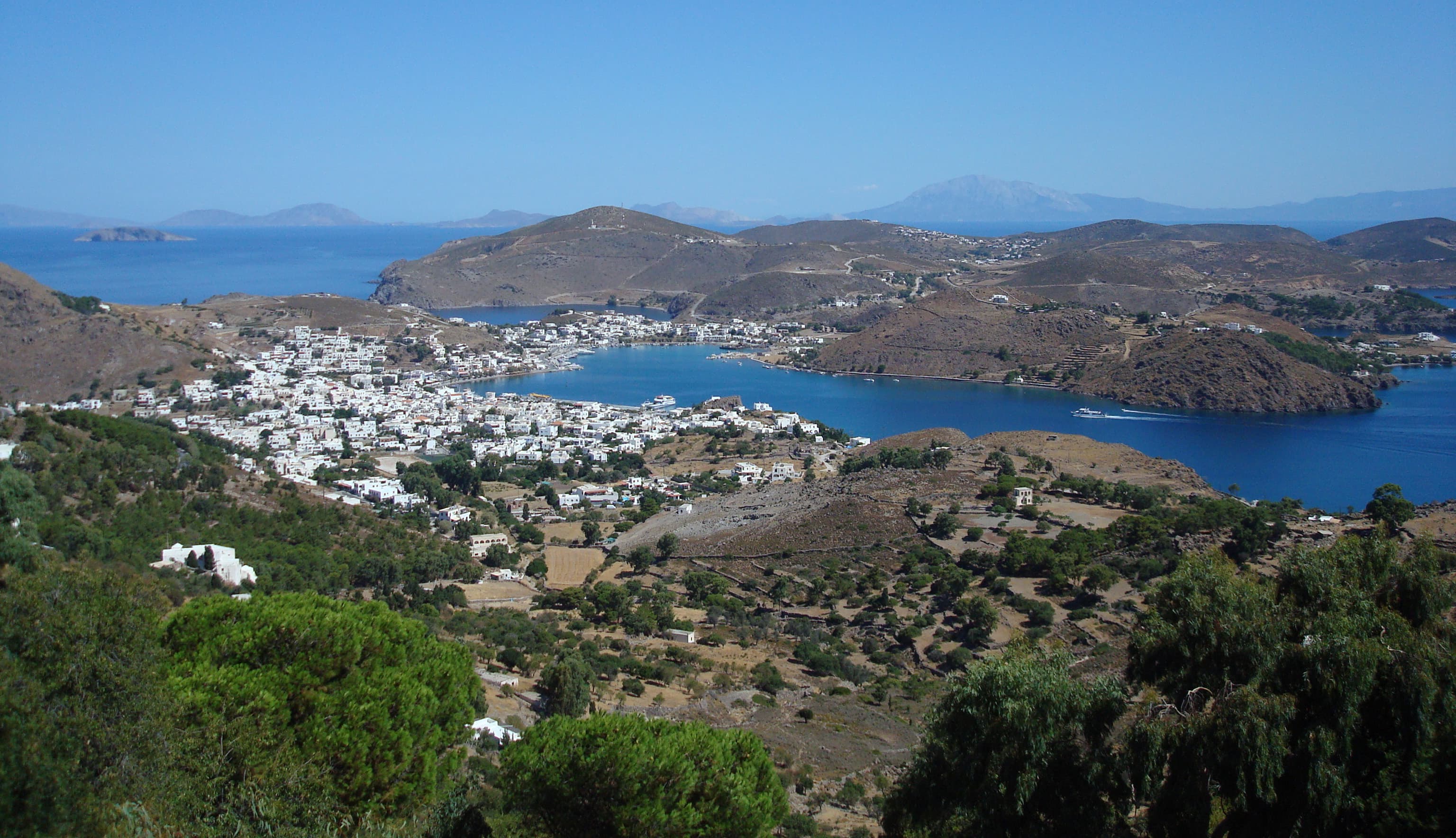
Caïques leave Skala in the morning for Psili Ammos, the only big sandy beach on Patmos, and come back in the afternoon. There is a taverna behind the beach.
From Skala
Beach
A long bay of smooth volcanic pebbles in red, green and purple, with clear water and one taverna. Please leave the stones on the beach.
Far north
Culture
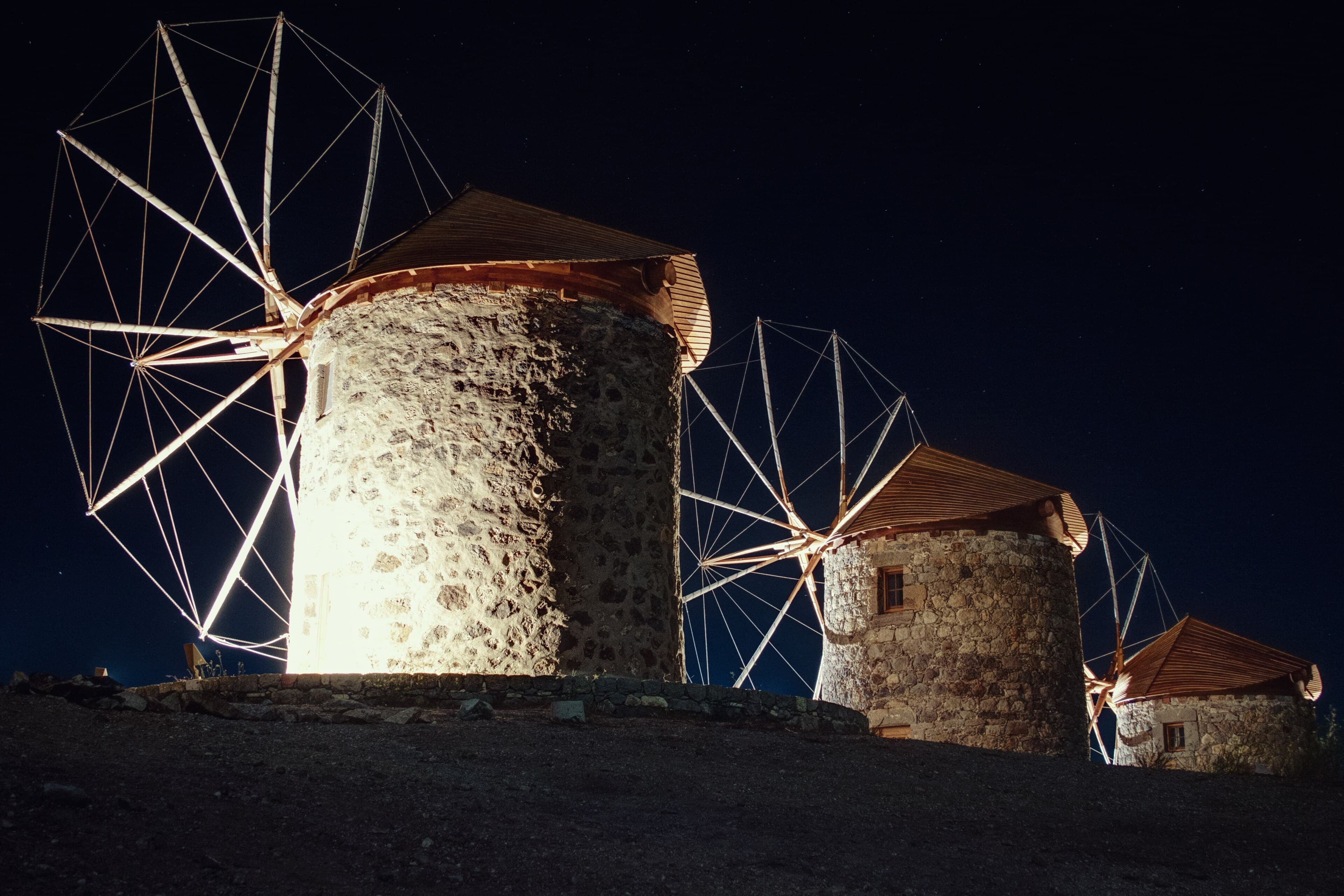
The three windmills on the ridge look west over the sea to Ikaria and Samos. Come half an hour before sunset.
Edge of Chora
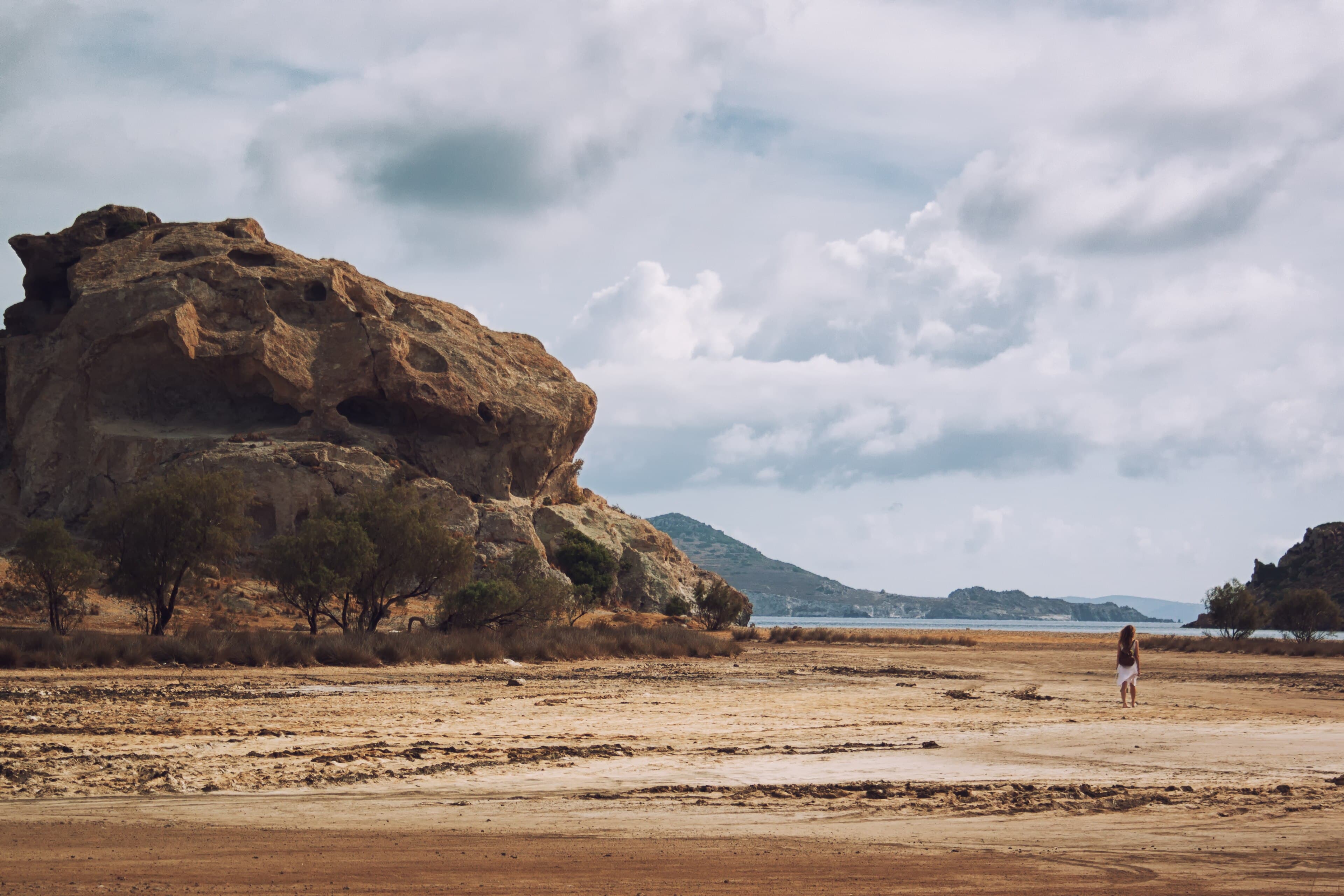
Nature
A huge rock at the end of Petra beach, with steps and the cells of hermits cut into it. Climb carefully for the view over the bay.
Petra beach, Grikos
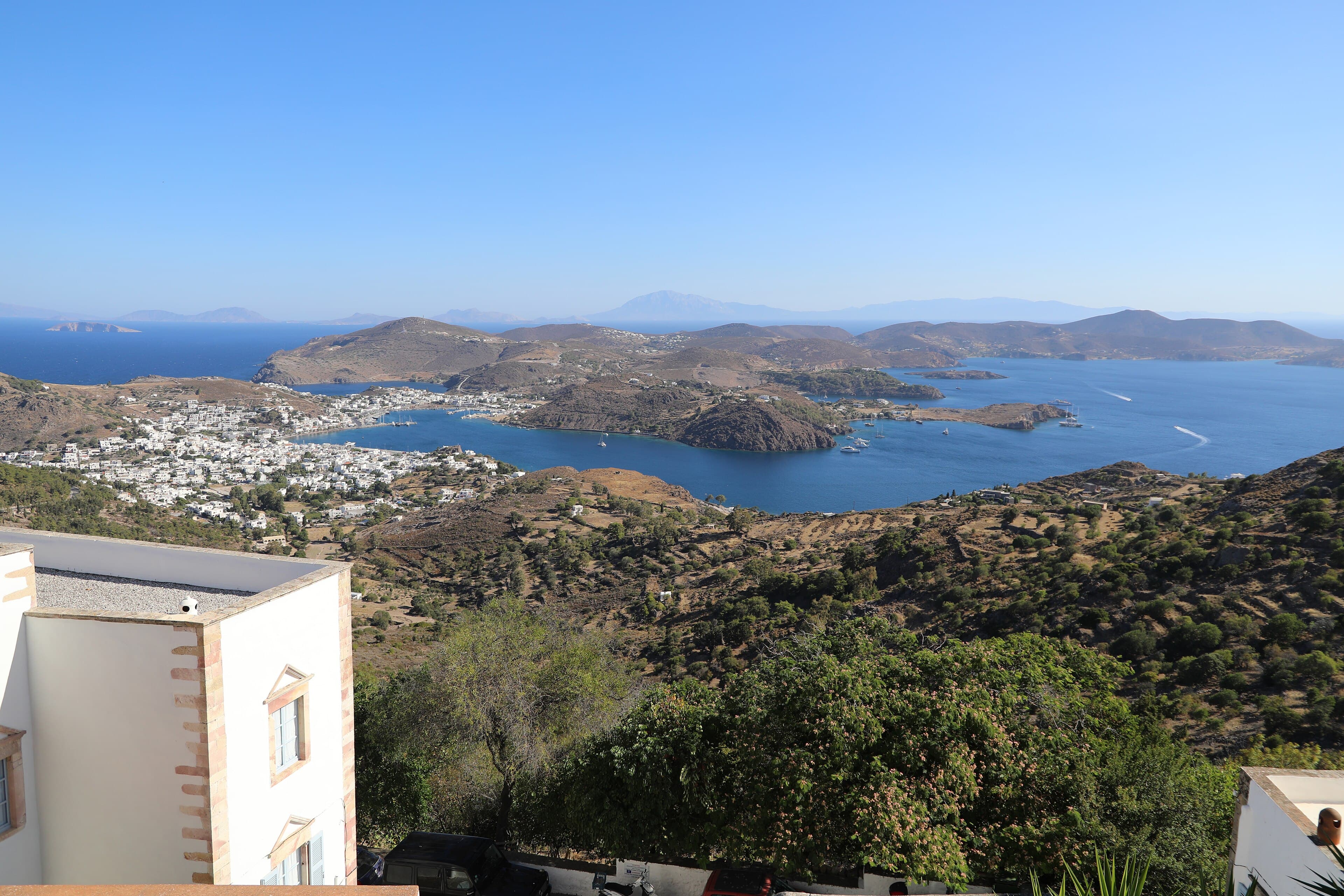
Beach
Small boats go to the tiny islands of Lipsi, Arki and Marathi, with a few tavernas, a handful of people and very clear water.
From Skala

Culture
If you come at Orthodox Easter, join the processions by candlelight and the washing of the feet in the main square on Holy Thursday. Book a year ahead.
Chora and the monastery
Only on Patmos
What makes Patmos different from every other island in the Aegean.
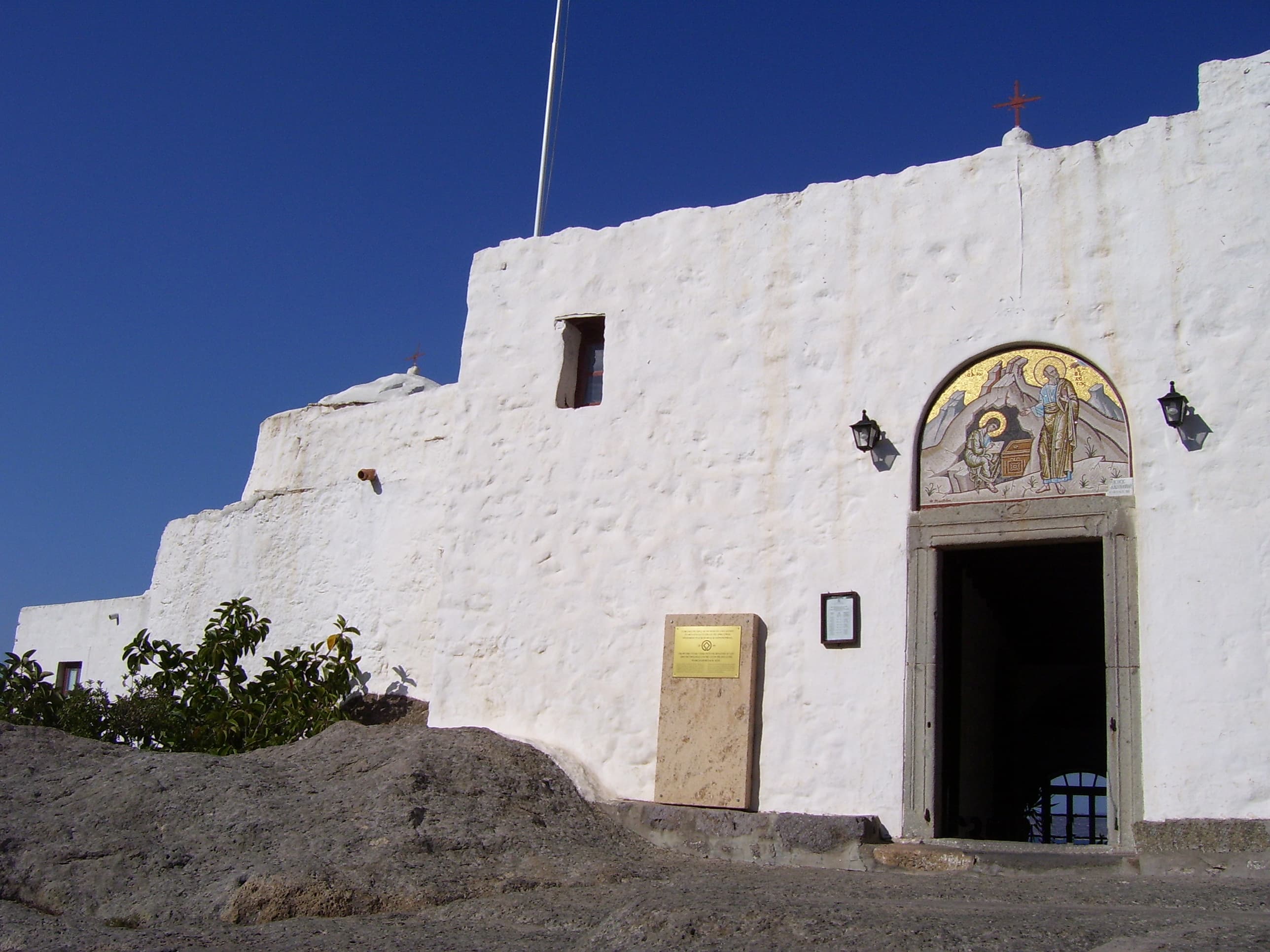
By tradition, St John the Evangelist was exiled to Patmos around AD 95 and wrote the last book of the Bible in a cave on the hillside, the Cave of the Apocalypse. Pilgrims still come from all over the world to see it.
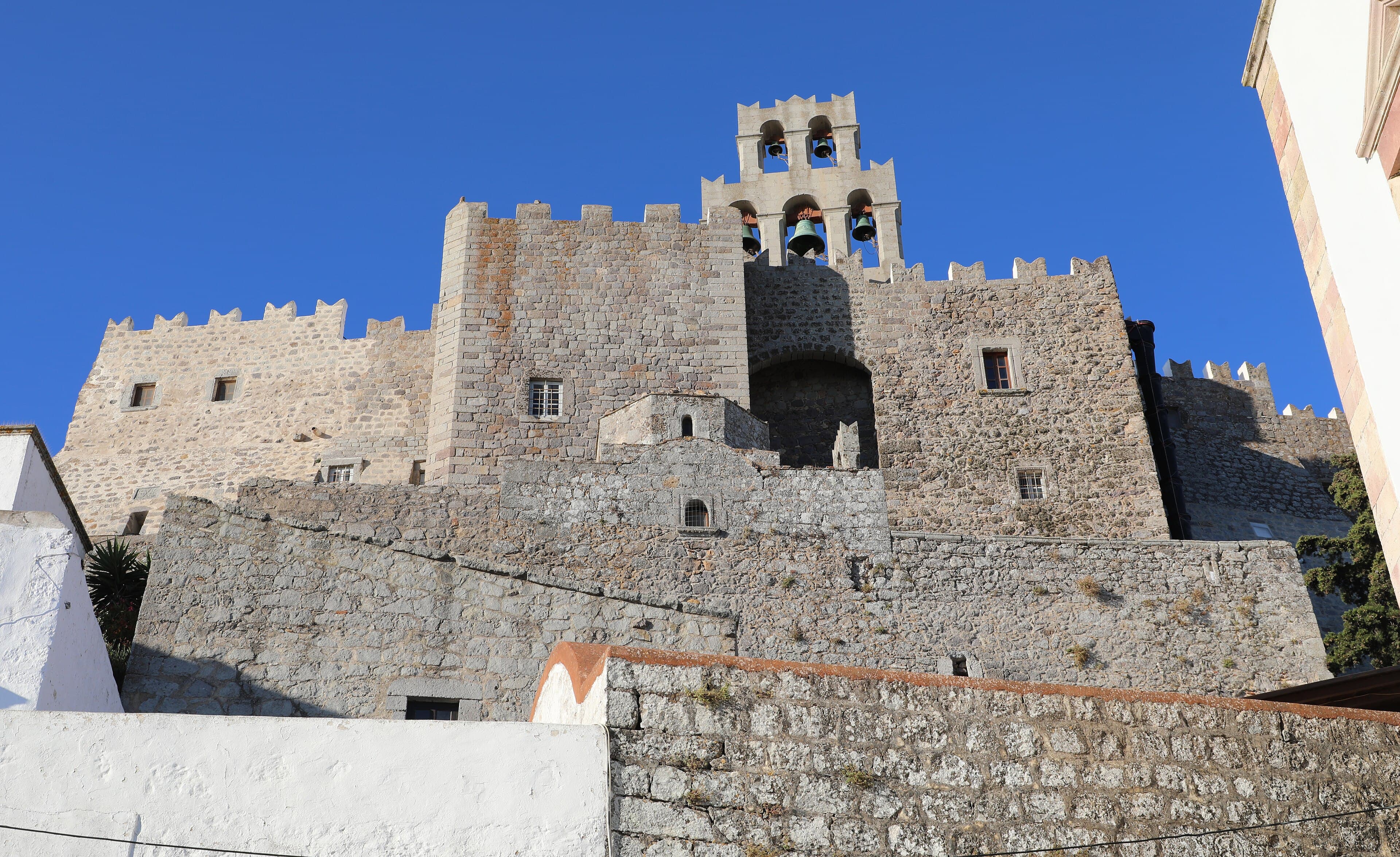
The Monastery of St John, founded in 1088, looks like a castle, with battlements on top. Its walls were built to keep out pirates, and monks still live inside.
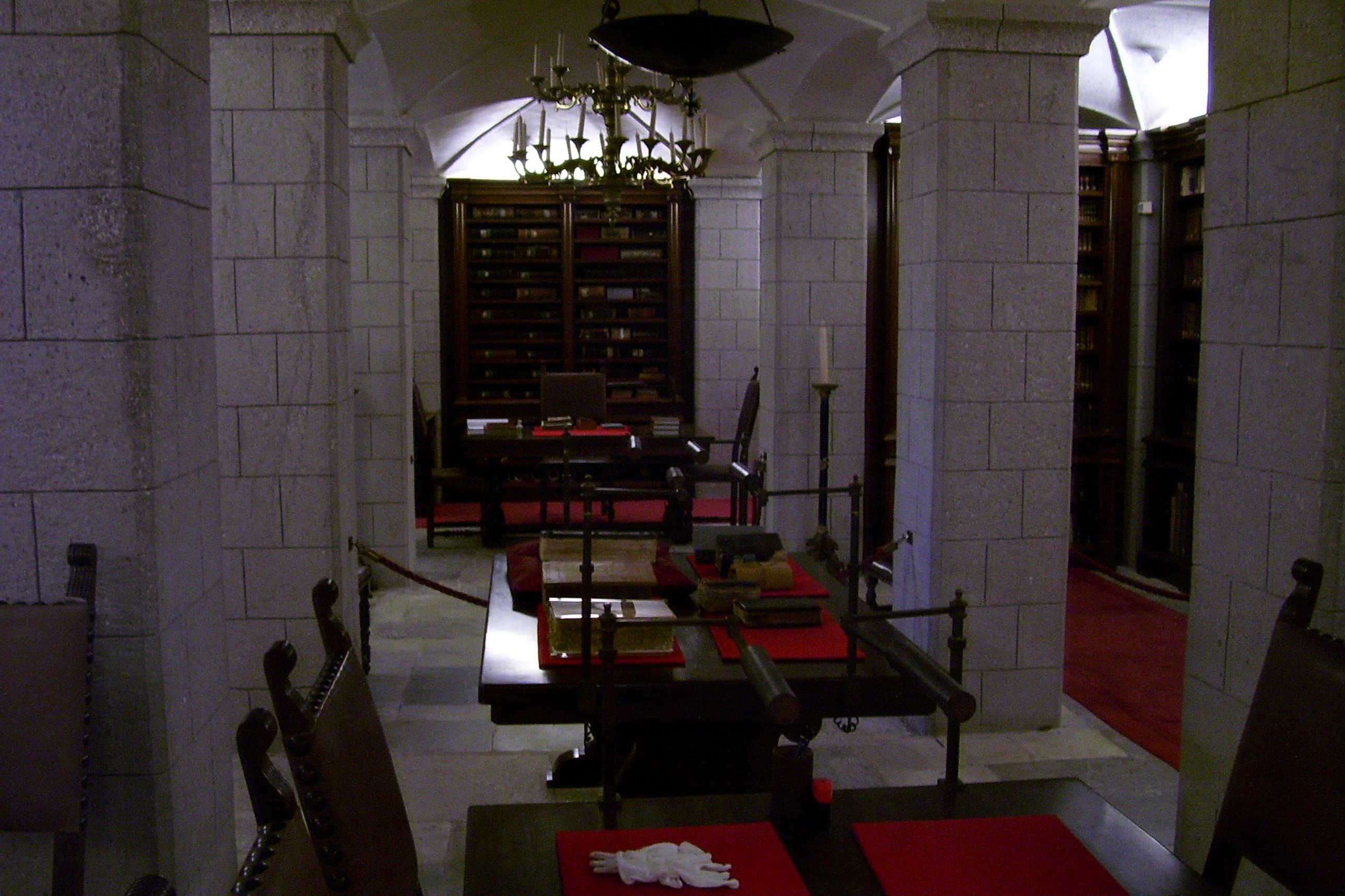
The monastery's library holds about 1,000 manuscripts and thousands of old books. Its most famous treasure, a few leaves of a 6th-century Gospel of Mark written in silver on purple parchment, is shown in the treasury.
In Holy Week the island fills with pilgrims. On Holy Thursday the abbot washes the feet of twelve monks in the main square of Chora, re-enacting the Last Supper as it has been done for centuries.