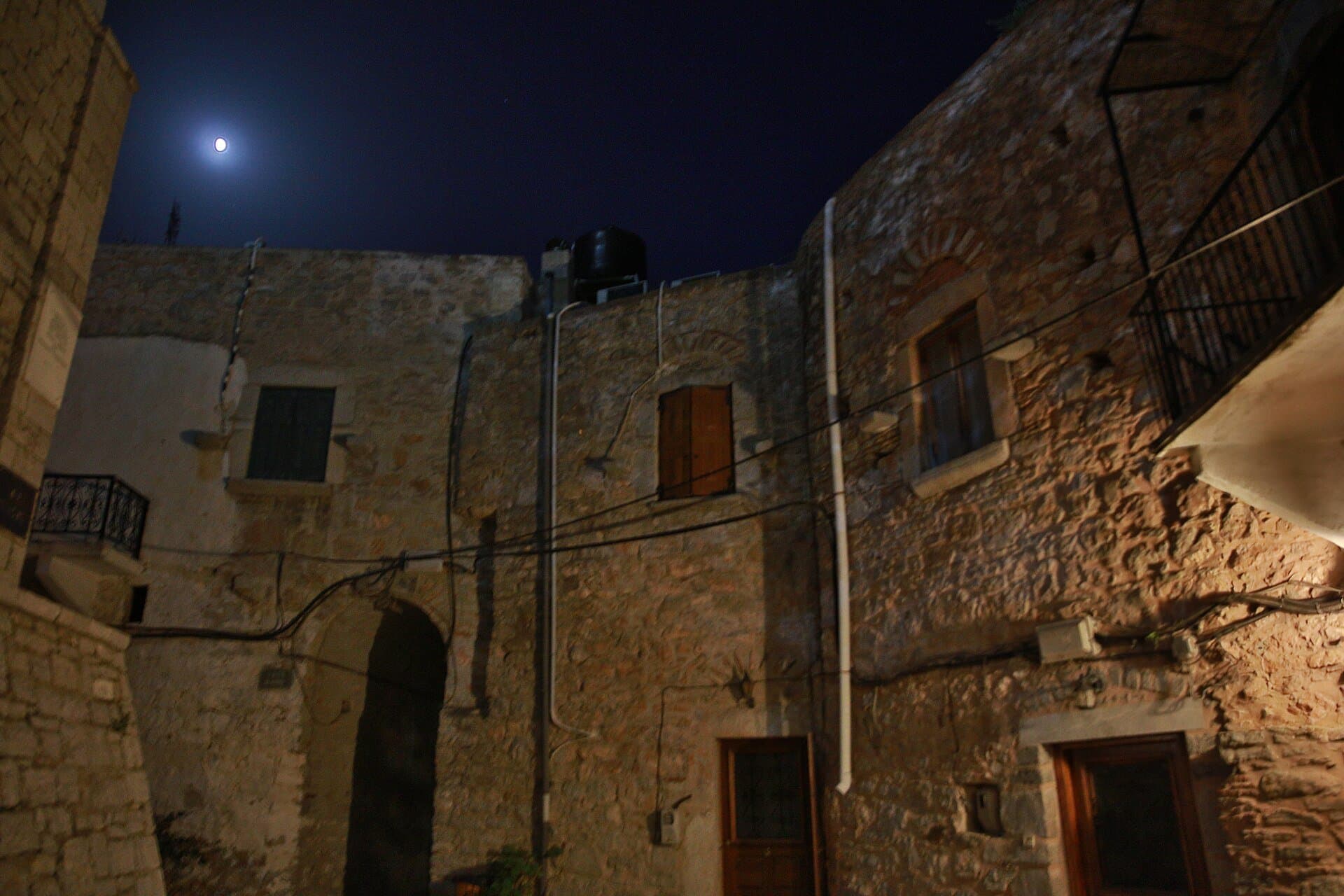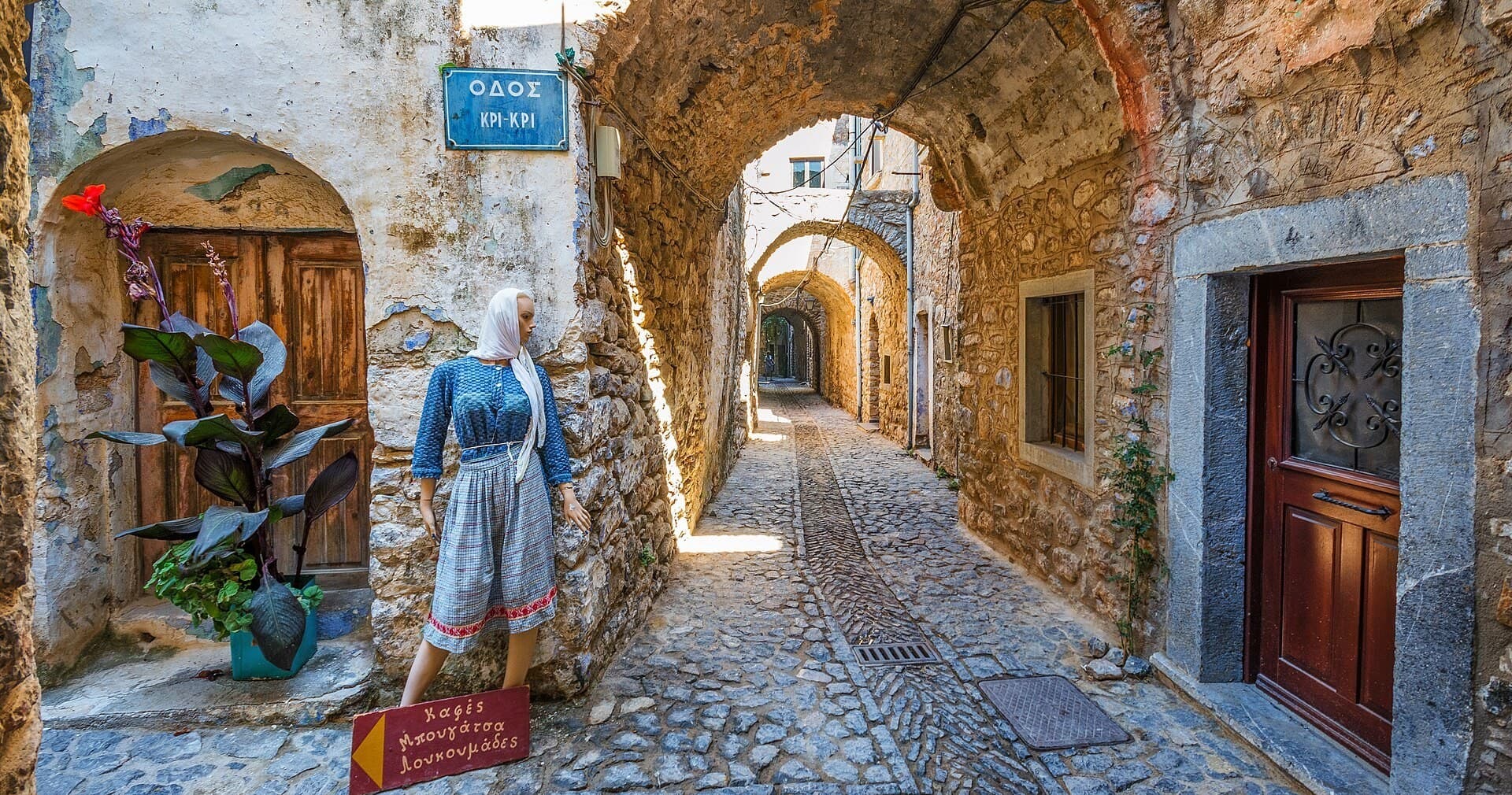
A lane of the medieval village of Mesta on Chios

Χίος · The mastic island, of medieval villages and citrus mansions

Chios, the fragrant island

Get lost in the vaulted lanes of a fortress village, walk streets painted in black-and-white patterns, sleep in a Genoese mansion among lemon trees and swim from a beach of black pebbles.

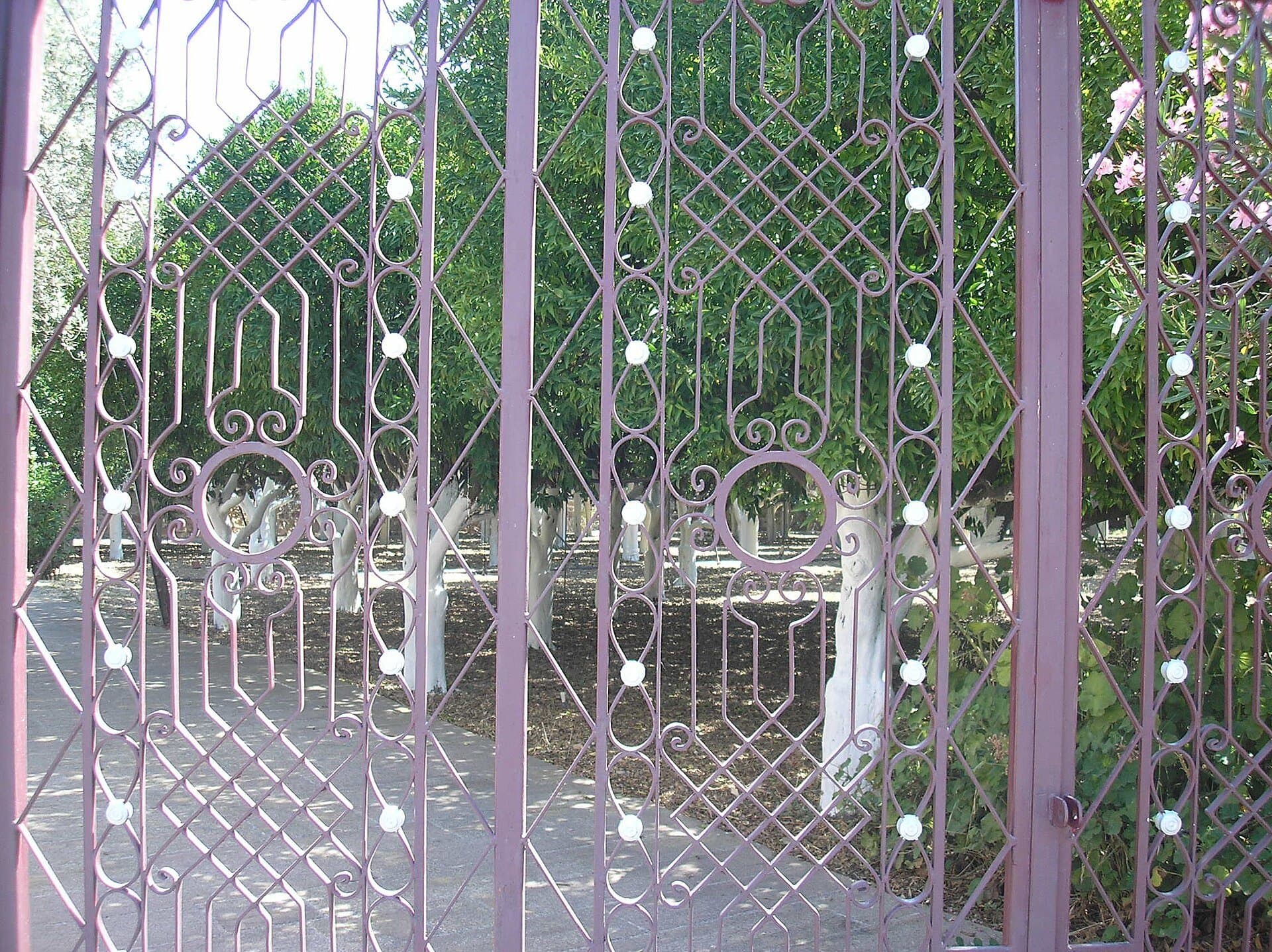
An iron gate into a walled citrus garden in Kampos

Greetings from Chios

Chios

This morning we woke in an old stone mansion in Kampos, with breakfast under the lemon trees and marmalade made from the fruit above our heads. In the afternoon we drove south through hills of mastic trees to Pyrgi, where every wall is painted in black-and-white patterns like lace. Now we are at a table on the little square of Mesta, inside a village built like a castle, with a glass of mastic liqueur and nowhere else we would rather be.

Wish you were here. x

Hour by hour

A perfect day on Chios

Golden mosaics in the hills, a ghost village, the painted lanes of the south, and dinner in a medieval square.

  1. 08:30

    Breakfast among the lemon trees

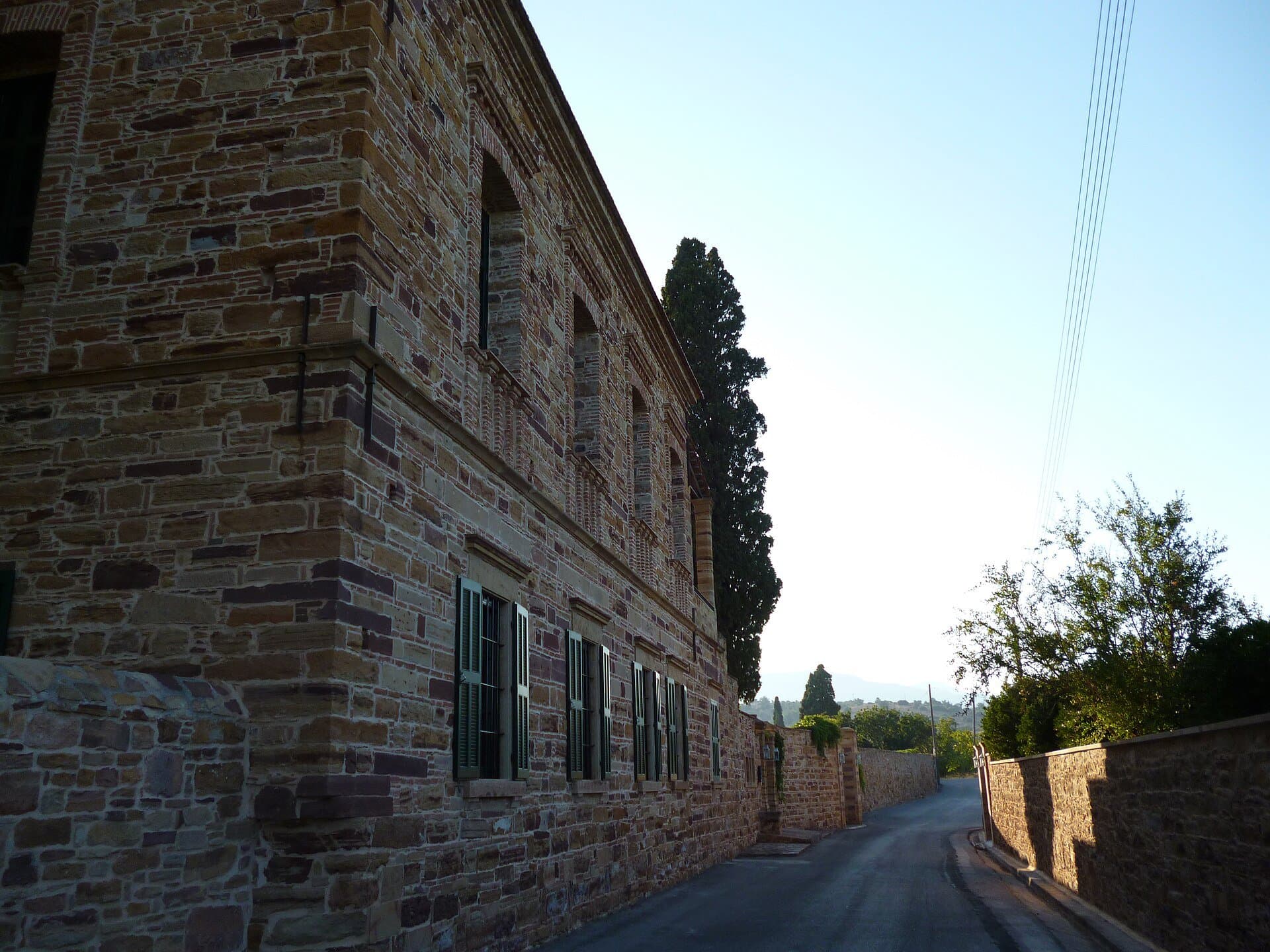
    Start in Kampos, south of Chios Town, with breakfast in the courtyard of an old stone mansion, among orange and mandarin trees.

    A stone mansion in Kampos
  2. 10:00

    The golden mosaics of Nea Moni

    Drive up into the pine-covered hills to Nea Moni, the 11th-century monastery whose mosaics are among the finest Byzantine art in the world.

    Byzantine mosaics at Nea Moni
  3. 11:30

    The ghost village of Anavatos

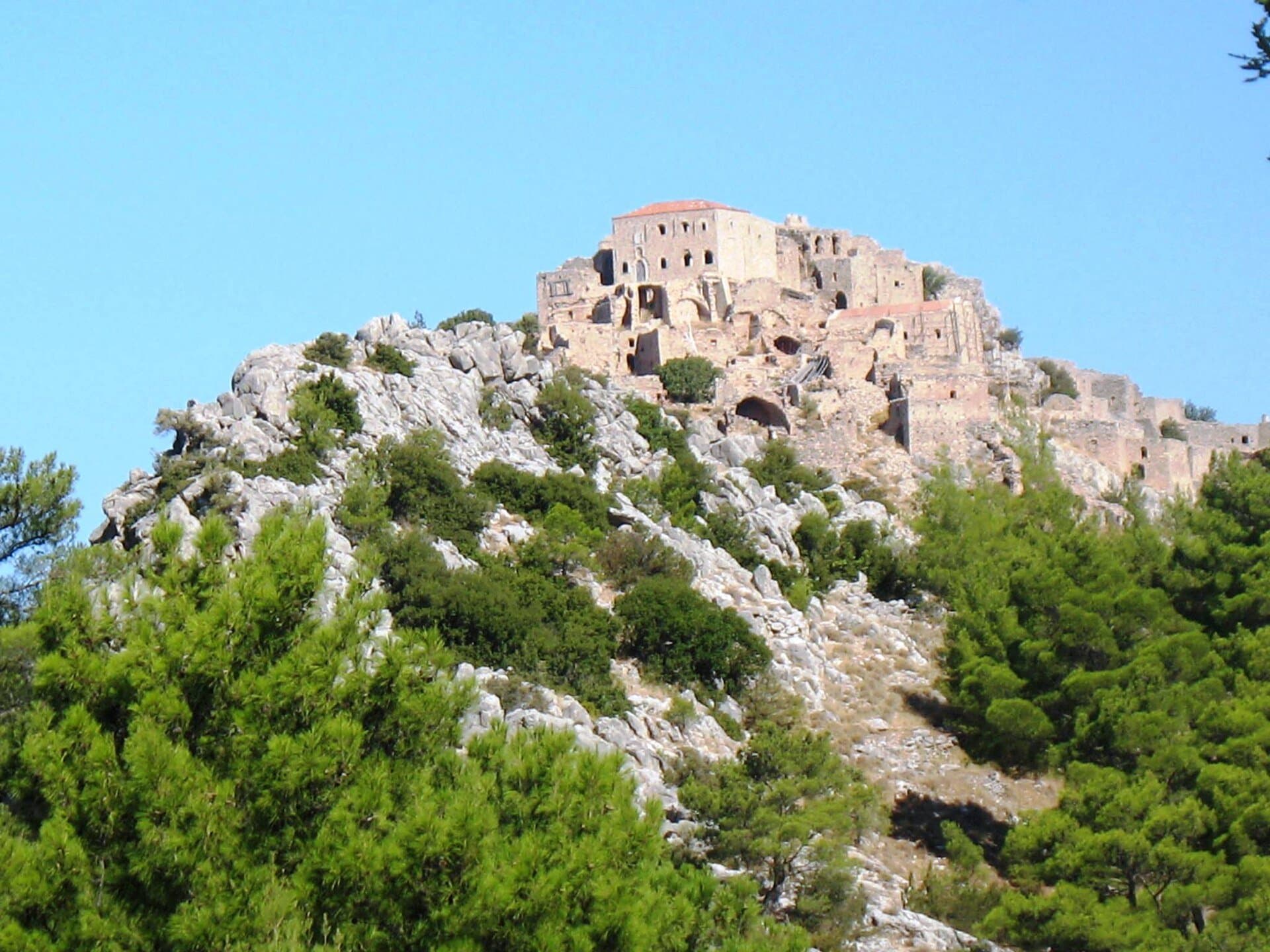
    Go on to Anavatos, the abandoned stone village on its cliff, and climb up through its silent lanes to the top of the rock.

    The abandoned village of Anavatos on its rock
  4. 14:00

    Black pebbles at Mavra Volia

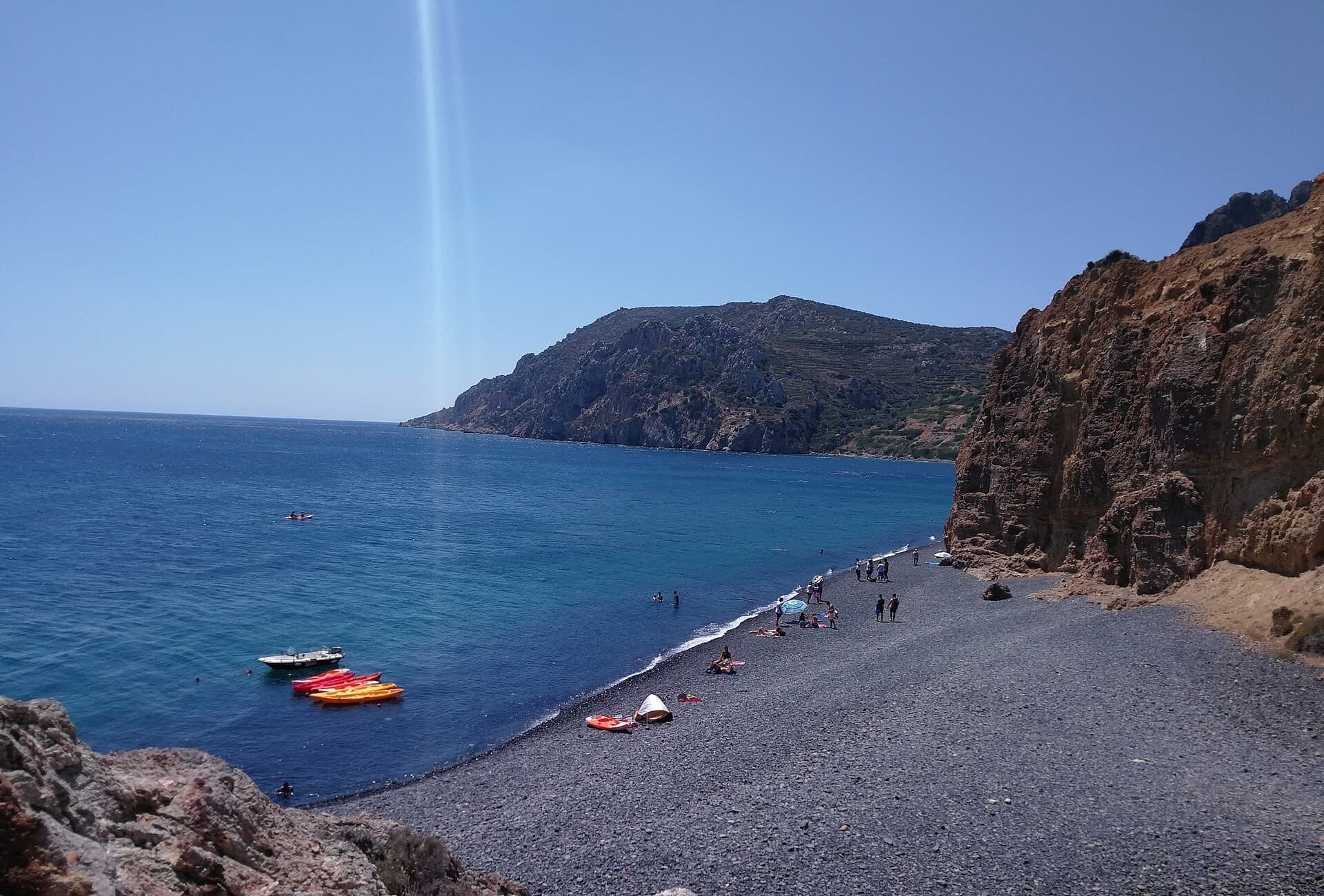
    Head to the far south for a late lunch by the harbour of Emporios and a swim from the beach of black volcanic pebbles.

    The black pebble beach of Mavra Volia
  5. 18:00

    The painted village

    Walk the lanes of Pyrgi, where every house is scratched with black-and-white patterns, in the soft light of the evening.

    The patterned houses of Pyrgi
  6. 21:00

    Dinner in a fortress village

    End the day in Mesta, inside the walls, at a table on the little square under the great church.

    The square of Mesta

Where to stay

Where you'll wake up on Chios

All stays

Only on Chios

The things you'll tell everyone about

What makes Chios different from every other island in the Aegean.

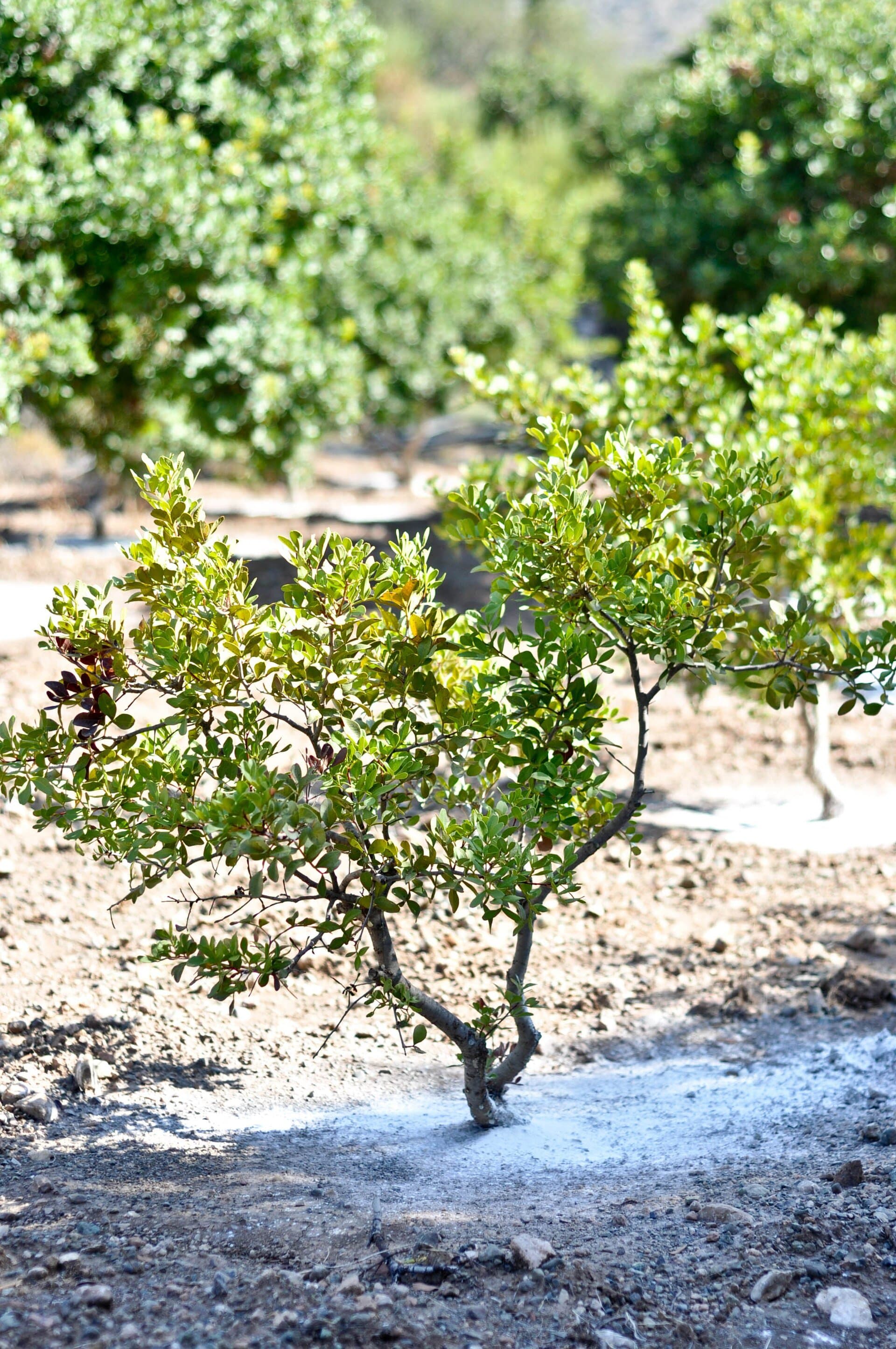
A mastic tree in southern Chios

A resin that grows nowhere else

The lentisk trees of southern Chios are the only ones in the world that weep mastic, the fragrant resin used since antiquity in medicine, perfume, sweets and the first chewing gum. Its cultivation is on UNESCO's list of intangible heritage.
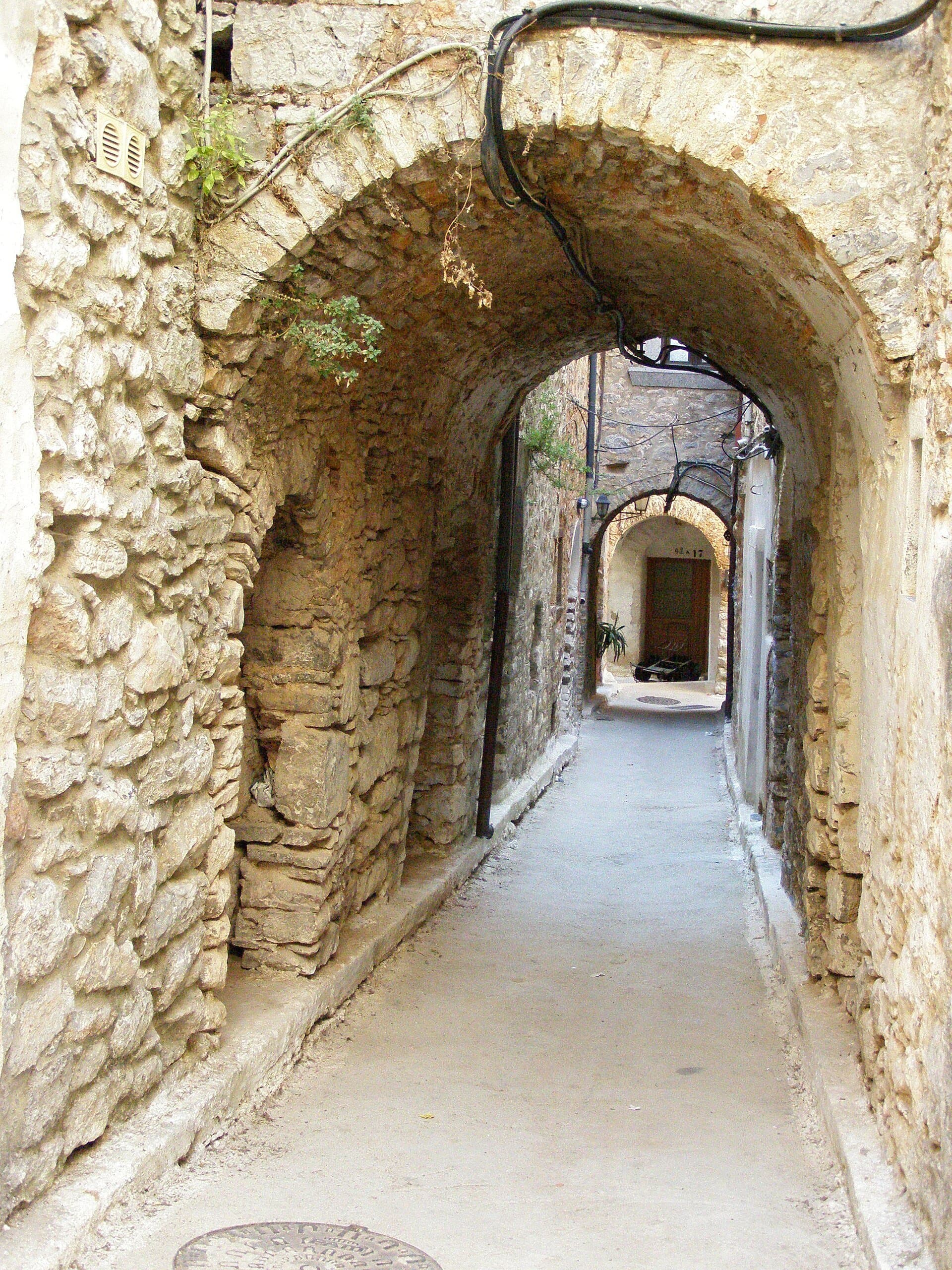
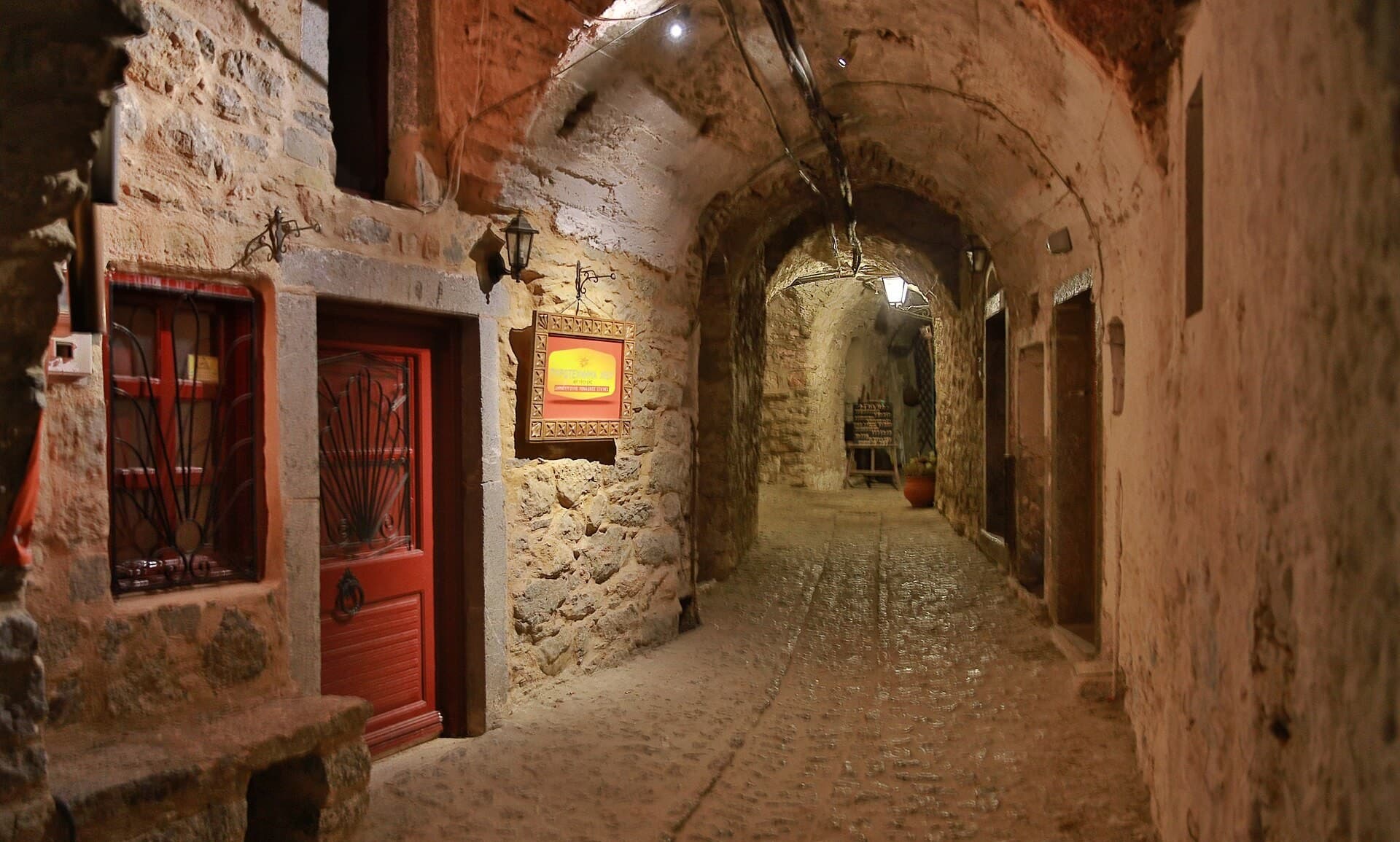
Stone arches in the lanes of Mesta

Villages built as castles

To guard the mastic, the Genoese fortified the villages of the south. In Mesta the outer houses form the walls, the lanes run under vaults, and the roofs connect so that people could cross the village without touching the ground.
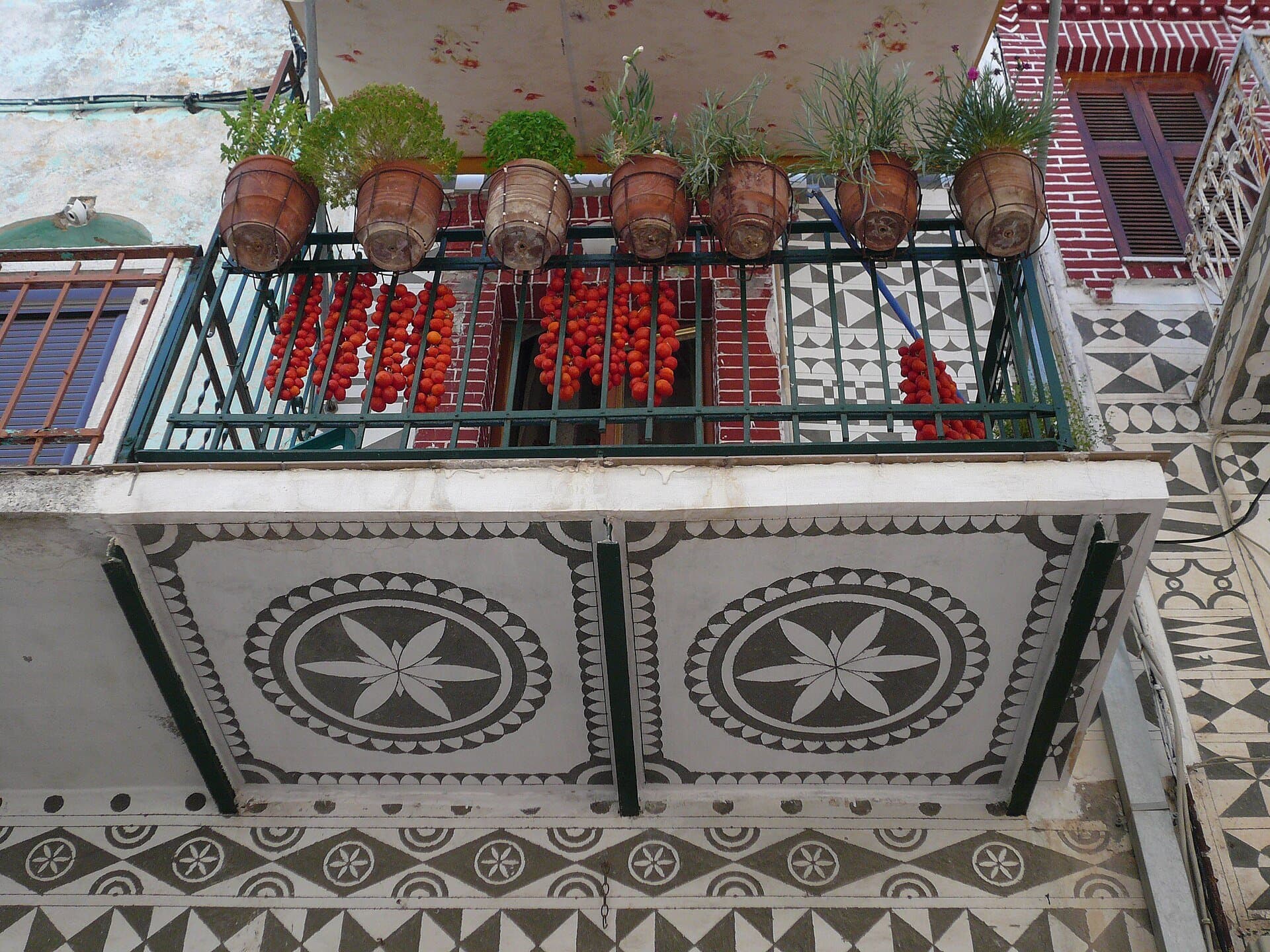
Xysta patterns on the houses of Pyrgi

Houses dressed in lace

In Pyrgi almost every façade is covered in xysta, geometric patterns scratched into grey plaster to show the white beneath, a craft found nowhere else in Greece.
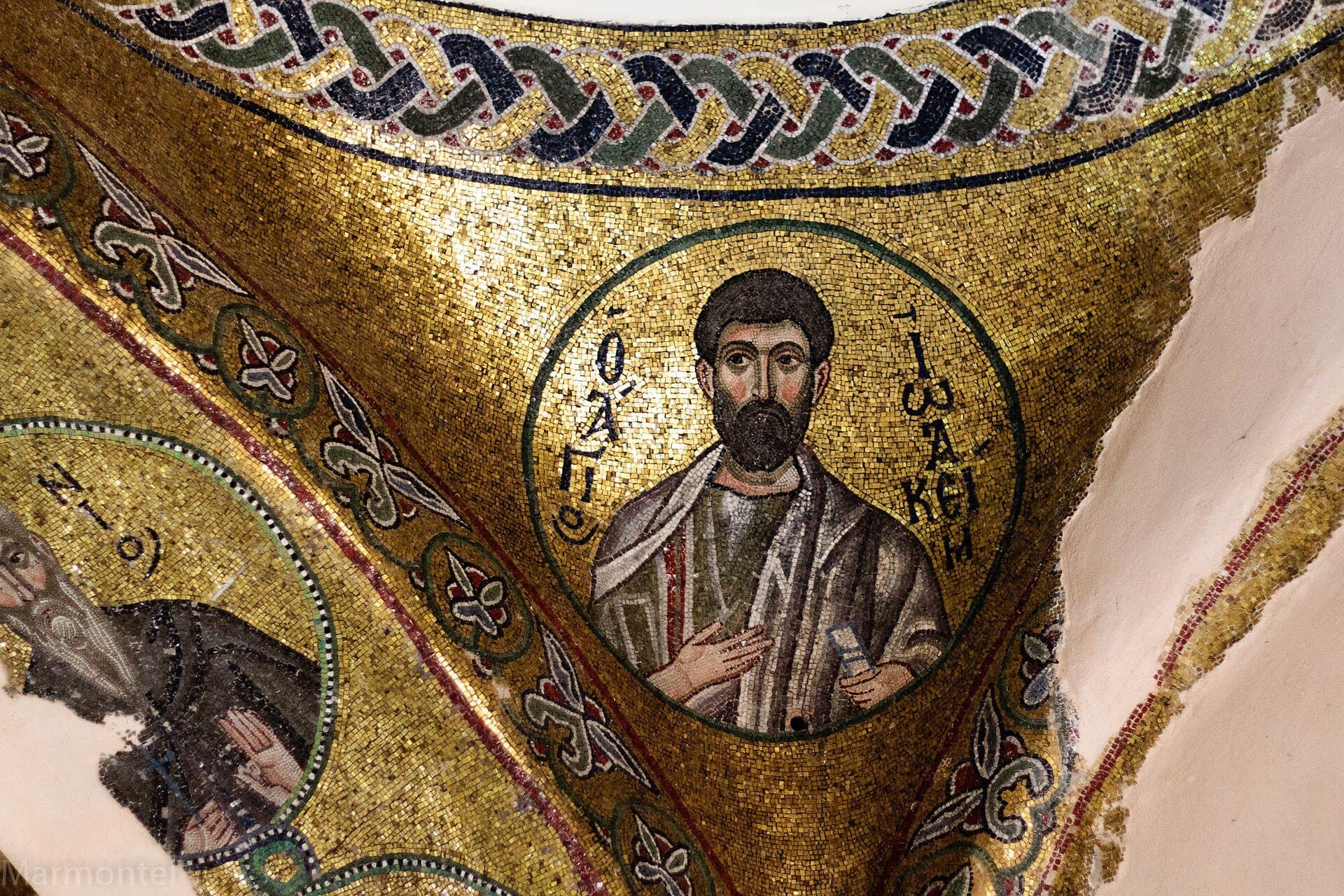
Byzantine mosaics in Nea Moni

Mosaics of gold in the hills

Nea Moni, founded in the 11th century by the emperor Constantine IX, keeps some of the finest Byzantine mosaics anywhere and is a UNESCO World Heritage Site, with Hosios Loukas and Daphni.
Towns & villages

Where you'll fall for Chios

All towns & villages
View of Mesta, The mastic villages, Chios
01
The mastic villages

Mesta

A medieval fortress village of vaulted lanes, built to hide its mastic

The best-preserved of the mastic villages, and one of the most remarkable villages in Greece. Mesta is a castle in the shape of a village: the outer houses form its walls, and inside, a maze of narrow stone lanes runs under arches and vaults, so you walk through it as if through one great building. Everything leads to the little square, where the tables of the tavernas sit beneath the big church of the Taxiarchis.

  • Getting lost in the vaulted lanes
  • Dinner on the square under the Taxiarchis
  • Walking on the flat roofs, as the villagers once did
  • The mastic groves all around
Discover Mesta
View of Pyrgi, The mastic villages, Chios
02
The mastic villages

Pyrgi

The painted village, its houses scratched in black-and-white patterns

The largest of the mastic villages, and one of the strangest and loveliest in Greece. Almost every house is covered in xysta, geometric patterns of triangles, circles and flowers scratched into grey plaster over whitewash, so the lanes look like they have been embroidered. In the middle stands the little Byzantine church of the Holy Apostles, painted inside with frescoes, and around the square the tomatoes and strings of peppers hang from the balconies in late summer.

  • The xysta patterns on every wall
  • The Byzantine church of Agioi Apostoloi
  • Strings of tomatoes drying on the balconies
  • The Chios Mastic Museum nearby
Discover Pyrgi

Things to do

Moments to collect

A vaulted lane in Mesta

Culture

Get lost in Mesta

Wander the vaulted stone lanes of the fortress village until you find the square, then stay for dinner under the church as the lanes cool down.

Mesta

A mastic tree in the groves

Nature

Watch the mastic harvest

From late July to September the farmers scrape the bark of the lentisk trees and gather the tears of resin from the white earth below. Visit the Mastic Museum, then taste mastic sweets and liqueur in the villages.

The mastic villages

An iron gate into a citrus estate in Kampos

Culture

Cycle the lanes of Kampos

Ride or walk the narrow lanes between the high stone walls of the citrus estates, peeking through old gates at mansions, cisterns and waterwheels. Best in April, when the orange blossom is out.

Kampos

Good to know

Before you fall for Chios

Chios is one of the largest islands in the Aegean, about 842 km² of mountains rising to 1,297 m, so close to Turkey that you can see its coast across the strait. For centuries it was one of the richest places in the Mediterranean, thanks to one tree: the lentisk of the south, whose resin, mastic, grows nowhere else in the world. To protect it the Genoese built fortified villages like Mesta and Pyrgi, and the island's merchants built stone mansions among the citrus orchards of Kampos. Add a Byzantine monastery with golden mosaics, a ghost village on a cliff, Homer's stone and quiet beaches, and you have a deeply Greek island where tourism has never taken over.

Area
≈ 842 km²
Population
≈ 50,000
Highest point
Pelinaio, 1,297 m
Airport
JKH, ≈ 4 km from Chios Town
  • Couples
  • Villages
  • History
  • Slow travel

5,000 years on the island of Homer

A Bronze Age harbour, the island Homer is said to have called home, golden Byzantine mosaics, Genoese mastic lords, a massacre that moved Europe and a seafaring dynasty.

Walk through the story