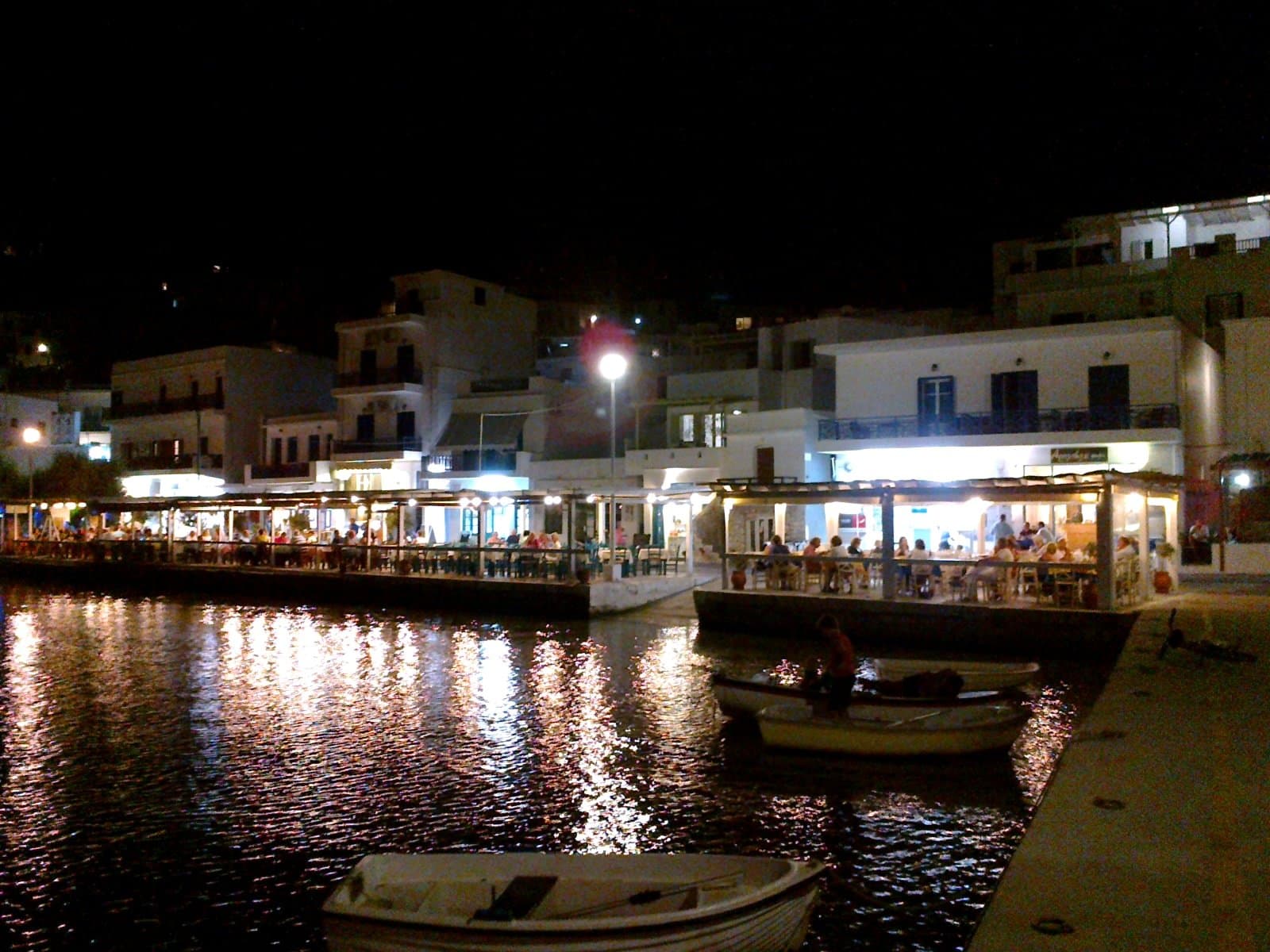
Sifnos: a whitewashed monastery and village above the Aegean

Σίφνος · The Cycladic island of potters, old footpaths and the best cooking in the Aegean

Sifnos, the island of cooks and potters

Walk old stone paths between white villages and chapels, eat chickpeas baked overnight in a clay pot, swim below a monastery on a split rock and watch the sunrise from a walled village on a cliff.

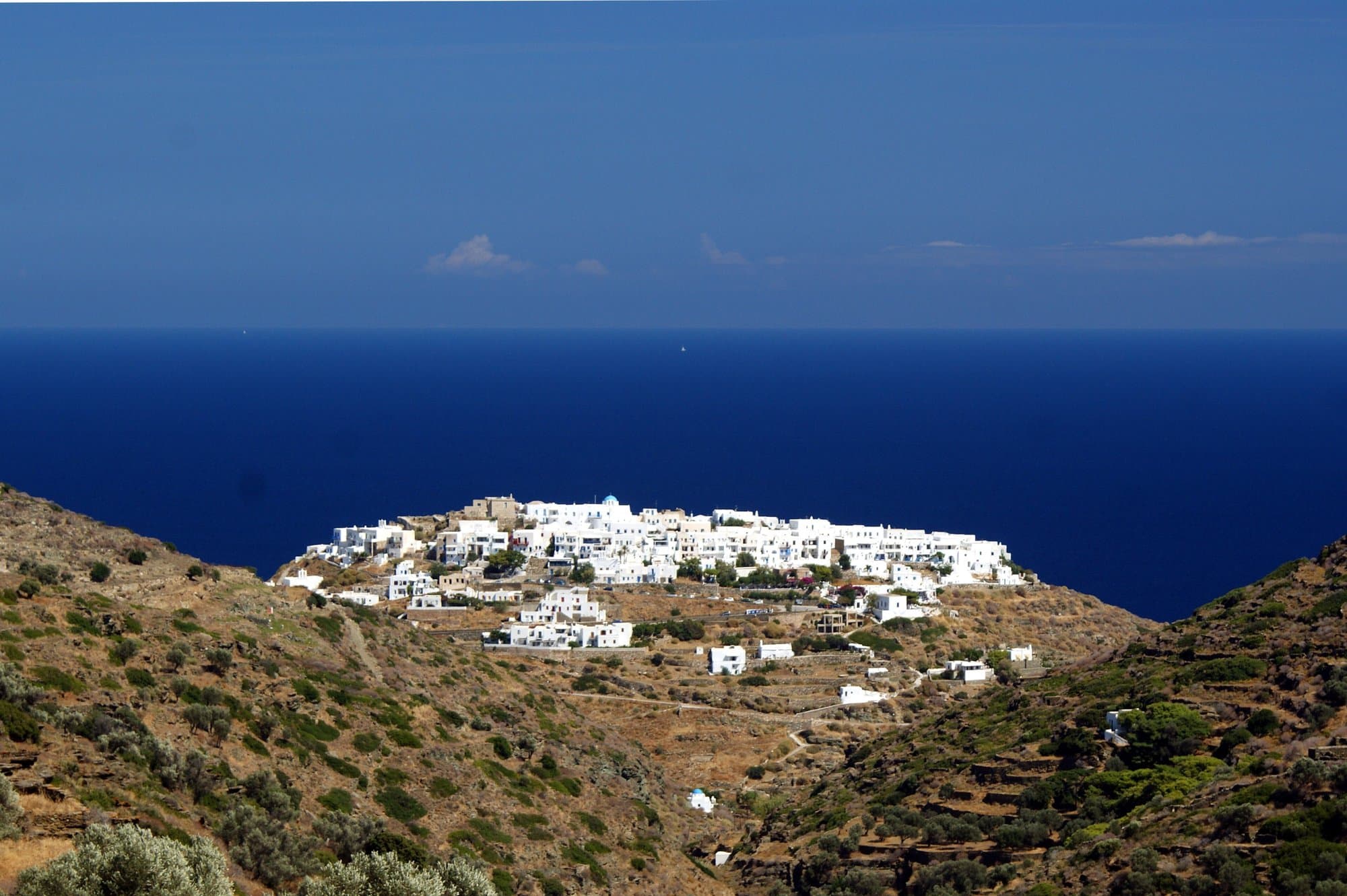
Kastro on its rock above the sea

Greetings from Sifnos

Sifnos

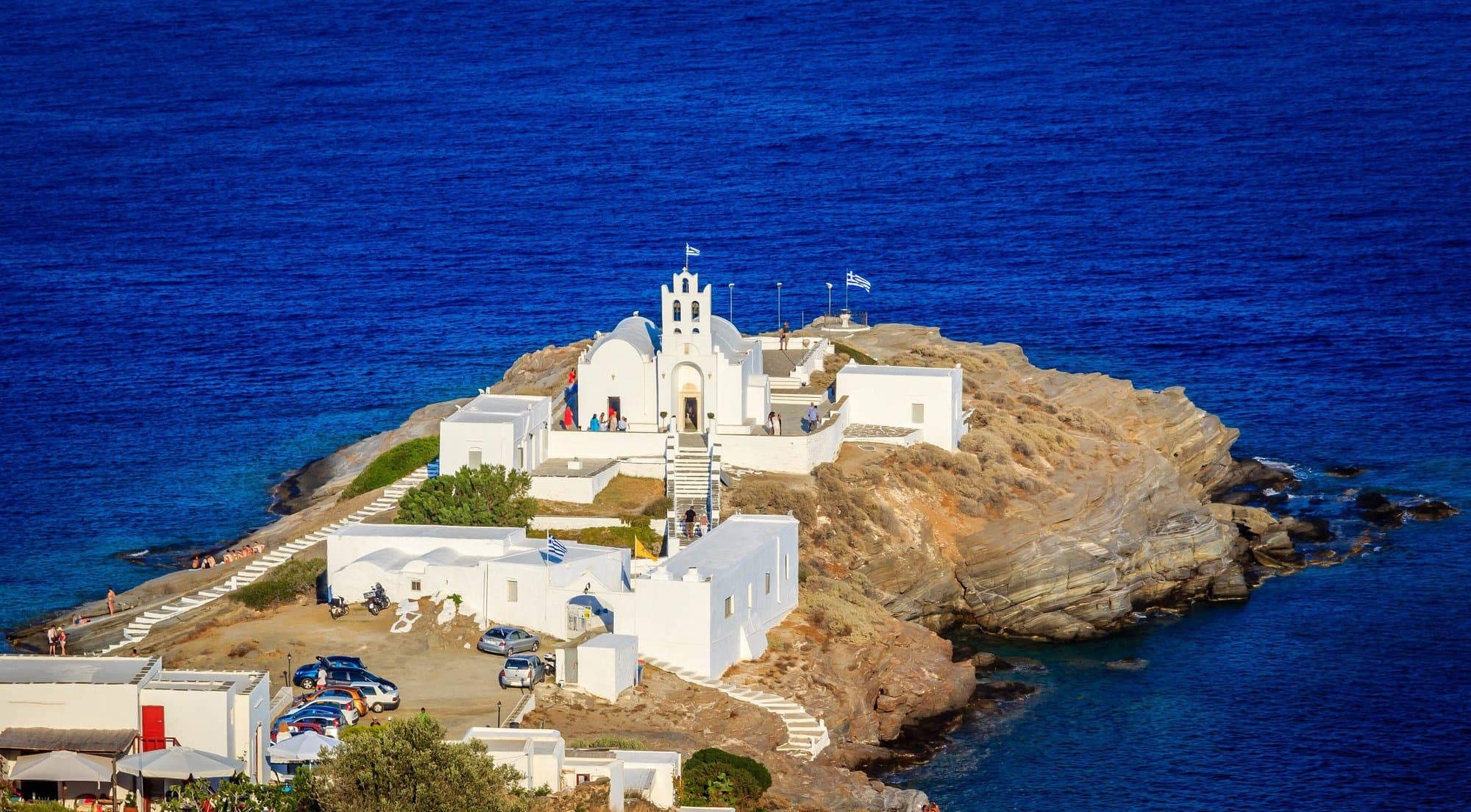
This morning we walked from Apollonia down the old stone path to Kastro, past dovecotes and a dozen small chapels, and swam from the rocks below the Seven Martyrs. At lunch in Vathi the taverna owner lifted the lid off a clay pot of chickpeas that had been in the wood oven all night. Now we are sitting on the steps of Chrysopigi, the monastery on its split rock, and the sea below is turning gold.

Wish you were here. x

Hour by hour

A perfect day on Sifnos

An old path, a walled village, a swim below a chapel, a long lunch by the sea and sunset at the monastery on the rock.

  1. 08:30

    Coffee in Apollonia

    Start in the white lanes of Apollonia, with a coffee and a Sifnian almond sweet before the heat.

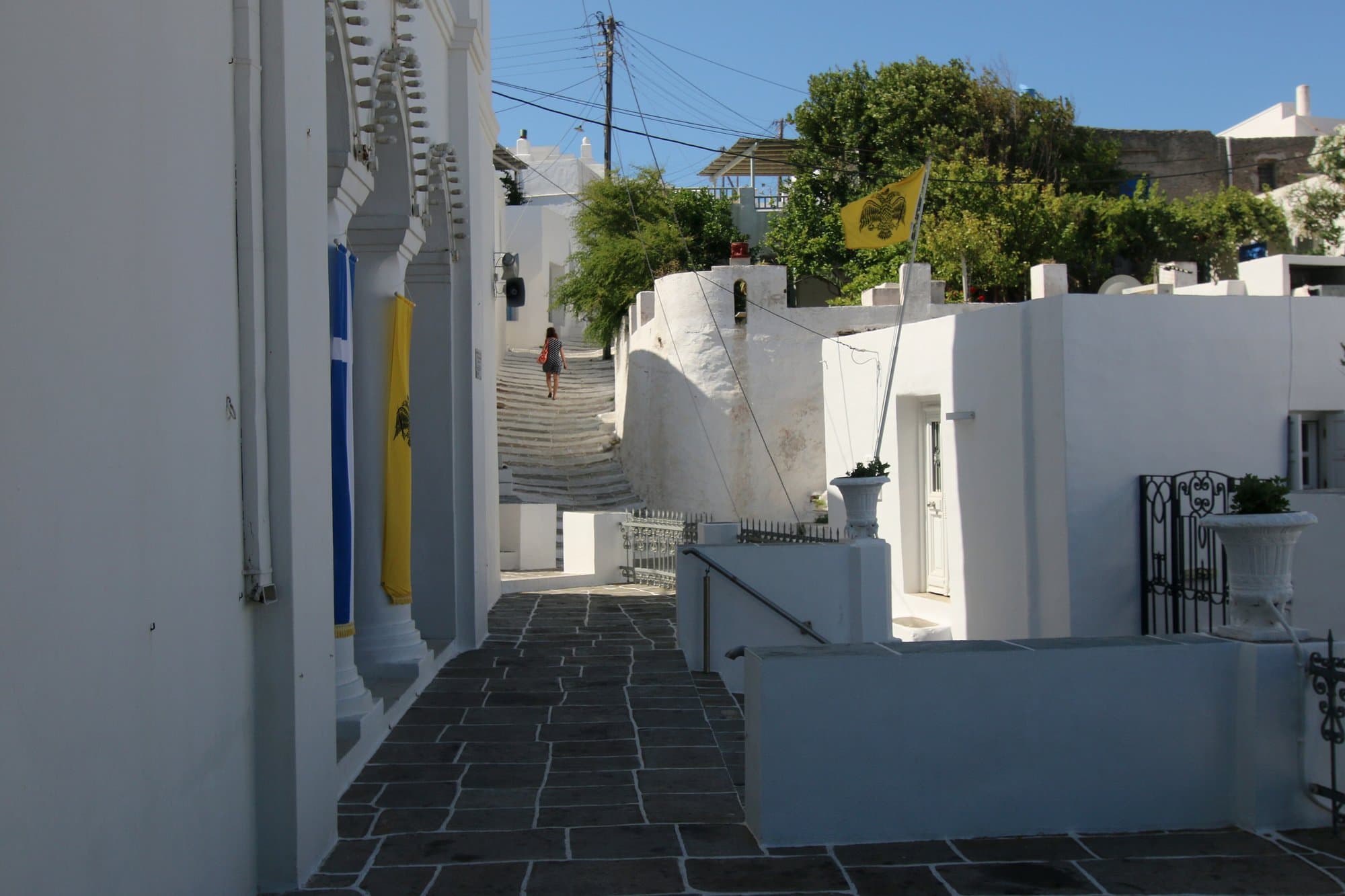
    A whitewashed lane in Apollonia
  2. 09:30

    The path to Kastro

    Walk the signposted path down to Kastro, about an hour through the fields, and wander the vaulted lanes of the old capital.

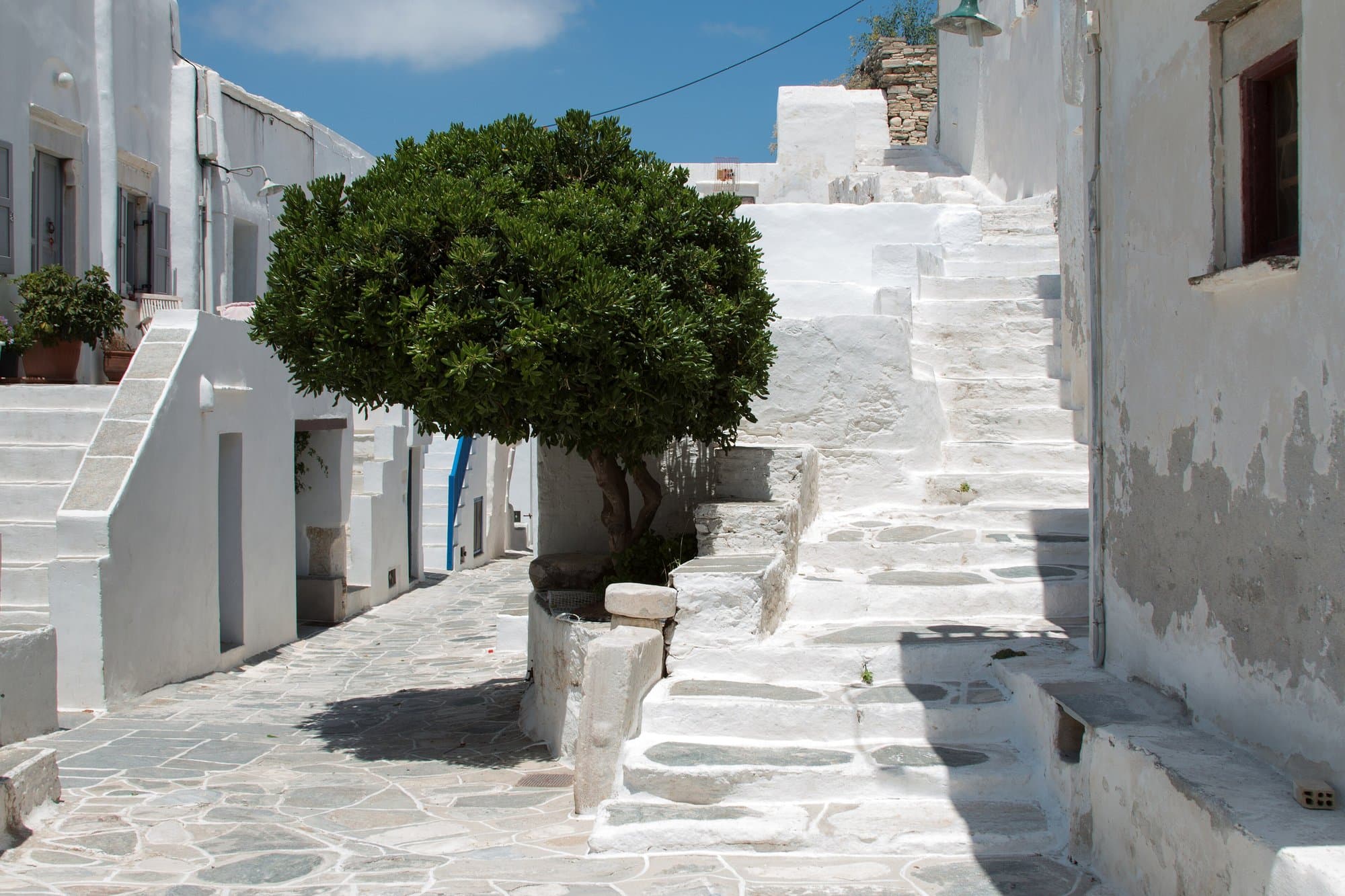
    A narrow lane inside Kastro
  3. 11:30

    A swim below the Seven Martyrs

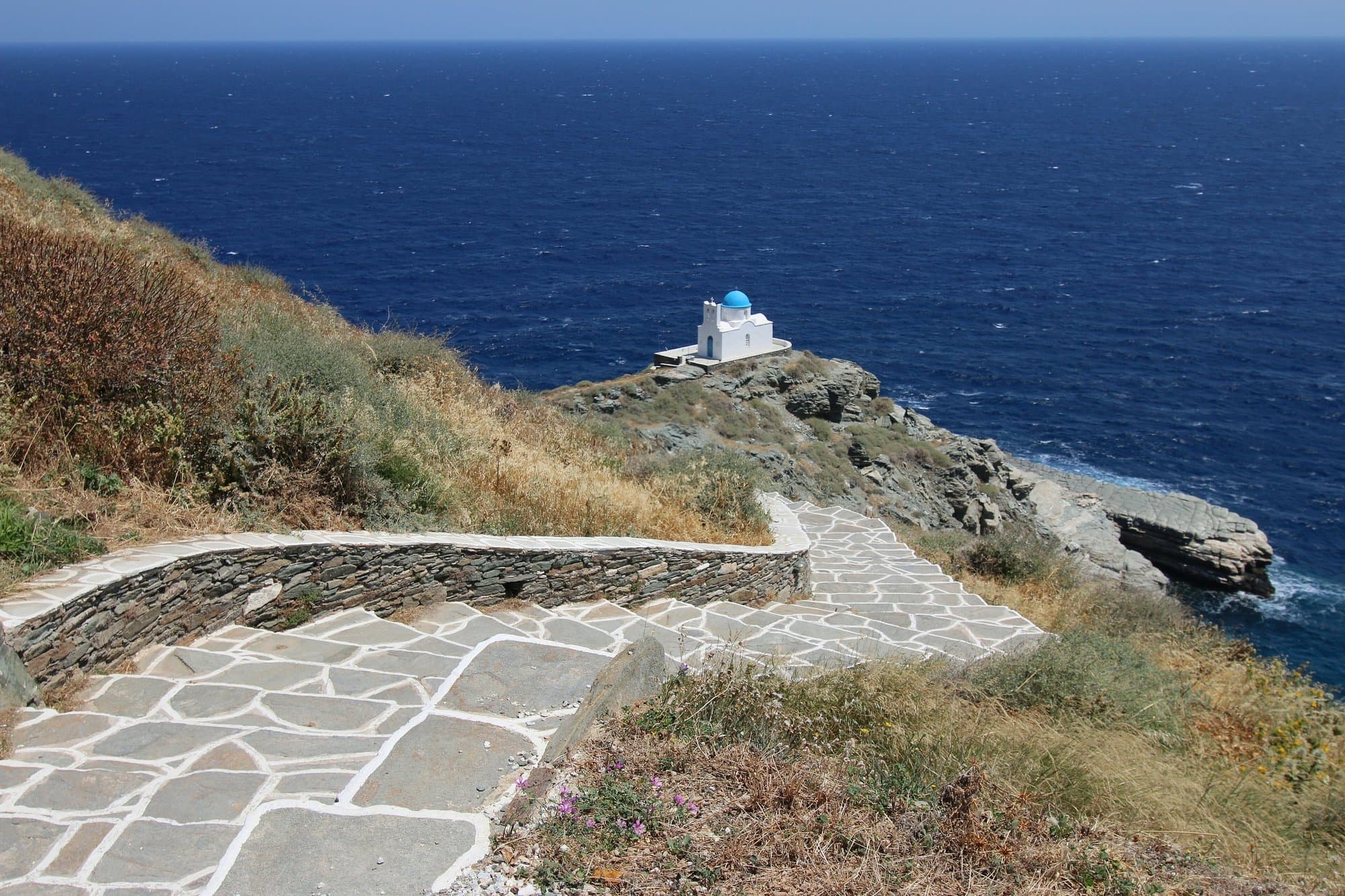
    Climb down to the little chapel on its rock in the sea and swim from the flat rocks around it.

    The chapel of the Seven Martyrs below Kastro
  4. 14:00

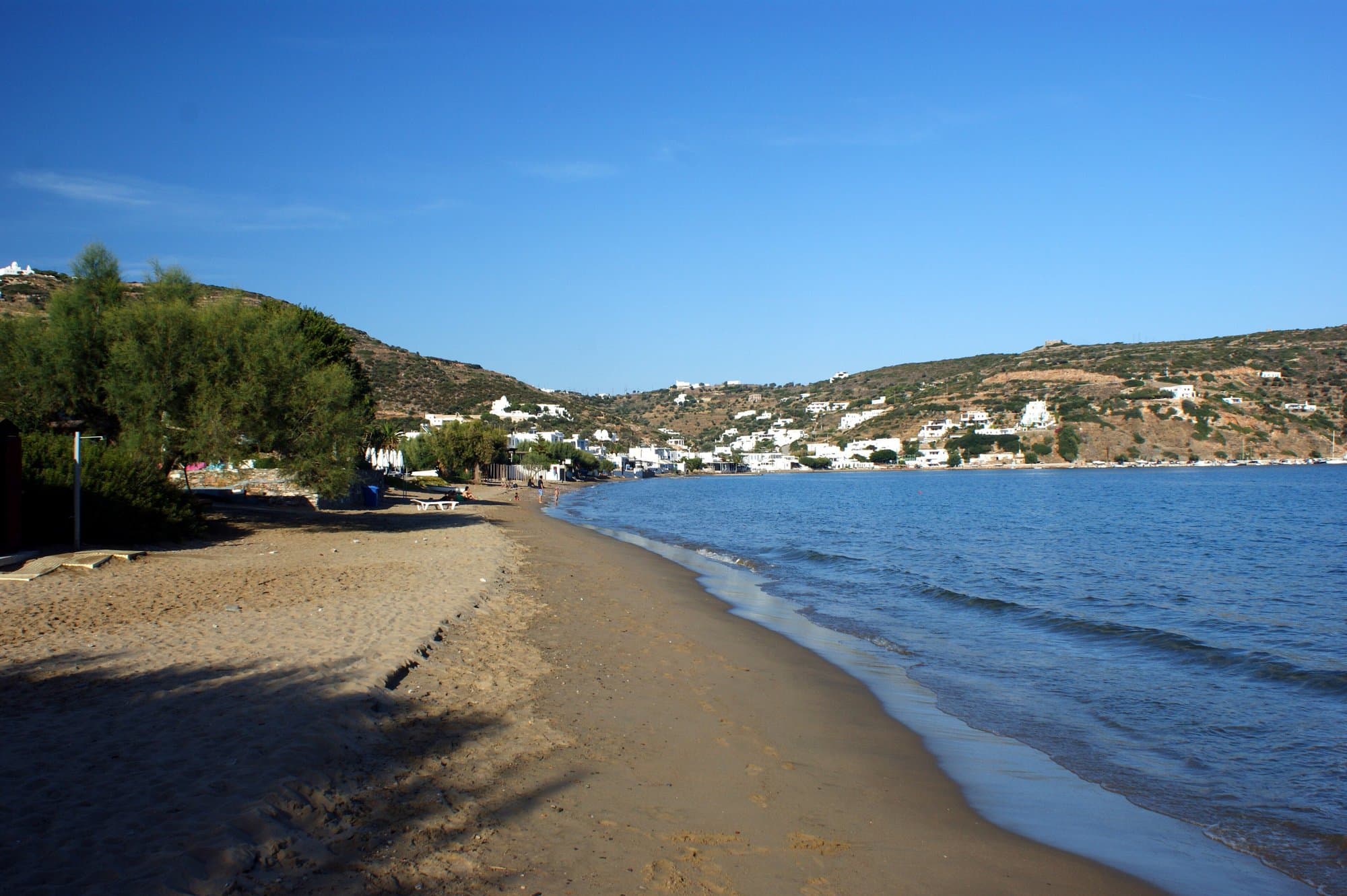
    Lunch in Vathi

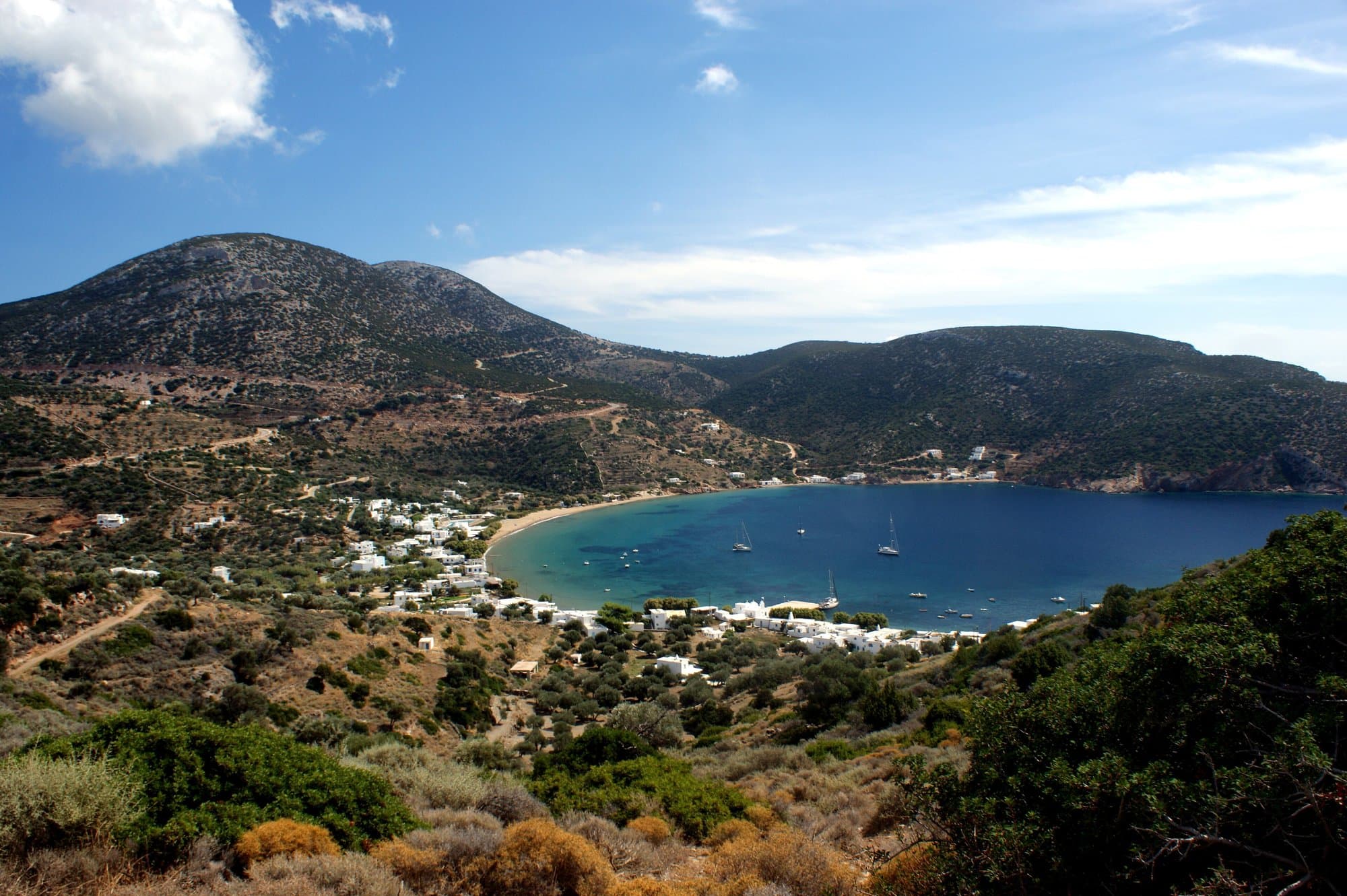
    Drive across the island to the calm round bay of Vathi for a long lunch at the water's edge, and a swim afterwards.

    The calm bay of Vathi
  5. 18:30

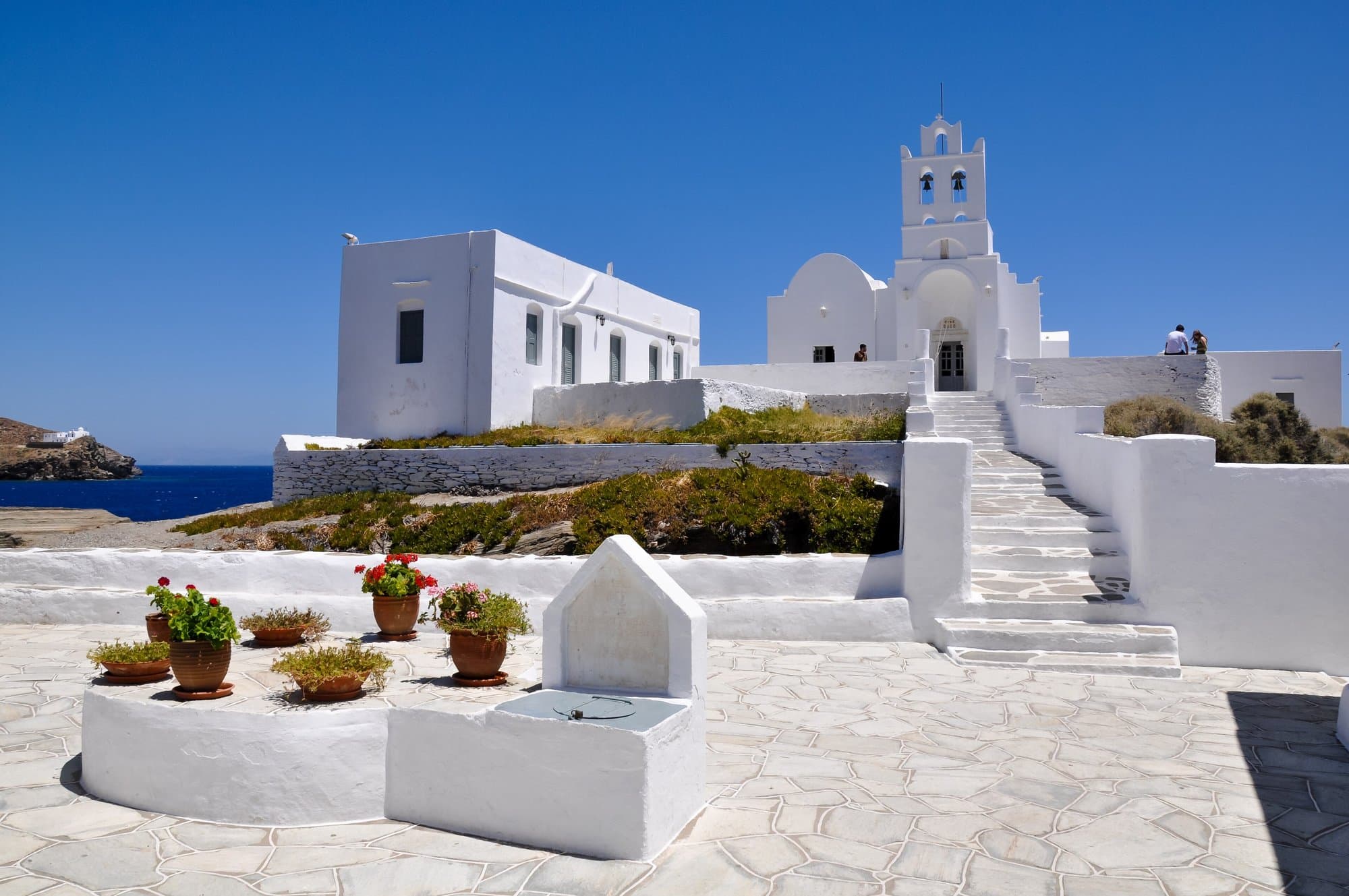
    Chrysopigi at golden hour

    Cross the little bridge to the island's patron monastery on its split rock, then swim at Apokofto next door.

    The monastery of Chrysopigi on its rock
  6. 21:00

    Dinner by the sea

    End the evening on the long beach of Platis Gialos with fish and small plates, a few steps from the water.

    The beach of Platis Gialos

Where to stay

Where you'll wake up on Sifnos

All stays

Only on Sifnos

The things you'll tell everyone about

What makes Sifnos different from every other Greek island.

A table of Sifnian dishes

The island of cooks

Nikolaos Tselementes, born in Exambela in 1878, wrote the cookbook of 1910 that taught Greece to cook, and gave moussaka its béchamel. On Sifnos, revithada, chickpeas baked overnight in a clay pot in a wood oven, is still the Sunday dish, and every September the island holds a festival of Cycladic food in his name.
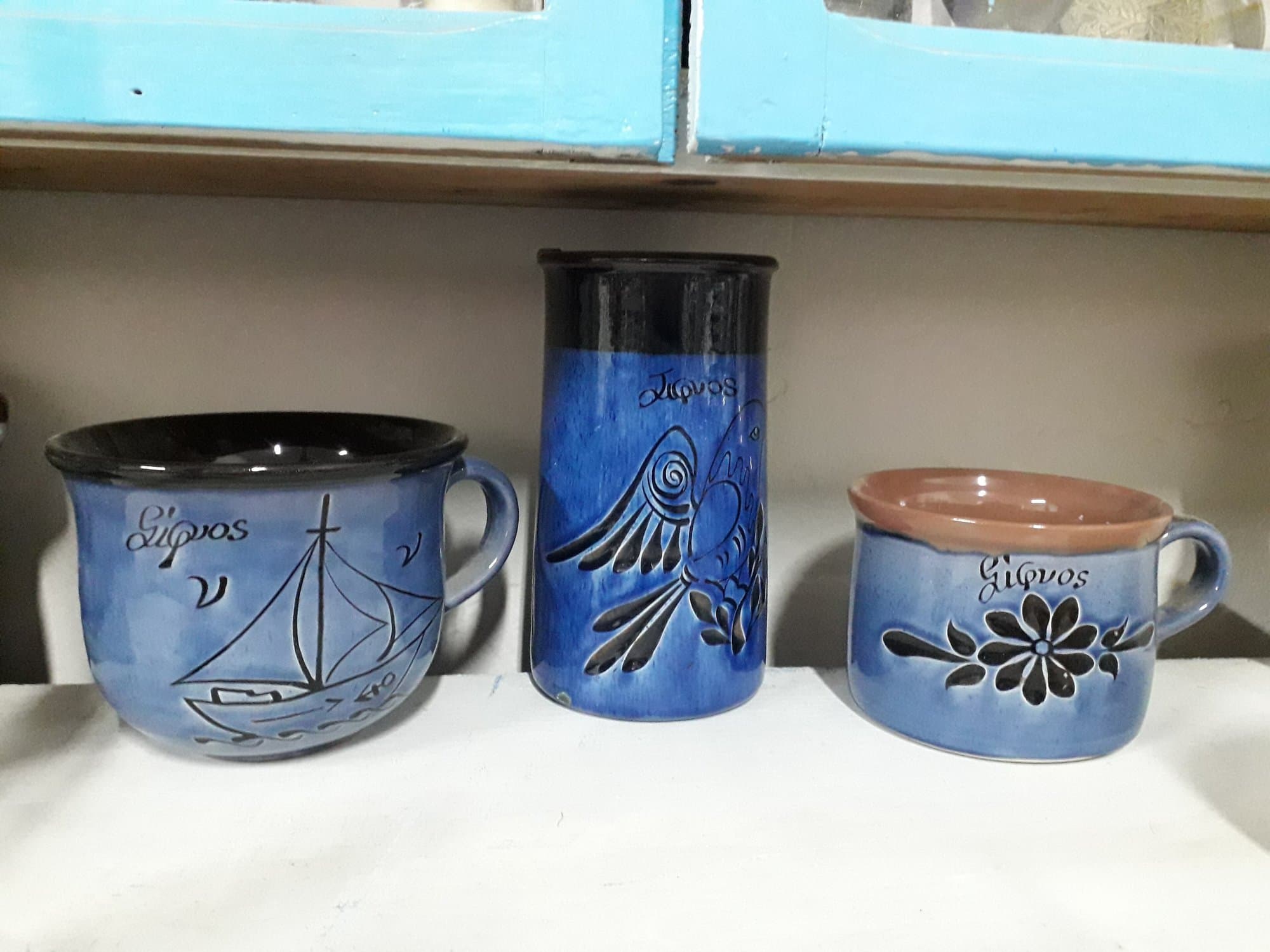
Pottery made on Sifnos

Potters by the sea

Sifnos has rich veins of clay, and its potters were once so well known across the Aegean that 'a Sifnian' could simply mean a potter. They made the clay pots for revithada and mastelo, and the chimney pots on the roofs. Workshops still work at Kamares, Vathi, Platis Gialos, Artemonas and Cherronisos.
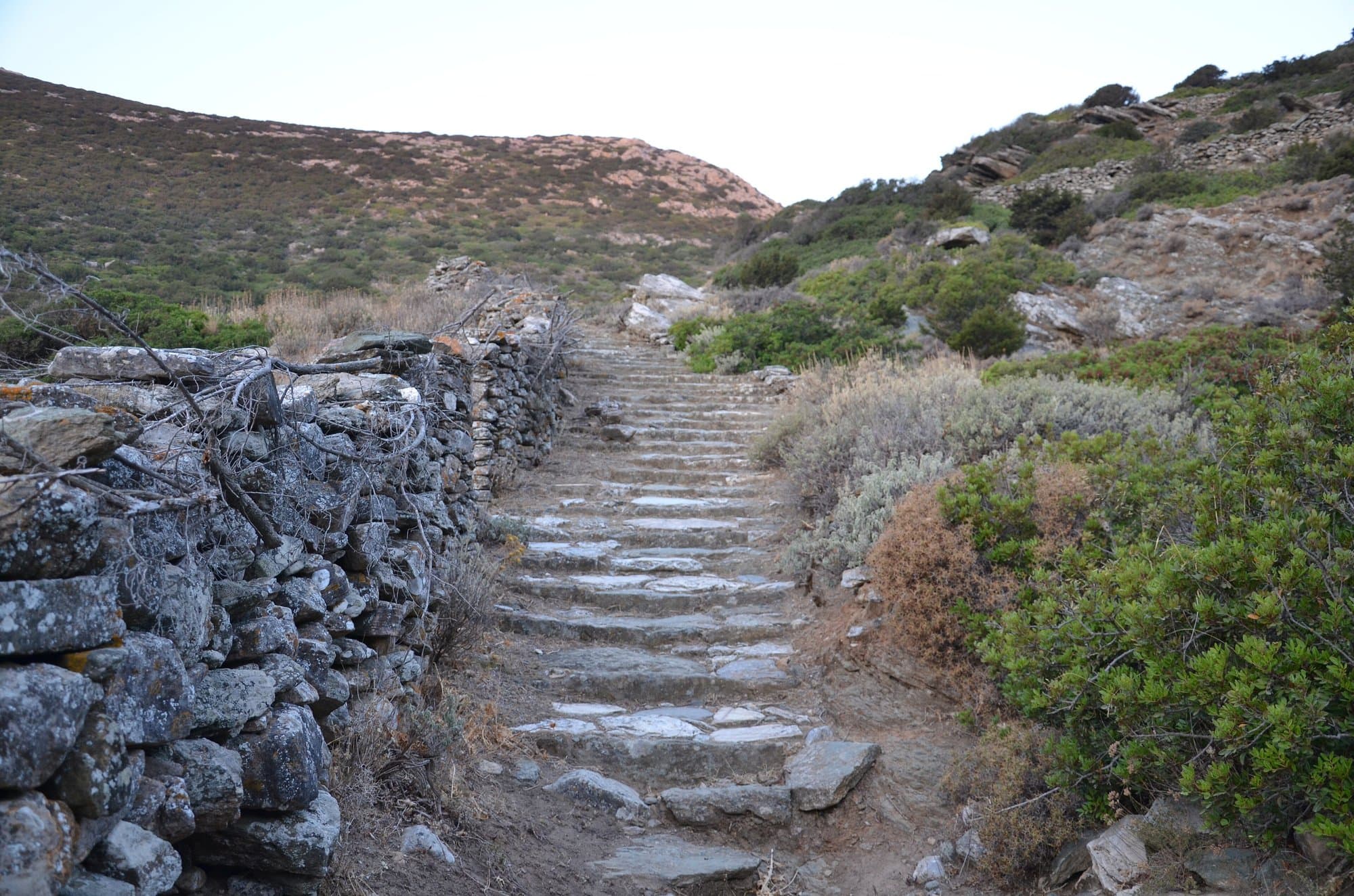
A stone footpath across the hills of Sifnos

Some 200 km of paths

Old stone and marble paths, some of them thousands of years old, link every village, monastery and bay. About 200 km of them are cleared and signposted as the Sifnos Trails, with 19 marked routes past dovecotes, wells, windmills and chapels.
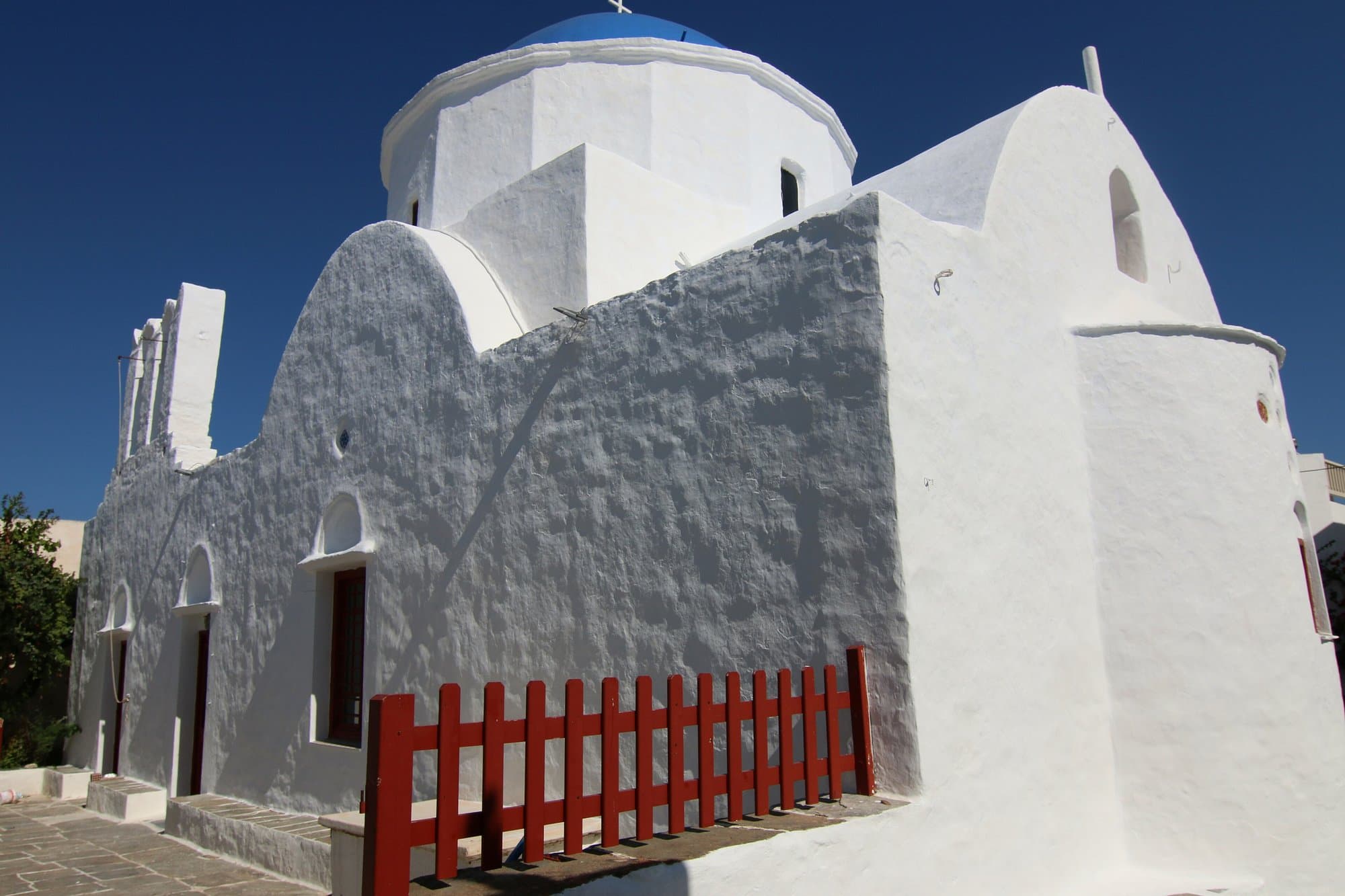
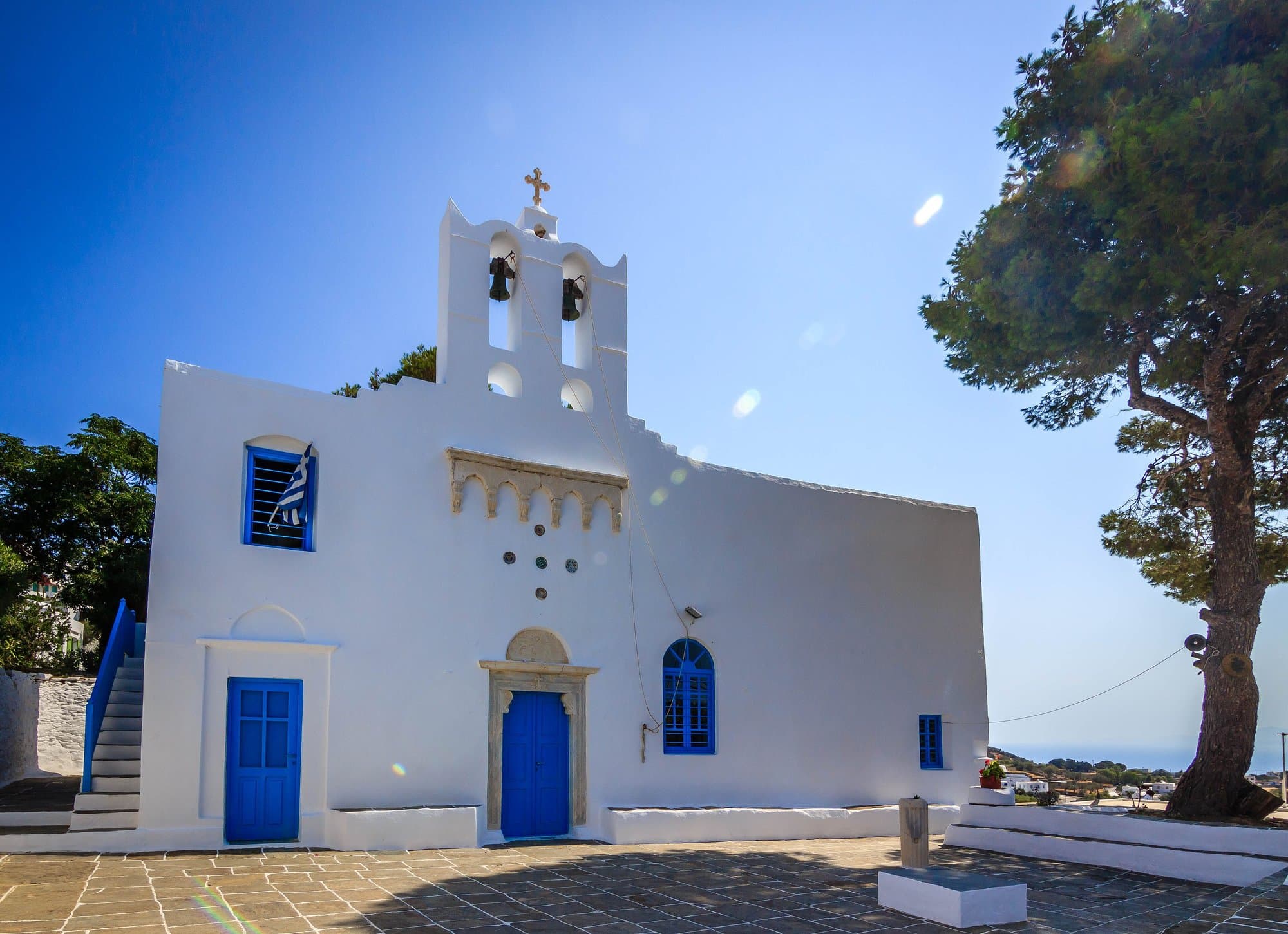
A whitewashed church on Sifnos

A chapel on every hill

Islanders like to say there is a church for every day of the year; the count is more than 230. Each has its feast day, the panigyri, often with a shared meal after the service. The greatest is at Chrysopigi on Ascension Day.
A whitewashed lane in Apollonia

“When the prytaneum on Siphnos is white, and white-browed the market, then a wise man is needed: beware a wooden ambush and a red herald.”

The oracle of Delphi to the Siphnians, as told by Herodotus

Towns & villages

Where you'll fall for Sifnos

All towns & villages
View of Apollonia, Apollonia & the hill villages, Sifnos
01
Apollonia & the hill villages

Apollonia

The white capital on the hills, where every evening ends on the Steno

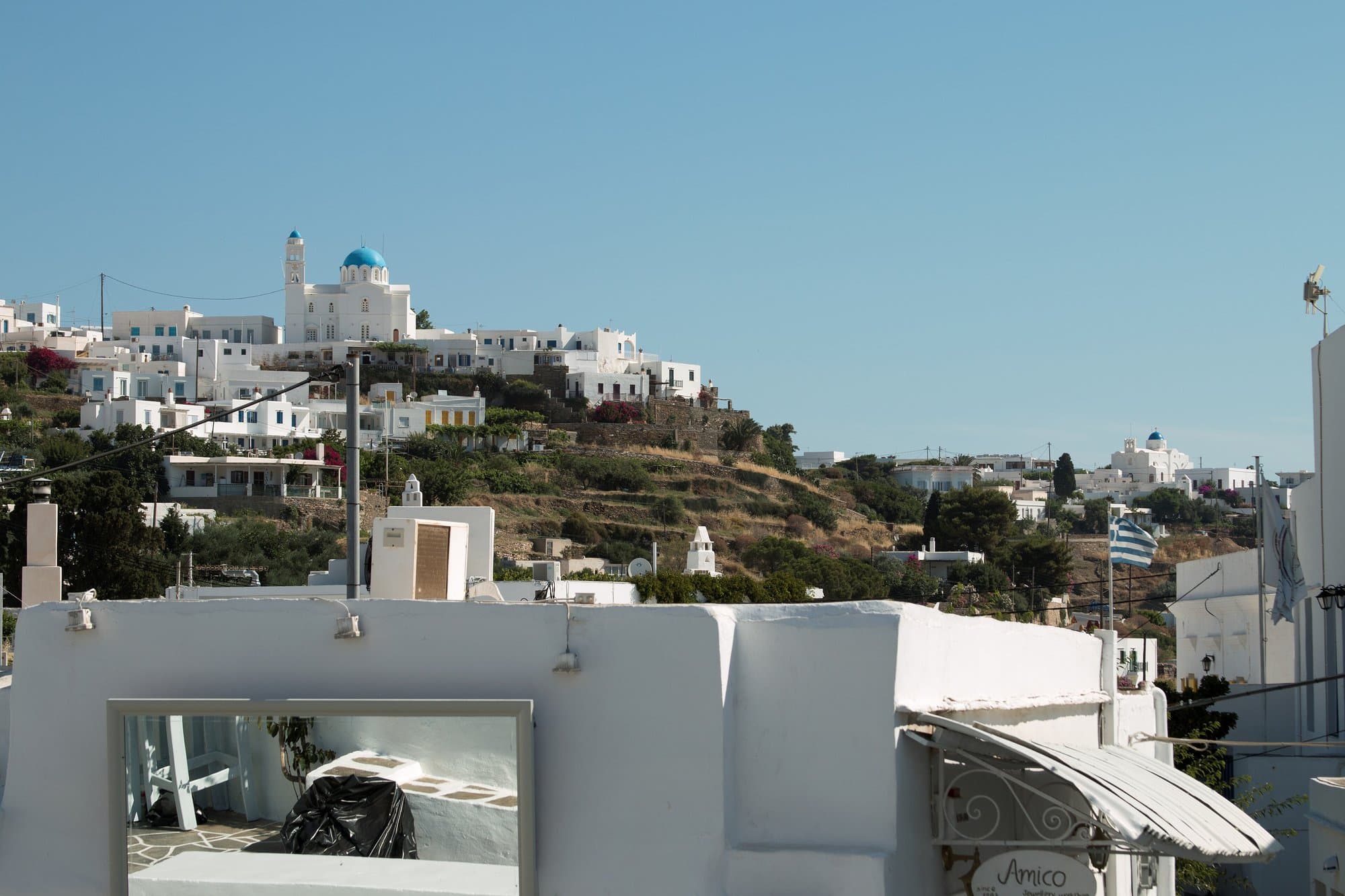
Apollonia is the capital of Sifnos, a white village spread over three low hills in the middle of the island. Its main lane, the Steno, is a narrow marble-paved street of shops, cafes and small bars that fills up after dark. Around it are quiet lanes of whitewashed houses with blue doors, churches on every corner, a square with the Folklore Museum, and paths that lead out across the fields to Artemonas, Kastro and Exambela. It is the best base for a first visit: everything on the island is a short drive or a walk away.

  • An evening walk along the Steno
  • The Folklore Museum on Iroon Square
  • The paths to Artemonas and Kastro
  • Sweets and coffee by the bus stop
  • Sunset from the hill of Agios Symeon nearby
Discover Apollonia
View of Artemonas, Apollonia & the hill villages, Sifnos
02
Apollonia & the hill villages

Artemonas

The village of mansions and windmills, with the finest view on the island

Artemonas sits on the hill just north of Apollonia, a short walk along the lanes. It is the most elegant village on Sifnos: next to the white Cycladic houses stand neoclassical mansions with gardens and painted doorways, built by island families who made their money at sea and abroad. Above the village are the old windmills, and from the top you look down over the white villages, the fields and dovecotes to Kastro and the sea. It is quieter than Apollonia, with a small square, a much-loved bakery and a few good places to eat. The poet Ioannis Gryparis was born on Sifnos, and the village's small folk exhibition keeps a few of his things.

  • The windmills above the village
  • The mansions and their gardens
  • The view to Kastro and the sea
  • Sweets from the village bakery
  • Small plates on the square in the evening
Discover Artemonas

Things to do

Moments to collect

A table of Sifnian dishes

Food & wine

Sunday revithada

On Sunday, order the chickpeas that have baked all night in a clay pot in the wood oven, soft and sweet with onion and olive oil. Some tavernas make them every day in summer.

Tavernas across the island

Pottery made on Sifnos

Culture

Watch a potter at the wheel

Visit one of the island's workshops to see the clay pots for revithada and mastelo being thrown, and take one home.

Kamares, Vathi, Platis Gialos, Artemonas

A stone footpath across the hills

Hike

Walk the Sifnos Trails

Pick one of the 19 signposted routes: Apollonia to Kastro in about an hour, Faros to Chrysopigi along the shore, or the long climb to Profitis Ilias. Spring and autumn are best.

All over the island

Good to know

Before you fall for Sifnos

Sifnos is a small island in the western Cyclades, about 74 km² of terraced hills, with a string of white villages along its spine and a handful of sandy bays around the coast. In ancient times its gold and silver mines made it the richest island in the Aegean, rich enough to build a marble treasury at Delphi. Today its wealth is quieter: more than 230 churches and chapels, some 200 km of old footpaths, potters still working their clay, and a kitchen so respected that the man who wrote Greece's best-known cookbook was born here. There is no airport, and that keeps the pace slow.

Area
≈ 74 km²
Population
≈ 2,800
Highest point
Profitis Ilias, ≈ 680 m
Airport
None, ferries to Kamares
  • Couples
  • Food
  • Walking
  • Villages

From silver mines to the white villages

Some of the oldest silver mines in the world, a Mycenaean acropolis, a treasury at Delphi, Venetian lords in Kastro, then Ottoman rule, the War of Independence and a new capital at Apollonia.

Walk through the story