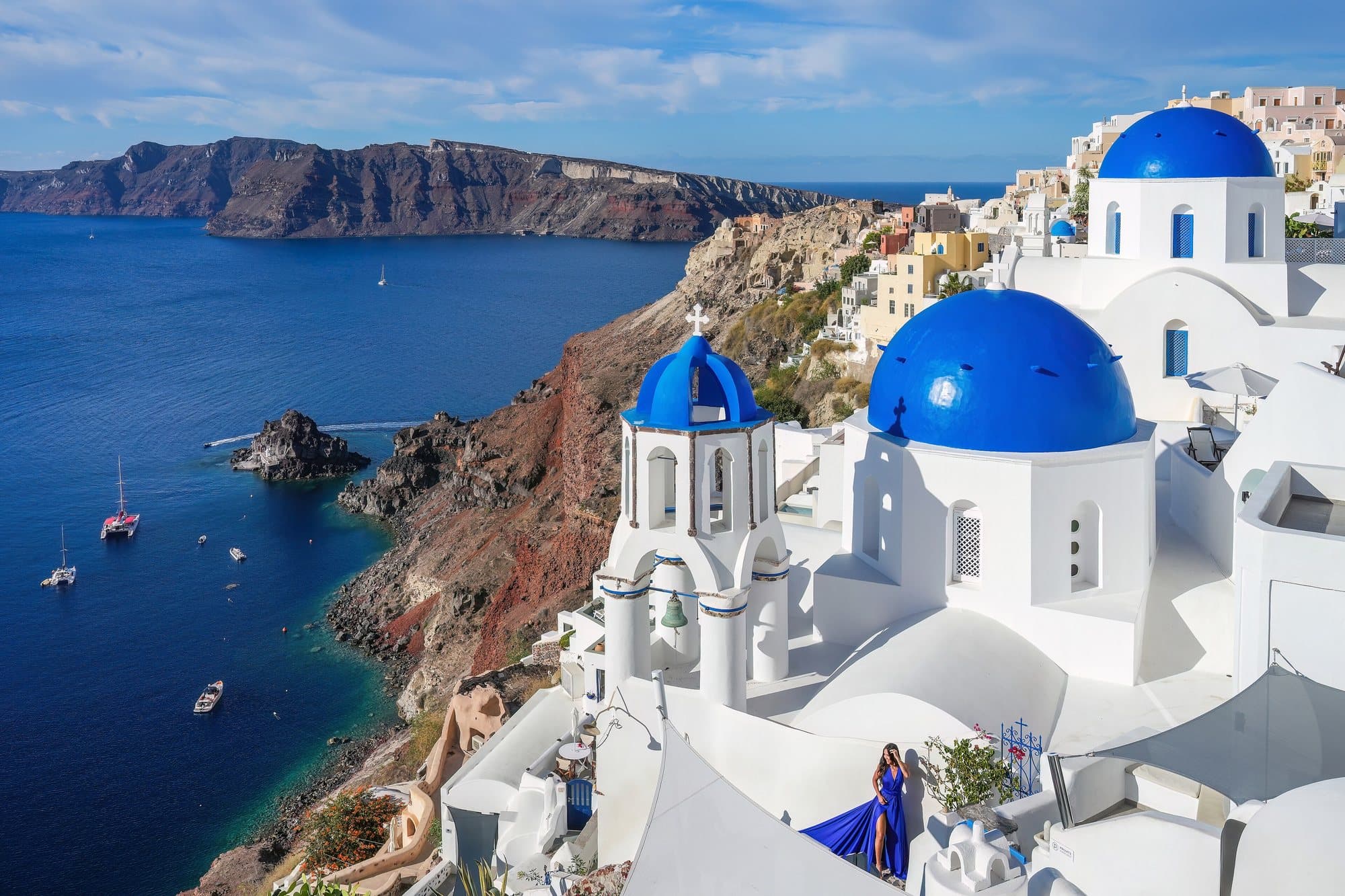
Villages on the rim of a volcano
The villages of the caldera are built along the top of cliffs that drop 300 m to a flooded crater, many of their homes dug into the soft volcanic rock as cave houses.
Σαντορίνη · A ring of cliffs around a drowned volcano, with white villages on the rim
Wake above a flooded volcano, walk the caldera rim at first light, swim off black sand, taste wine from vines older than the villages, and watch the sun go down over the sea from a quiet terrace.
Greetings from Santorini
Santorini
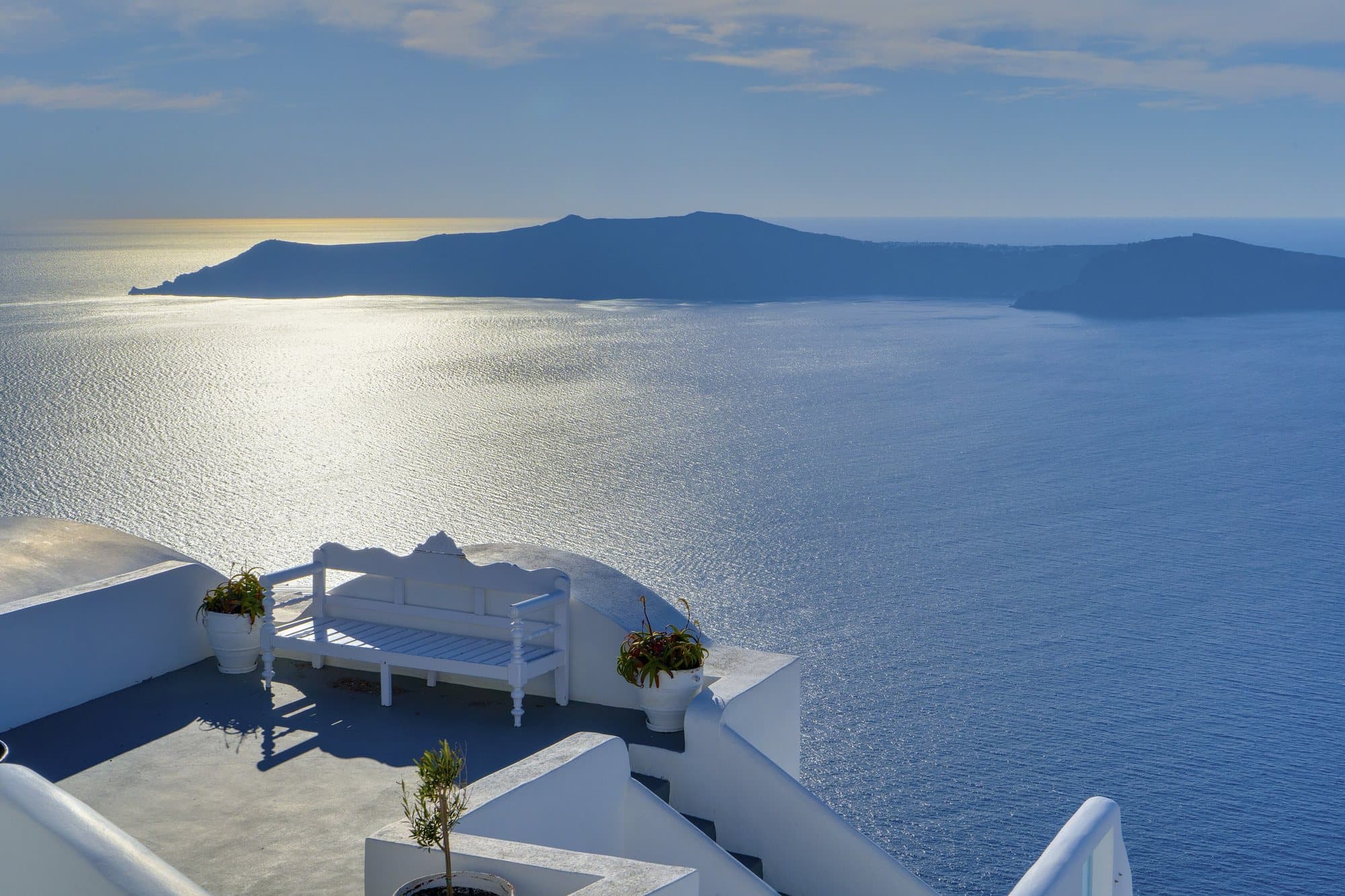
We had our coffee on a terrace hanging over the crater, with the sea three hundred metres below and the volcano floating in the middle like a sleeping animal. By noon we were in a cool cave of a winery, tasting a wine made from vines the size of baskets. Tonight we skipped the crowds and climbed to the castle of Pyrgos. The whole caldera went pink, then gold, and somewhere below a church bell rang.
Hour by hour
The caldera at first light, a Bronze Age town and a wine cave by day, and a sunset away from the crowds.
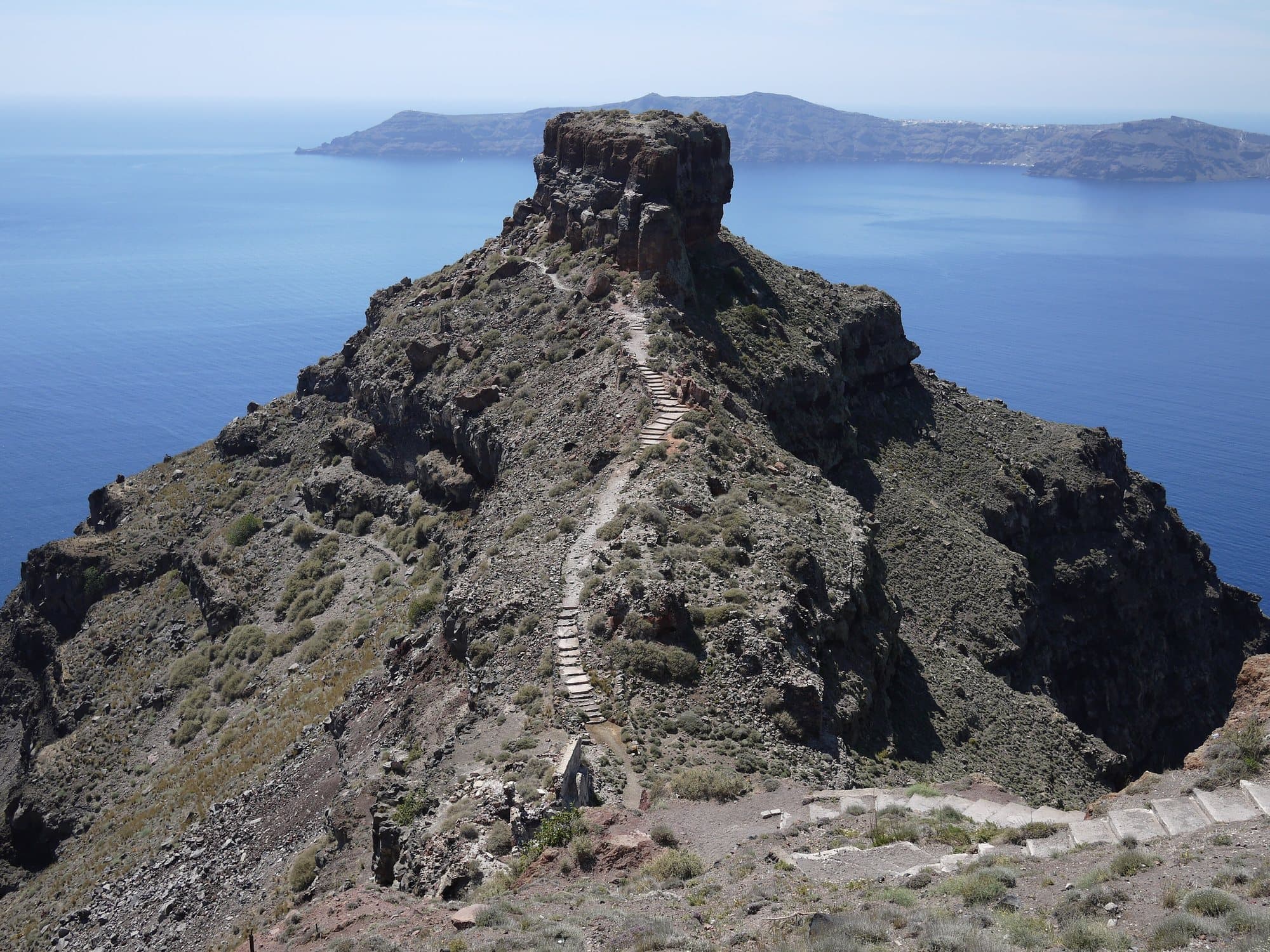
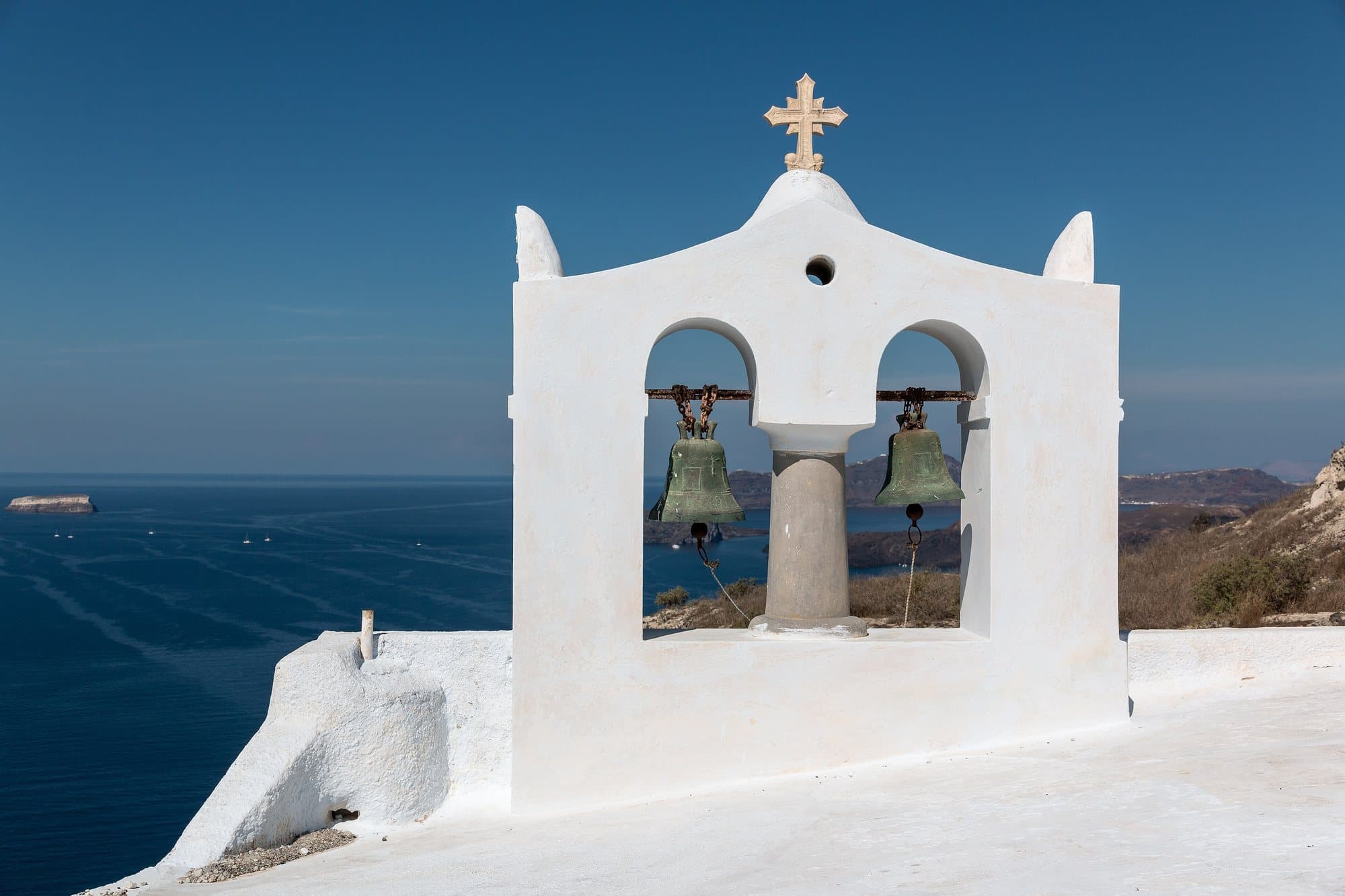
Walk out of Imerovigli towards the rock of Skaros while the caldera is still and the cliffs turn pink. At this hour the path is yours.
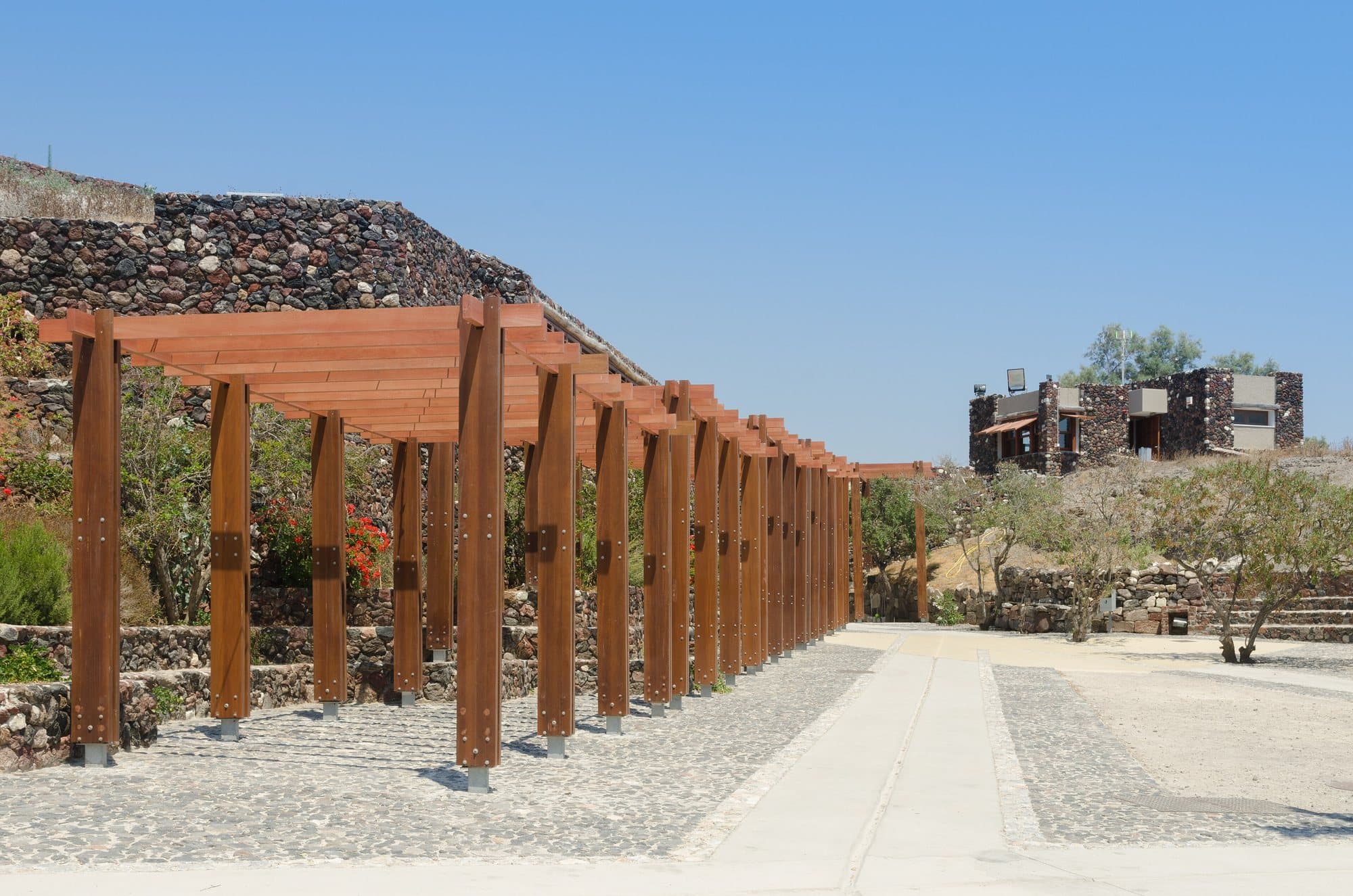
Drive south to Akrotiri and walk the streets of a Bronze Age town, its houses still two and three storeys high under a great roof.
Head into the vineyards to Megalochori for lunch in the lanes, with a glass of crisp Assyrtiko.
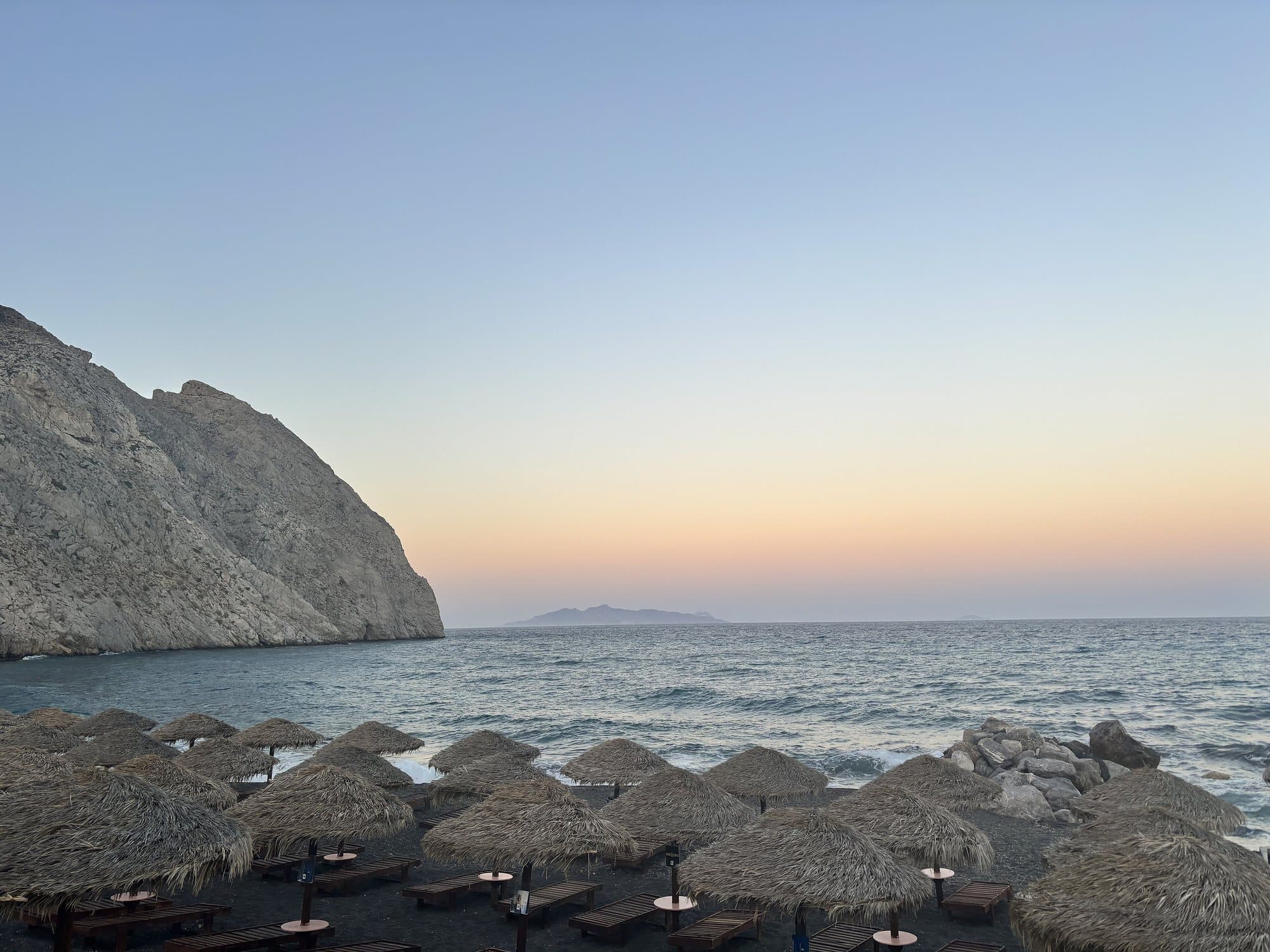
Cross to Perissa on the east coast and swim off the long beach of volcanic sand, under the rock of ancient Thera.
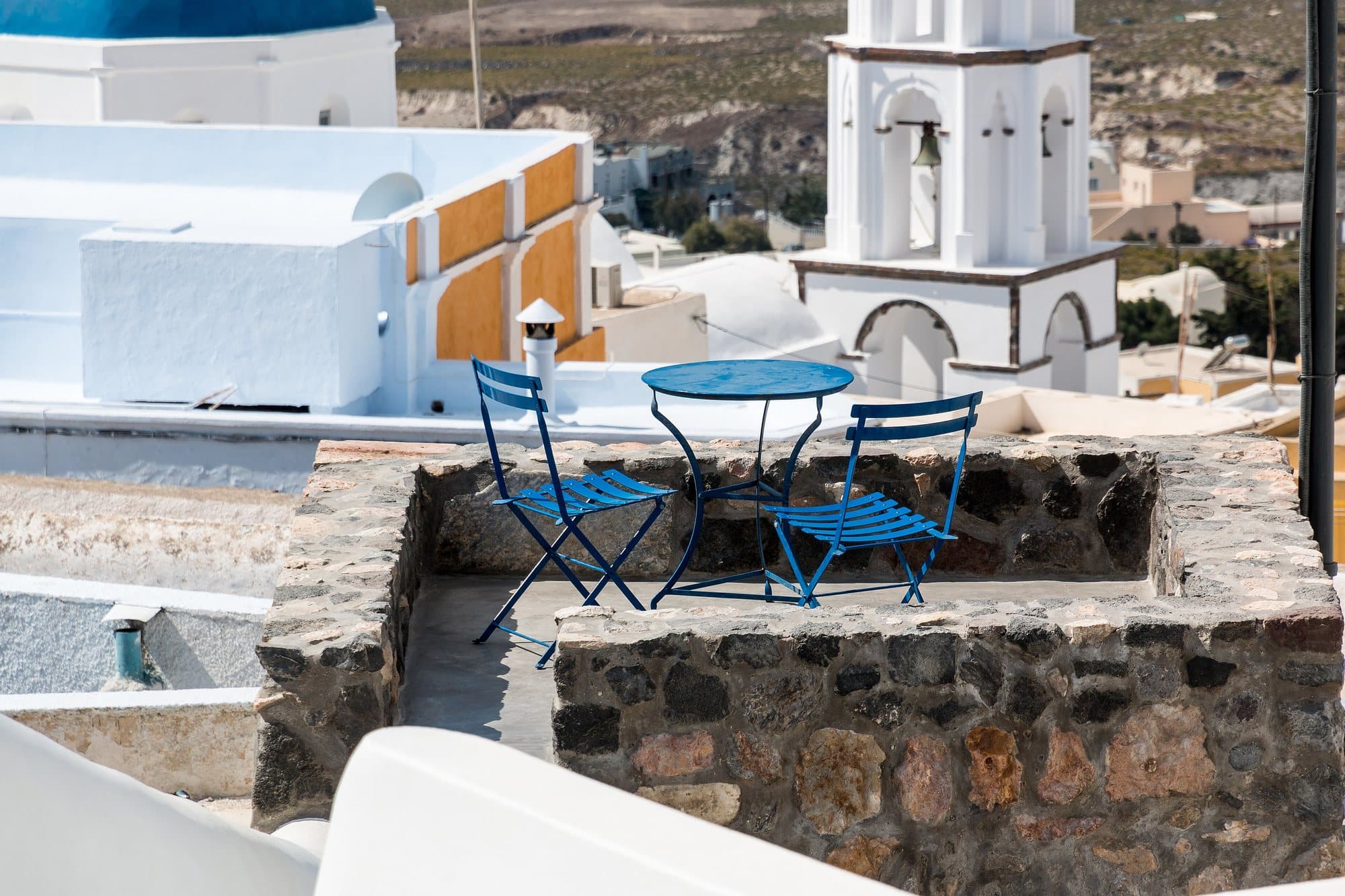
Skip the crowds of Oia and climb the lanes of Pyrgos to the top of the old castle, where you can watch the sun set over the whole caldera.
Stay up in the village for dinner on a terrace, and drive home under the stars.
Where to stay
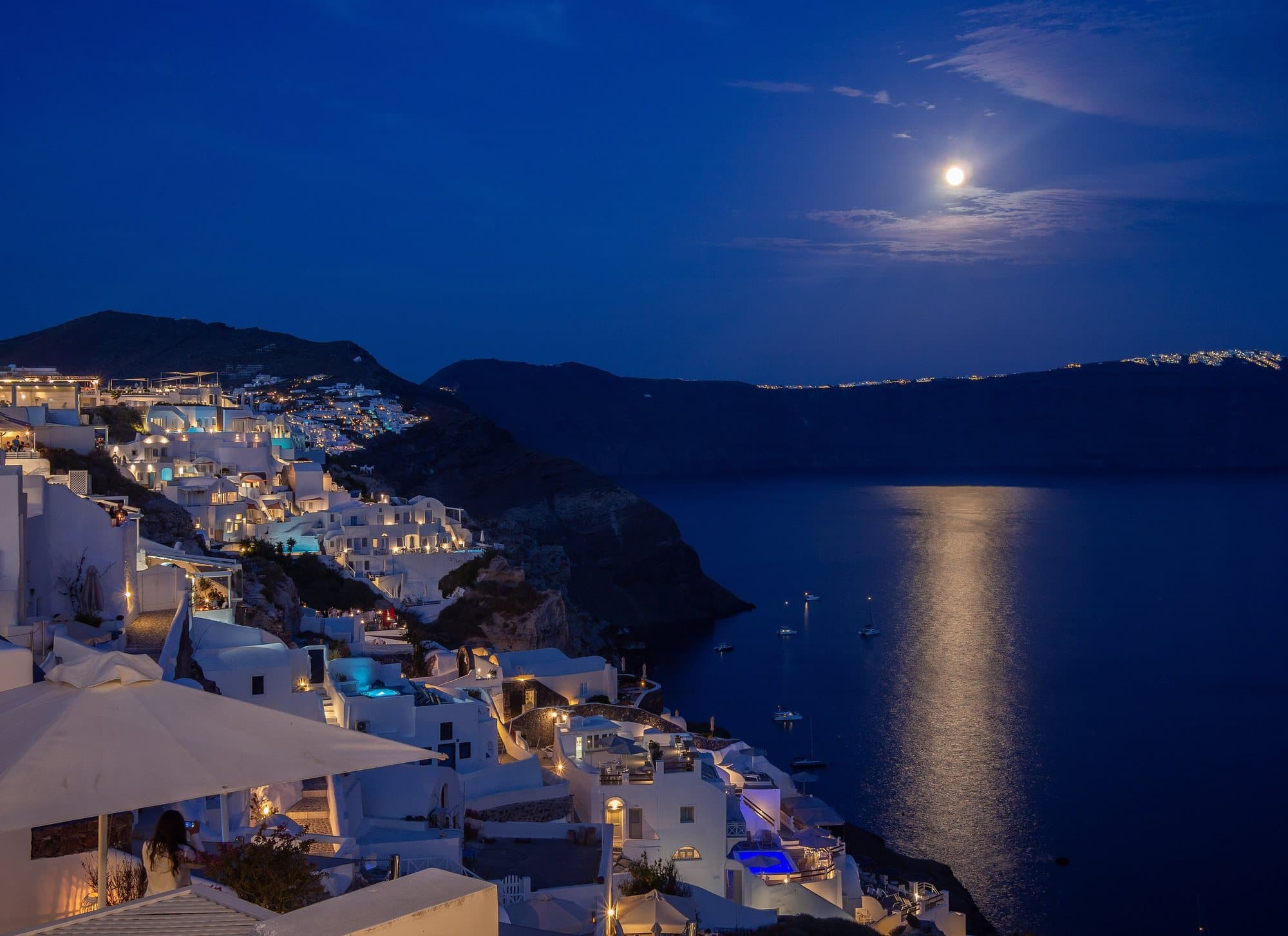
Oia
Chelidonia Traditional Villas · Traditional cave houses · €€€
Oia
Esperas · Caldera houses & suites · €€€
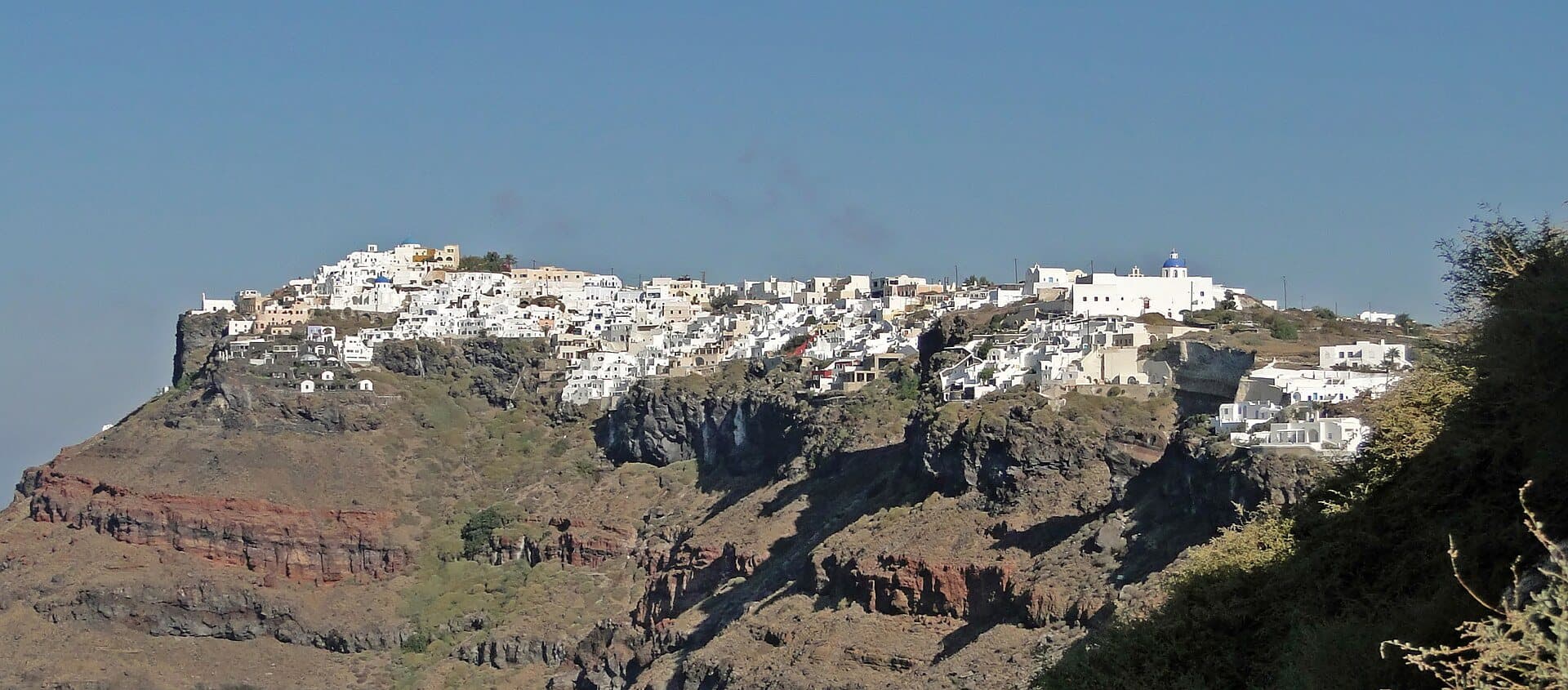
Imerovigli
Astra Suites · Caldera suites · €€€
Only on Santorini
What makes Santorini unlike any other island in the Aegean.
The villages of the caldera are built along the top of cliffs that drop 300 m to a flooded crater, many of their homes dug into the soft volcanic rock as cave houses.
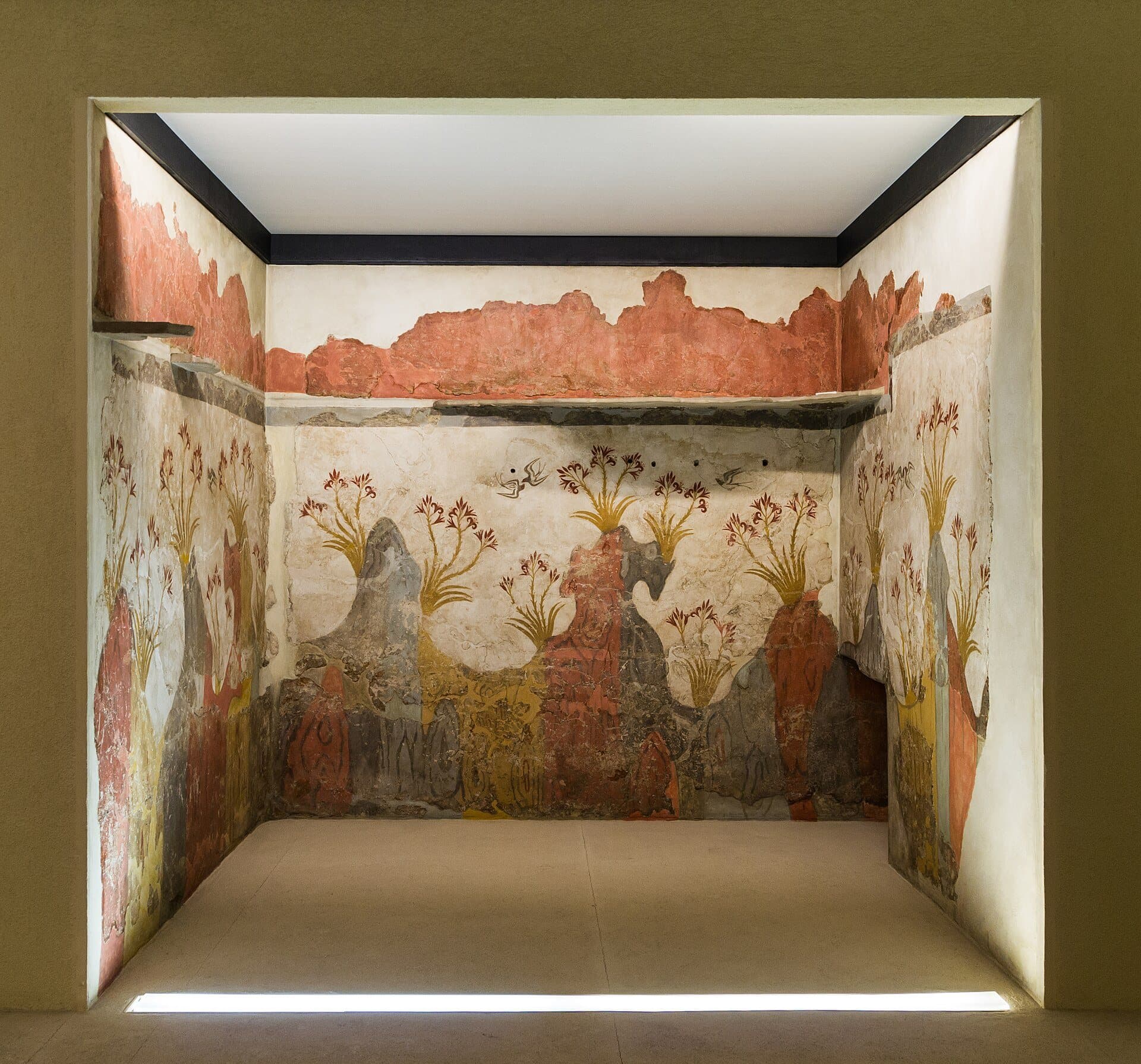
Around 1600 BC the eruption buried Akrotiri, a rich harbour town with ties to Minoan Crete. Its houses still stand, and its frescoes are among the finest paintings of the ancient world.
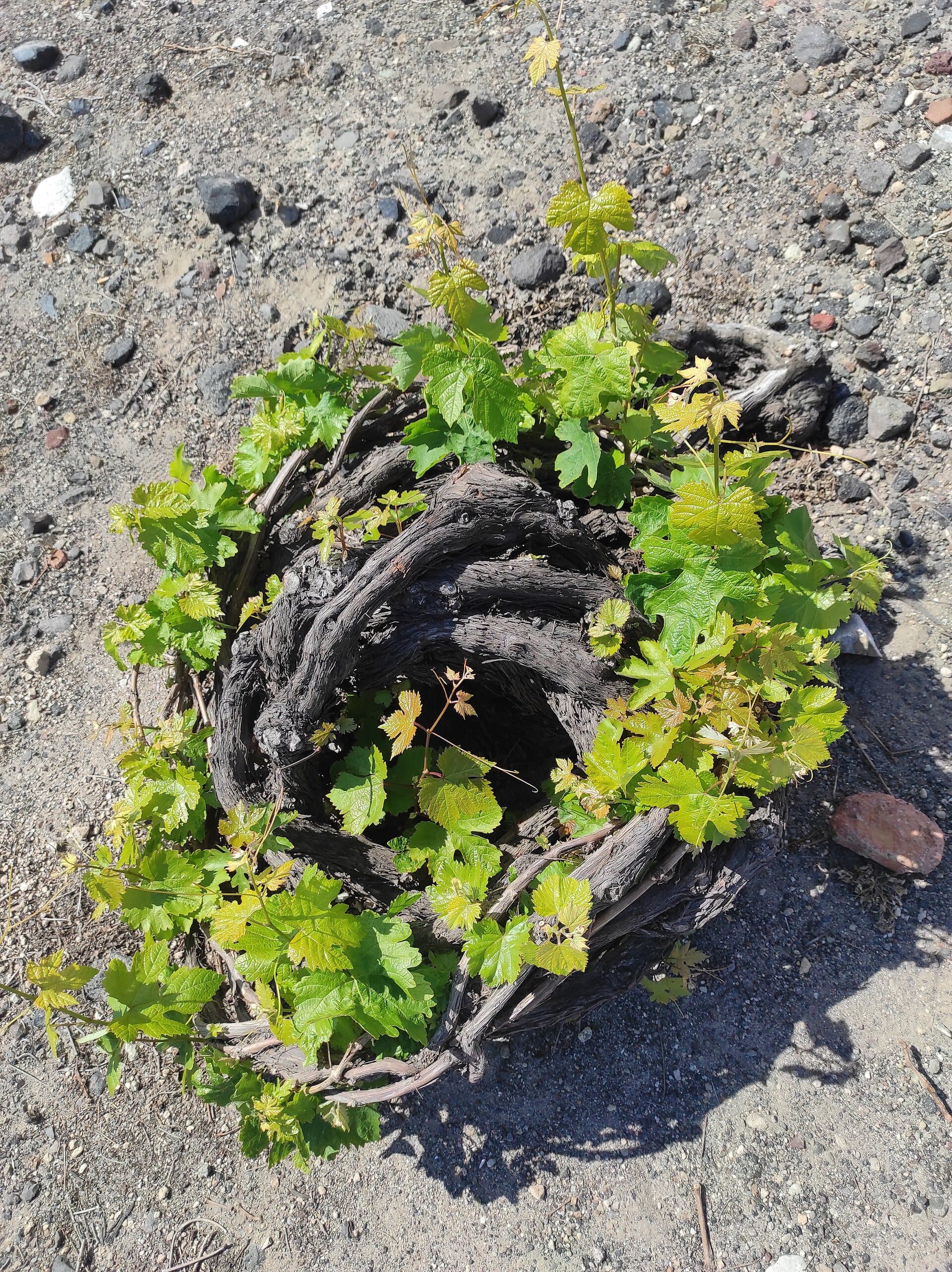
To protect them from the wind, the island's growers twist their vines into low baskets called kouloures. Phylloxera never reached the volcanic soil, so many roots are very old.
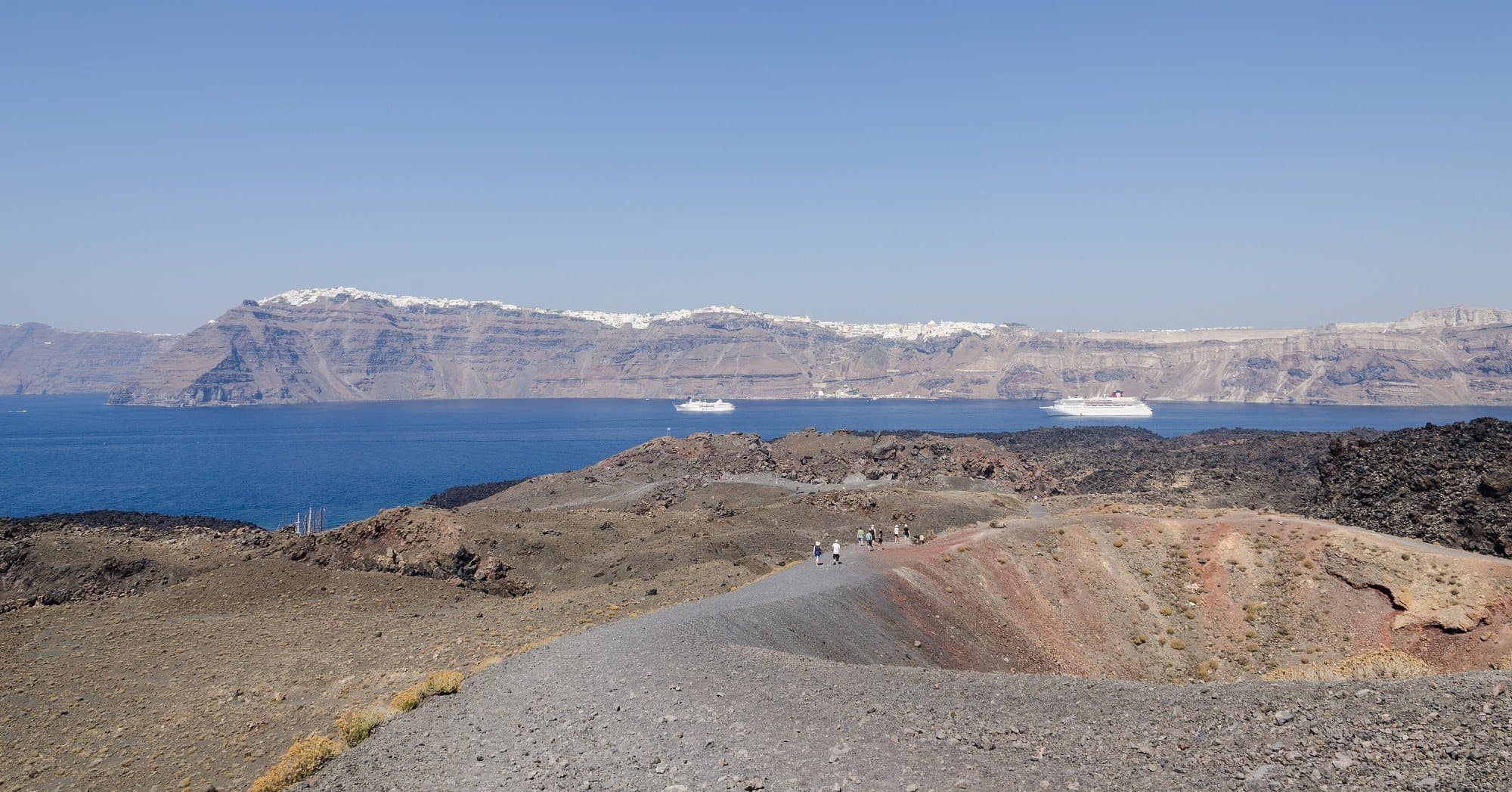
In the middle of the caldera, the black islet of Nea Kameni has grown out of the sea in eruptions since 1707. Boats take you there to walk up to its steaming craters.
Towns & villages
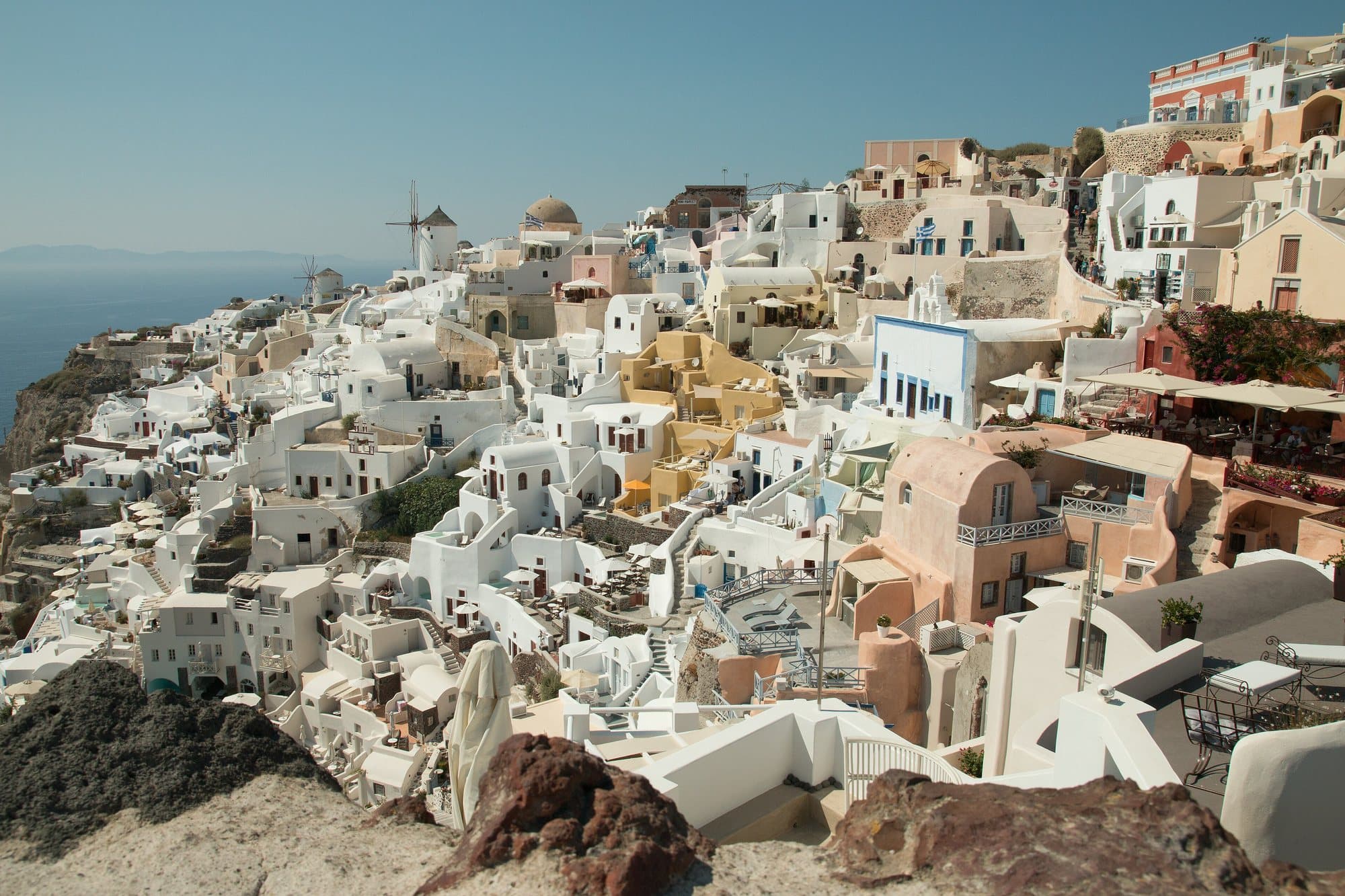
Captains' houses and blue domes at the tip of the caldera
The village at the northern tip of Santorini, where white cave houses, blue domes and the mansions of old sea captains spill down the cliff. Below it, some 300 steps lead to the little harbour of Ammoudi, and at its end the ruins of a Venetian castle look out over the open sea. It is the most famous sunset on the island, so come for the mornings too, when the lanes are empty and the light is soft.
The highest balcony on the caldera, quiet at first light
The highest village on the rim of the caldera, between Firostefani and Oia, its name means something like 'day watch', after the lookouts who once scanned the sea from here for pirates. Below it the rock of Skaros juts into the caldera, where the Venetians built their main castle. Come early: in the soft morning light, with the sea still and the cliffs turning pink, you can have the whole view to yourself.
Things to do
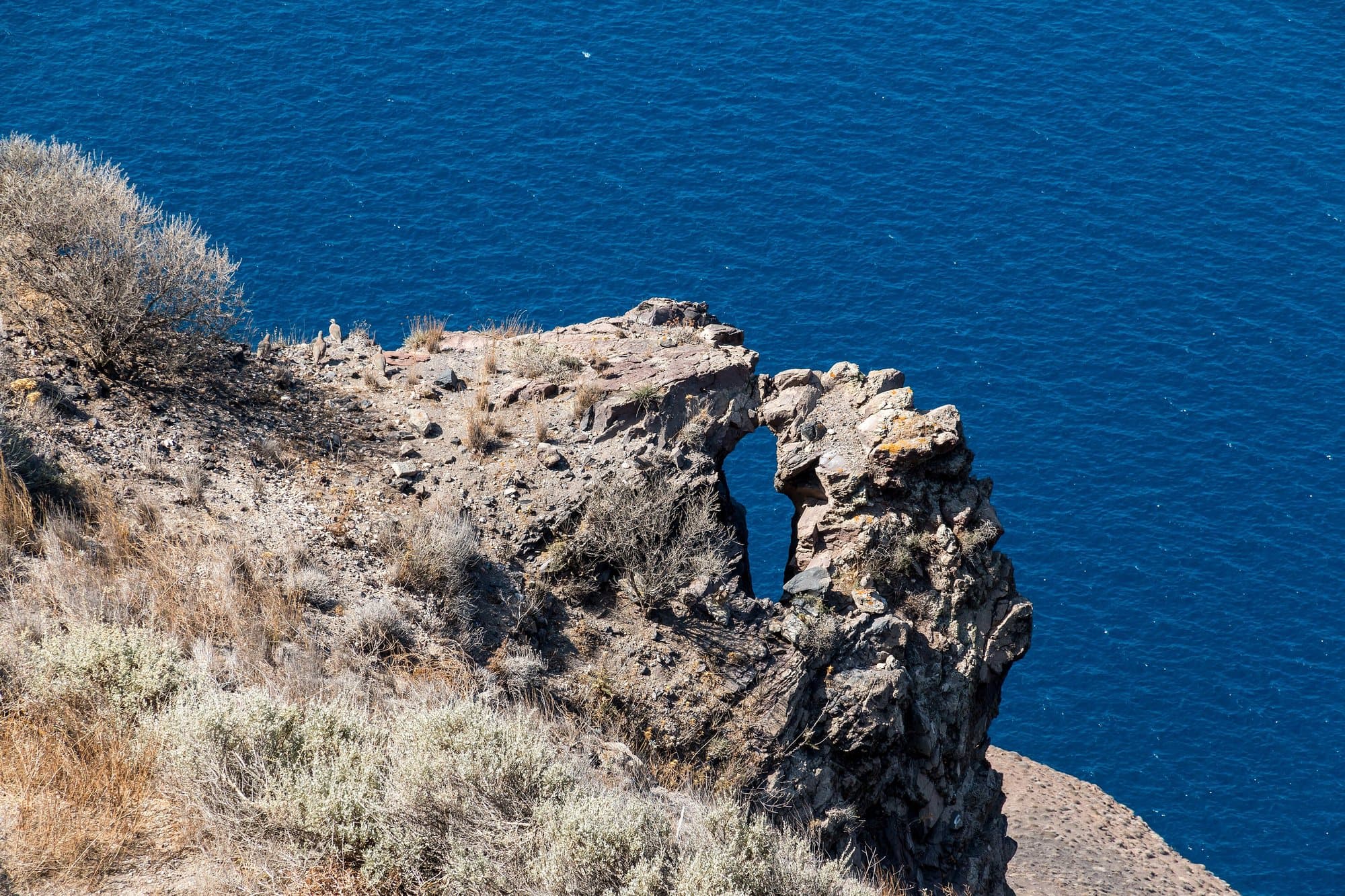
Hike
A path of about 10 km follows the rim through Firostefani and Imerovigli, past Skaros and over the hills to Oia. Allow 3–4 hours, start at dawn, and end with breakfast in Oia before the crowds.
Fira to Oia
Hike
Take the steps down from Imerovigli and the path round the rock to the little chapel of Theoskepasti, with the caldera all around you. Best early in the morning.
Imerovigli
Nature
Boat trips cross to Nea Kameni to walk up to the craters, then swim in the warm, rust-coloured water of the hot springs off Palea Kameni. Sunset cruises are the romantic way to end the day.
From Athinios, Fira old port or Ammoudi
Good to know
Santorini is what is left of a volcano that blew itself apart around 1600 BC. The sea flooded the crater, and what remains is a crescent of cliffs up to 300 m high, with white villages strung along the rim and the dark islets of the volcano still smoking gently in the middle. The east side slopes down to vineyards and long beaches of black sand. Under the ash lies Akrotiri, a Bronze Age town painted with frescoes, a sister of Minoan Crete. The island is small, about 76 km², and famous, so it can be crowded at midday in summer. Come early in the morning or late in the season, stay in a quiet village, and it is as magical as everyone says.
When to go
April, May, late September and October are the most beautiful: warm, quieter and cheaper. July and August are hot and crowded, and cruise ships fill Fira and Oia by day.
Beat the crowds
Do the caldera at sunrise, spend the middle of the day in the wine villages or on the beach, and watch the sunset from Imerovigli or Pyrgos instead of Oia.
How long
Three or four nights give you the caldera, Akrotiri and the wine villages. Add a few days to hop on to Folegandros, Ios or Naxos, or across to Crete.
Getting there
Fly from Athens to Santorini in about 45 minutes, or direct from much of Europe in summer, or take the ferry from Piraeus or Rafina in 5–8 hours.
Flights & ferries
A painted town buried in ash, a Dorian city on a mountain top, Venetian castles against the pirates, an earthquake that emptied the villages, and the wine that never stopped.
Walk through the story