A gate with no temple
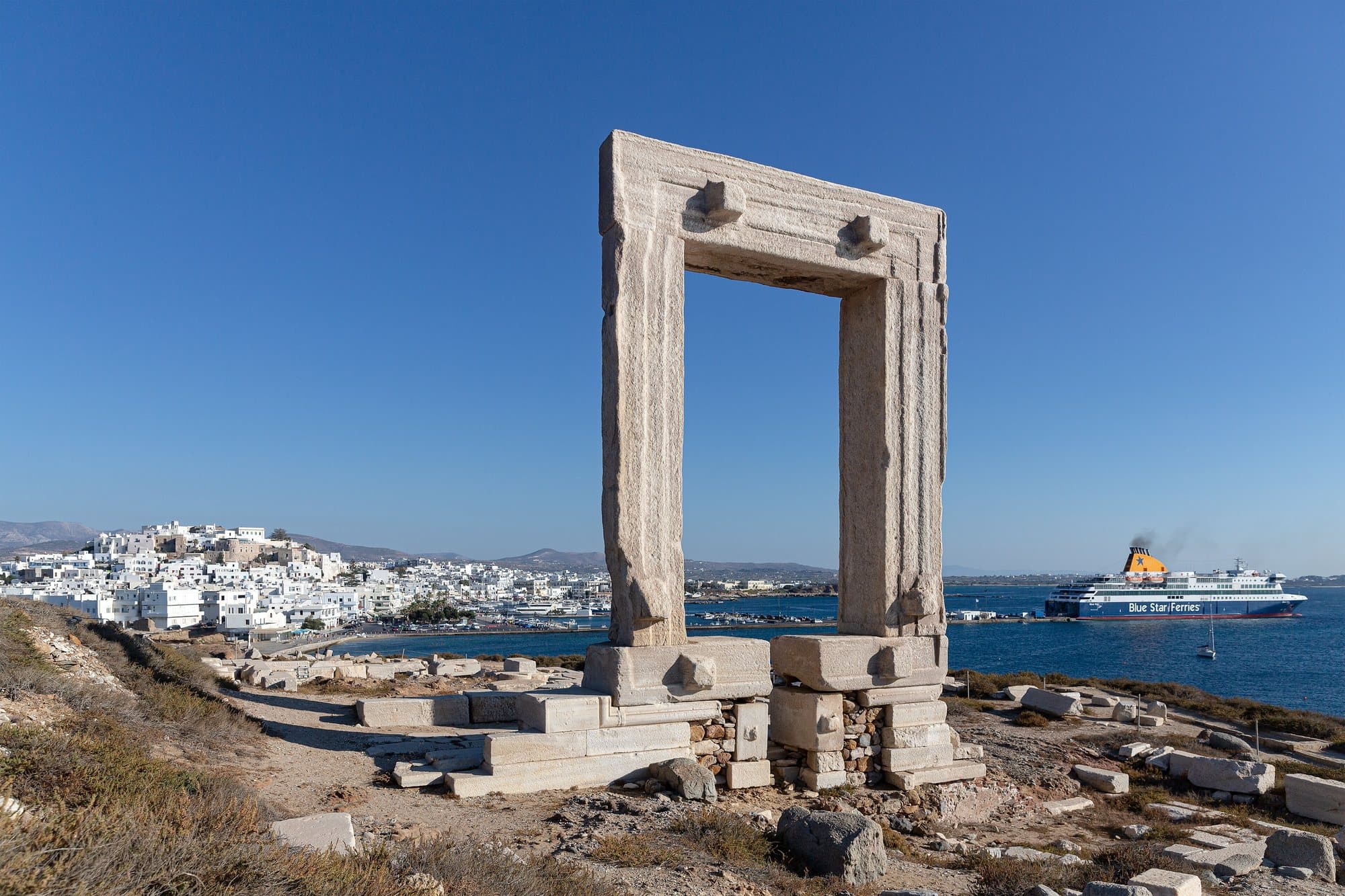
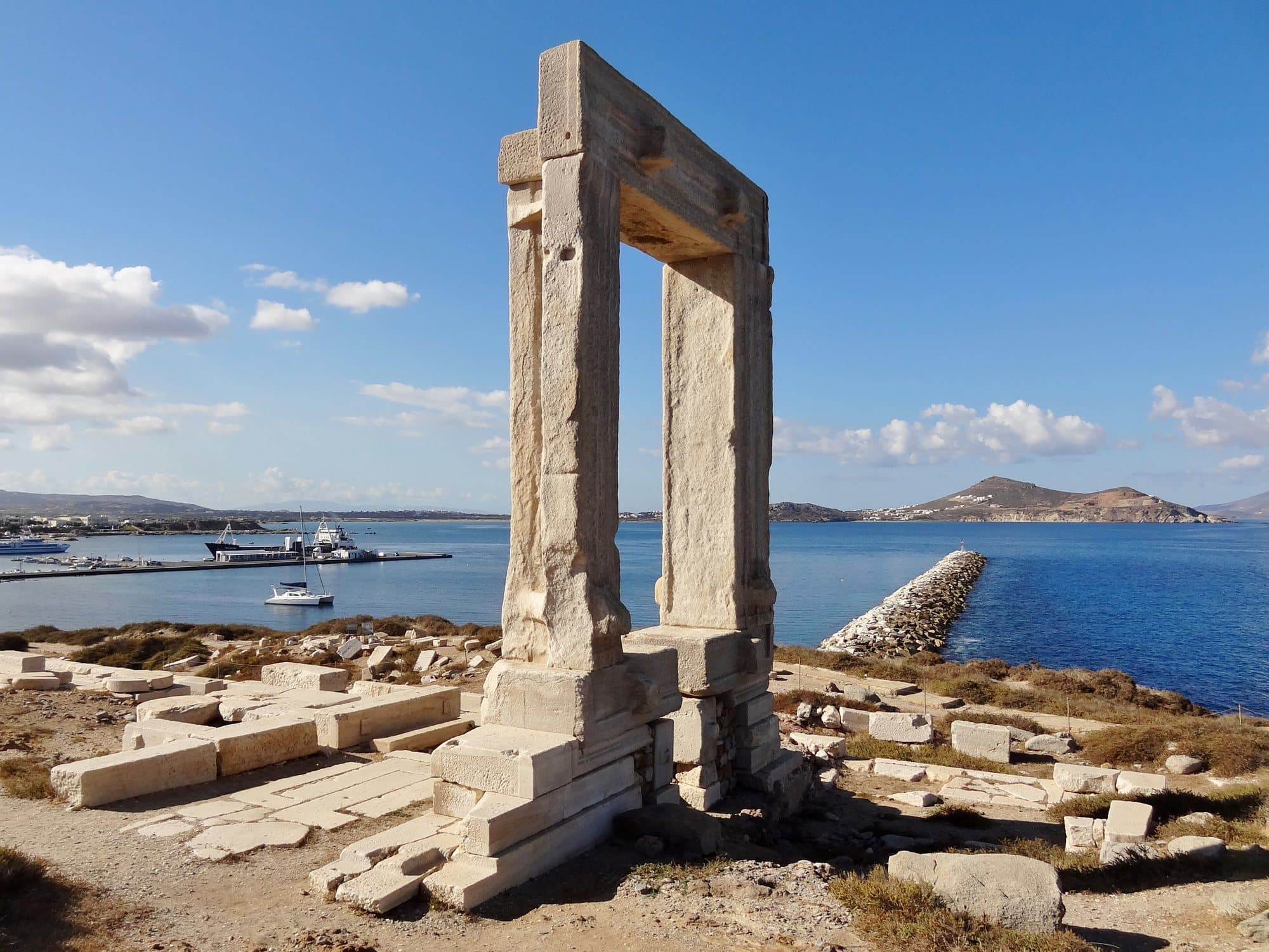
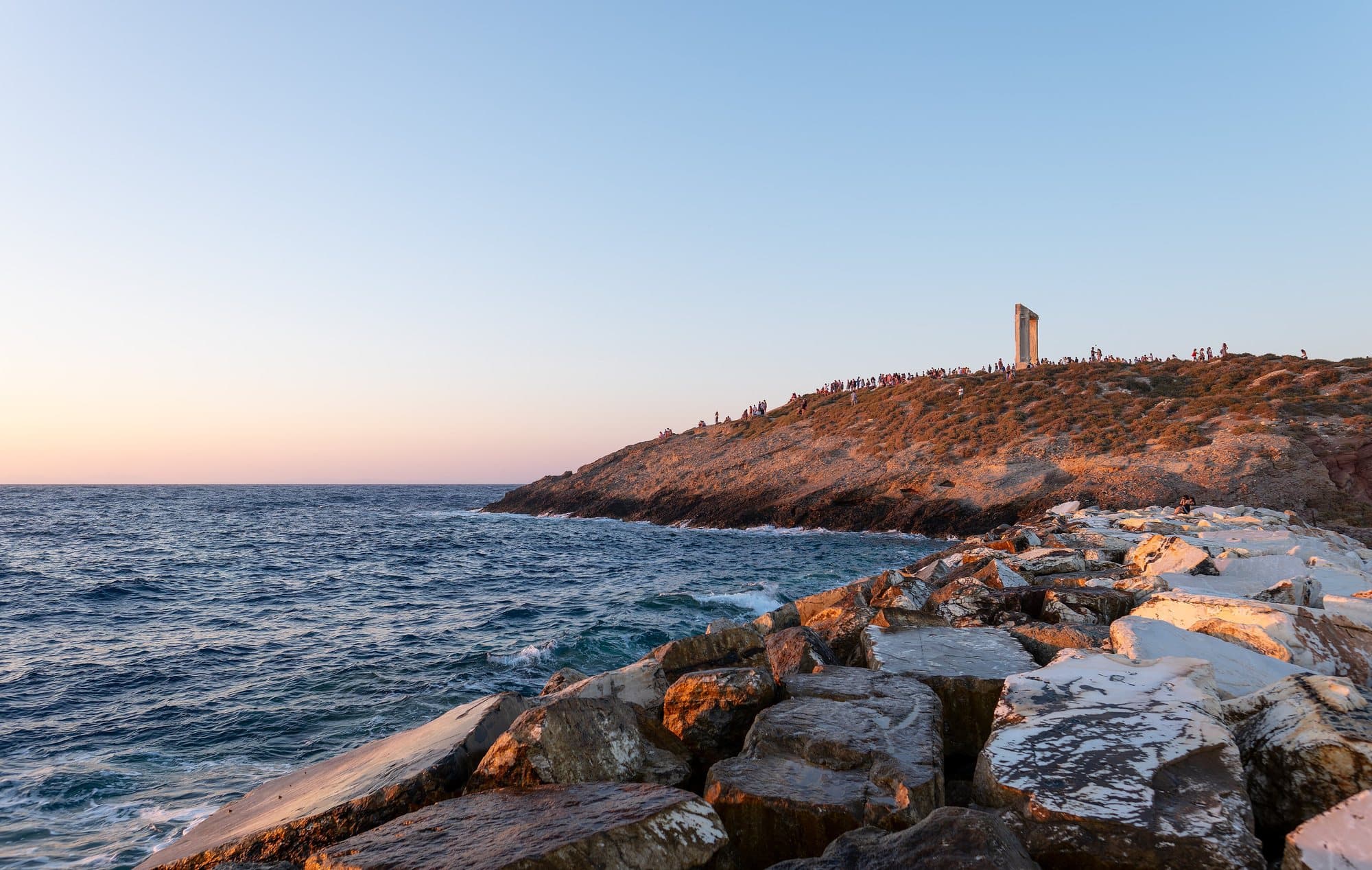
Around 530 BC the tyrant Lygdamis began a vast temple to Apollo on the islet at the harbour mouth. It was never finished, but its marble doorway, the Portara, still stands, and the sunset through it is the island's ritual.
Νάξος · Ariadne's island, with marble villages and long sandy beaches
Watch the sun set through a marble gate of Apollo, walk the lanes of a Venetian castle, swim off miles of sand and eat in mountain villages paved with marble.
Greetings from Naxos
Naxos
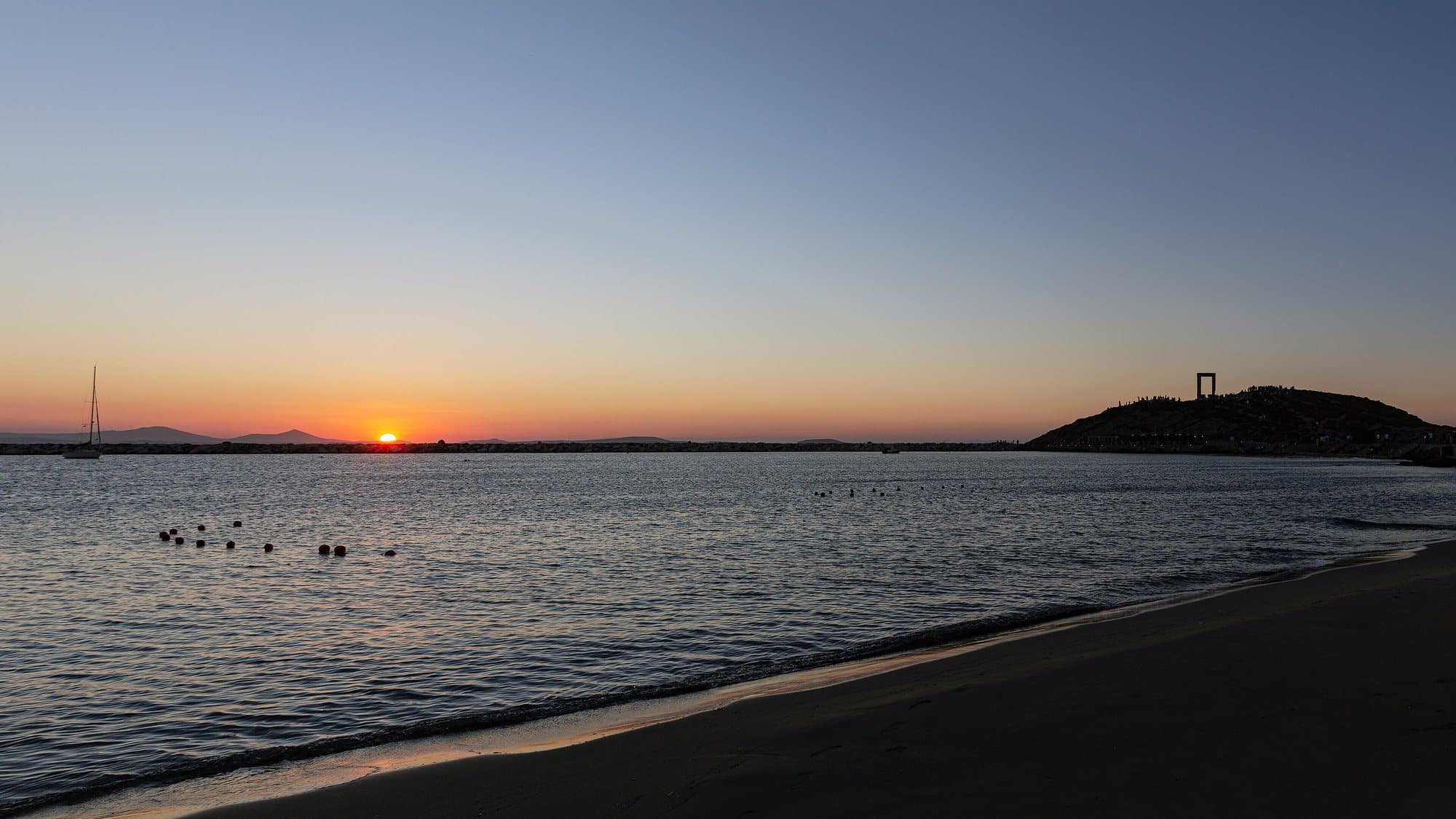
This morning we swam off a beach of white sand so long we could not see the end of it. By lunch we were up in the mountains, in a village where even the streets are marble, eating cheese made over the hill. Now we're sitting on the warm rocks by the Portara, a door with no temple, watching the sun go down behind Paros. Everybody on the island seems to be here with us.
Hour by hour
Sand in the morning, marble villages and kitron in the afternoon, and the sunset at the gate of Apollo.
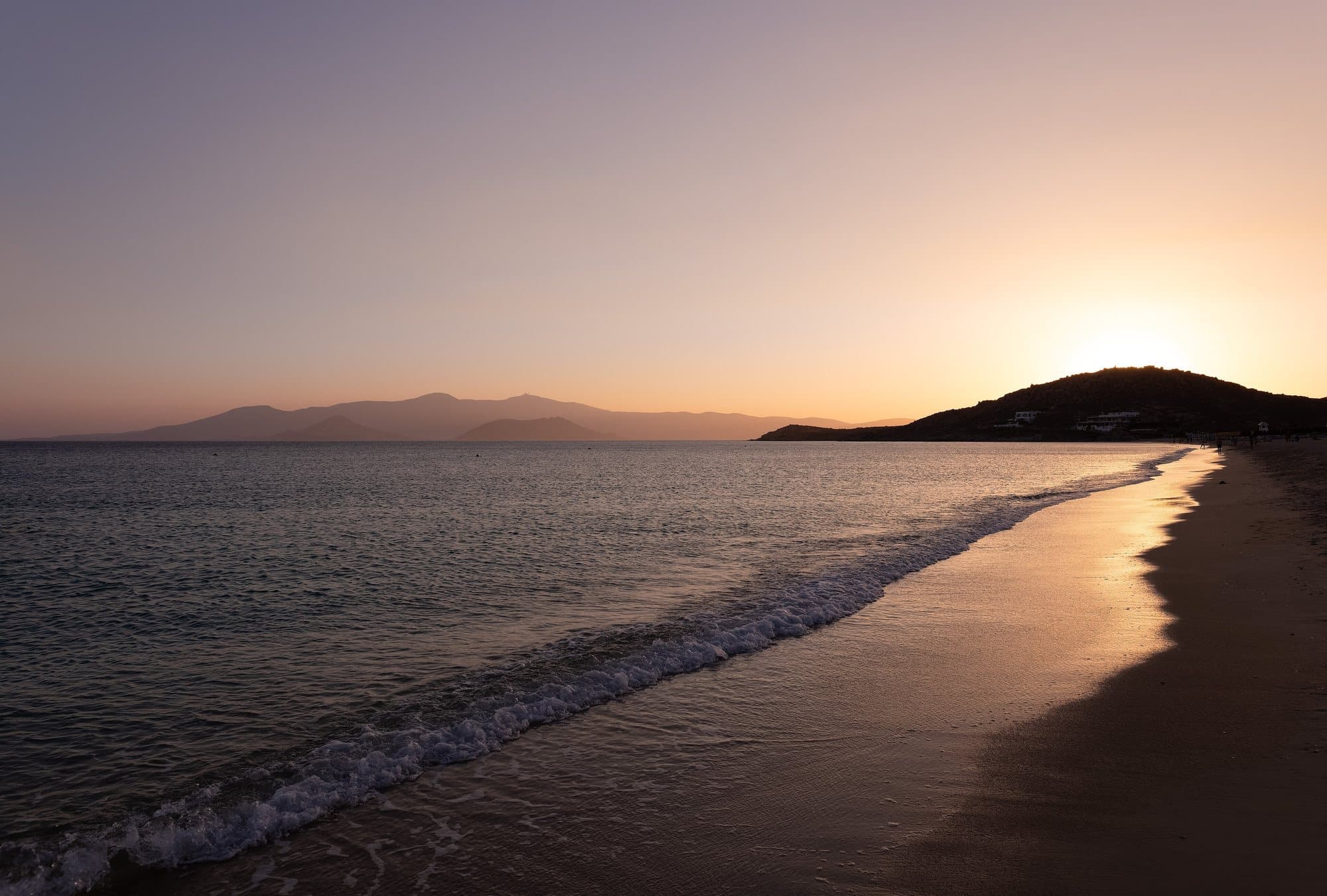
Swim in the calm, clear water of Agios Prokopios before the sunbeds fill up, then have breakfast a few steps from the sand.
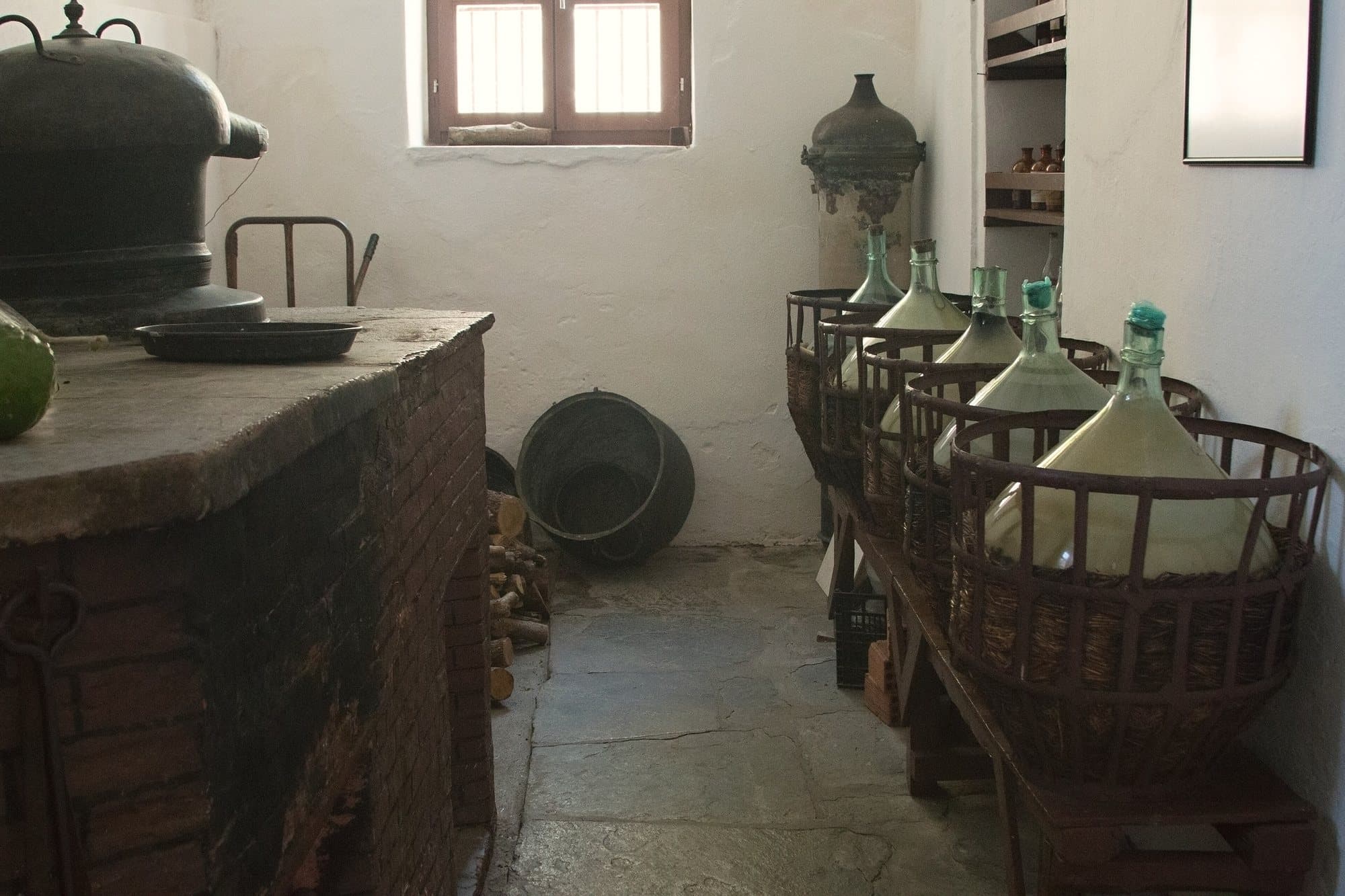
Drive up into the olive valley of the Tragea to Halki. Taste kitron at the old Vallindras distillery, visit the Byzantine church of Panagia Protothronos, and stay for lunch in the lanes.
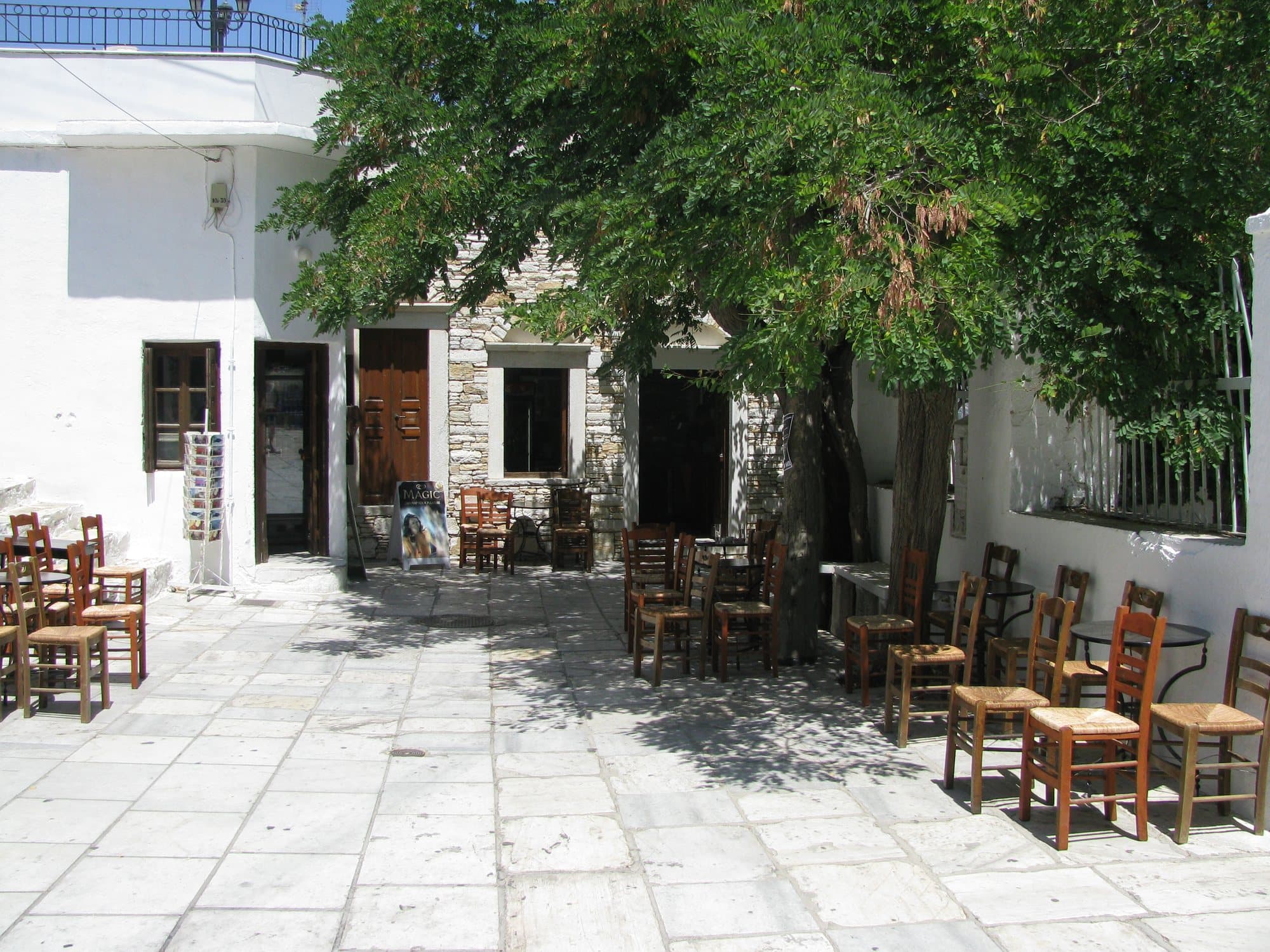
Go on to Apiranthos, walk its marble lanes, and have a coffee and a sweet on a small square under the trees.
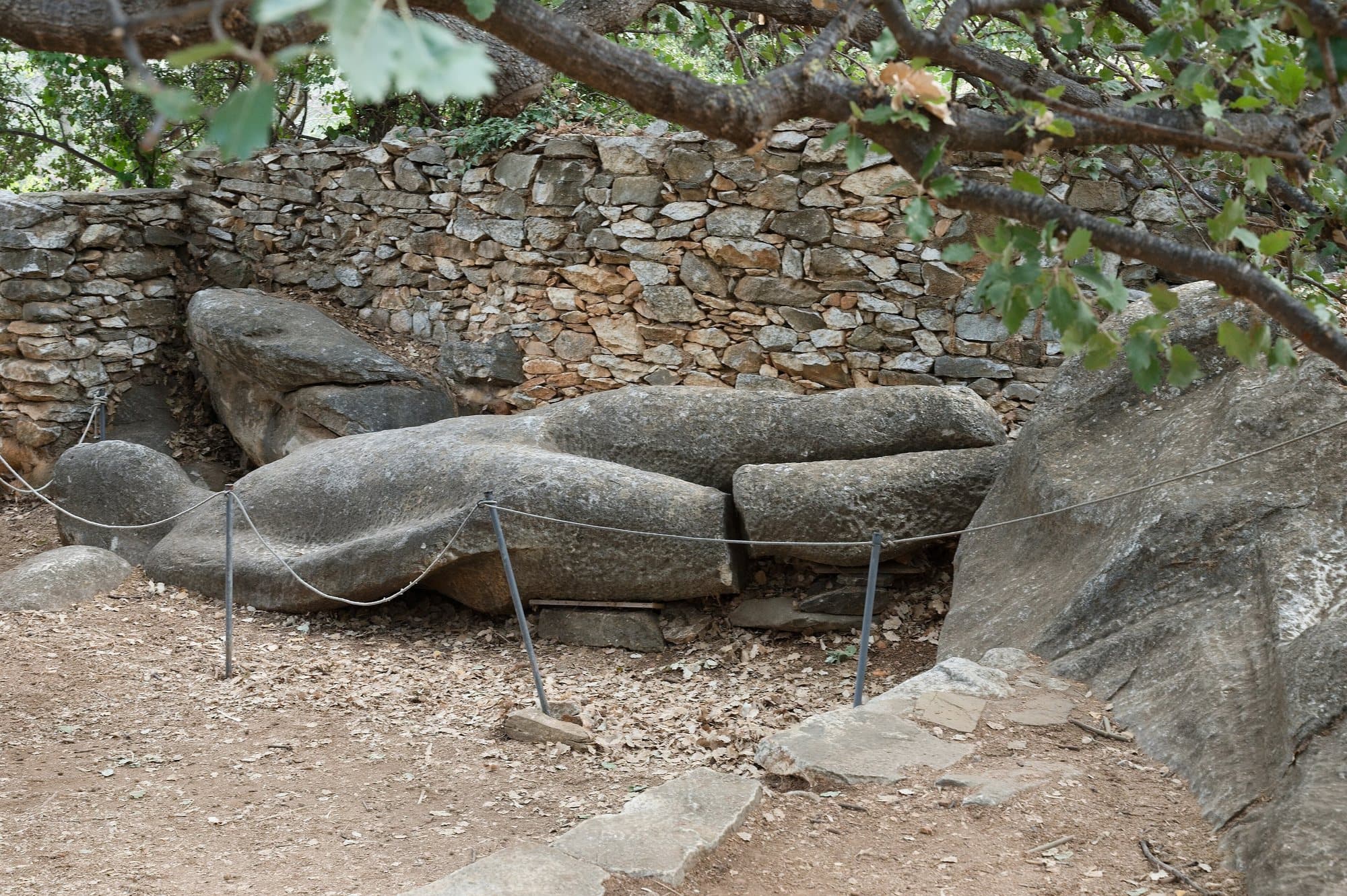
On the way back, stop at Flerio near Melanes to see a marble youth 2,600 years old, still lying where it broke in its quarry.
Walk along the causeway to the marble gate and watch the sun go down behind Paros.
Climb into the old town for dinner on a square, and walk home along the harbour.
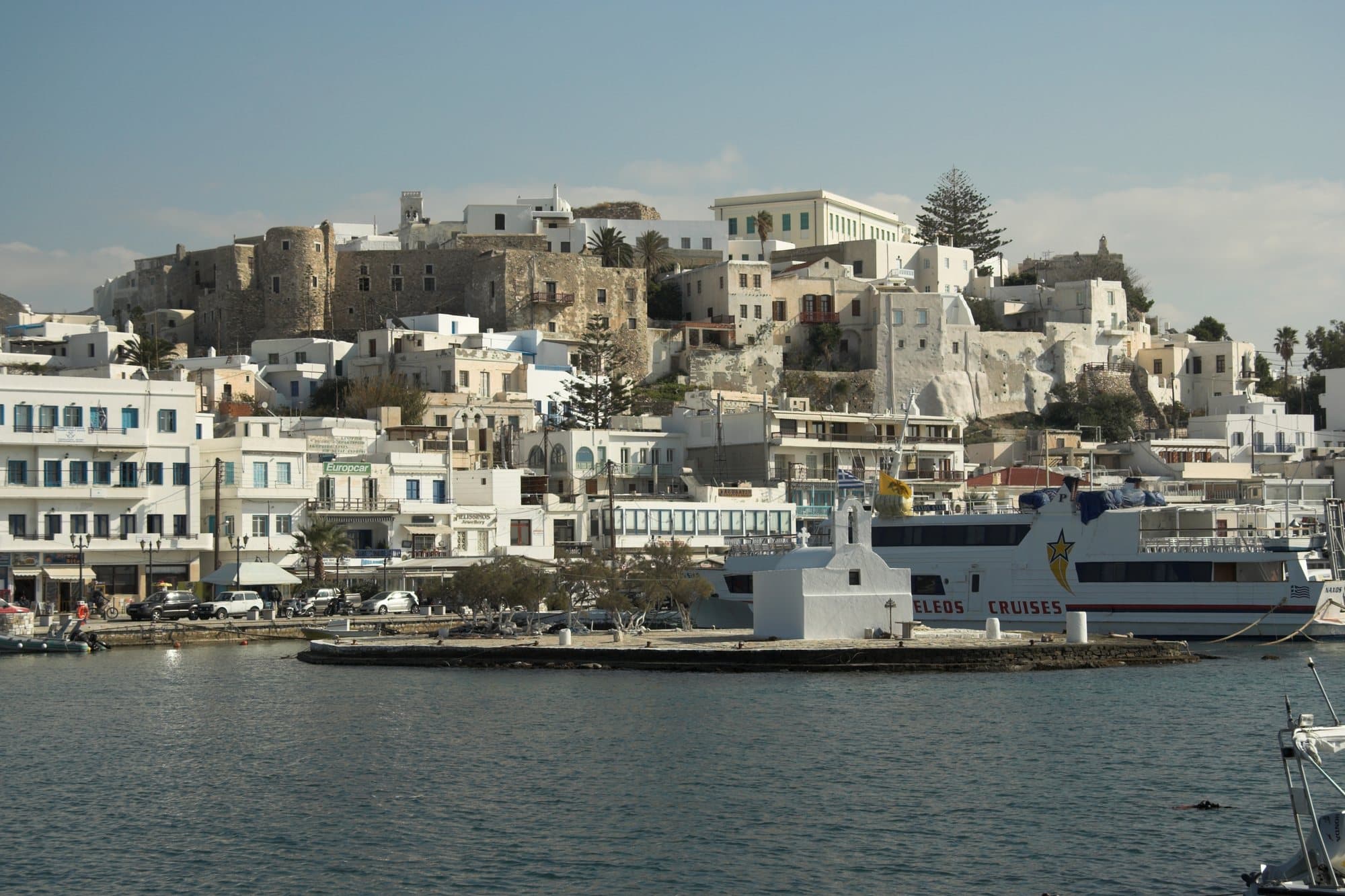
Where to stay
Grotta, Naxos Town
Hotel Grotta · Family-run hotel · €€
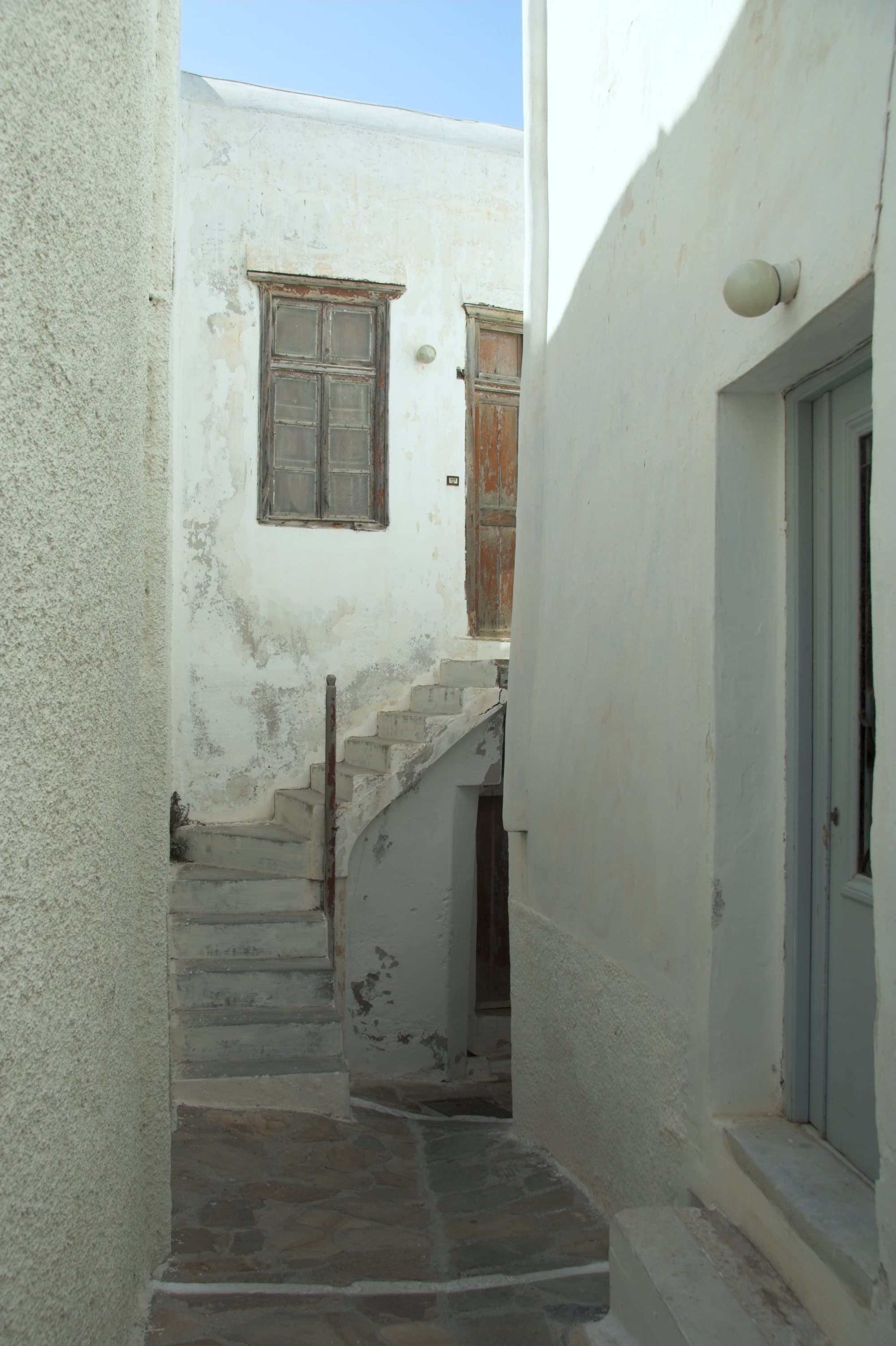
Kastro, Naxos Town
Chateau Zevgoli · Small Cycladic hotel · €€
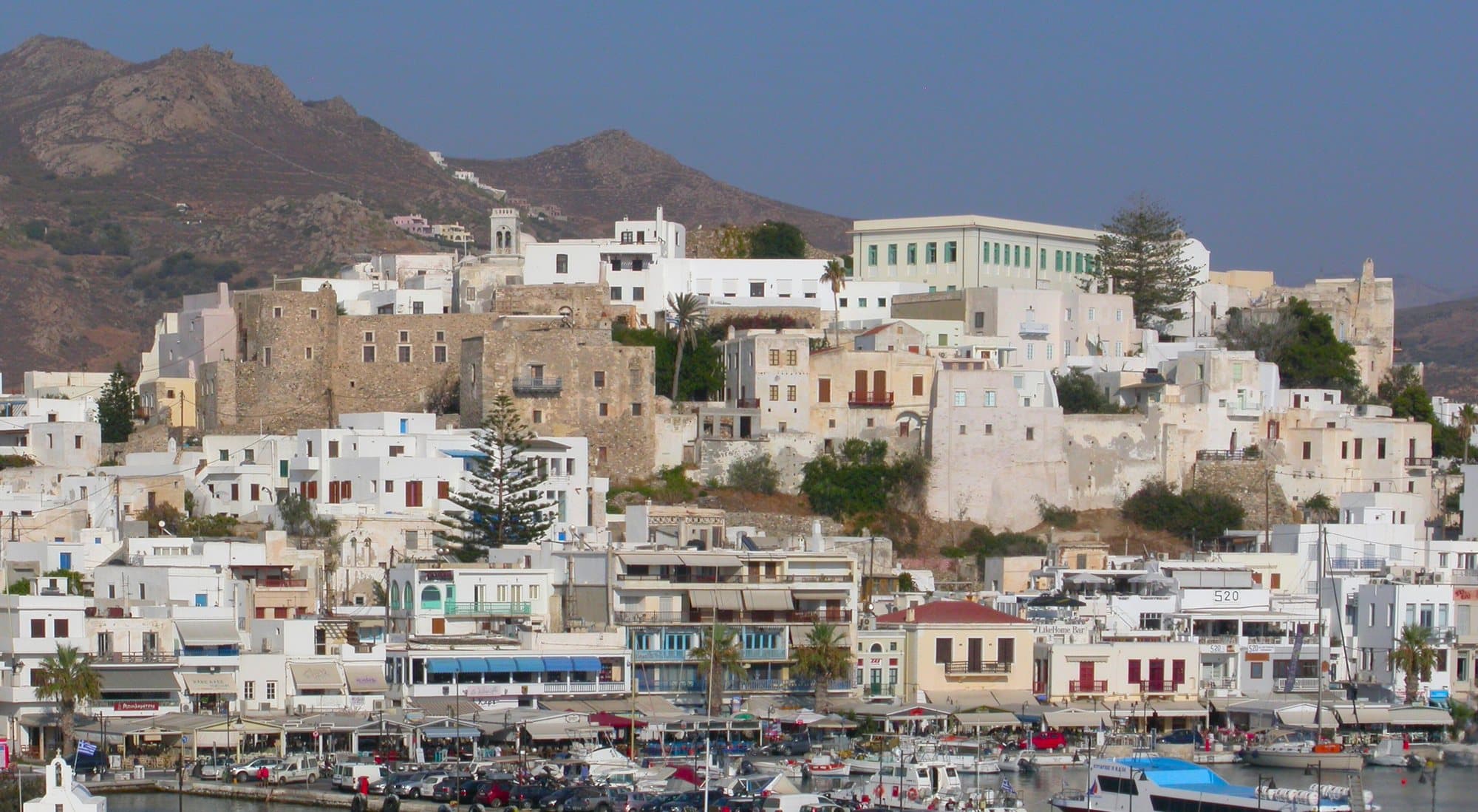
Stelida
Naxian Collection · Luxury villas & suites · €€€€
Only on Naxos
What makes Naxos different from every other island in the Cyclades.
Around 530 BC the tyrant Lygdamis began a vast temple to Apollo on the islet at the harbour mouth. It was never finished, but its marble doorway, the Portara, still stands, and the sunset through it is the island's ritual.
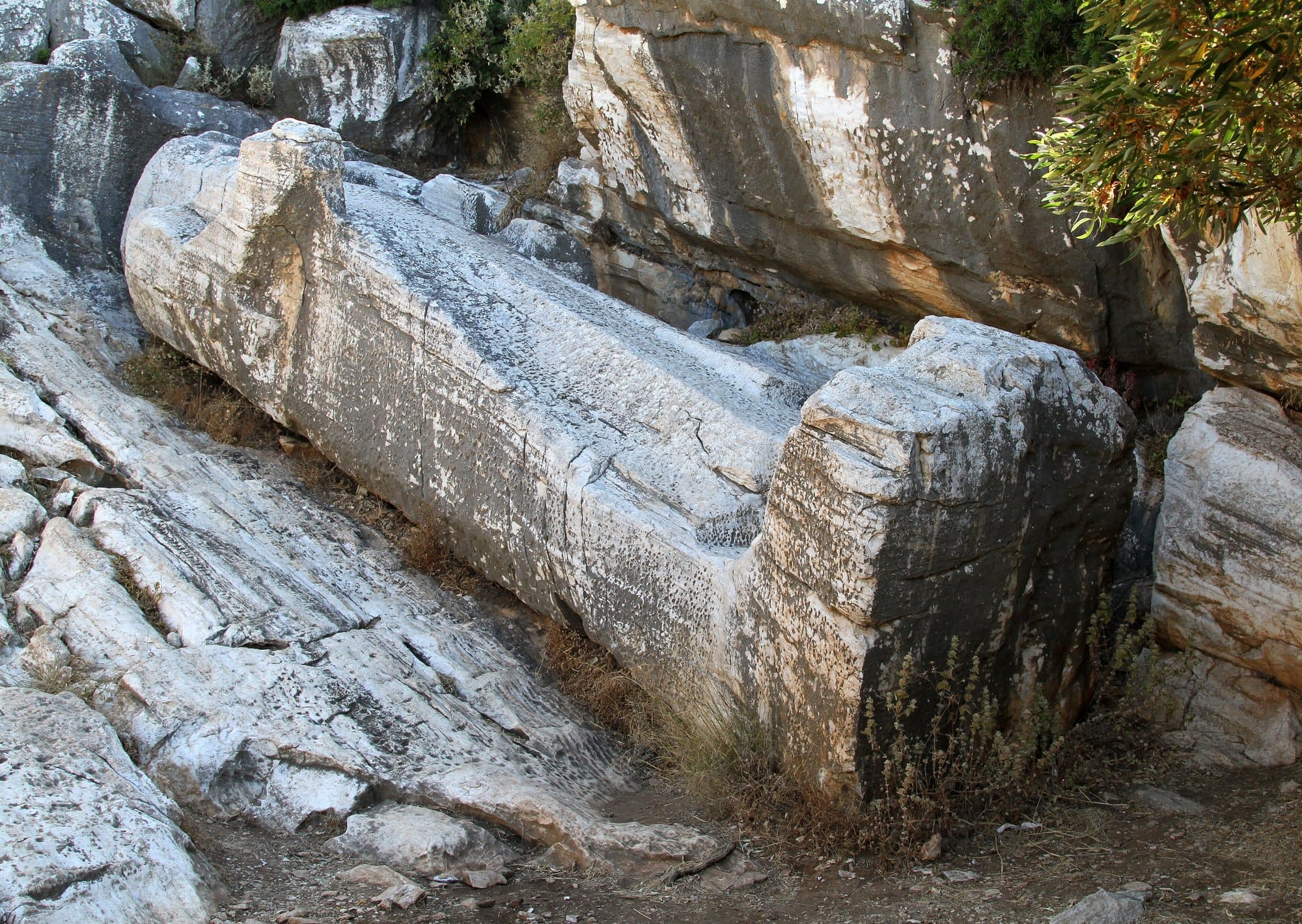
Naxos was famous for its marble in antiquity. Two huge statues of young men, kouroi, still lie unfinished in their quarries, one at Flerio near Melanes and one over 10 m long above Apollonas.
From 1207 Naxos was the capital of the Duchy of the Archipelago, founded by the Venetian Marco Sanudo. Its families still live in the Kastro, behind doorways carved with their coats of arms.
Naxos is the home of kitron, a liqueur made from the leaves of the citron tree. The Vallindras distillery in Halki has made it since 1896, and you can taste it among the old copper stills.
Towns & villages
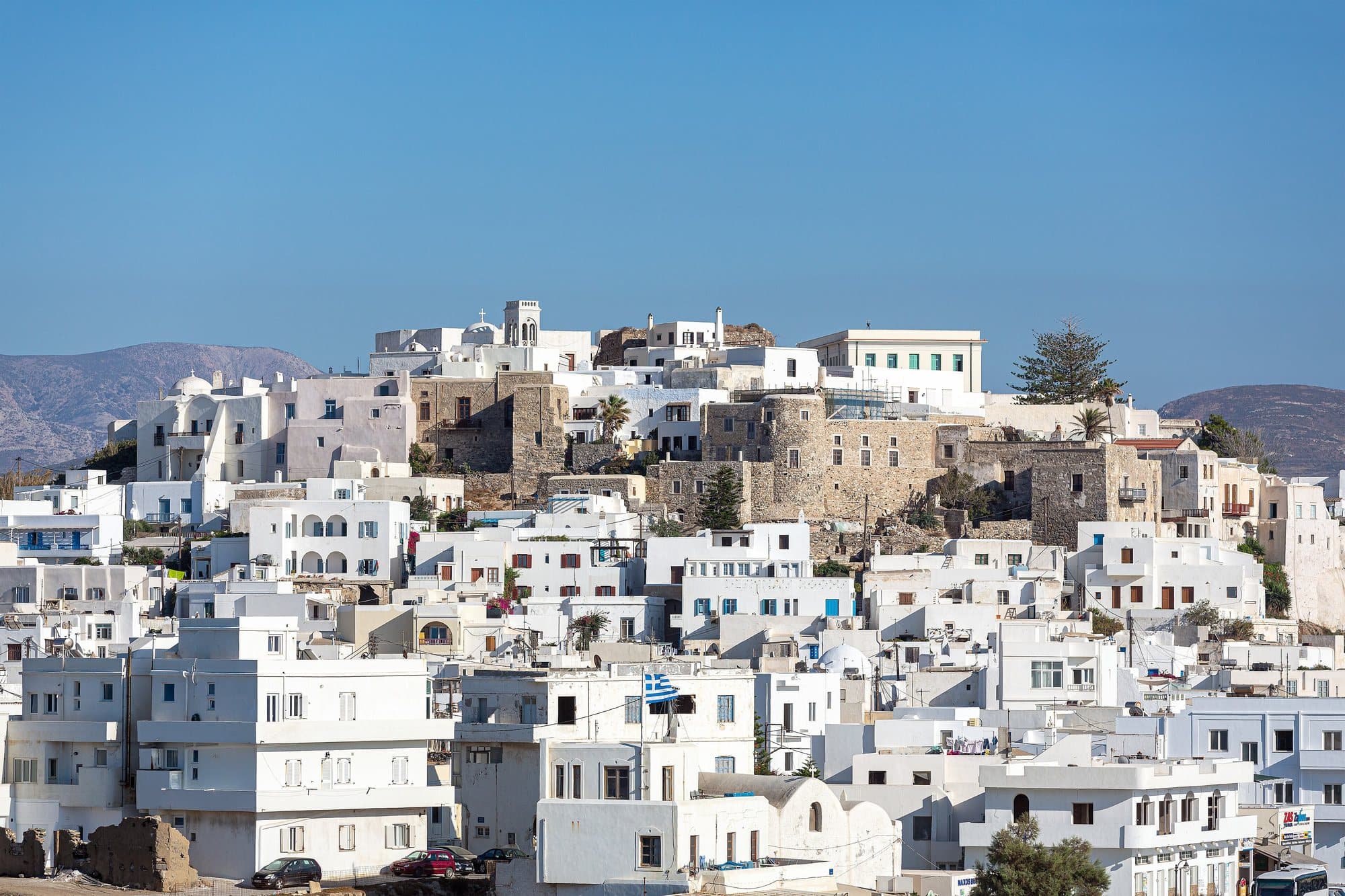
A Venetian castle town above the harbour, with the Portara at its door
The island's capital and port, climbing from the harbour to the walls of the Kastro, the castle the Venetian dukes built in the 13th century. Below it spread the old quarters of Bourgos and the beach of Grotta, and on an islet joined by a causeway stands the Portara, the marble gate of a temple of Apollo that was never finished.
Long sandy beaches just south of town
South of Chora the west coast is one long line of sand: Agios Prokopios with its clear, calm water, the fishing harbour and tavernas of Agia Anna, then Plaka, a beach of dunes several kilometres long. It is the place to stay for swimming, with small hotels a few steps from the sea and the sunset over Paros every evening.
Things to do
Culture
Walk out along the causeway to the islet of Palatia and watch the sun go down behind Paros, framed by the marble gate. Come early for a good rock.
Chora
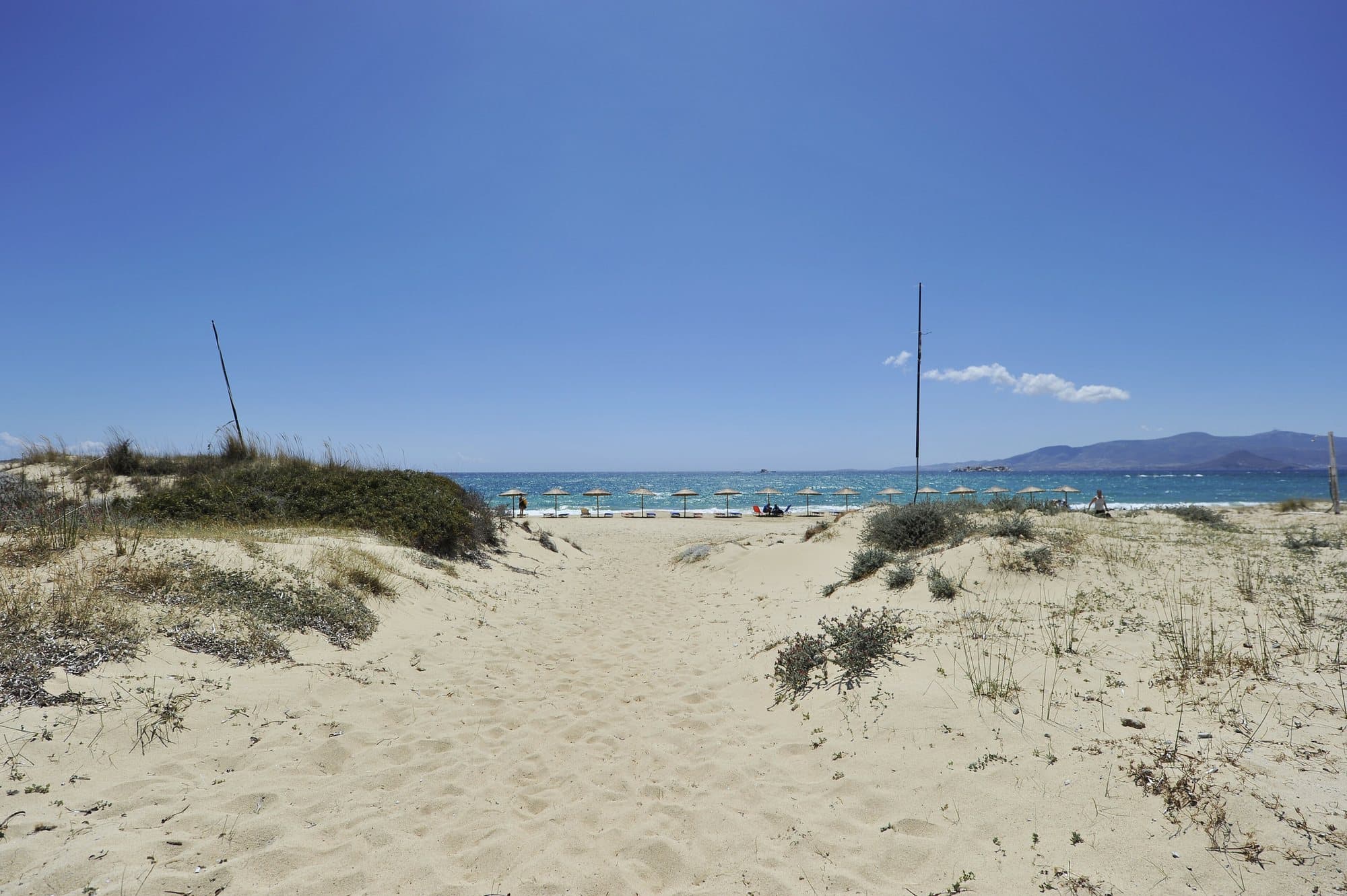
Beach
Agios Prokopios, Agia Anna and Plaka make kilometres of sand with clear, shallow water. Go further south to Plaka's dunes for space even in August.
Agios Prokopios to Mikri Vigla
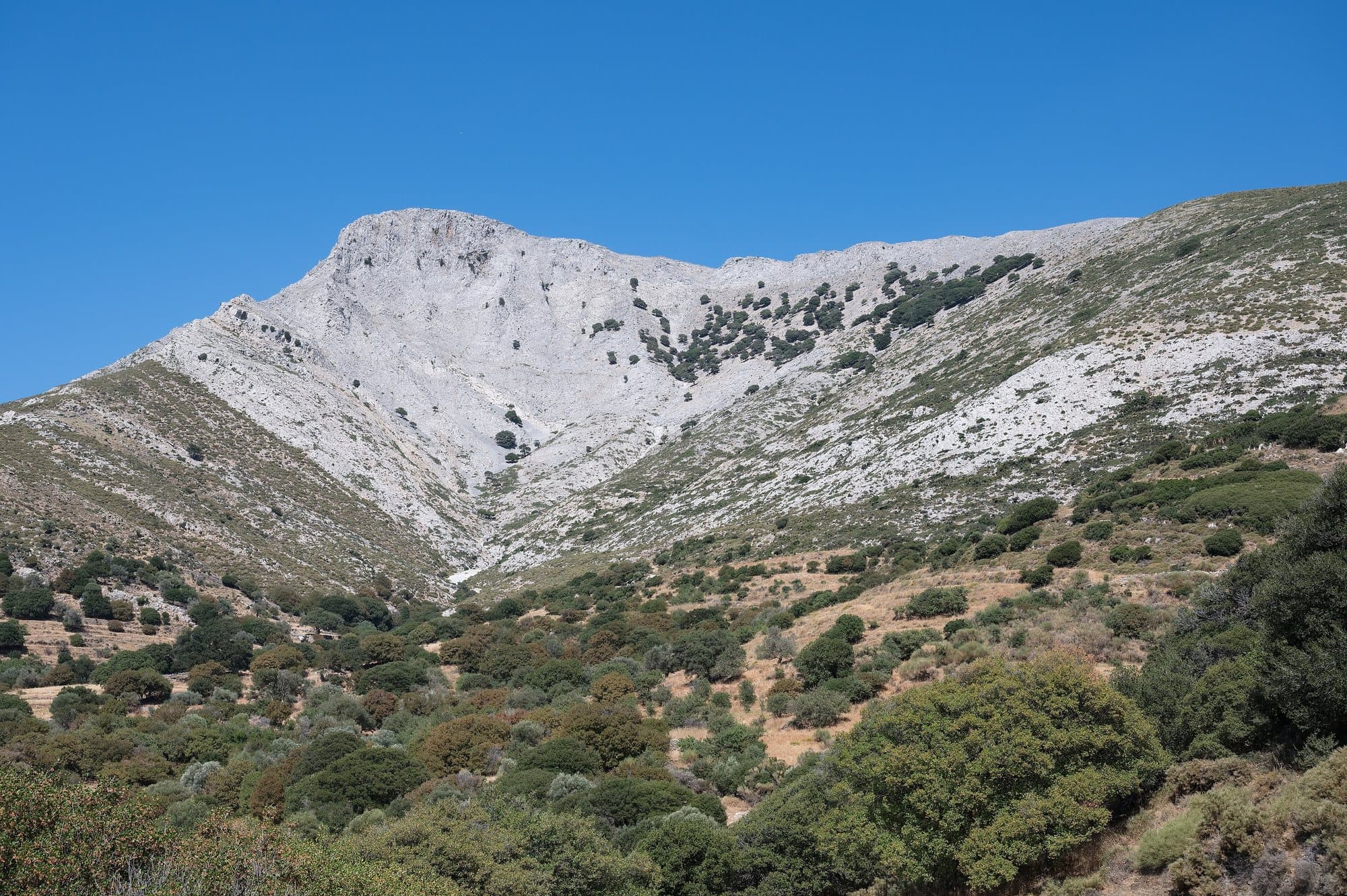
Hike
A marked path climbs from near Filoti to the 1,004 m summit, the highest in the Cyclades, past the Cave of Zas. Allow about 3–4 hours there and back, and go early.
From Filoti
Good to know
Naxos is the largest of the Cyclades, about 430 km², and the greenest. Mount Zas, at 1,004 m the highest peak in the archipelago, rises in the middle, with olive valleys and mountain villages of marble and stone around it. The west coast is one long line of sandy beaches. Its port, Chora, is a white town under a Venetian castle, and at the harbour mouth stands the Portara, the marble gate of a temple to Apollo begun around 530 BC. In myth this is where Theseus left Ariadne and Dionysus found her. Naxos grows its own potatoes, cheese and citrons, so it feeds itself, and it feels like a real island where people live all year, not only a summer resort.
When to go
May, June, September and early October are ideal: warm sea and fewer people. July and August are busy and the meltemi wind blows, but the beaches are long and the mountain villages stay cool.
Getting around
Rent a car to explore the mountain villages and the north. Buses run from the port to the beaches and the main villages, and the west coast is easy by scooter or even bike.
How long
Five days to a week gives you the beaches, Chora and the villages of the Tragea. Add a few days to hop on to the Small Cyclades, Paros or Santorini.
Getting there
Fly from Athens to Naxos airport in about 45 minutes, or take the ferry from Piraeus or Rafina in 3.5–6 hours.
Flights & ferries
Marble figurines from the Bronze Age, the myth of Ariadne, the giants of the archaic sculptors, a Venetian duchy, and villages that kept their old ways in the mountains.
Walk through the story