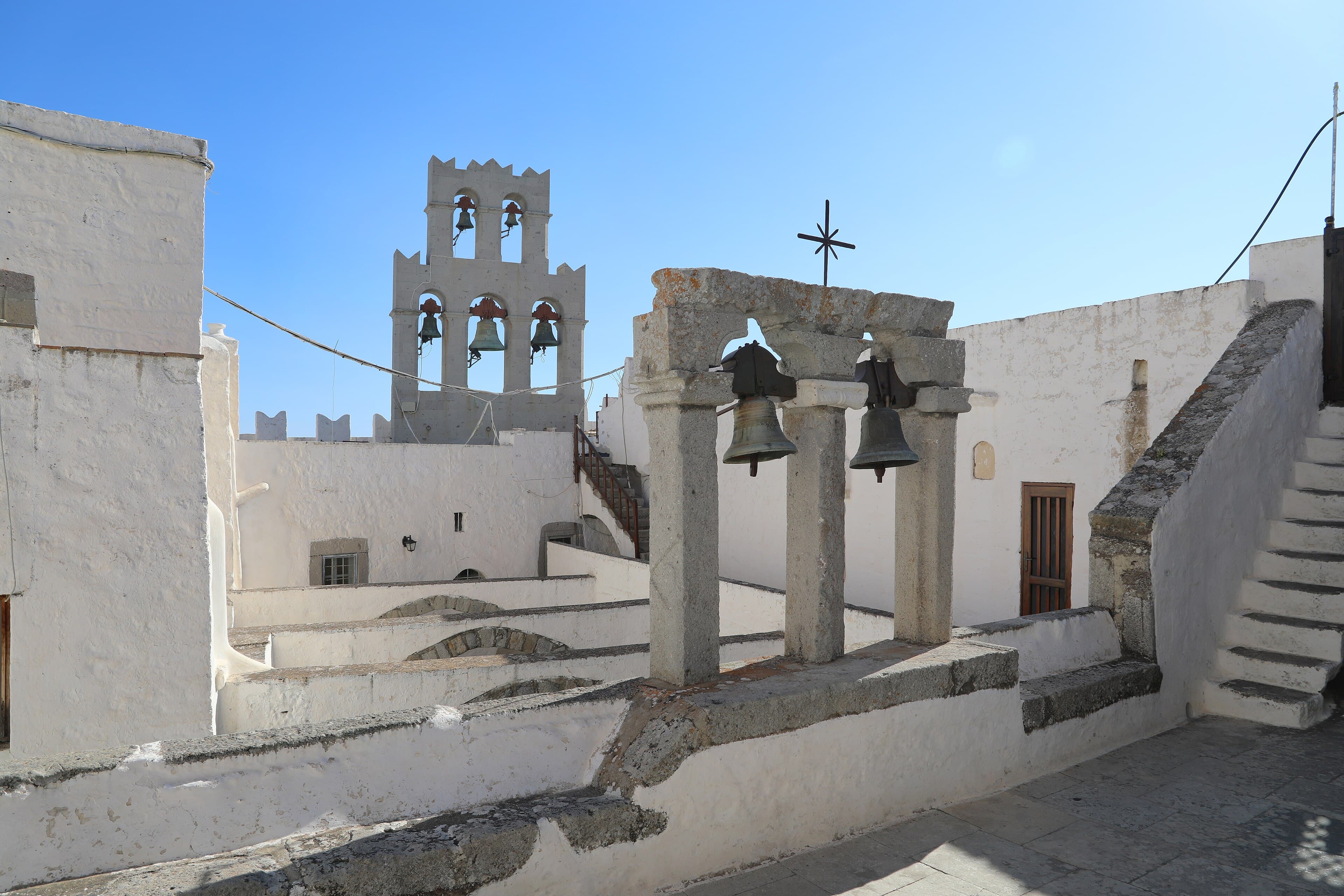
Monastery of St John the Theologian
The 11th-century fortress monastery at the top of Chora, with a frescoed church, courtyards and the treasury. Go at opening time and dress modestly.
Patmos · History
An ancient acropolis, the exile of St John, a monastery that ruled the island for centuries, rich sea captains and a famous school, before Patmos joined Greece in 1948.
Timeline
Antiquity
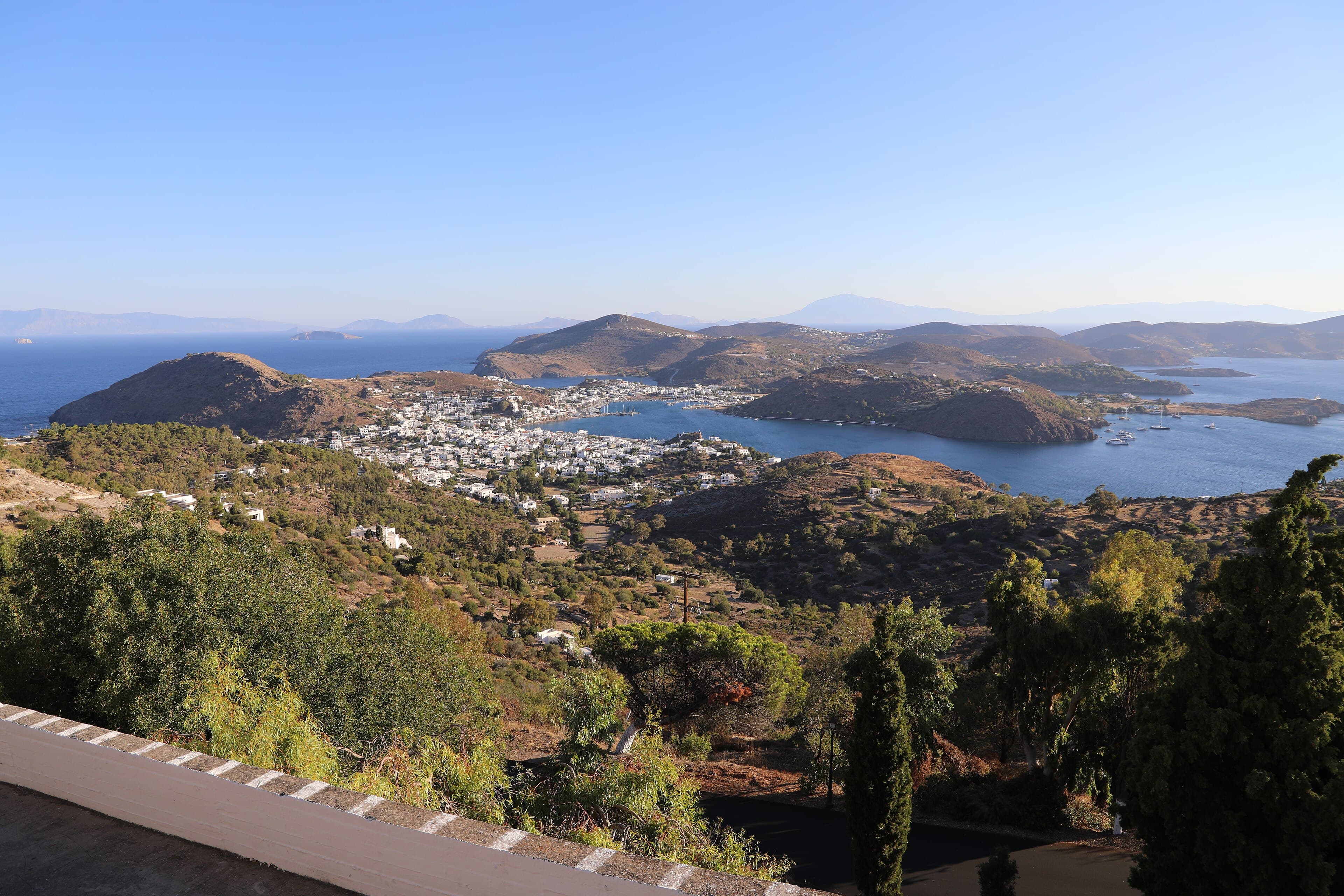
In ancient times Patmos belonged to the city of Miletus on the coast of Asia Minor. On the hill of Kastelli, above Skala, there are still walls of its Hellenistic acropolis. According to tradition, a temple of Artemis stood where the monastery is now.
c. AD 95
Under the Roman emperor Domitian, John, a Christian leader from Ephesus, was exiled to Patmos. According to the Book of Revelation, he received its visions here. Church tradition holds that he dictated them to his disciple Prochorus in a cave on the hillside.

1088
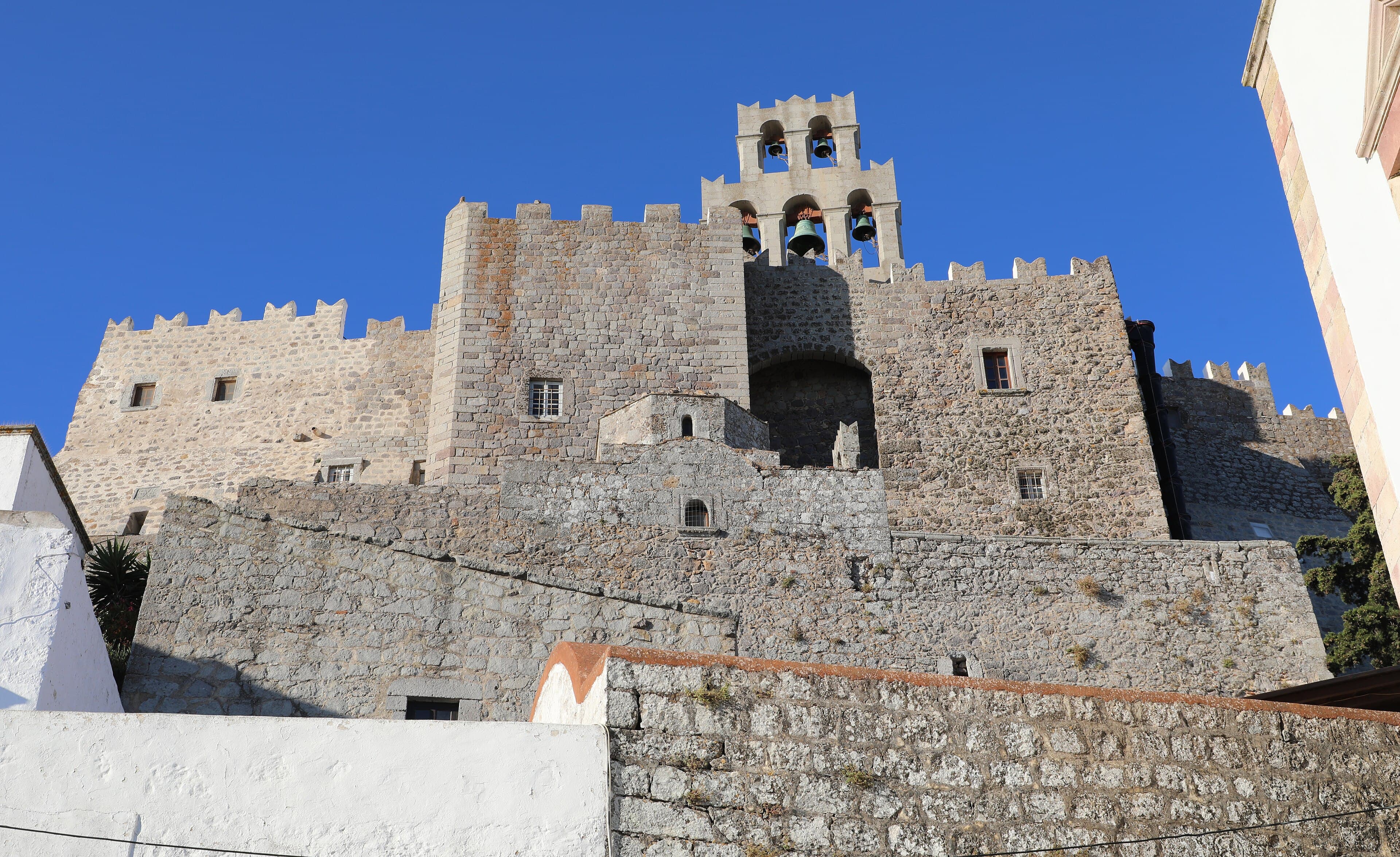
The island was almost empty when the monk Christodoulos received it from the Byzantine emperor Alexios I Komnenos with a golden bull, a decree sealed in gold. He built the Monastery of St John on the hill above the harbour, with walls against pirates, and the monks ruled Patmos for centuries.
16th–18th centuries
Under the Ottomans the island kept many privileges, and its ships traded across the Mediterranean. Captains and merchants built the stone mansions of Chora, and refugees from Crete arrived after 1669. In 1713 the Patmias School was founded. It taught Greek scholars and churchmen for generations.

1912–1948
Italy took Patmos with the rest of the Dodecanese in 1912. German forces occupied it in 1943, and after the war it was under British administration. Patmos joined Greece in 1948. In 1999 UNESCO listed Chora, the monastery and the Cave of the Apocalypse as a World Heritage Site.
Visit
The 11th-century fortress monastery at the top of Chora, with a frescoed church, courtyards and the treasury. Go at opening time and dress modestly.
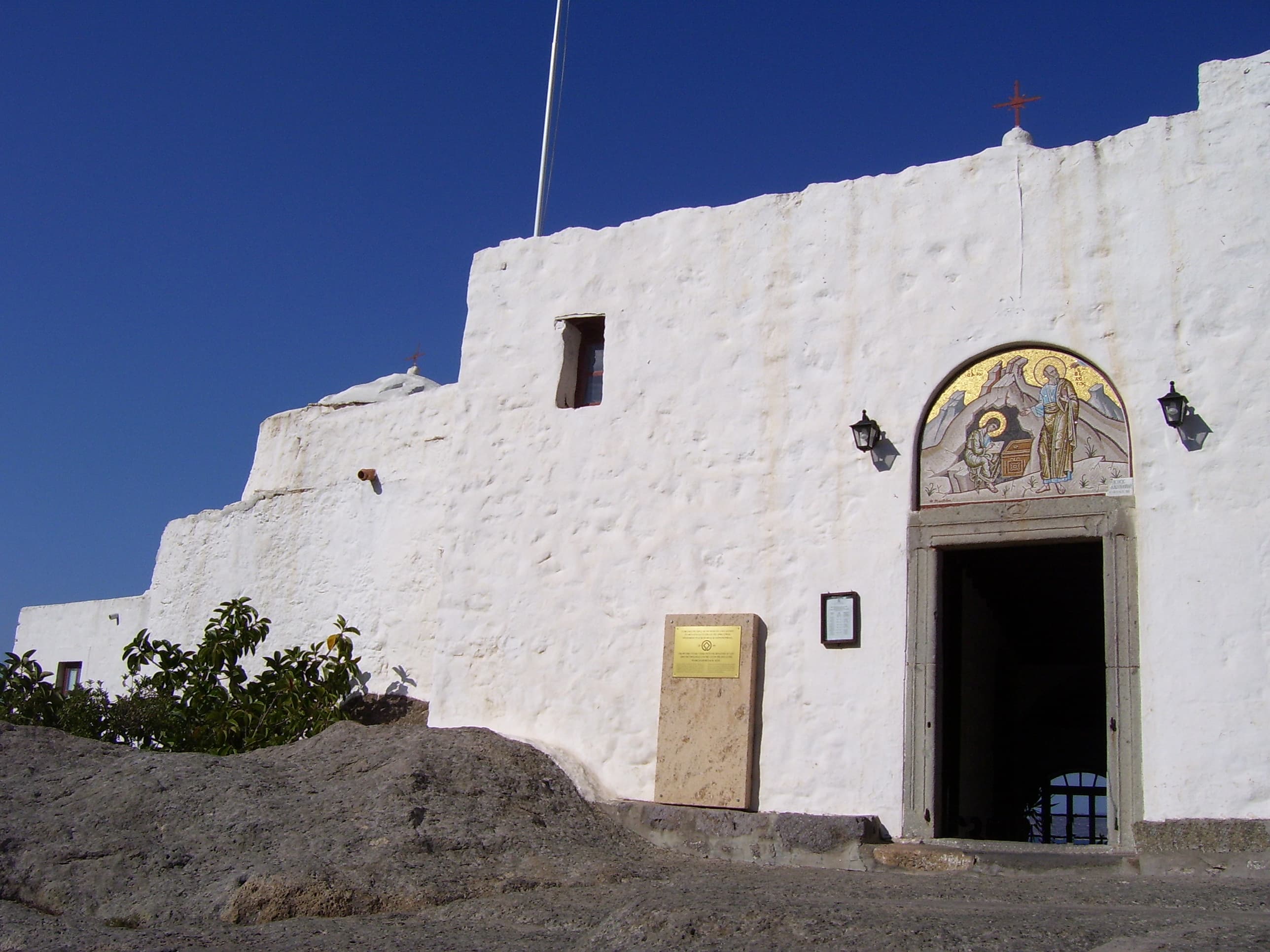
The small cave chapel where, by tradition, St John wrote the Book of Revelation, halfway between Skala and Chora.

A convent founded in 1607 in the lanes of Chora, with a flower-filled courtyard and fine icons. Open at set hours.
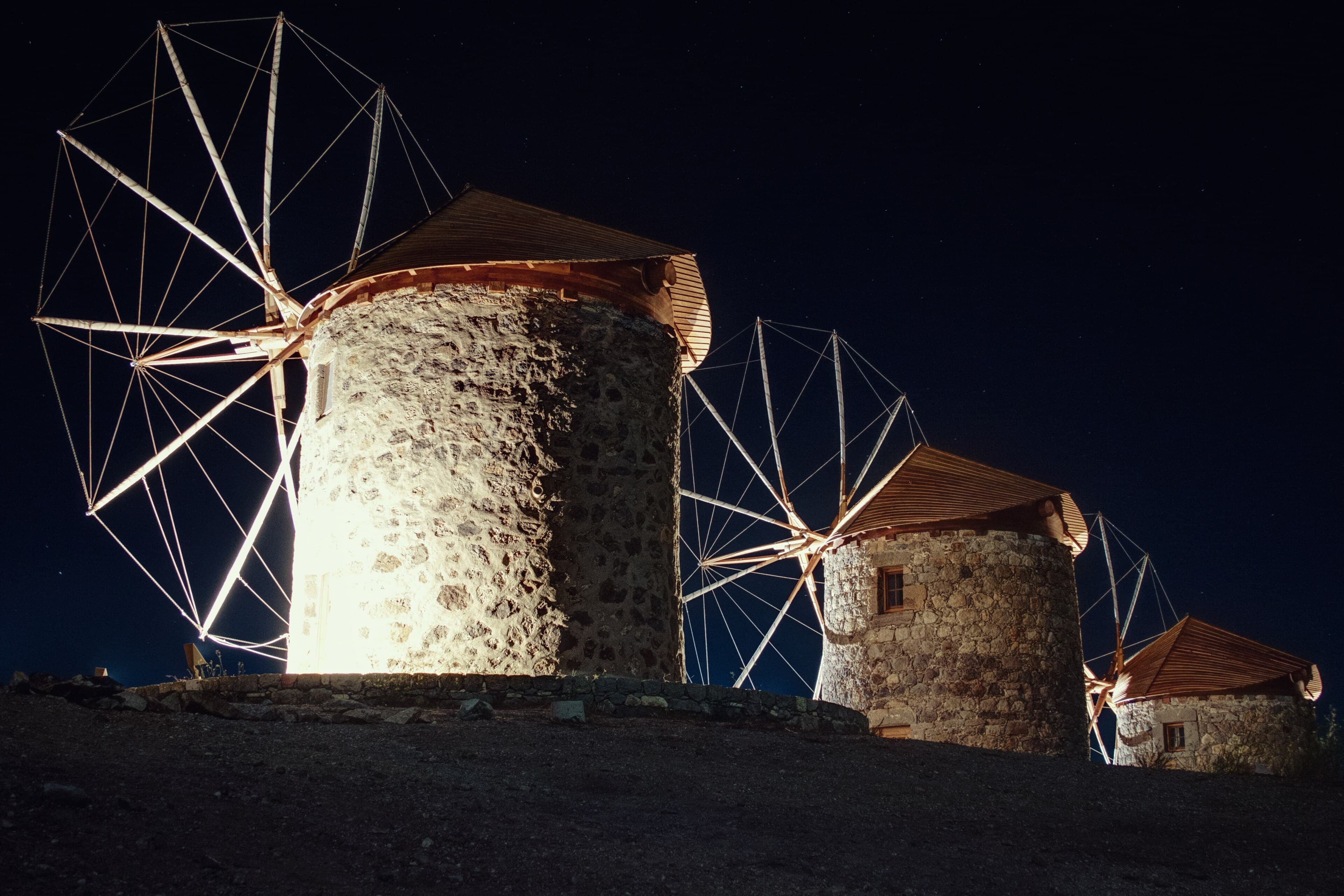
Three windmills on the ridge next to Chora, restored in recent years, one of them able to grind flour again.
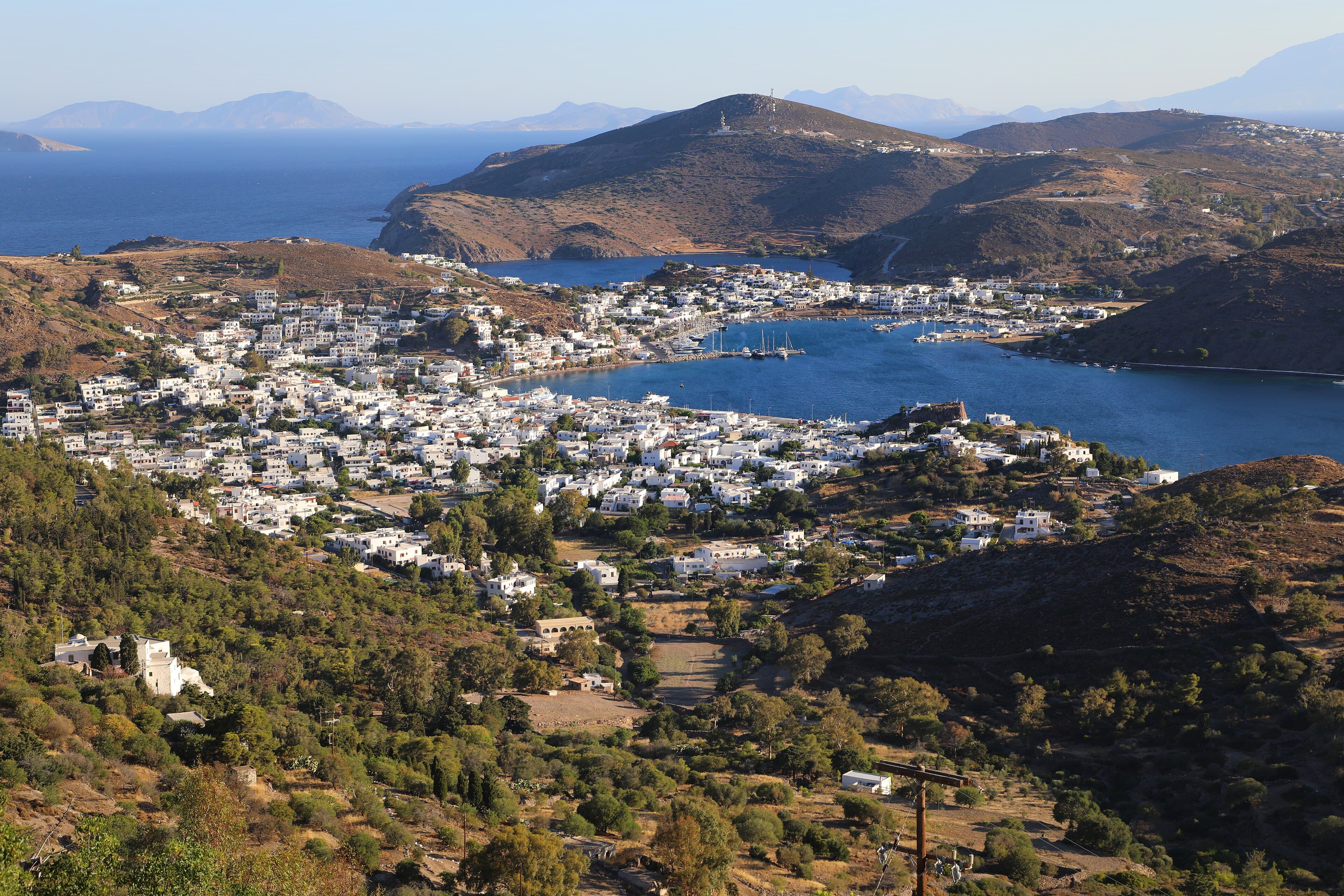
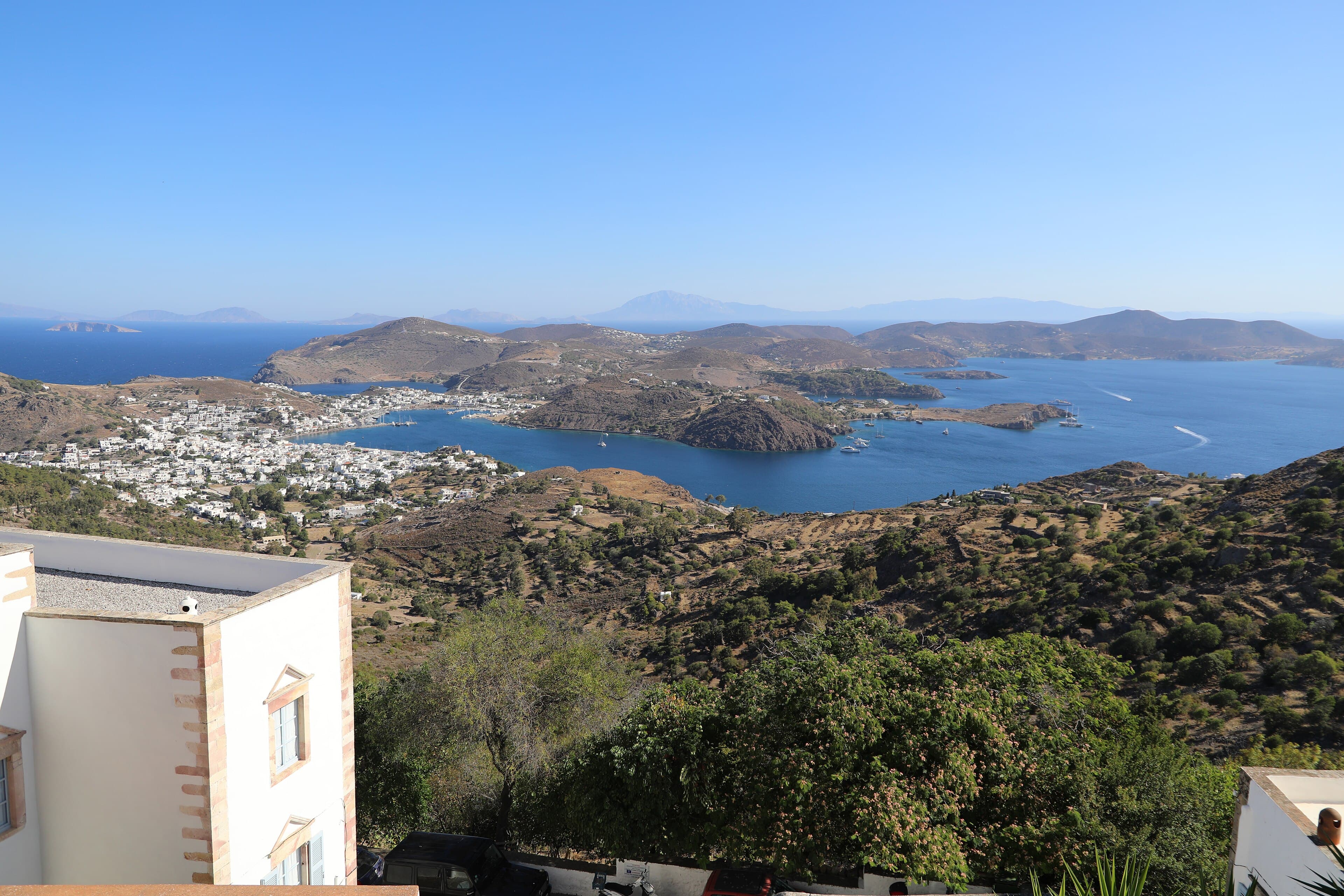
The remains of ancient walls on a hill above Skala. A short walk up from the port, with a wide view over the bay.