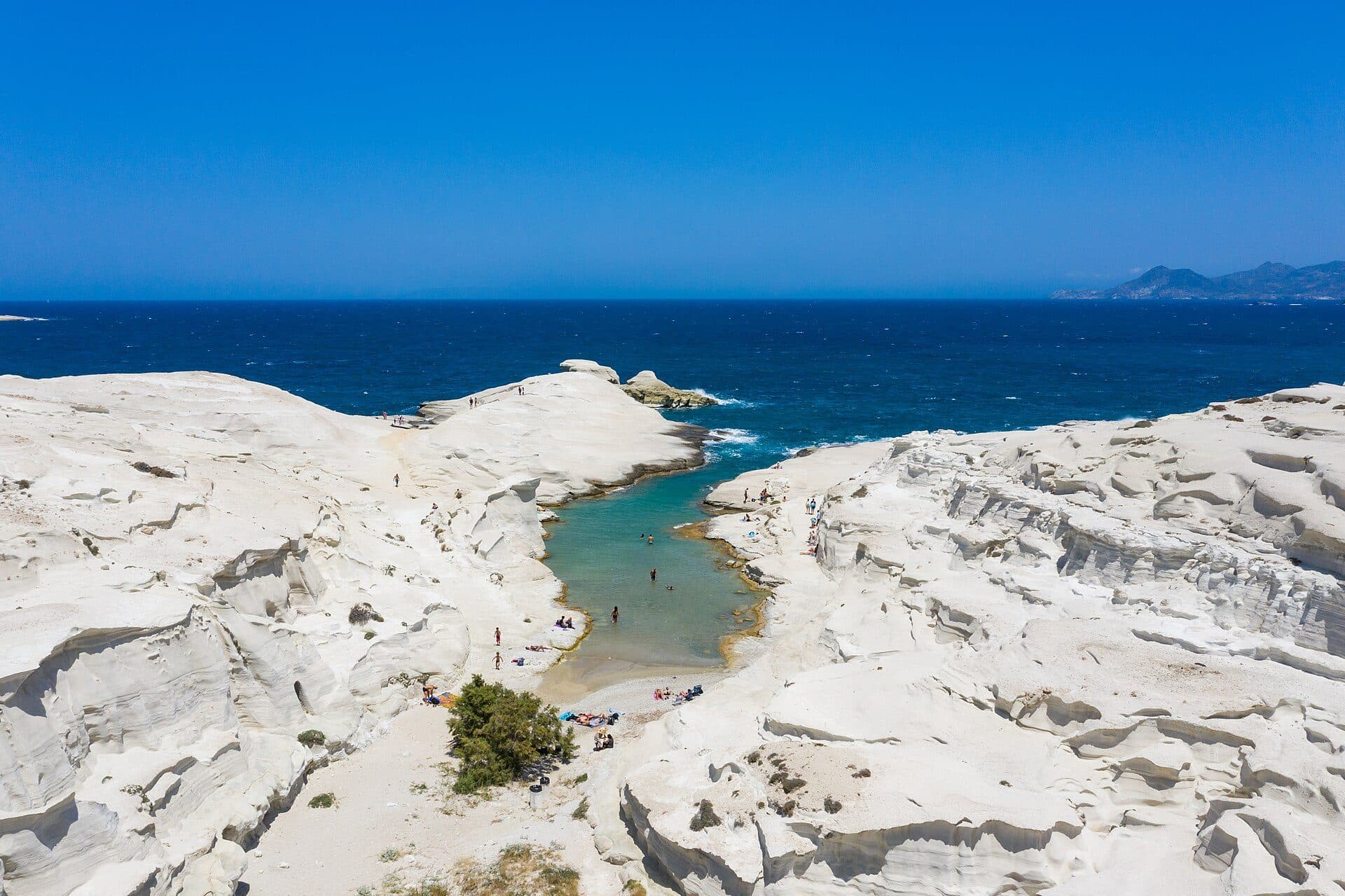
The white volcanic rocks of Sarakiniko on Milos

Μήλος · The volcanic island of coloured rocks, sea caves and painted boathouses

Milos, the island the volcano painted

Swim between white rocks that look like the moon, sail into the sea caves of Kleftiko, sleep above a painted boathouse in Klima and watch the sun go down from the castle of Plaka, on the island where the Venus de Milo was found.

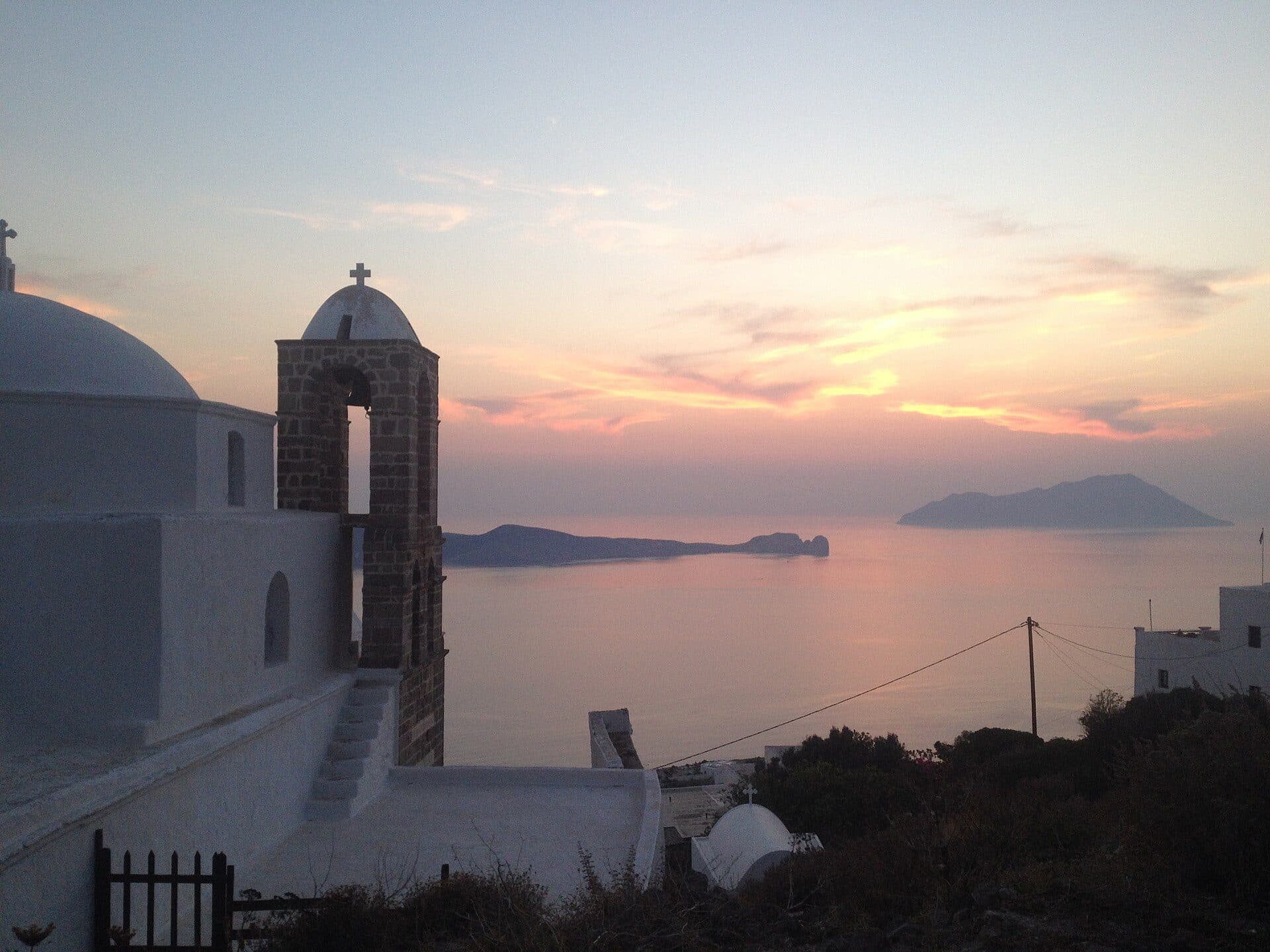
Sunset over the Bay of Milos from the Kastro of Plaka

Greetings from Milos

Milos

We woke at Klima with the sea slapping against the boathouse doors below us. By ten we were on a small boat to Kleftiko, swimming through a cave in the white rock with nobody else in it. In the afternoon we walked up past the catacombs to the theatre where, two hundred years ago, a farmer dug up the Venus de Milo. Now we are on the castle hill above Plaka with what feels like half the island, waiting for the sun to drop into the bay.

Wish you were here. x

Hour by hour

A perfect day on Milos

White rocks at sunrise, a boat to the sea caves, a fish lunch by the boathouses and sunset from the castle.

  1. 07:30

    Sarakiniko before the crowds

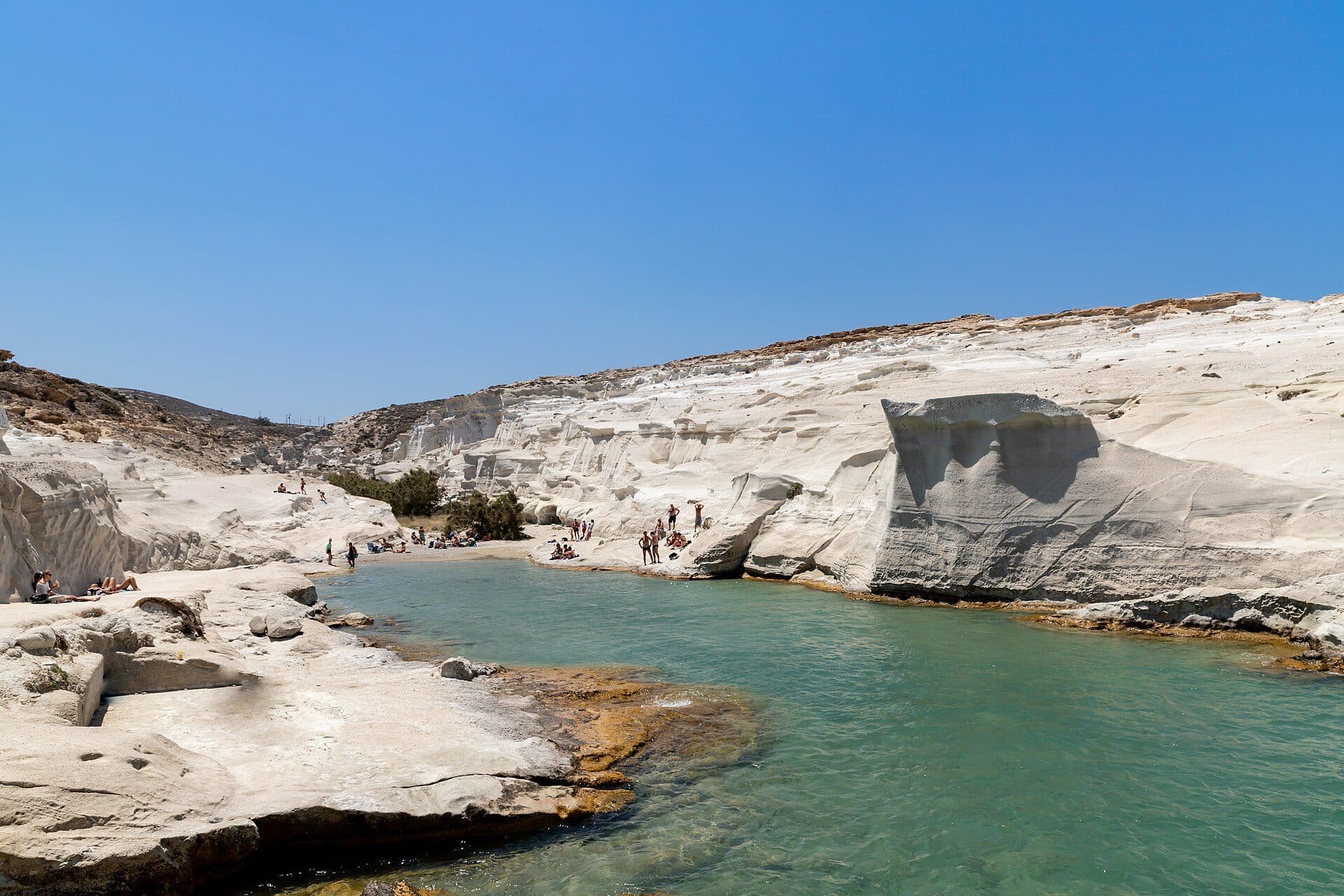
    Start on the smooth white rocks of Sarakiniko while the light is soft and the stone is still cool, with a first swim in the inlet.

    The white volcanic rocks of Sarakiniko
  2. 09:30

    A boat to Kleftiko

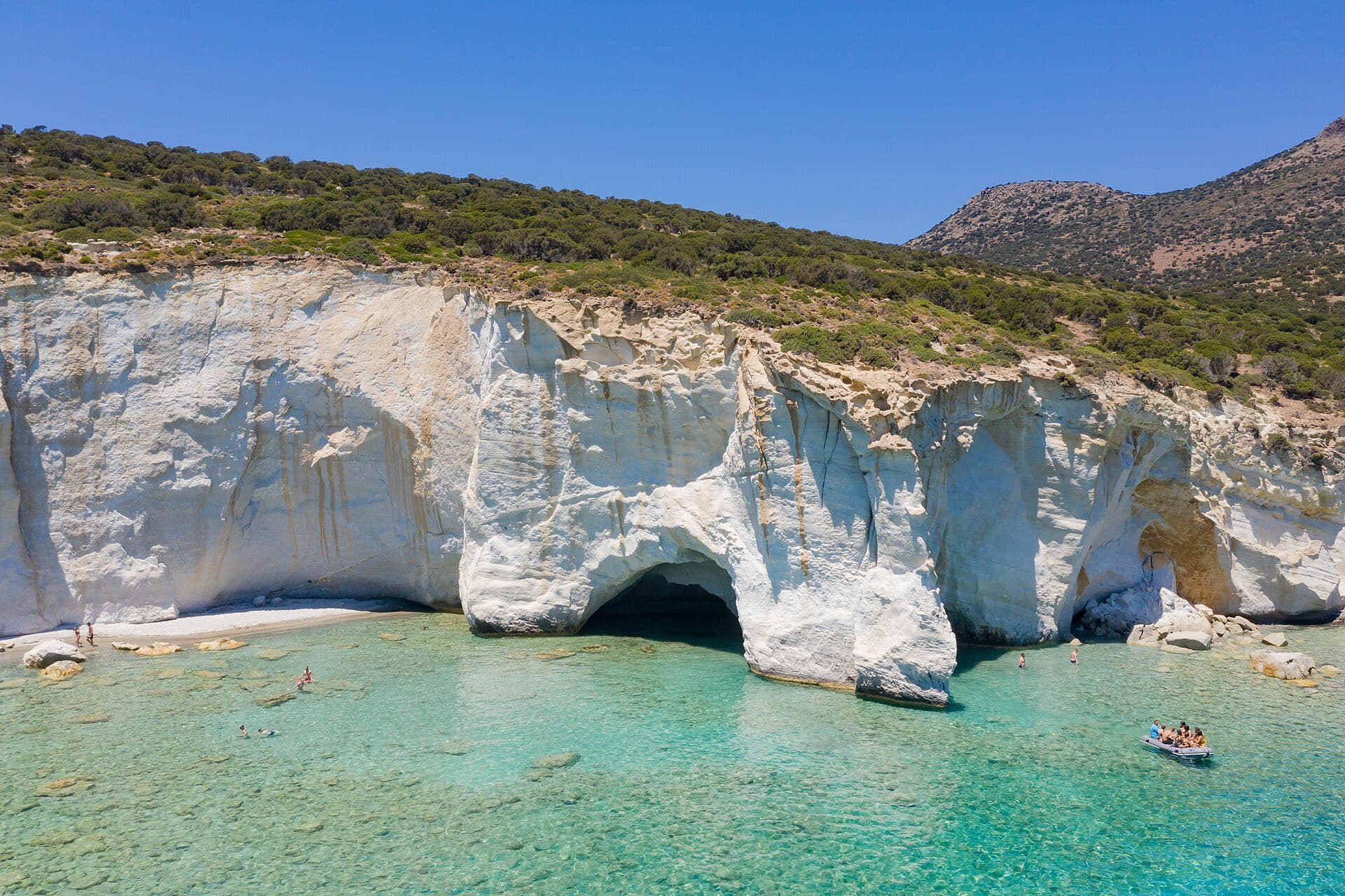
    Sail from Adamas around the wild west of the island to the white rocks and sea caves of Kleftiko, and swim through the arches.

    The white rocks and sea caves of Kleftiko
  3. 15:00

    Lunch at Klima

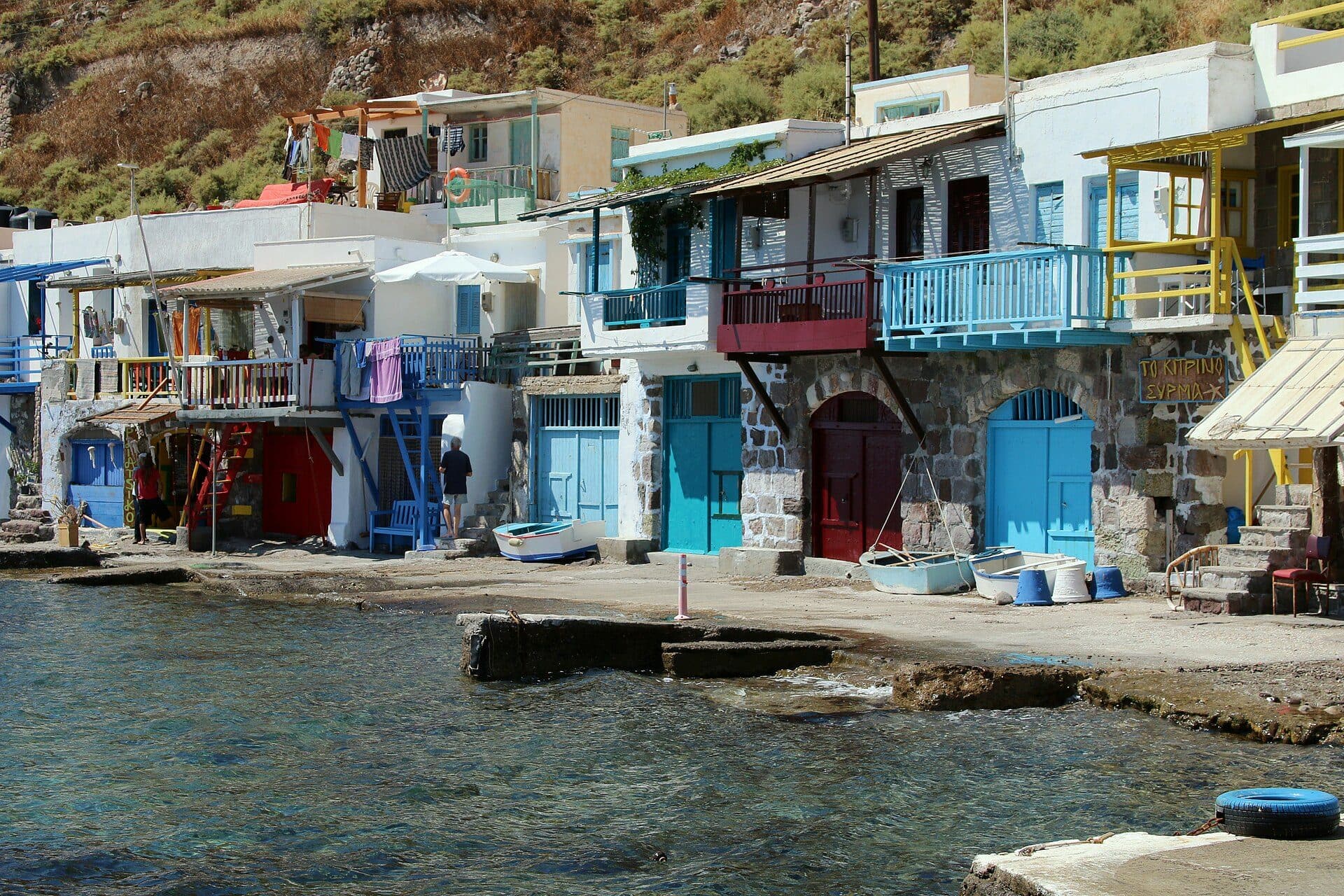
    Back on land, drive to Klima for a late lunch of fish beside the painted syrmata.

    The painted boathouses of Klima
  4. 17:00

    The catacombs and the theatre

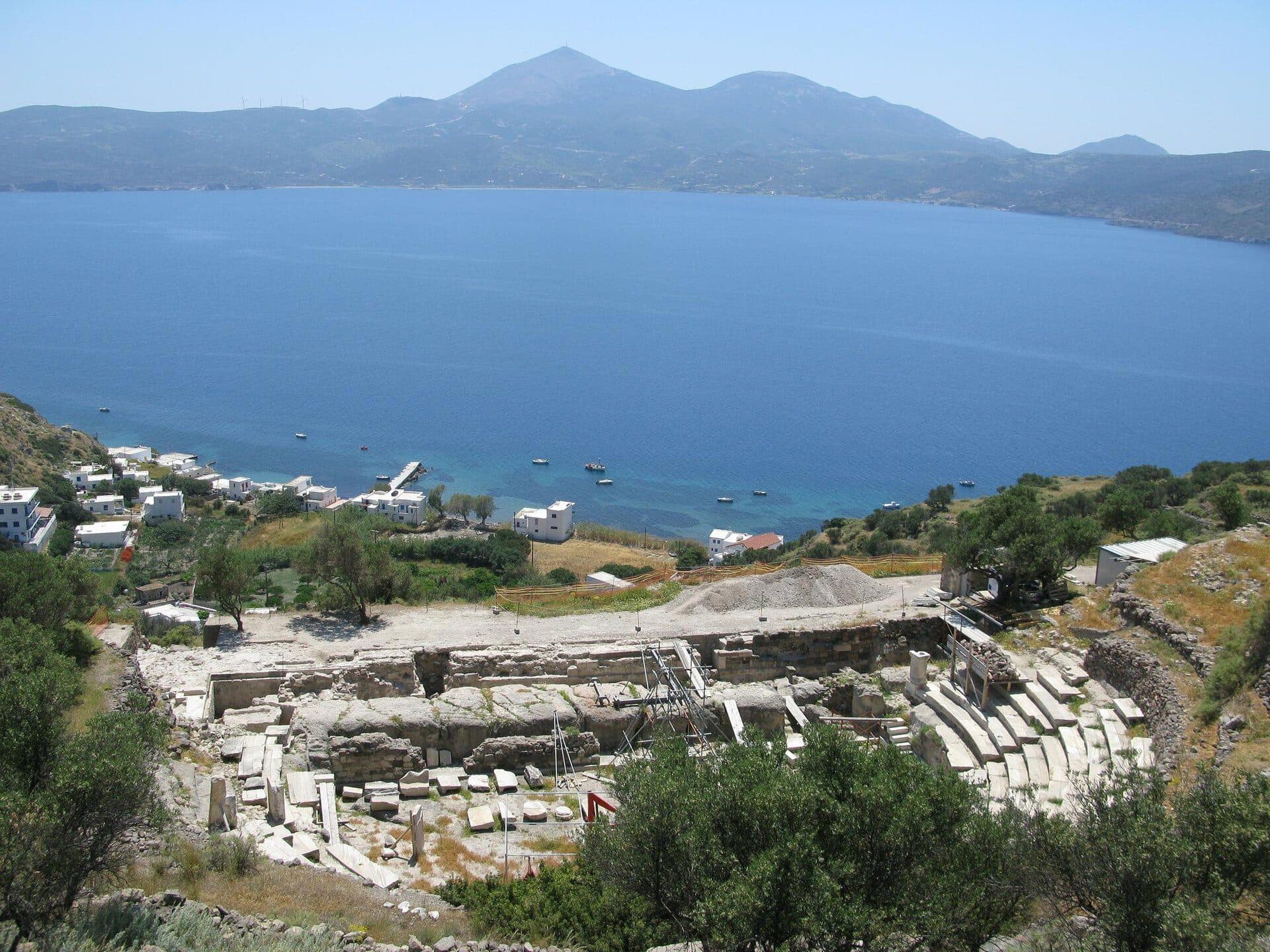
    Walk up the hill to the early-Christian catacombs and the Roman theatre above the bay, and see the field where the Venus was found.

    The ancient theatre of Milos
  5. 19:30

    Sunset from the Kastro

    Climb the steps above Plaka to Panagia Thalassitra and watch the sun go down over the bay.

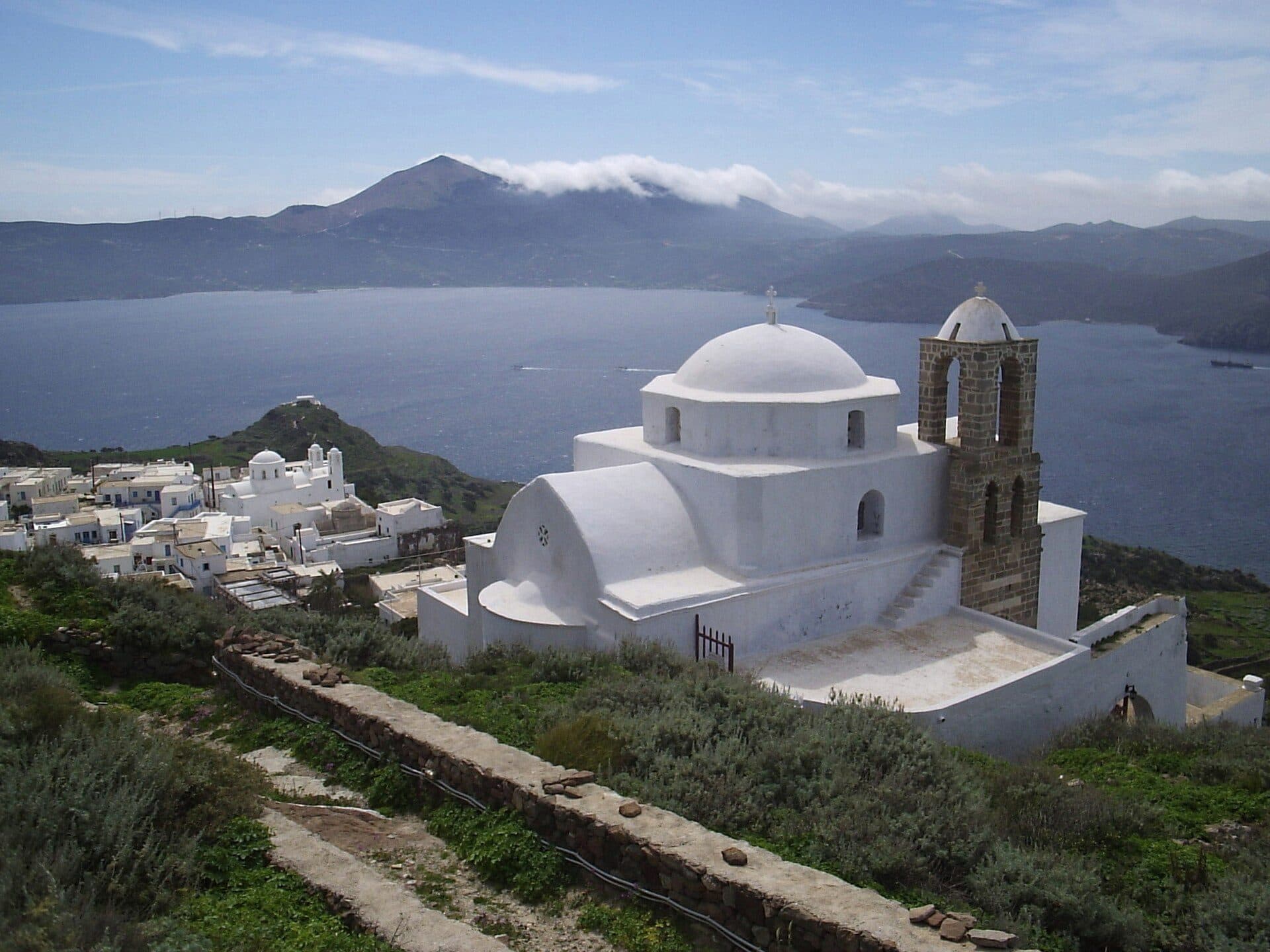
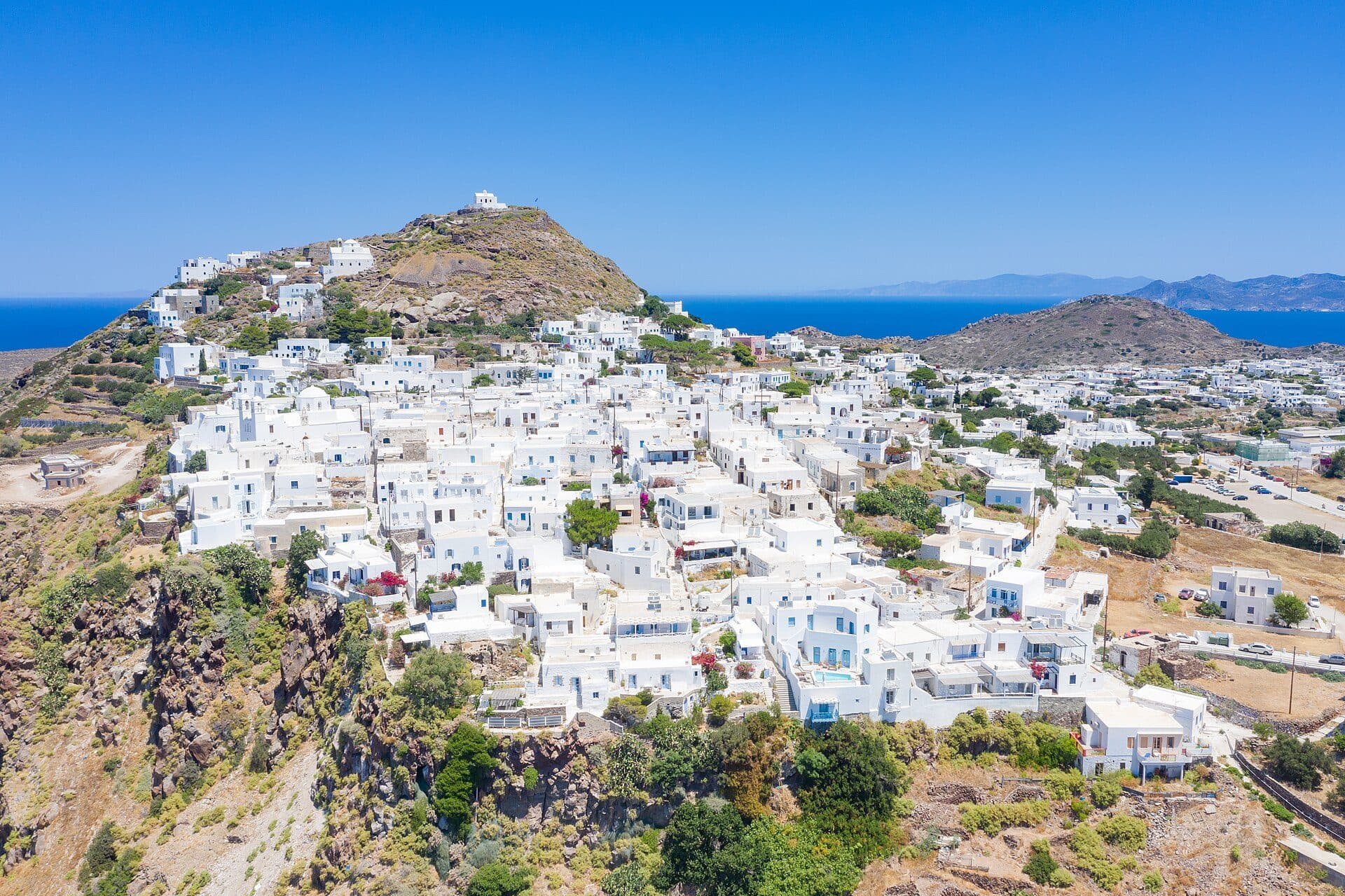
    The castle hill of Plaka with Panagia Thalassitra
  6. 21:30

    Dinner on the ridge

    Walk along the ridge to Tripiti for dinner on a terrace that faces the last of the light.

    The village of Tripiti on its ridge

Where to stay

Where you'll wake up on Milos

All stays

Only on Milos

The things you'll tell everyone about

What makes Milos different from every other Greek island.

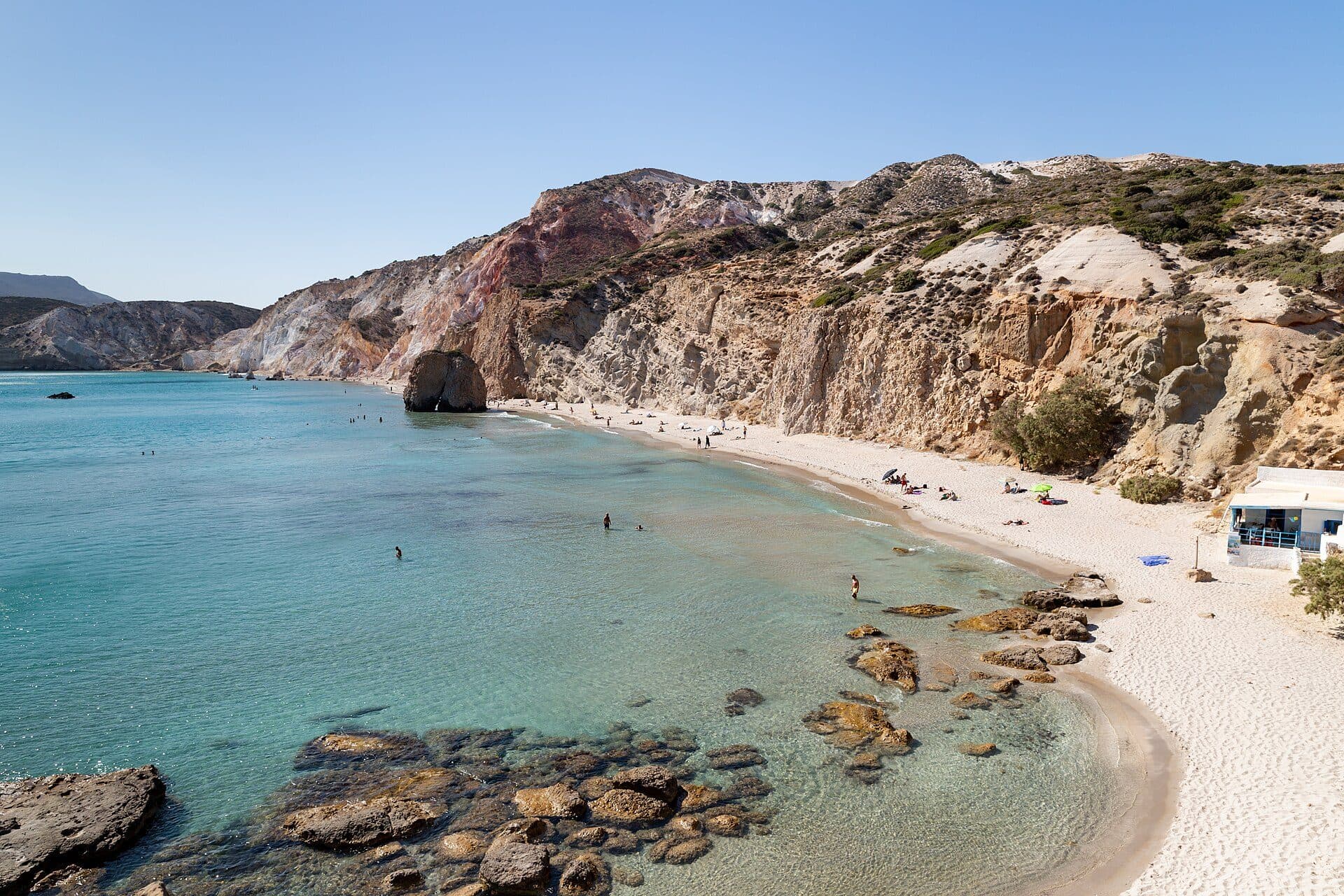
The coloured cliffs of Firiplaka

A coast the volcano painted

Milos was built by volcanoes, and you see it everywhere: the white pumice of Sarakiniko, the red and ochre cliffs of Firiplaka, yellow sulphur at Paleochori and Thiorichia, and warm springs that rise at the water's edge. No two of its seventy-odd beaches look alike.
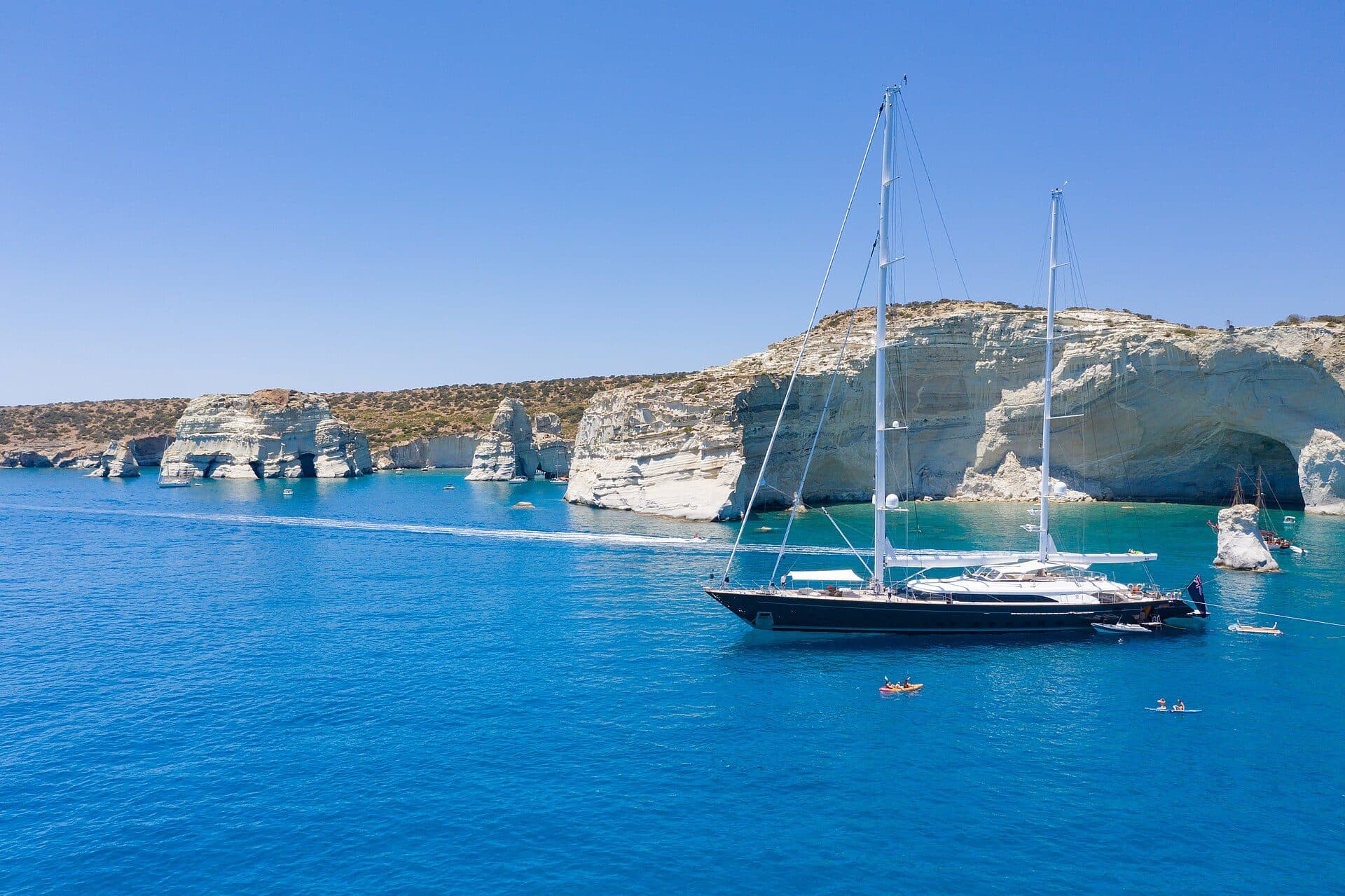
A boat trip along the coast of Milos

Sea caves and pirate coves

Much of the west coast has no road at all. The only way to see Kleftiko, the old pirate hideout of white rocks and arches, the sea cave of Sykia with its open roof, and the coves around them is by boat, on a day trip from Adamas or a small sailing boat.
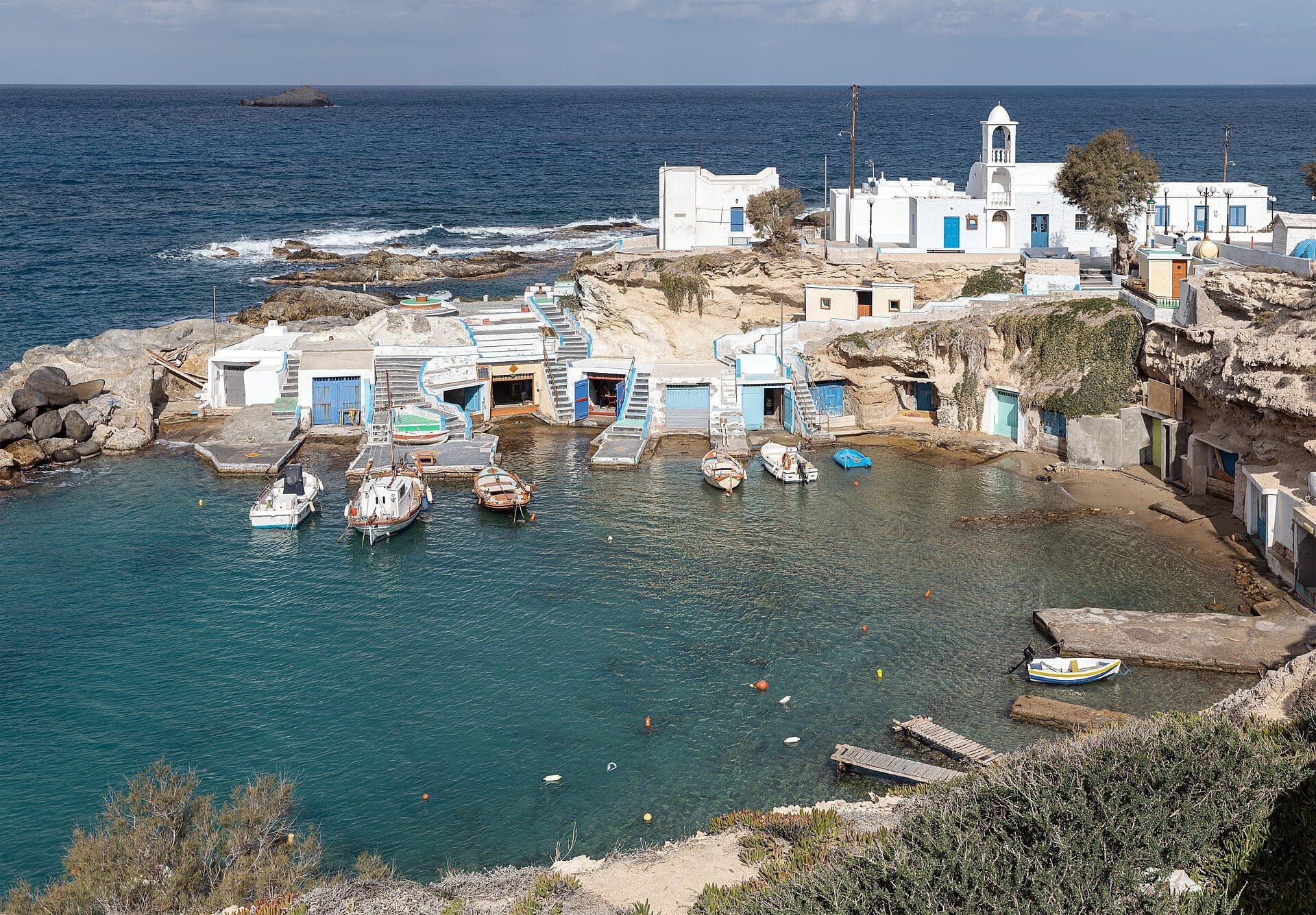
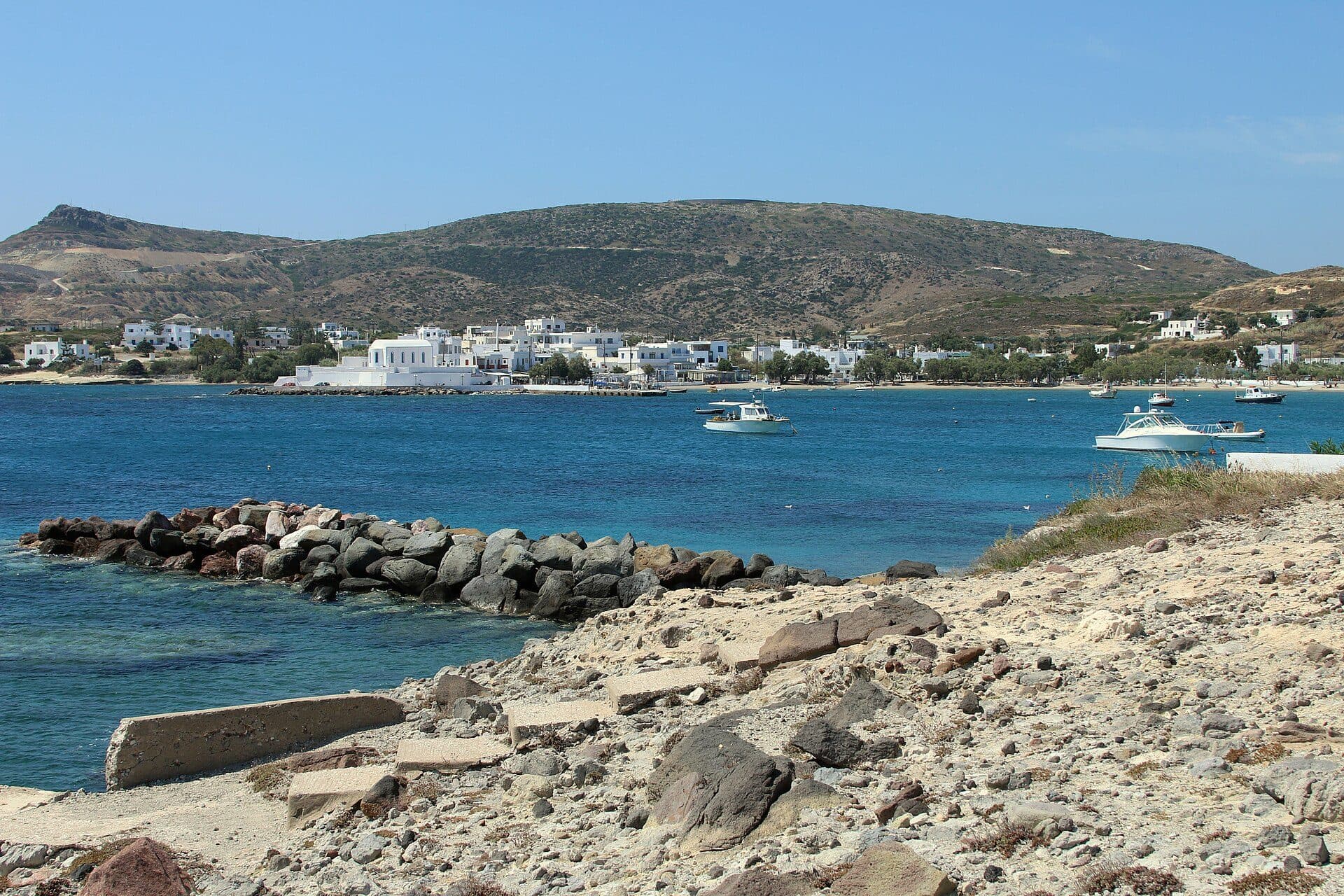
Painted boathouses in the harbour of Mandrakia

The syrmata

In Klima, Mandrakia, Firopotamos and a few other bays, fishermen built their houses right on the water: a boathouse below, cut into the rock, where the boat was pulled up for winter, and a small room above. Their doors and shutters are painted in bright colours, each family its own.
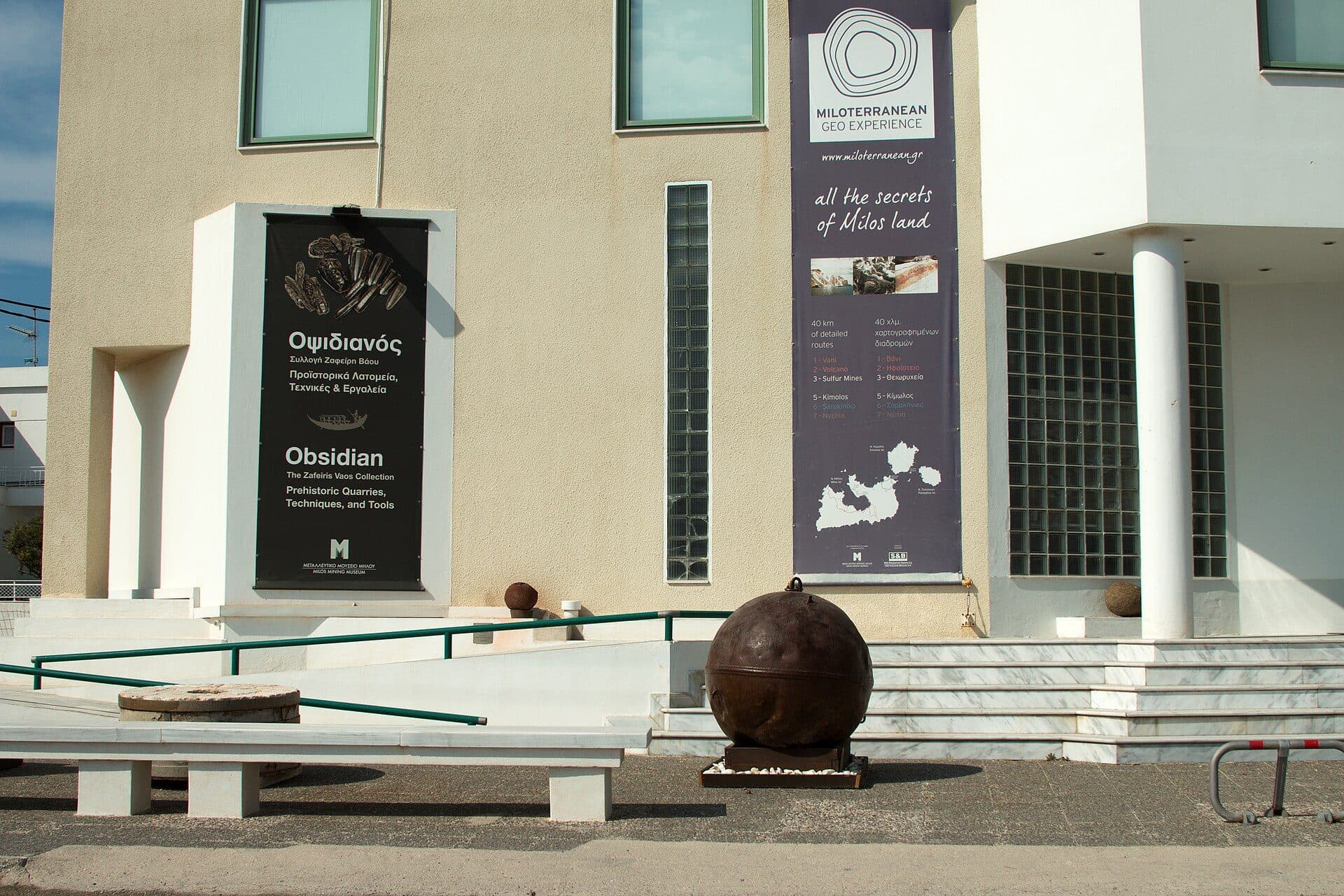
The Milos Mining Museum in Adamas

An island still mined

People have taken stone from Milos since prehistory: obsidian, then sulphur, alum, kaolin, and today bentonite and perlite, which leave on ships from the bay. The Mining Museum in Adamas tells the story, and the abandoned sulphur mines at Thiorichia show how hard the work was.
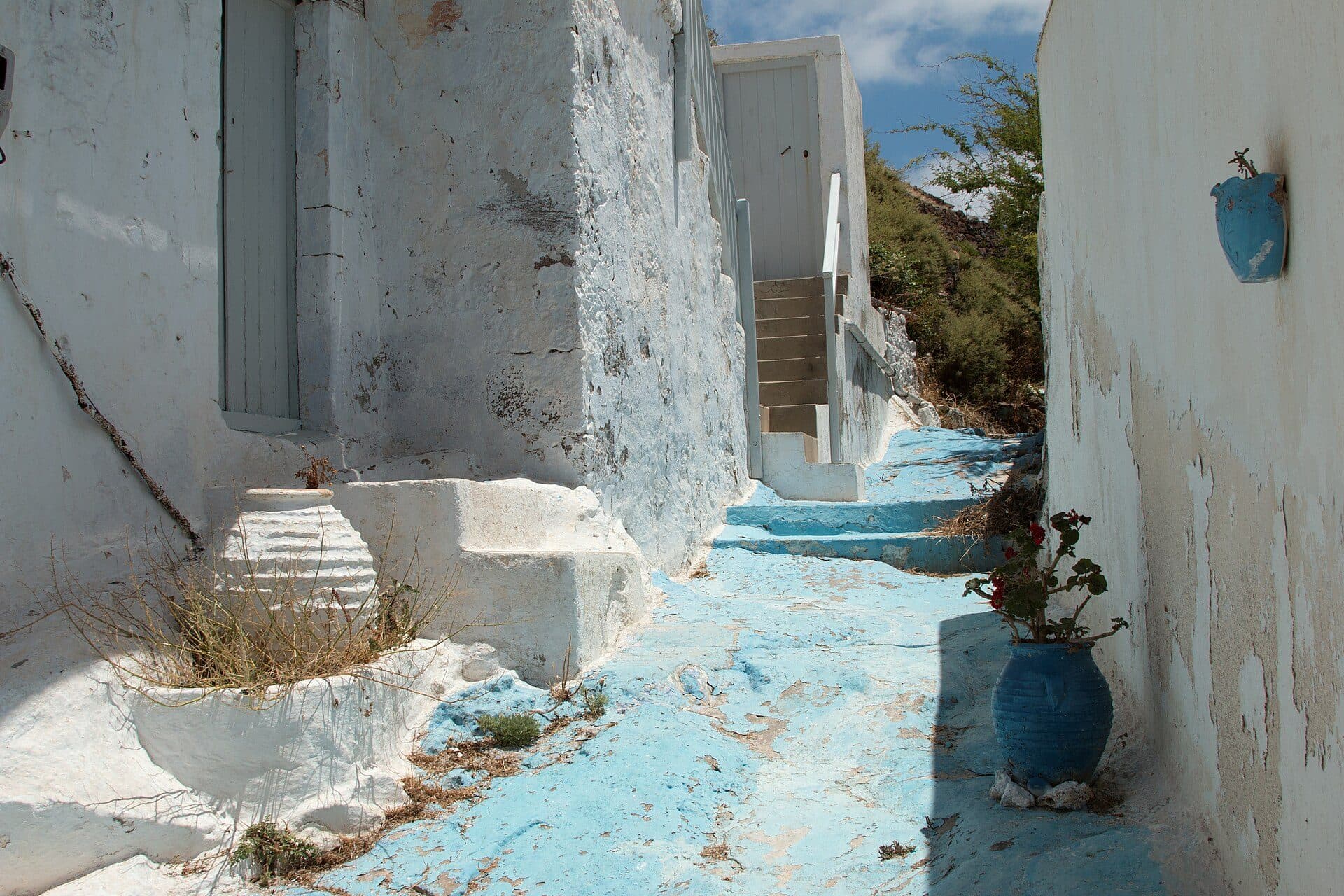
A whitewashed lane in Plaka

“The strong do what they can and the weak suffer what they must.”

The Athenians to the Melians, in Thucydides' Melian Dialogue (Crawley's translation)

Towns & villages

Where you'll fall for Milos

All towns & villages
View of Plaka, Plaka & the hill villages, Milos
01
Plaka & the hill villages

Plaka

The white capital on its hill, crowned by a castle that watches the sun go down

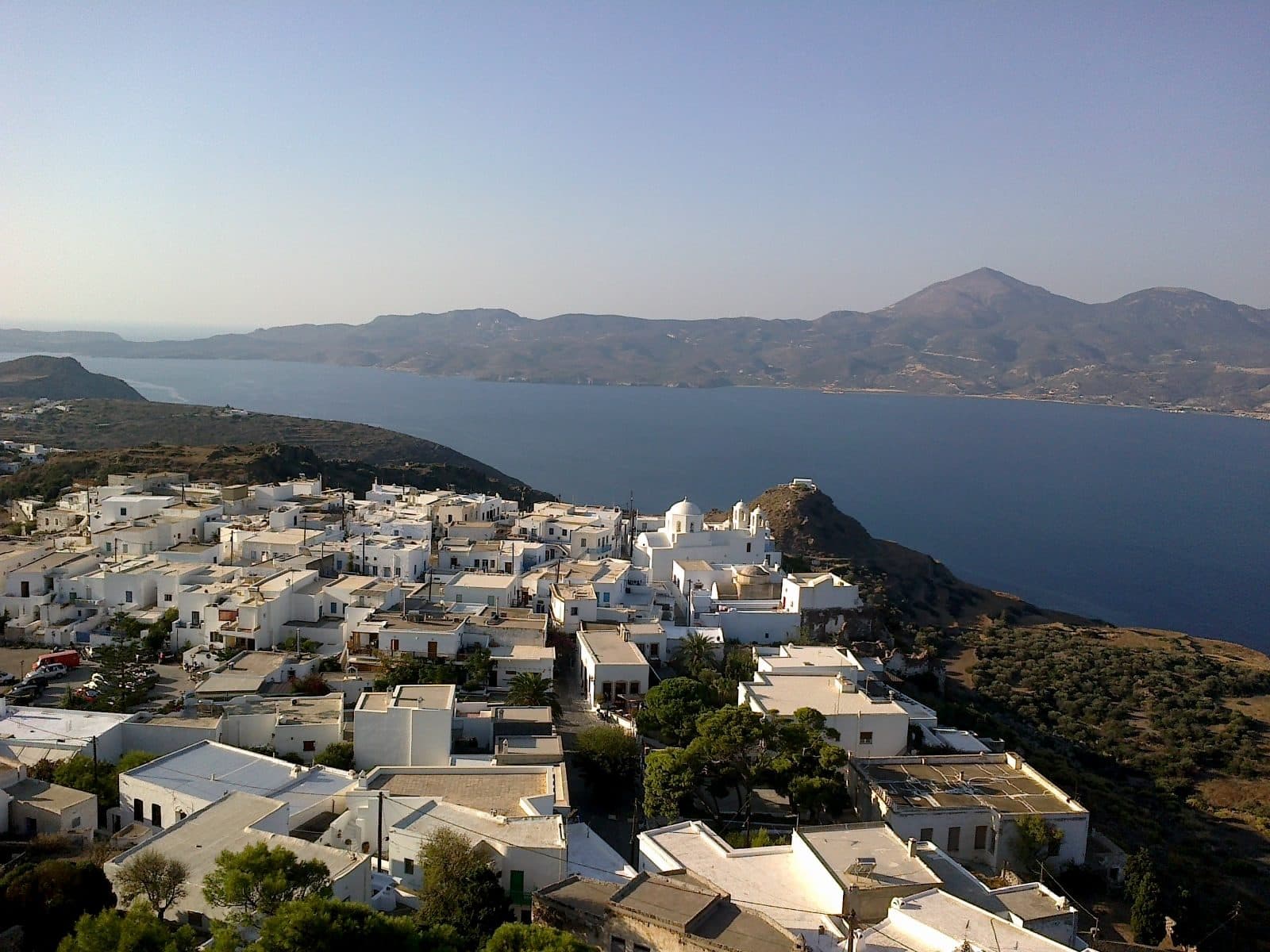
Plaka is the capital of Milos, a white village on a hill above the north-west coast, with the old castle, the Kastro, on the rock behind it. Its lanes are narrow and paved, with the joints painted white, and they wind between small houses with coloured doors, chapels, little shops and cafes. The Archaeological Museum and the Folklore Museum are here, and the lanes lead out along the ridge to Tripiti, the catacombs and the ancient theatre. In the evening half the island climbs to the Kastro or to the church of Panagia Korfiatissa to watch the sun set over the Bay of Milos.

  • Sunset from the Kastro
  • The terrace of Panagia Korfiatissa
  • The Archaeological Museum and the Lady of Phylakopi
  • An evening walk through the lanes
  • The path down to Tripiti and the catacombs
Discover Plaka
View of Tripiti, Plaka & the hill villages, Milos
02
Plaka & the hill villages

Tripiti

Windmills on a ridge above the ancient city

Tripiti runs along a ridge just south of Plaka, a quiet village of white houses and old windmills with a view over the whole Bay of Milos. Its name means 'full of holes', after the tombs cut into the soft rock of the hillside. Below the village are the early-Christian catacombs, the remains of the ancient city of Melos, the marble Roman theatre and the field where the Venus de Milo was found in 1820. A path drops on from there to the fishing village of Klima at the water's edge. In the evening the tables on the edge of the village look straight into the sunset.

  • The windmills on the ridge
  • The early-Christian catacombs
  • The Roman theatre and the Venus field
  • The walk down to Klima
  • Dinner facing the sunset
Discover Tripiti

Things to do

Moments to collect

A boat trip along the coast of Milos

Beach

Sail to Kleftiko

Take a day boat or a small sailing boat around the west coast to the white rocks and sea caves of Kleftiko, with swimming stops at Sykia and other caves on the way.

From Adamas or Pollonia

The white volcanic rocks of Sarakiniko

Nature

Sunrise at Sarakiniko

Walk on the smooth white rock and swim in the inlet before the crowds arrive. At sunrise the stone glows pink and gold.

The north coast

Sunset over the Bay of Milos from the Kastro

Culture

Sunset from the Kastro

Climb the steps above Plaka to the church of Panagia Thalassitra and watch the sun go down over the Bay of Milos, a nightly gathering of the whole island.

Plaka

Good to know

Before you fall for Milos

Milos is a volcanic island in the south-west of the Cyclades, about 151 km², shaped like a horseshoe around one of the largest natural harbours in the Mediterranean. The volcano left it rich in stone: white cliffs, red and yellow rocks, warm springs on the beaches and about seventy beaches, more than any other island in the Cyclades. It also left obsidian, the black volcanic glass that people sailed here for more than ten thousand years ago, and minerals that islanders still mine today. Add a Bronze Age town, a famous siege in Thucydides, catacombs, a marble theatre and the place where the Venus de Milo was found, and the island has more history than its size suggests.

Area
≈ 151 km²
Population
≈ 5,000
Highest point
Profitis Ilias, ≈ 750 m
Airport
Milos (MLO), flights from Athens
  • Couples
  • Beaches
  • Boat trips
  • History

From obsidian traders to the Venus de Milo

Black volcanic glass traded across the Aegean, a Bronze Age town, a city destroyed by Athens, catacombs, a marble theatre, Venetian lords, a famous statue, mines and a war.

Walk through the story