
Phylakopi
The Bronze Age town on the north-east coast near Pollonia, inhabited for a thousand years, with walls and house foundations above the sea.
Milos · History
Black volcanic glass traded across the Aegean, a Bronze Age town, a city destroyed by Athens, catacombs, a marble theatre, Venetian lords, a famous statue, mines and a war.
Timeline
From the Stone Age
Milos is one of the very few sources of obsidian in the Aegean, a black volcanic glass that breaks into razor-sharp blades. Tools of Melian obsidian turn up in the Franchthi Cave on the mainland in layers more than ten thousand years old, which means people were already sailing to Milos long before anyone lived here. For thousands of years it was the island's great export.

c. 2300–1100 BC
On the north-east coast, near today's Pollonia, a town grew at Phylakopi and was rebuilt three times over a thousand years, first in the Cycladic way, then under Minoan influence from Crete, then as a Mycenaean town with a great wall and a shrine. Its pottery and frescoes, including the famous flying fish, and the clay figure of the Lady of Phylakopi, are among the finest of the Cycladic Bronze Age.
416 BC
Melos was settled by Dorians, kin of the Spartans, and tried to stay neutral in the Peloponnesian War. In 416 BC Athens sent a fleet and demanded surrender. Thucydides recorded the talks as the Melian Dialogue, in which the Athenians argue that justice only exists between equals in power. The Melians refused, the city was besieged and taken, the men were put to death and the women and children enslaved. The dialogue is still read today as a lesson in power and politics.
Hellenistic and Roman times
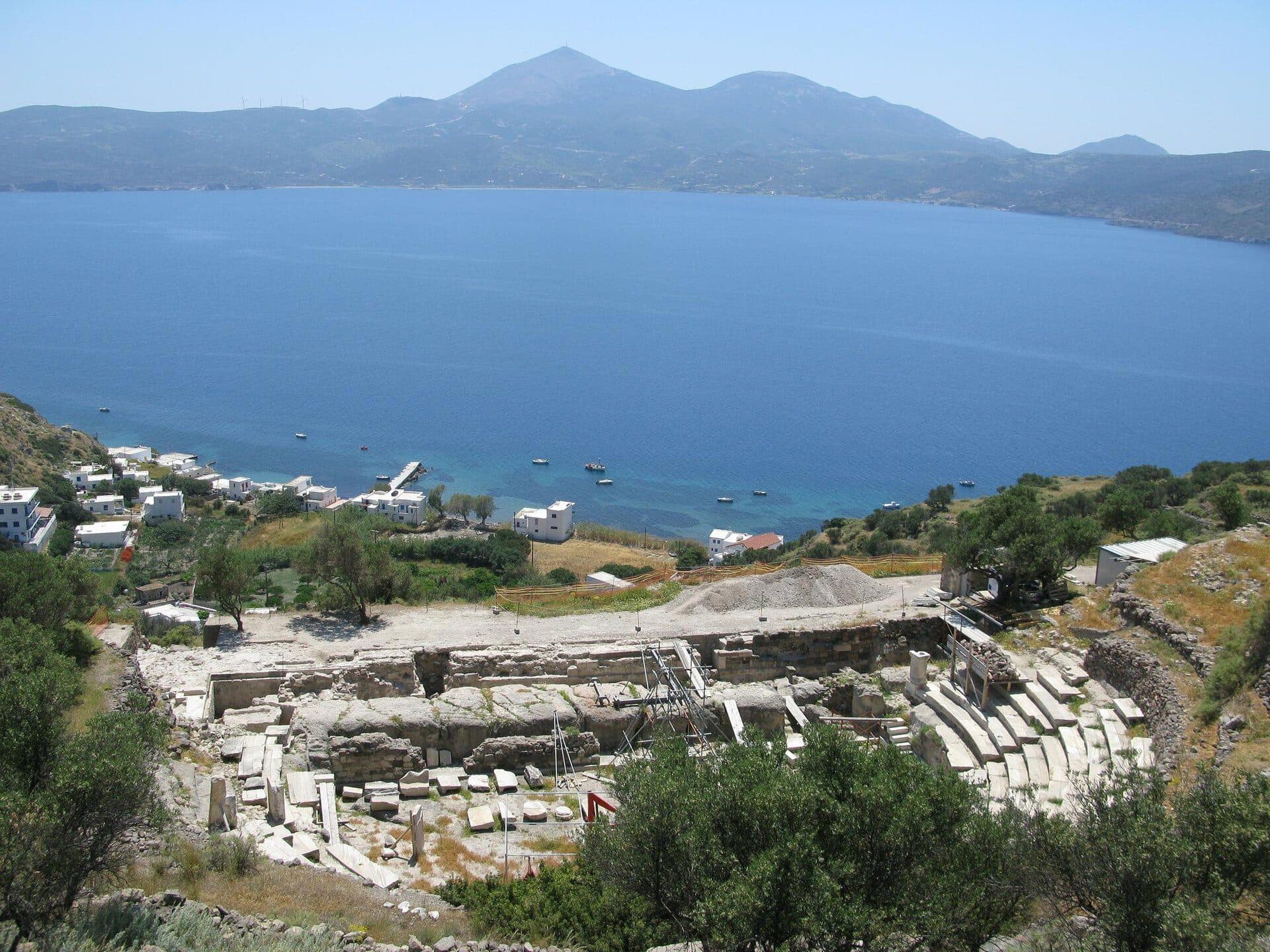
The city was rebuilt on the hillside between today's Plaka and Klima. In the Hellenistic and Roman centuries it had a gymnasium and a theatre, rebuilt in marble by the Romans, looking over the bay. It was in this city that the statue we call the Venus de Milo was carved, probably in the 2nd century BC.
1st–5th century AD
Below Tripiti, early Christians cut long corridors and burial chambers into the soft volcanic rock, with arched niches for their dead, some painted and inscribed. The catacombs of Milos are the largest early-Christian burial site in Greece and among the most important anywhere, with room for thousands of burials.

1207–1566
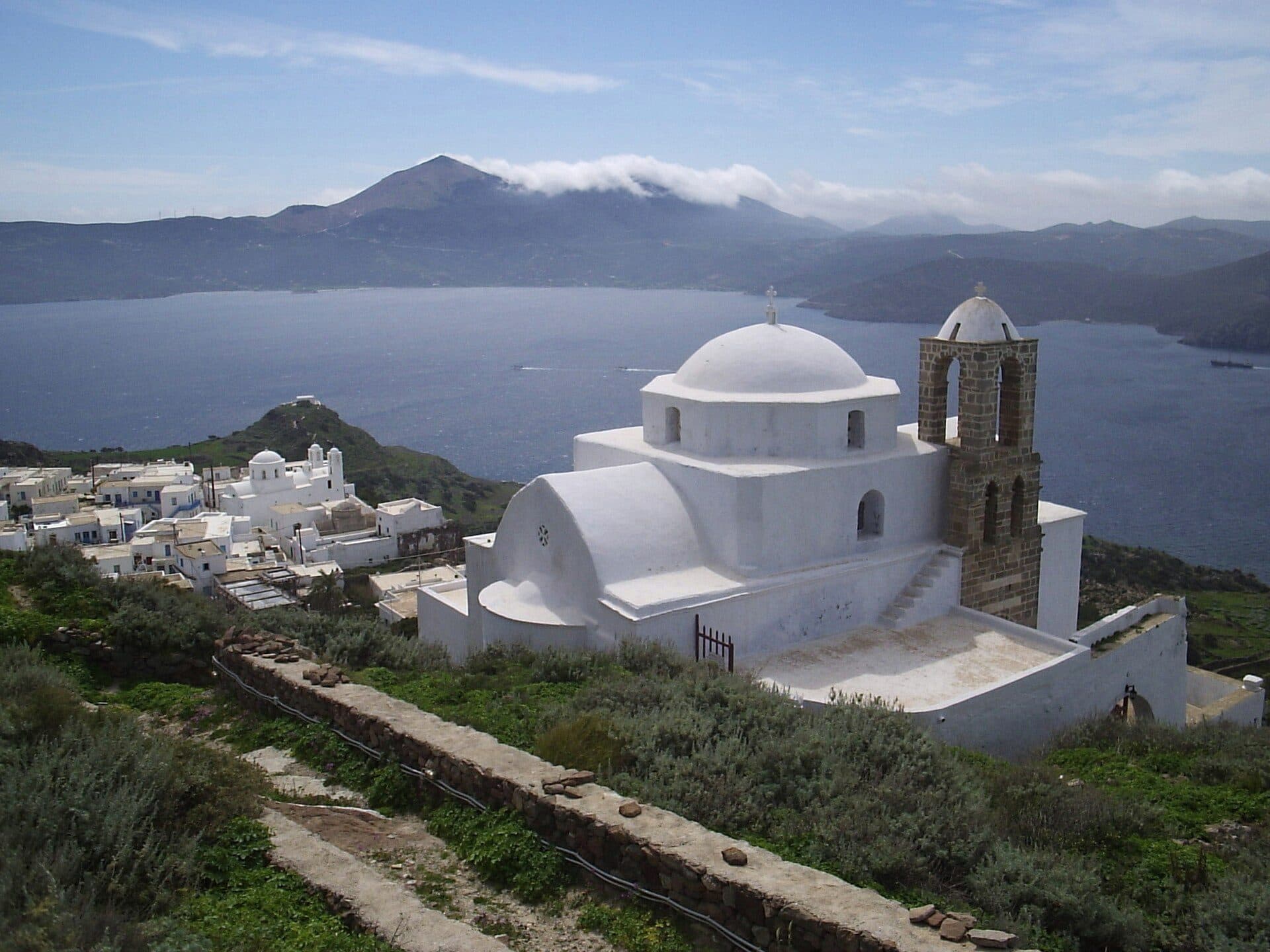
After the Fourth Crusade, Milos became part of the Duchy of the Archipelago, ruled from Naxos by Marco Sanudo and his successors. The castle on the hill above Plaka took its shape in these centuries. The Ottomans took the island in the 16th century, and in the years that followed the great bay became a haven for pirates and corsairs, who gave their names to places like Kleftiko and Sarakiniko.
1820
In April 1820, a farmer digging stones near the ancient theatre found a marble statue of a woman in two large pieces. A French naval officer, Olivier Voutier, was there at the time, and French diplomats soon bought it for France. It was taken to Paris and given to King Louis XVIII, and it has stood in the Louvre ever since. Its arms have never been found. Milos joined the new Greek state a few years later.

19th–20th century
In the 19th century refugees from Crete founded Adamas by the harbour. Mining grew into the island's living: sulphur at Thiorichia until the mid-20th century, kaolin, barite and later bentonite and perlite, still exported today. In the Second World War German forces occupied Milos and fortified the bay, and the island was freed in 1944. Since then, tourism has grown alongside the mines.

Visit
The Bronze Age town on the north-east coast near Pollonia, inhabited for a thousand years, with walls and house foundations above the sea.
Early-Christian tombs cut into the rock below Tripiti, the largest in Greece. Part of them is open, on a short guided visit.
A marble theatre of the Roman period on the slope of the ancient city, looking over the bay. The field where the Venus was found is a short walk away.
The castle hill above Plaka, with the church of Panagia Thalassitra at the top and the best sunset view on the island.
The abandoned sulphur mines on the south-east coast, with rusting machinery and empty miners' houses above a quiet beach.