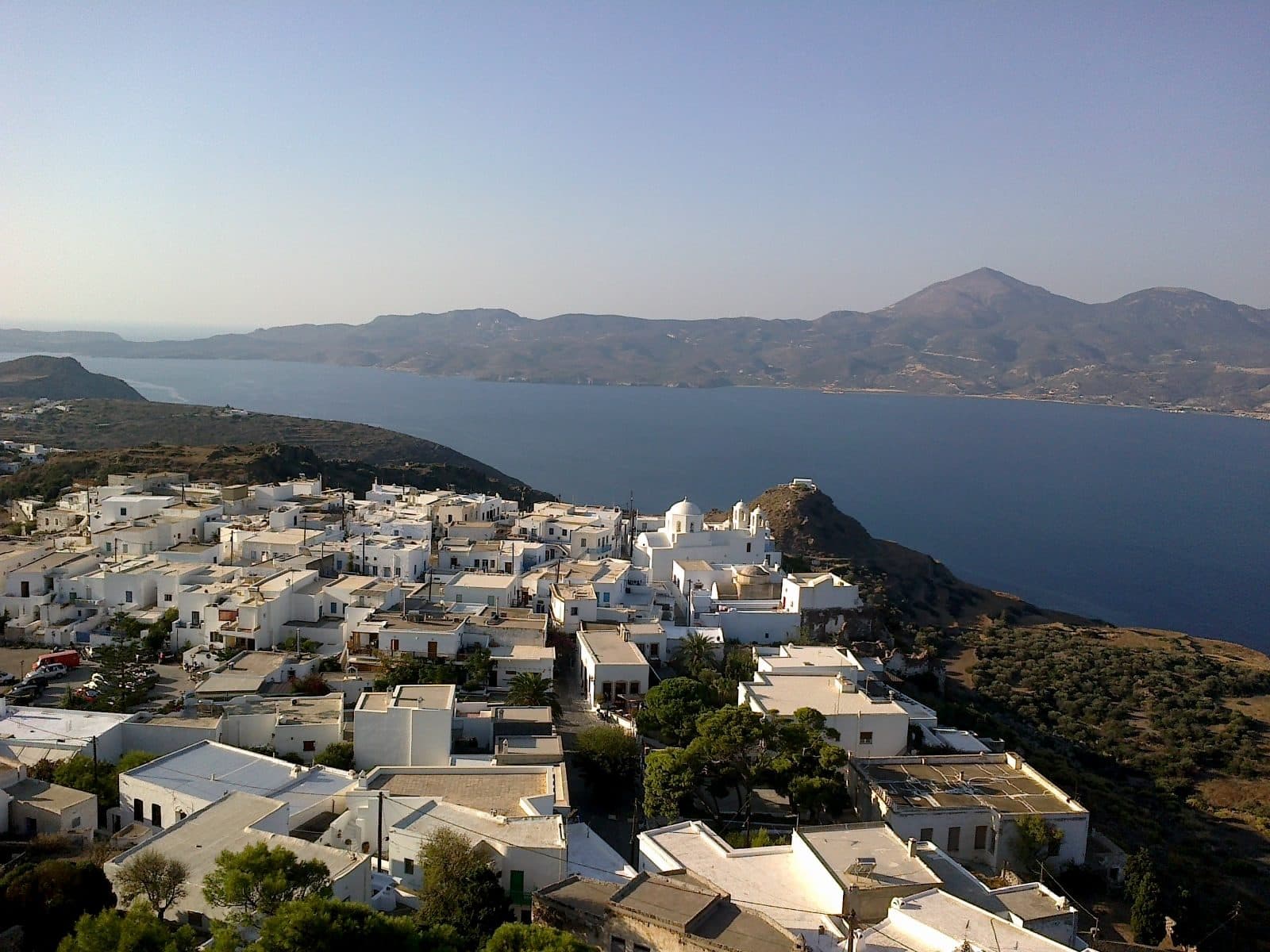
Tripiti
The next village along the ridge, with its windmills, the catacombs and the path down to the ancient theatre and Klima.
Milos · Plaka & the hill villages · Πλάκα
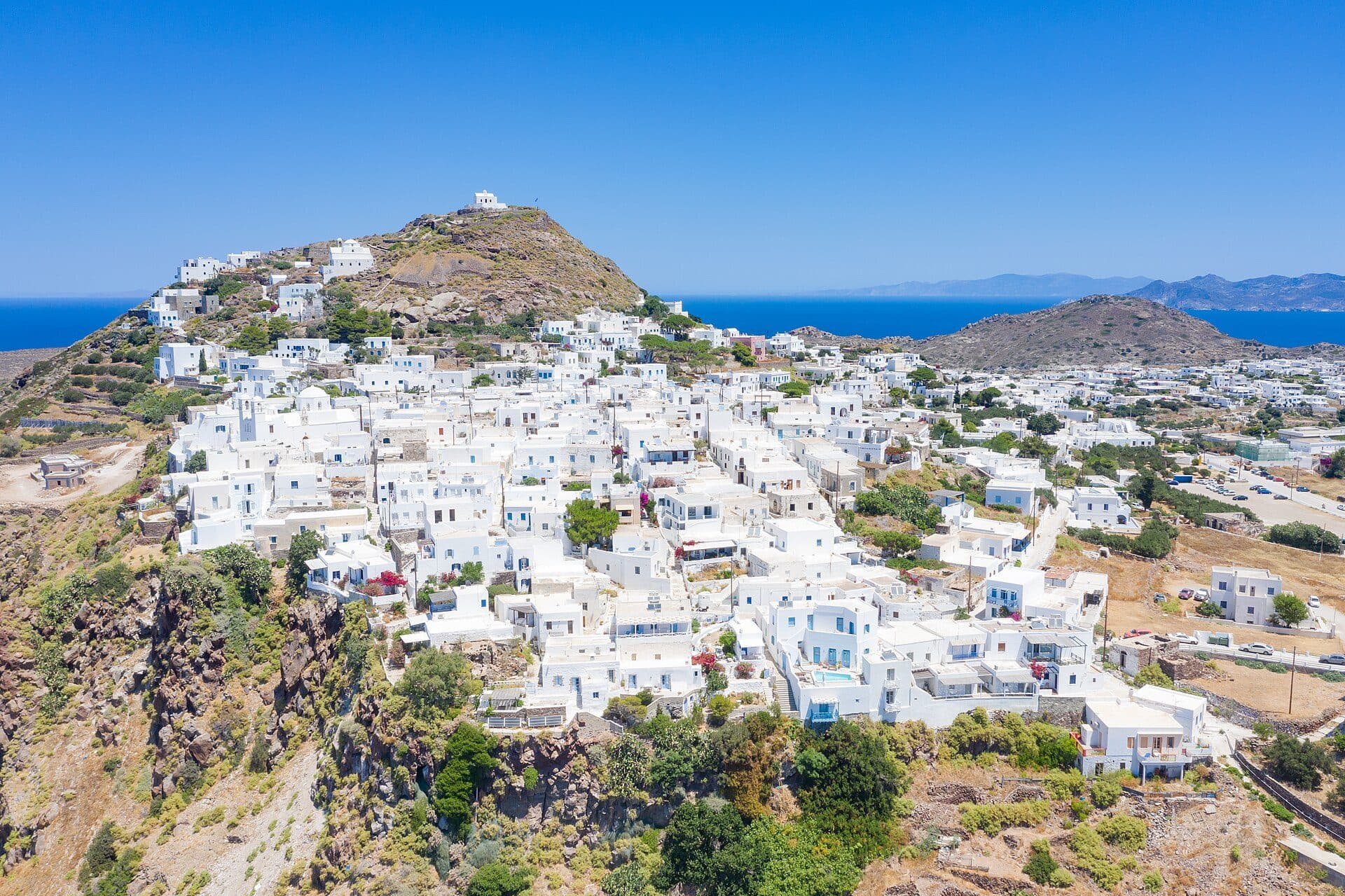
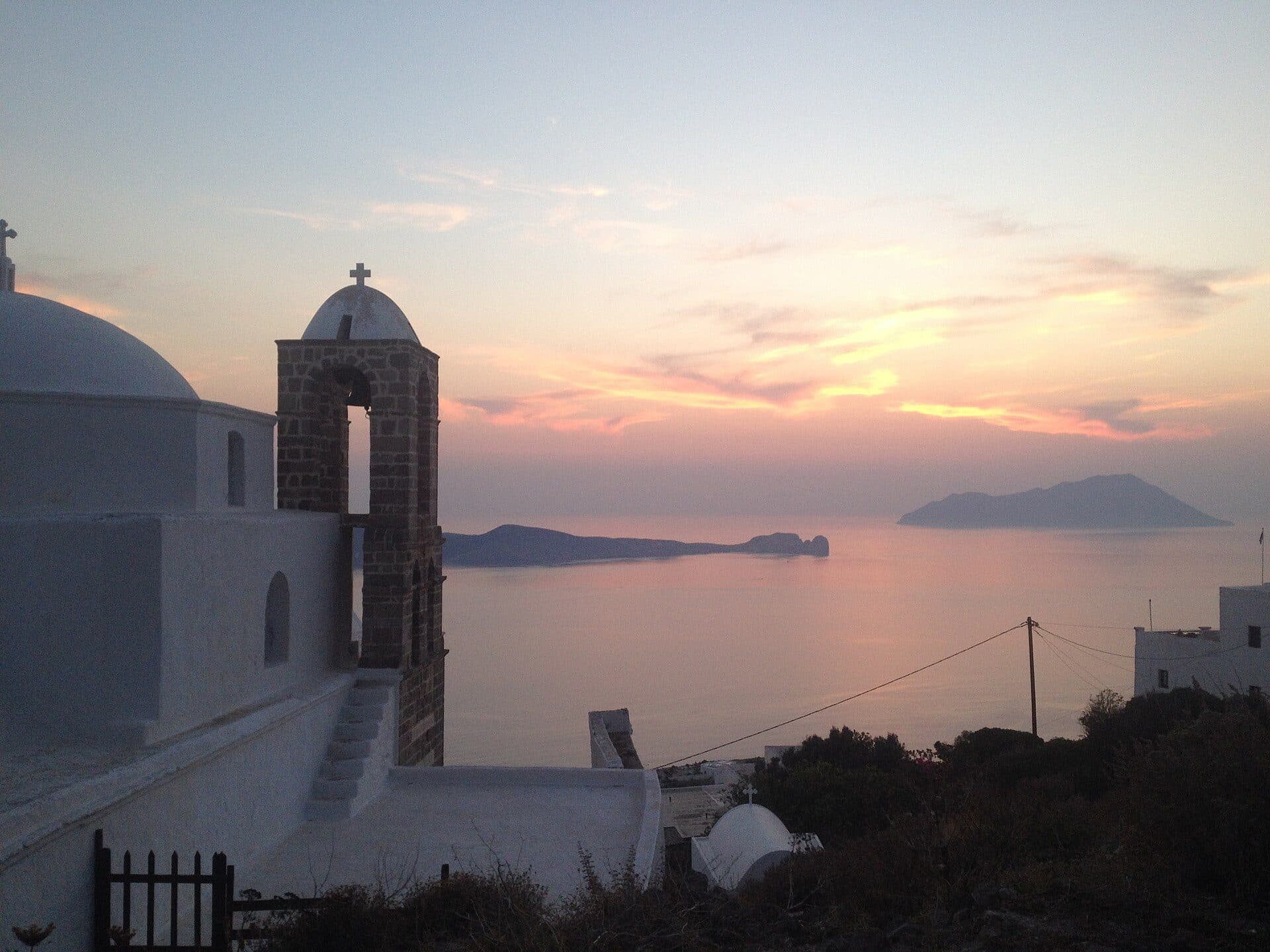
Plaka is the capital of Milos, a white village on a hill above the north-west coast, with the old castle, the Kastro, on the rock behind it. Its lanes are narrow and paved, with the joints painted white, and they wind between small houses with coloured doors, chapels, little shops and cafes. The Archaeological Museum and the Folklore Museum are here, and the lanes lead out along the ridge to Tripiti, the catacombs and the ancient theatre. In the evening half the island climbs to the Kastro or to the church of Panagia Korfiatissa to watch the sun set over the Bay of Milos.
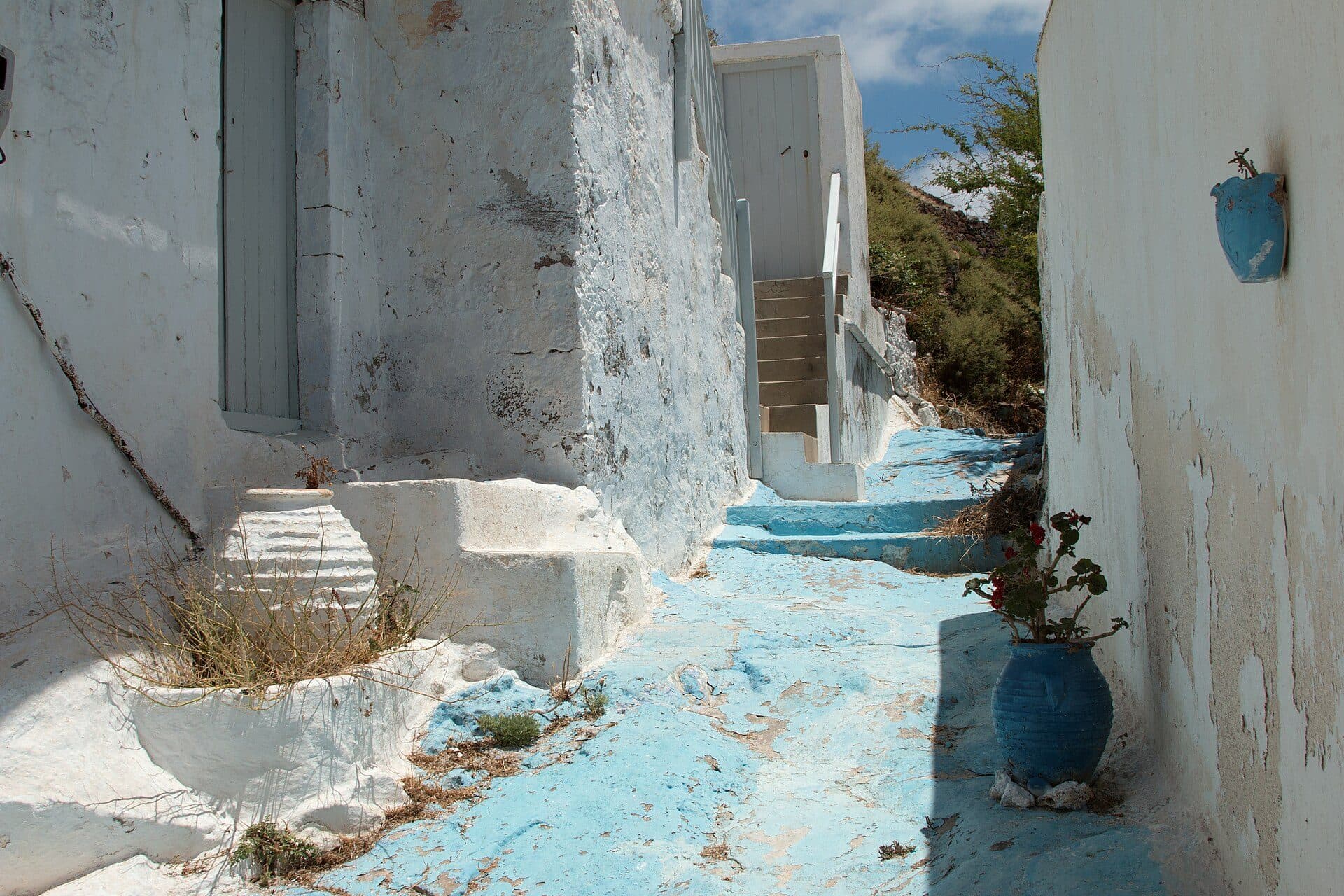
Greetings from Plaka
Plaka
This afternoon we walked through the museum and stood a long time in front of the Lady of Phylakopi, who is more than three thousand years old. Then we climbed the steps of the Kastro, past little chapels, and sat on the rocks at the top with half the island. The sun went down behind the bay, everyone clapped, and we walked back down through the white lanes to dinner, with the lamps coming on one by one.
The white capital on its hill, crowned by a castle that watches the sun go down
Plaka sits high on a hill on the north-west side of the island, with Tripiti, Triovasalos and Pera Triovasalos running into it along the same ridge. Below it, on the slope down to Klima, lay the ancient city of Melos, and on this rock above it the islanders have had a fortress for a very long time.
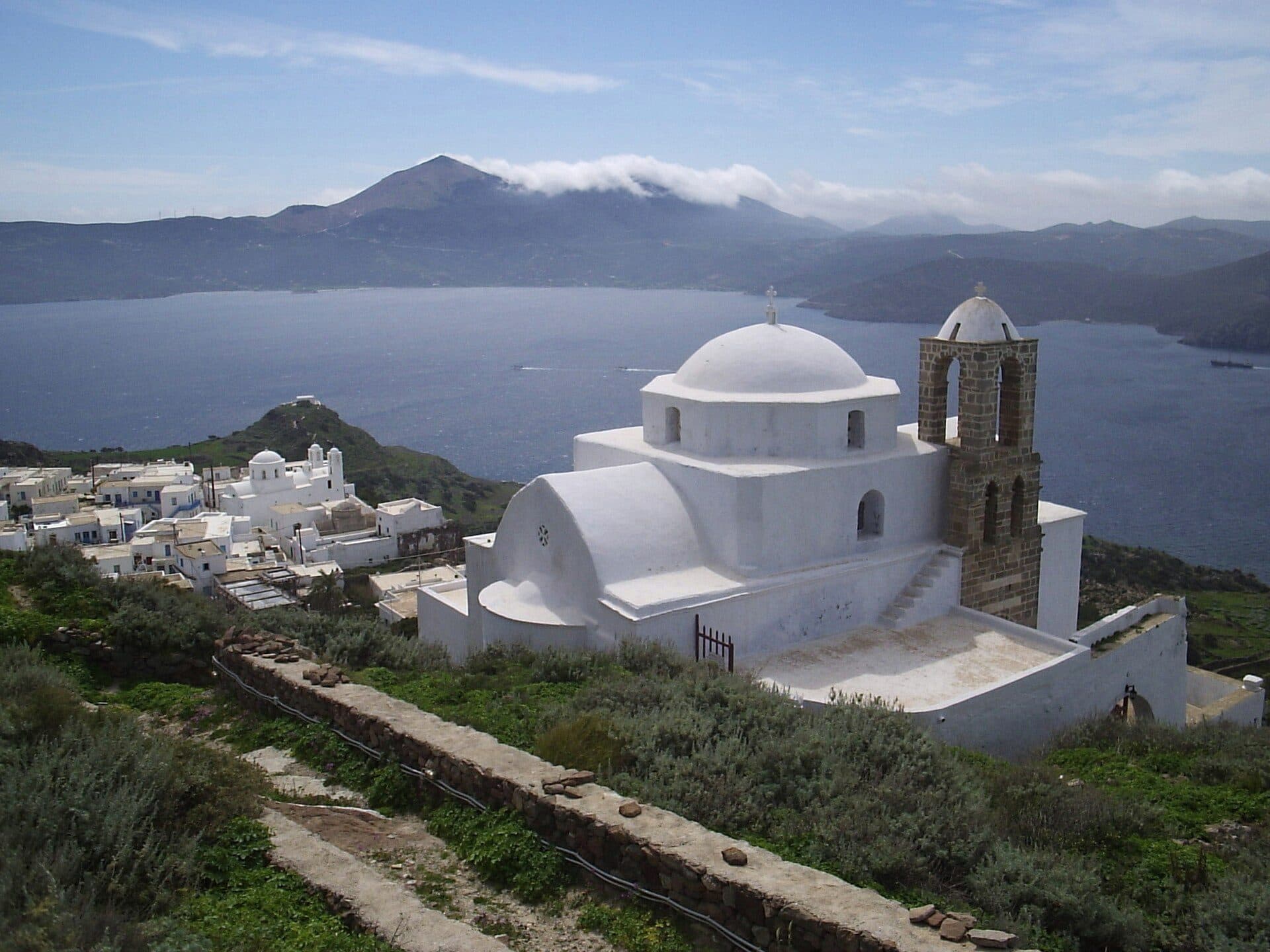
The castle you climb to today was built in the Middle Ages, when Milos belonged to the Venetian dukes of Naxos. The houses were built in a ring around the hill, so that their outer walls formed the wall of the castle. Most of the old Kastro has gone, but the path still climbs through what remains, past chapels and old walls, to the church of Panagia Thalassitra, the Virgin of the Sea, at the very top.
For centuries the capital of the island was not here but at Zefyria, in the plain to the south-east. In the late 18th century epidemics, and by some accounts volcanic fumes from the ground, emptied it, and its people moved up to the healthier hills. Plaka grew into the capital, and it has stayed one.
The village is built the Cycladic way: white cubes with flat roofs, outdoor stairs, pots of basil and bougainvillea on the steps, and small churches at every turn. Above the cliff on the edge of the village, the church of Panagia Korfiatissa has a wide terrace that hangs over the sea, one of the best places on the island to watch the light fade.
Plaka is also where Milos keeps its past. The Archaeological Museum, in a handsome neoclassical building, holds the clay figure of the Lady of Phylakopi, obsidian blades and pottery from the Bronze Age town, and a copy of the Venus de Milo, whose original was found in a field just below the village in 1820. A few steps away, the Folklore Museum shows how the islanders lived in the last centuries.
Hour by hour
A museum, the catacombs and the theatre, a swim at Klima and a sunset from the castle. Here is how we would spend a day here.
Start early in the white lanes, before the day visitors come up from the port, with a coffee and something sweet.
See the Lady of Phylakopi, the obsidian and the copy of the Venus de Milo, so the rest of the day makes sense.

Walk down through Tripiti to the early-Christian catacombs, then on to the marble Roman theatre above the bay and the spot where the Venus was found.
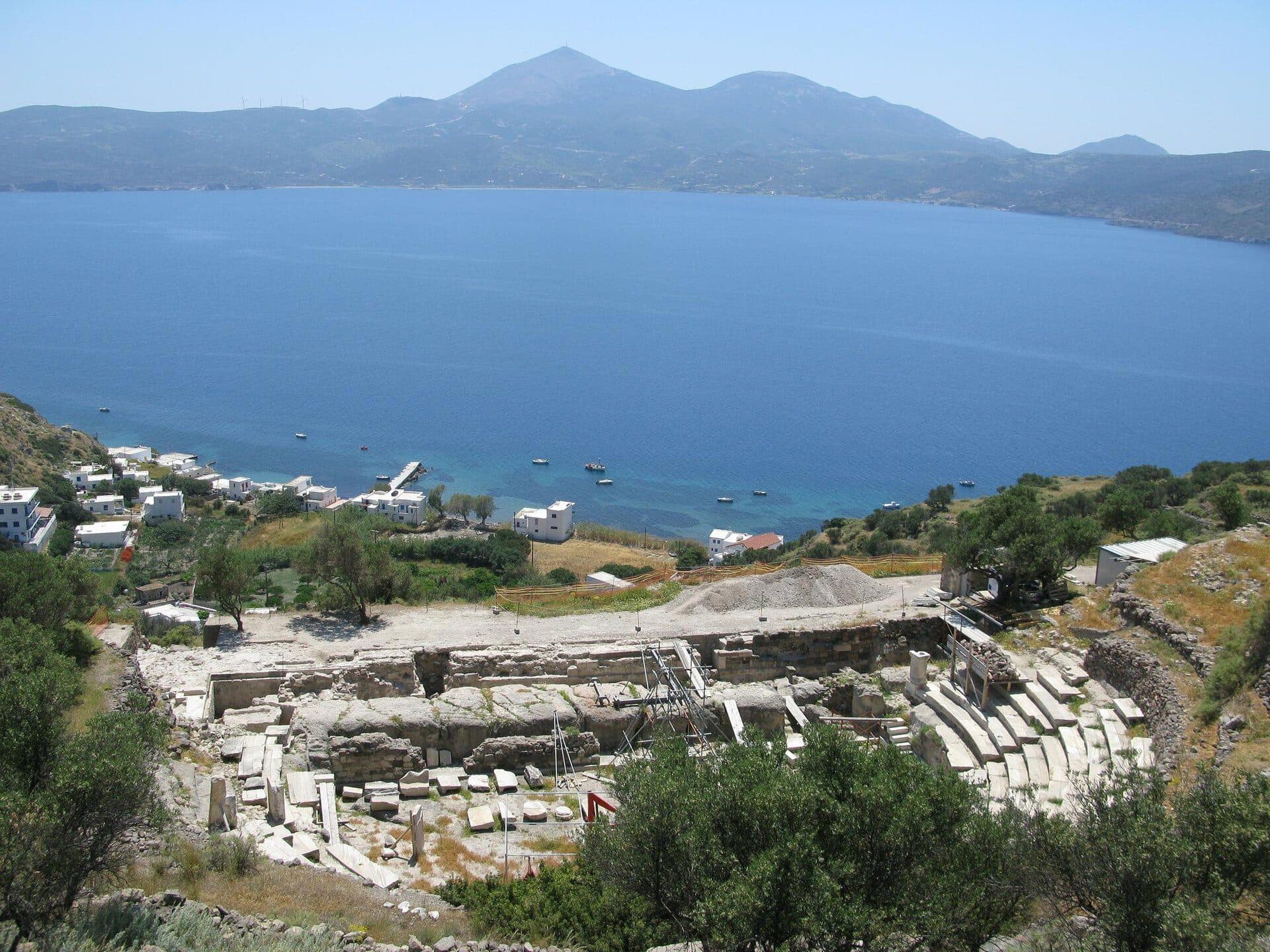
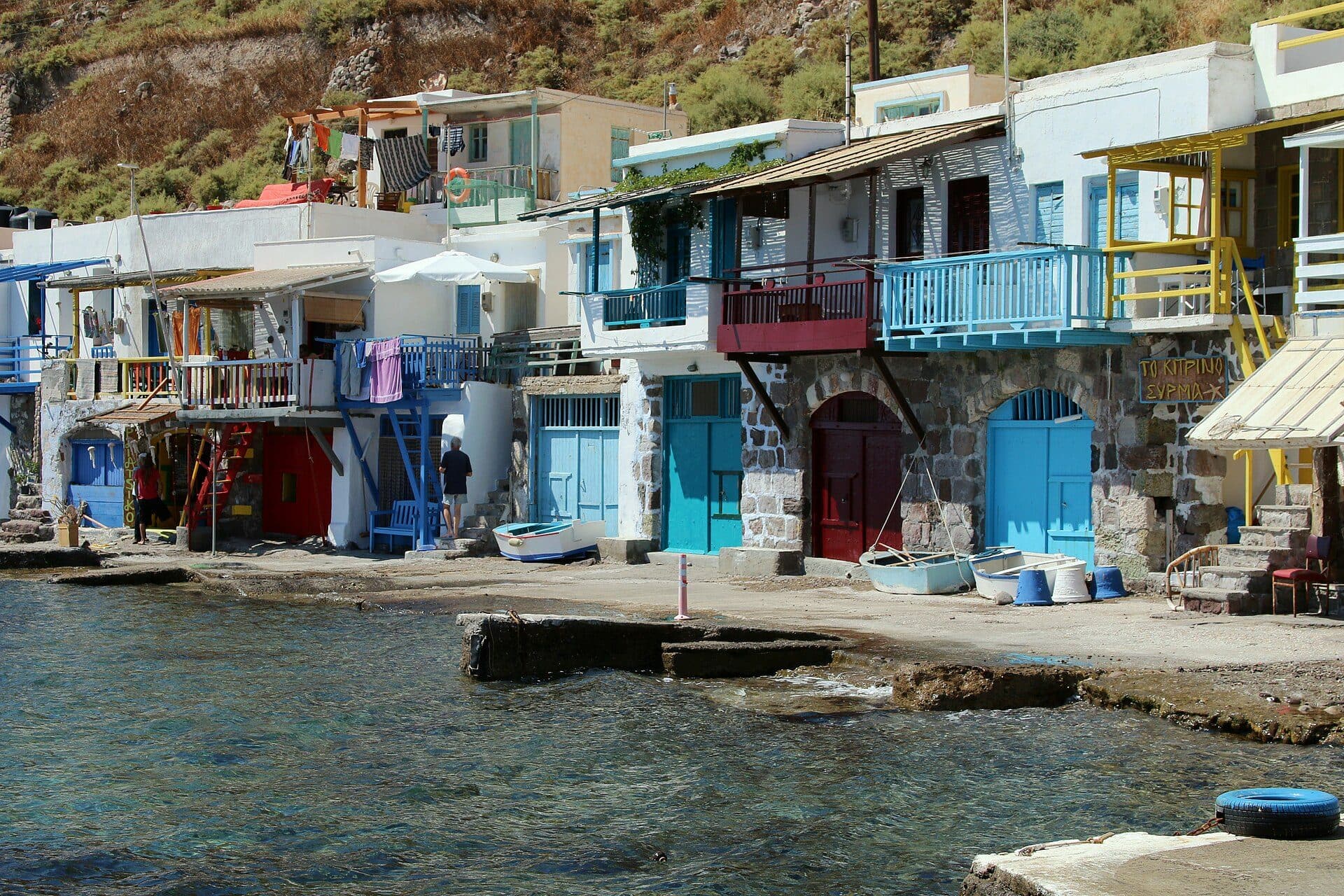
Carry on down to Klima for fish by the painted boathouses and a swim off the rocks.
Climb the steps to Panagia Thalassitra at the top of the castle hill, and watch the sun go down over the Bay of Milos.
Walk back down for a late dinner in the village, then wander the lanes while the shops are still open.
Where to stay
Plaka
Studios Betty · Village studios · €€
Where to eat
Plaka · Plaka & the hill villages
Plaka · Plaka & the hill villages
Within an easy drive
The next village along the ridge, with its windmills, the catacombs and the path down to the ancient theatre and Klima.

Early-Christian tombs cut into the soft rock below Tripiti, among the most important of their kind anywhere.
The fishing village of painted boathouses on the water, about twenty minutes' walk down from Tripiti.
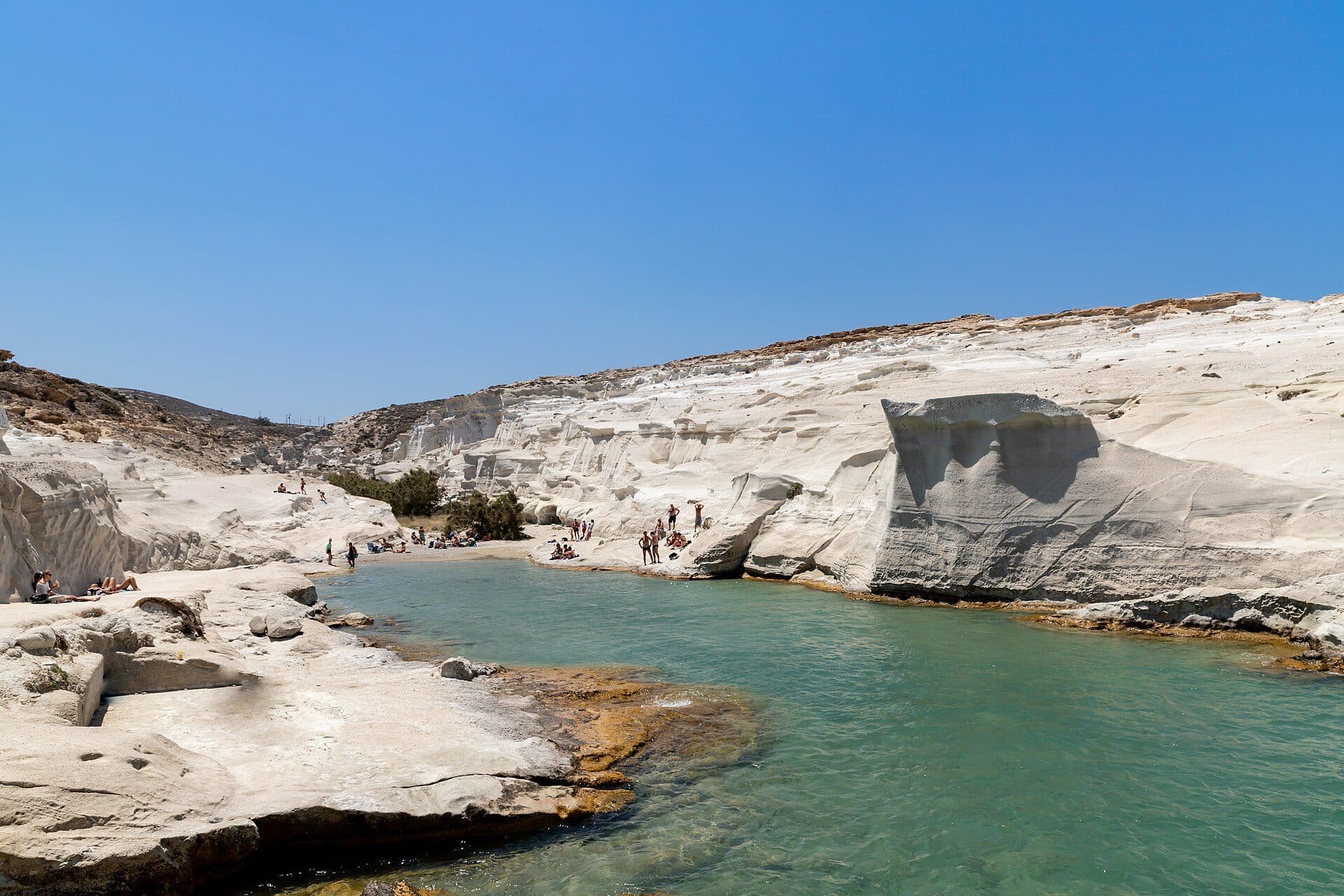
The white moon-like rocks of the north coast, a short drive from Plaka. Go early or late, when the stone is gold.

Good to know
Plaka is about 5 km up the hill from the port of Adamas, a short bus or taxi ride. Buses run between the two through the day. Cars stay in the car parks on the edge of the village: the lanes are for walking, and on summer evenings the car parks fill up before sunset.
May, June and September are ideal, warm but calm enough for long walks down to the theatre and Klima. In July and August the Kastro is crowded at sunset, so climb up early or watch from the terrace of Panagia Korfiatissa instead.
Every stay we recommend across Milos, from village guesthouses to rooms on the sea.
See all stays