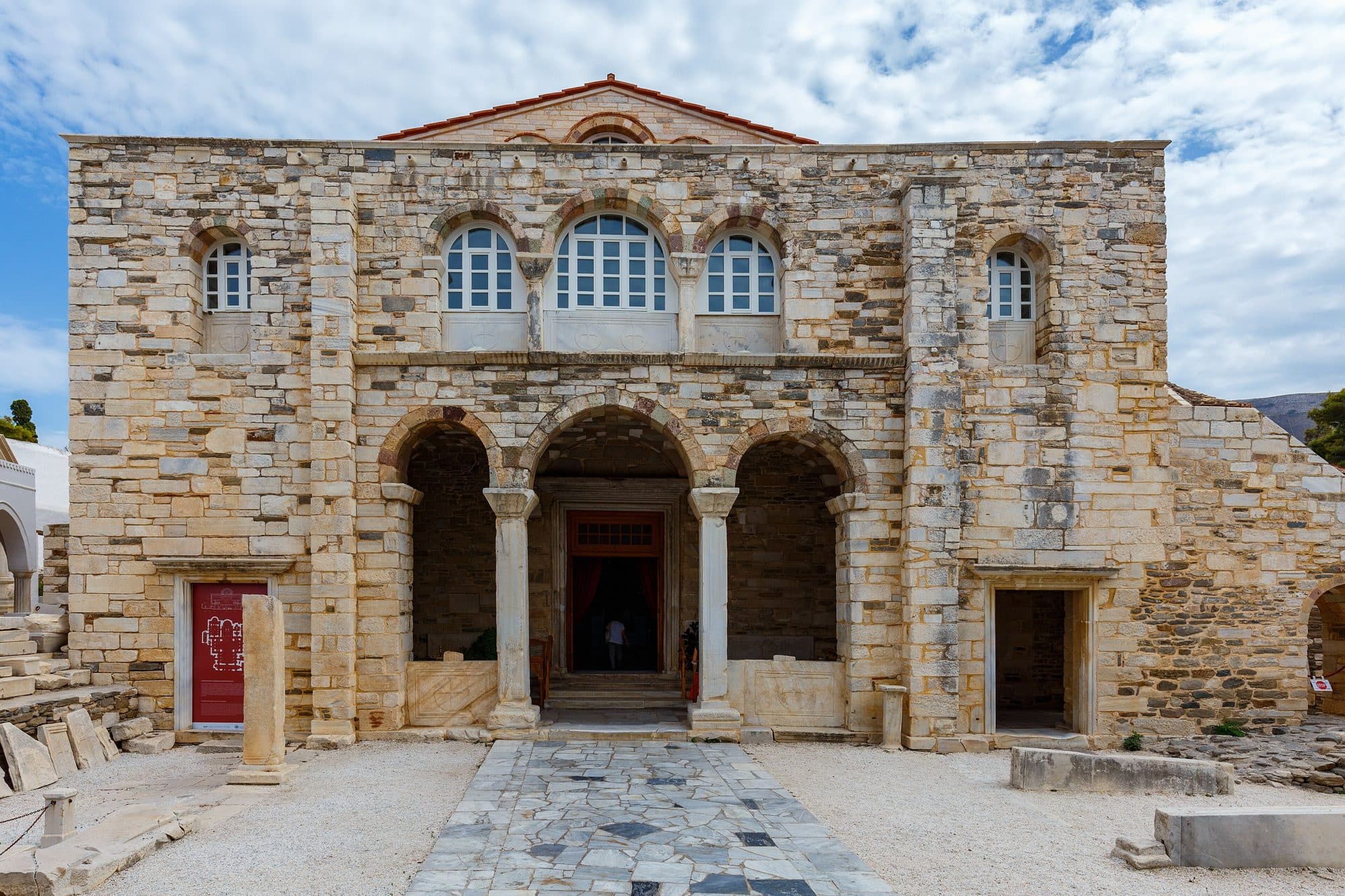
Panagia Ekatontapiliani
The 6th-century basilica by the port of Parikia, one of the oldest churches in Greece still in use, with a baptistery and the Byzantine Museum in its courtyard.

Paros · History
Cycladic figurines, a warrior poet, the marble of the great sculptors, a church of a hundred doors, Venetian lords and a heroine of the Greek revolution.
Timeline
c. 3200–2000 BC
In the Early Bronze Age Paros and its small neighbour Antiparos were home to the islanders who carved the famous marble figurines of the Cyclades. Burials at Plastiras on Paros gave their name to one of the earliest styles of figure, now in the Archaeological Museum.

7th century BC
In the archaic age Paros was rich and bold enough to found a colony on Thasos in the north Aegean. Among the colonists was Archilochus, a soldier and one of the first lyric poets of Greece, famous for verses of love, war and mockery. Fragments of a monument to him are in the Archaeological Museum.

Antiquity
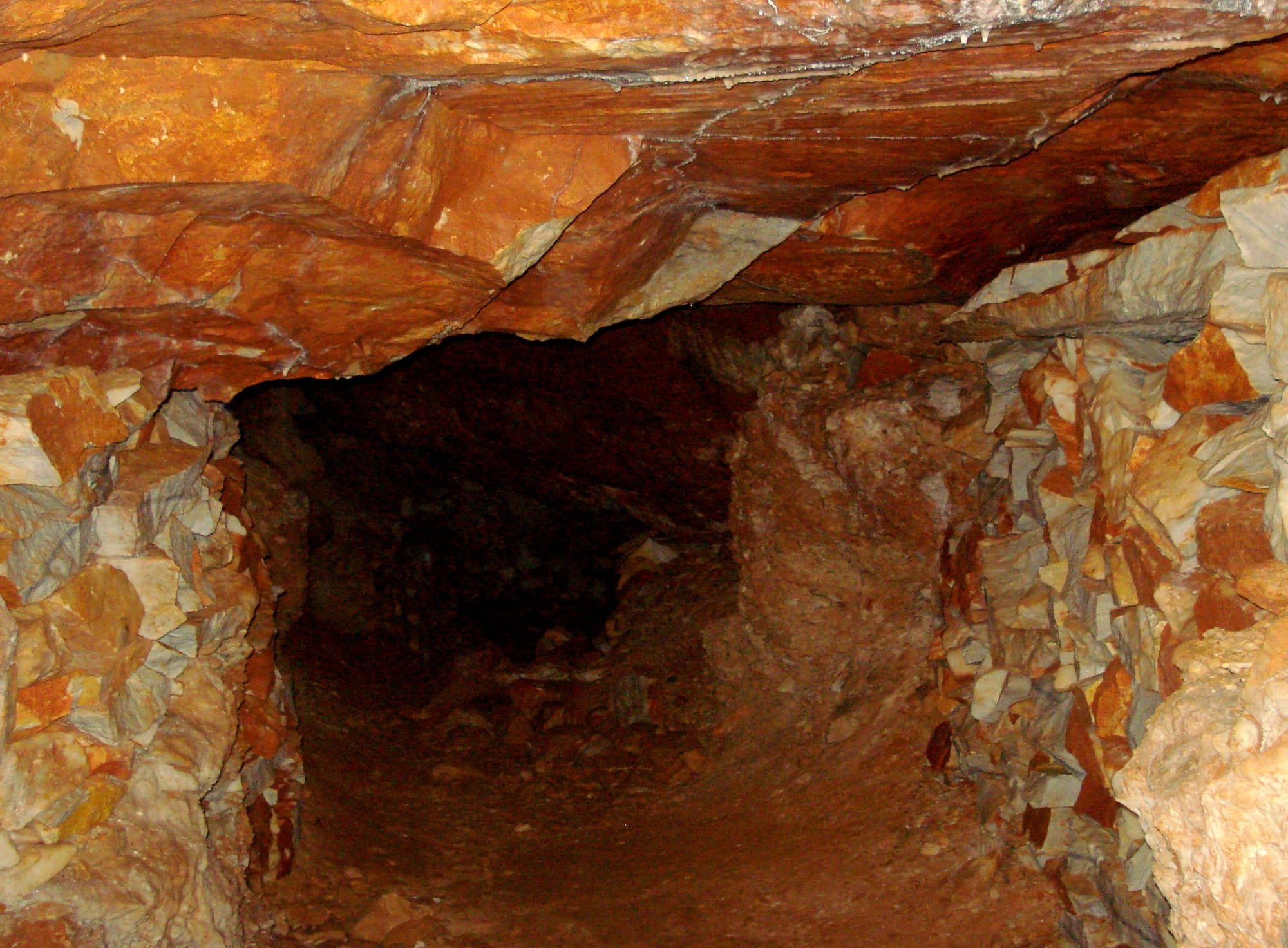
For a thousand years the marble of Paros was quarried at Marathi, in deep galleries cut by lamplight into the hill, and shipped all over the Greek world. Its translucent white made it the choice of the great sculptors, and the Venus de Milo is carved from it.
4th–6th centuries AD
Tradition says Saint Helena, mother of Constantine, founded a church at Parikia on her way to the Holy Land. In the 6th century the emperor Justinian rebuilt it as the great domed basilica of Panagia Ekatontapiliani, which is still the island's cathedral. The road paved with marble from Lefkes to Prodromos also dates from the Byzantine centuries.
1207–1537
After the Fourth Crusade Paros became part of the Venetian Duchy of the Archipelago. Its lords built the kastro of Parikia from the stones of ancient temples, and a small fortress guarded the harbour of Naoussa. In 1537 the Ottoman admiral Barbarossa took the island after a siege at Kefalos above Marpissa.
1821 to today
In the Greek War of Independence Manto Mavrogenous, a young woman from a rich merchant family, spent her fortune on ships and soldiers for the cause. She moved to Paros in 1840 and died there in 1848, and her marble bust stands on the square in Parikia that bears her name.

Visit
The 6th-century basilica by the port of Parikia, one of the oldest churches in Greece still in use, with a baptistery and the Byzantine Museum in its courtyard.
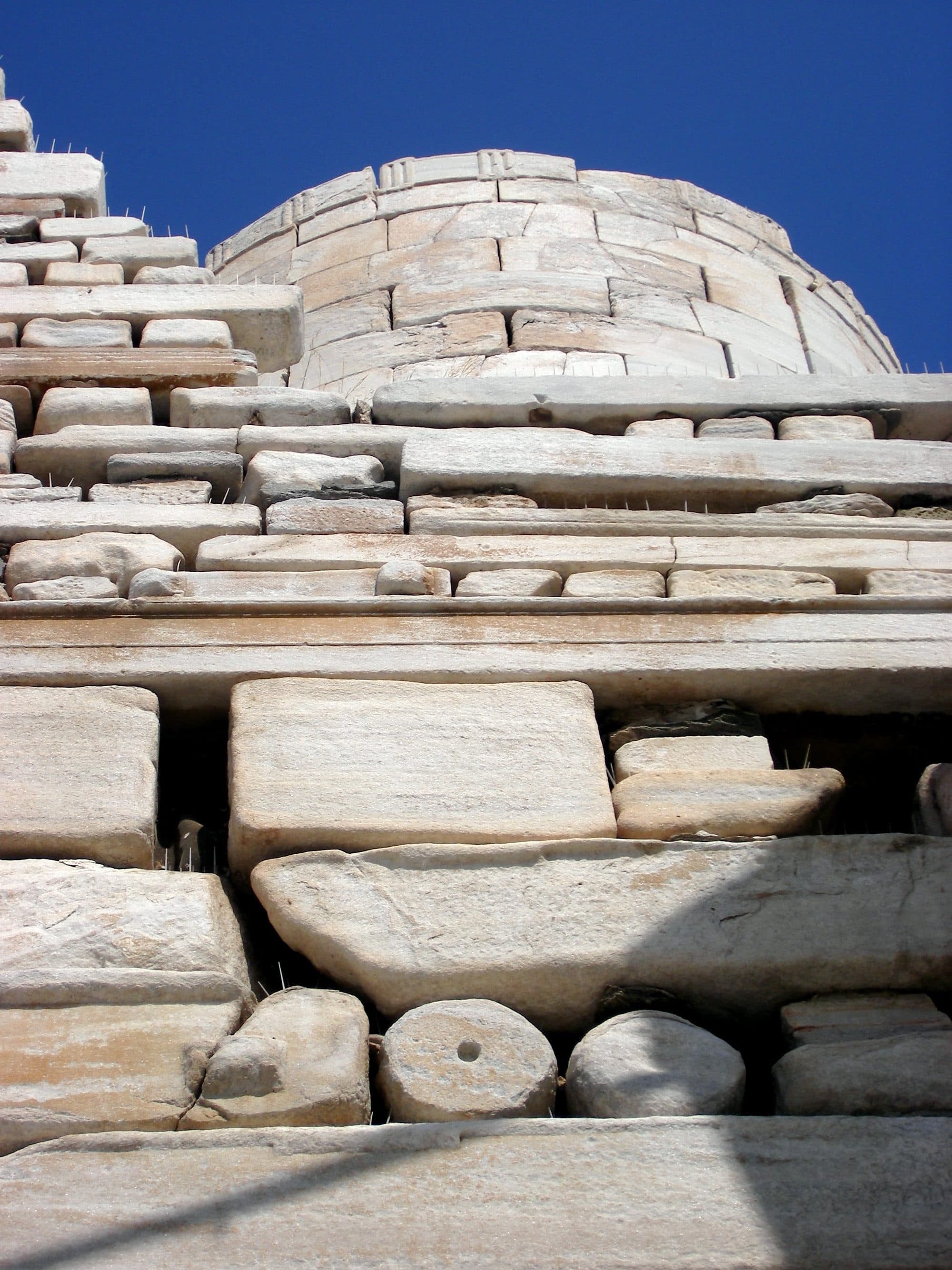
The 13th-century Venetian castle on the hill of the old town, its walls built from the columns and blocks of ancient temples. Free to wander.
The quarries where Parian marble was cut in antiquity, in the hills about 5 km east of Parikia. A short path leads from the village to the openings of the galleries.
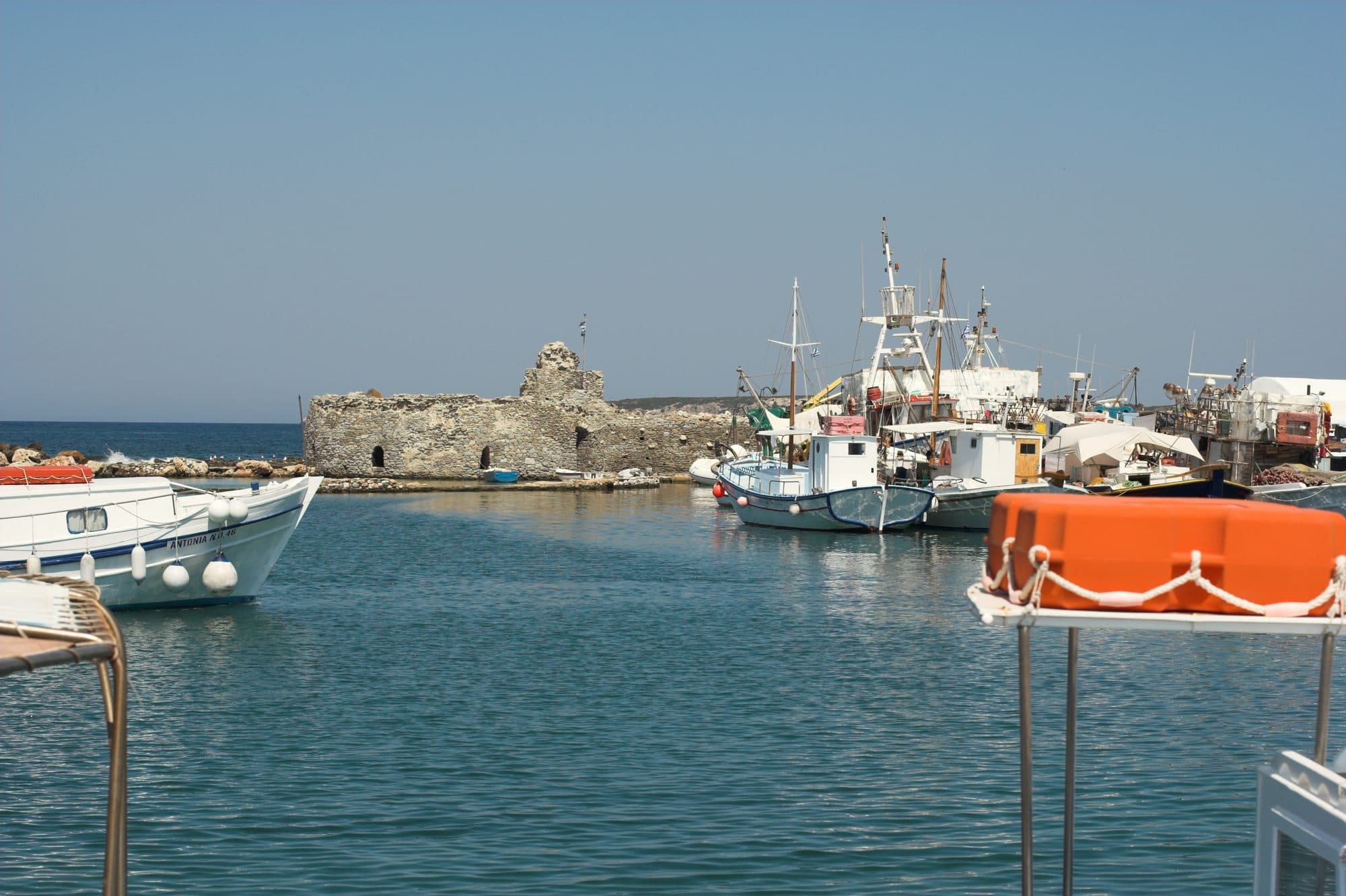
A small fort at the mouth of the old harbour, partly sunk in the sea, with the fishing boats moored beneath it.
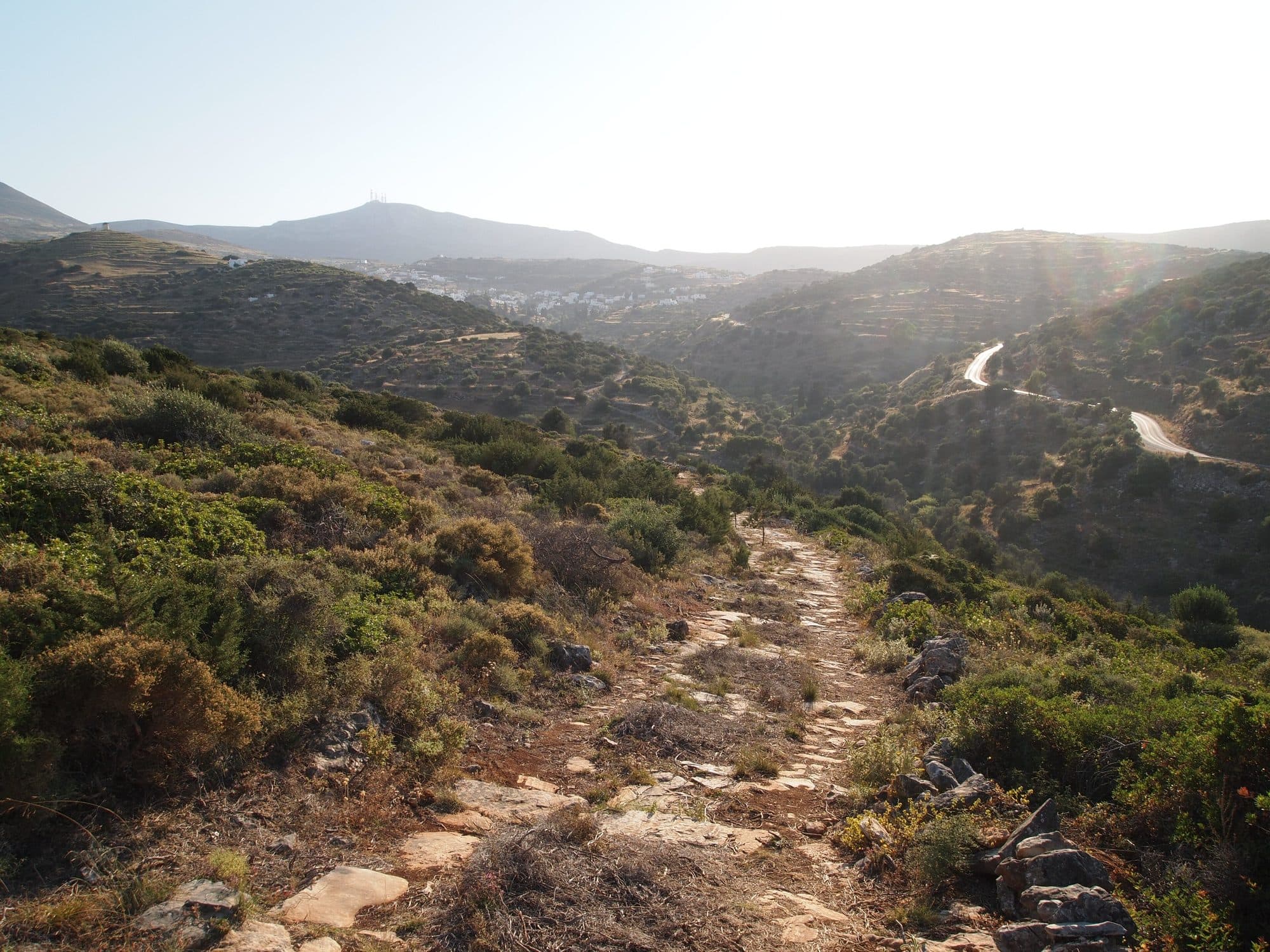
A paved road about 3.5 km long from Lefkes down to Prodromos, walked in under an hour, mostly downhill, past chapels, terraces and olive trees.

A great cavern full of stalactites in the hills of Antiparos, reached down about 400 steps, with the names of travellers from past centuries carved on its walls.