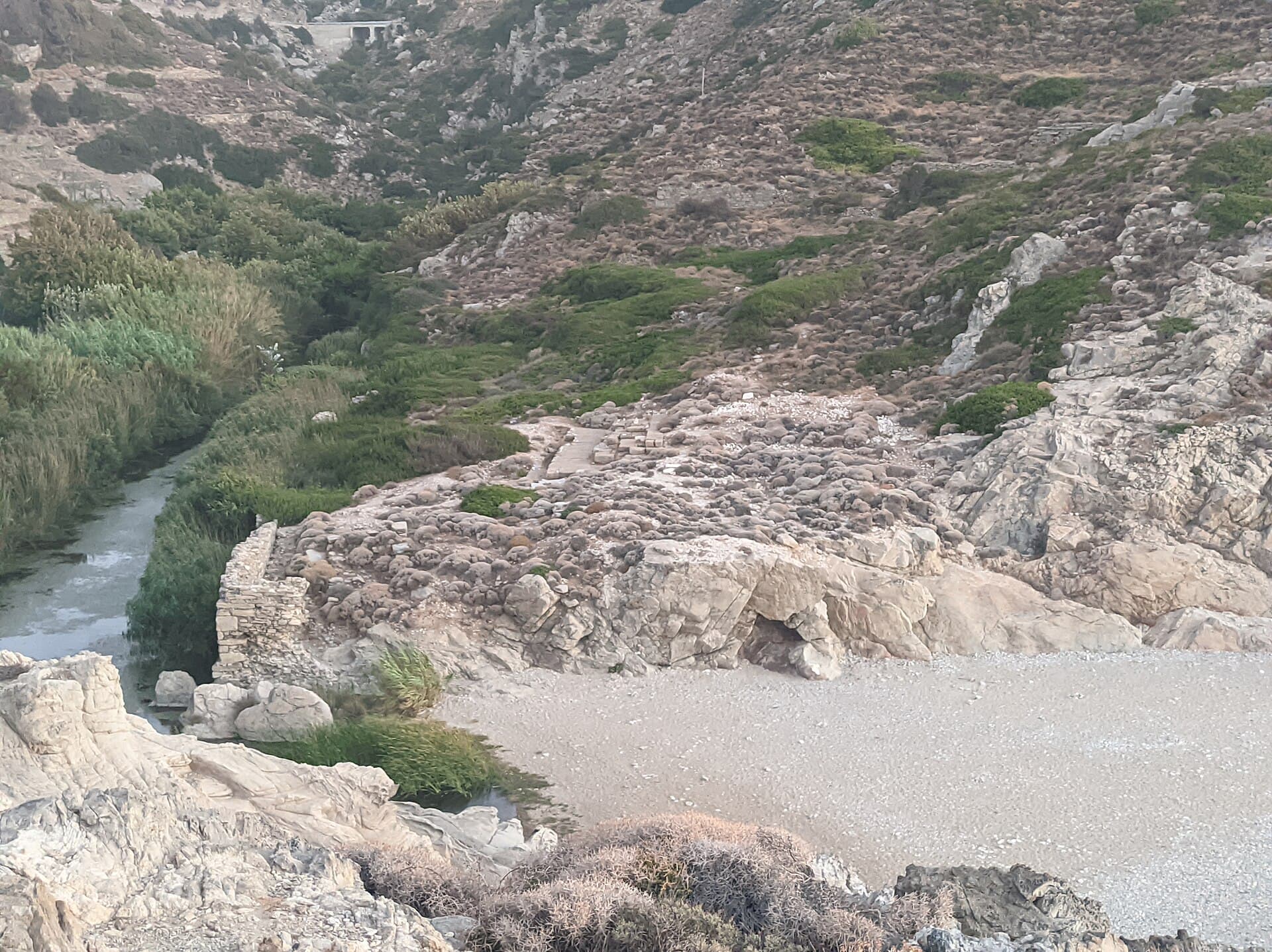
Temple of Artemis, Nas
Foundations of the sanctuary of Artemis Tauropolos, protector of sailors, at the mouth of the Chalaris river on the north-west coast.

Ikaria · History
Named for the boy who flew too close to the sun, this island has been a sacred site, a pirate refuge, a short-lived free state and a place of exile.
Timeline
Myth
Escaping Crete on wings of wax and feathers, Icarus flew too close to the sun and plunged into the sea off the island that now bears his name. His statue stands on the harbour wall at Agios Kirykos.

c. 750 BC – Roman era
Settlers from Miletus and Samos founded towns at Oenoe (today's Kampos) and Therma. Homer praised Pramnian wine, linked to the island, and a sanctuary of Artemis Tauropolos stood at Nas.
Byzantine & medieval
To escape pirates, islanders built low stone houses that could not be seen from the sea and moved inland. The Koskinas castle and the Hellenistic tower at Drakano watched over the coast.
1912
On 17 July 1912 Ikarians rose against the Ottoman garrison and the next day declared an independent state, with its own flag, stamps and anthem. It lasted about five months before joining Greece that November.
1940s – 1950s
During and after the Greek Civil War, thousands of left-wing political prisoners were exiled here. They shared their skills with the villagers, and the island earned the nickname 'Red Rock'.
2000s
Researchers studying longevity identified Ikaria as one of the world's Blue Zones, and the world took a new interest in its food, rhythm of life and healthy elders.
Visit
Foundations of the sanctuary of Artemis Tauropolos, protector of sailors, at the mouth of the Chalaris river on the north-west coast.
A 10th-century Byzantine fortress on a rocky peak in the centre of the island, with a small chapel and wide views to both coasts.
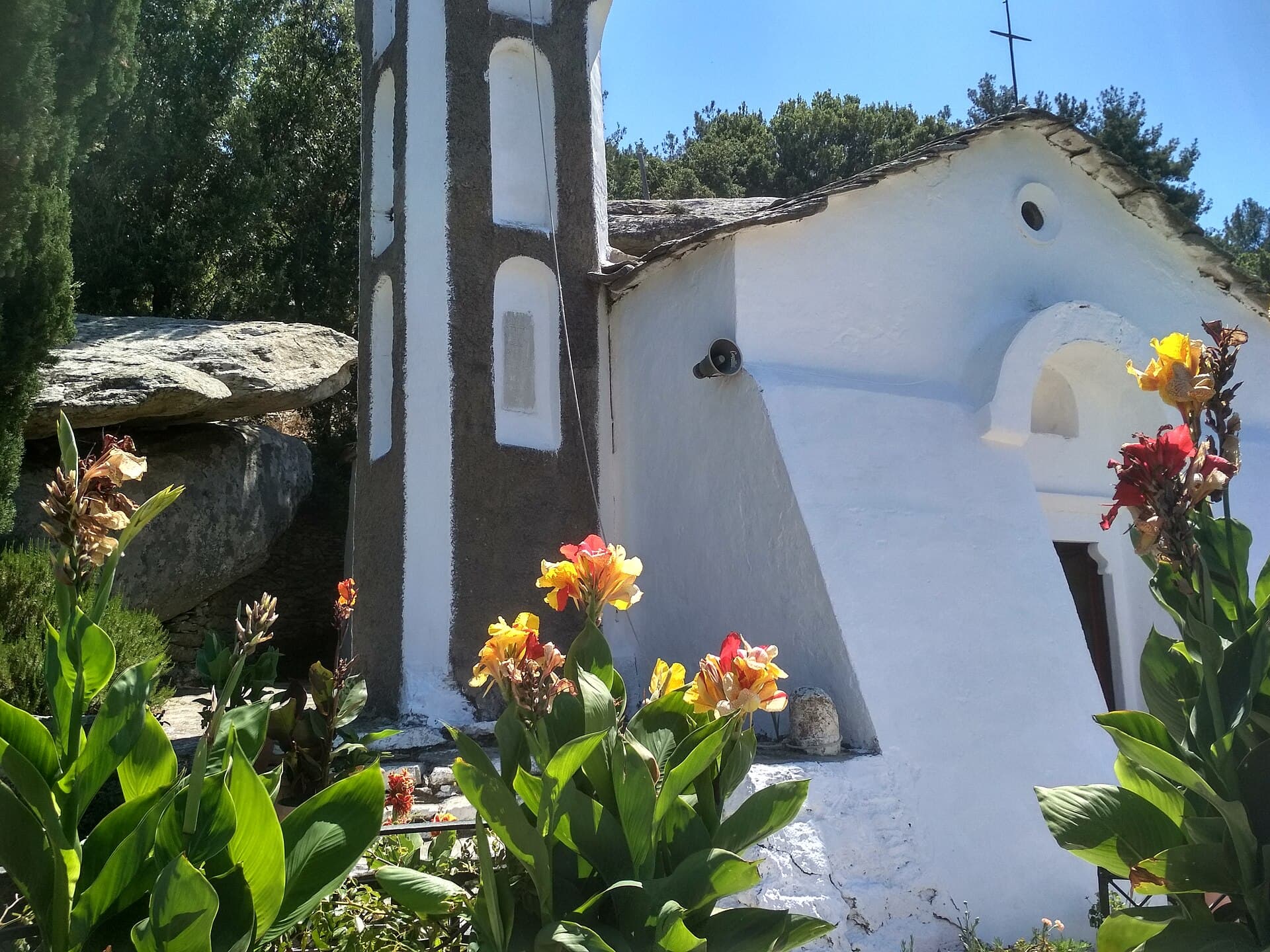
A quiet monastery in the hills above Pigi, with fine frescoes and the tiny Theoskepasti chapel squeezed beneath a giant boulder nearby.