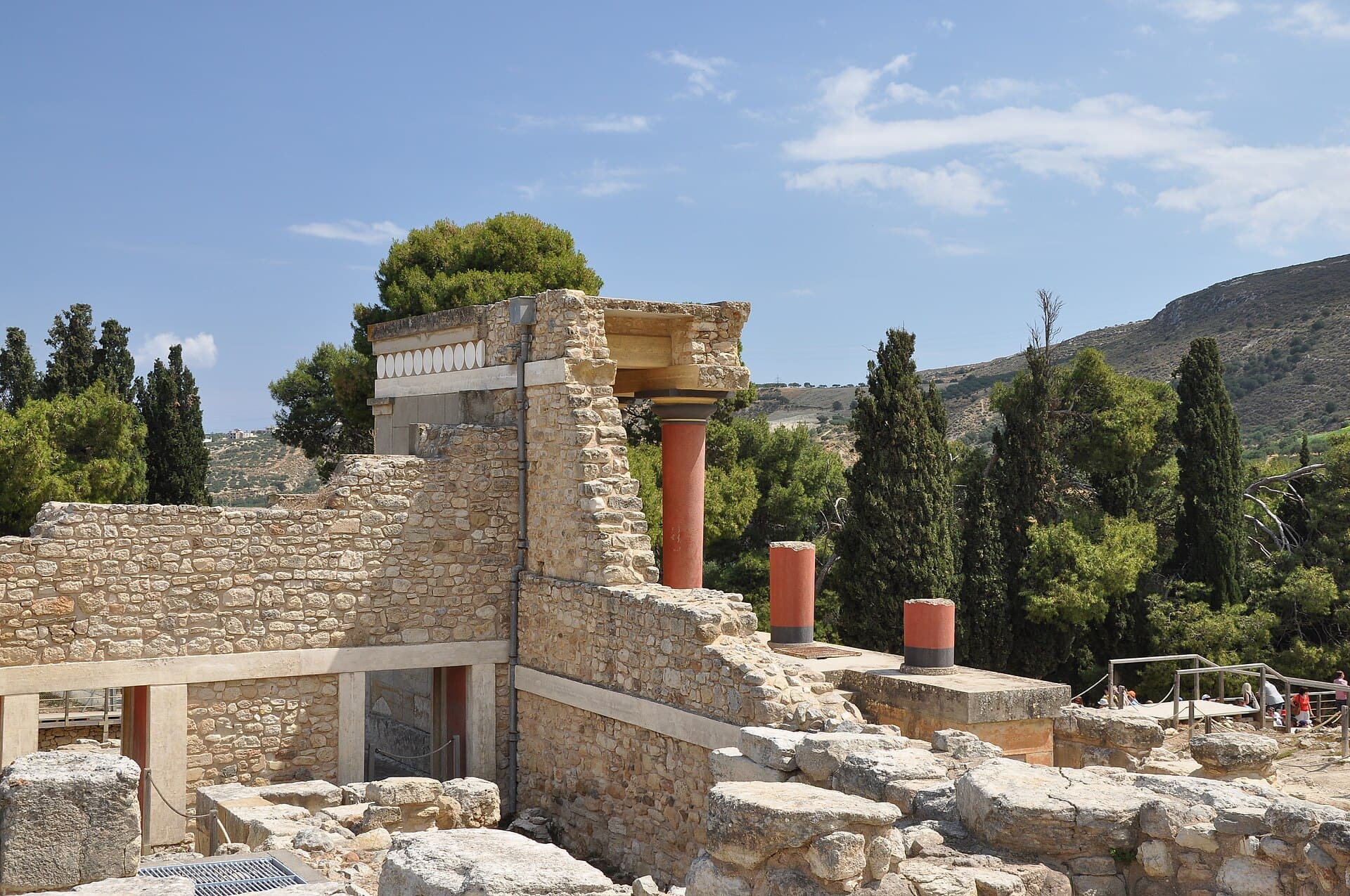
Palace of Knossos
The largest Bronze Age site on Crete, linked in myth to King Minos and the Labyrinth. It lies 5 km south of Heraklion.

Crete · History
Home of Europe's first civilisation, fought over by empires and defended by its people.
Timeline
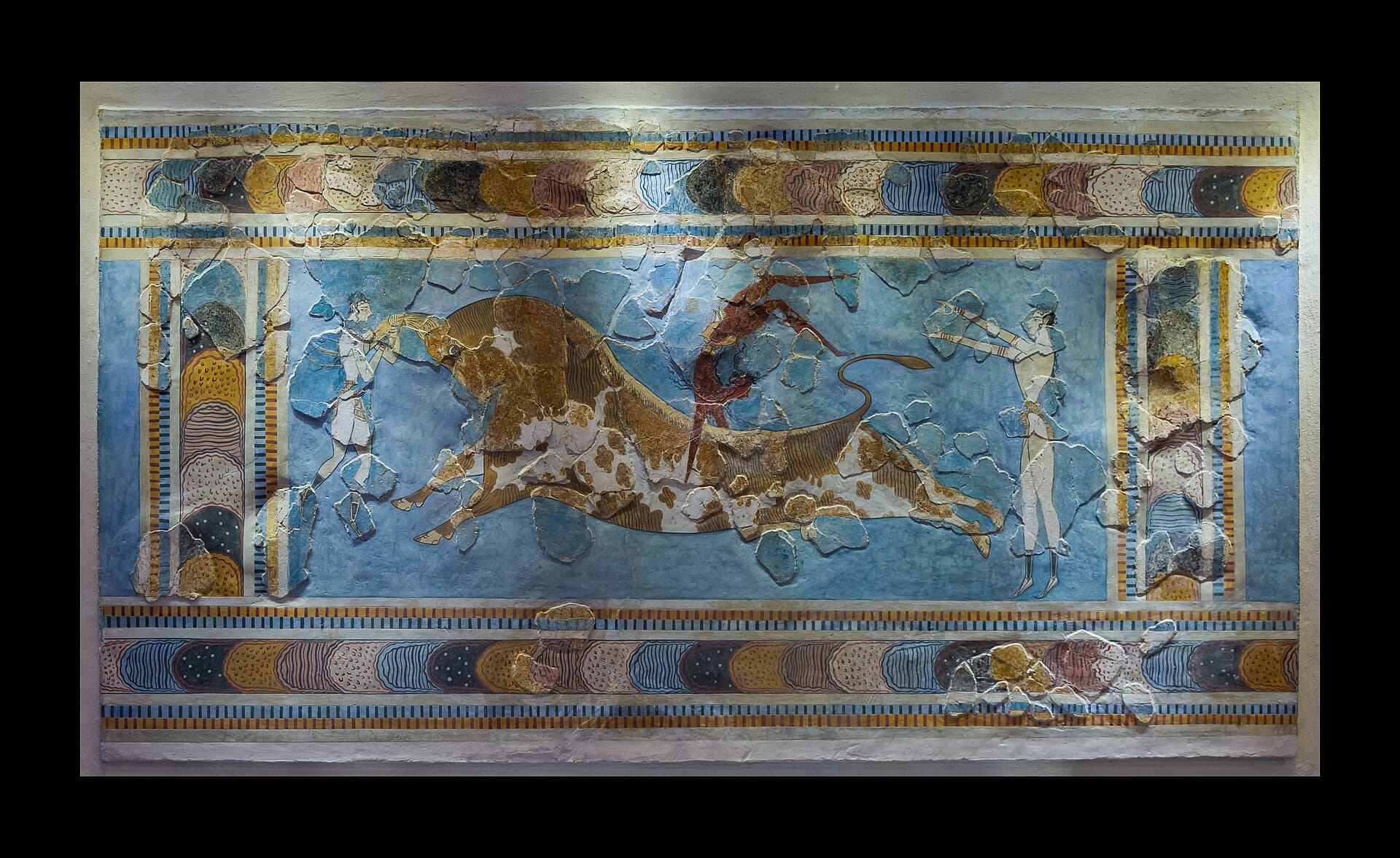
c. 3000–1100 BC
Europe's first advanced civilisation built palaces at Knossos, Phaistos, Malia and Zakros. It left frescoes, the Linear A script and a seafaring trade network across the Aegean.
c. 1450 BC
Mainland Greeks took control of Knossos, and the Linear B script appeared, the earliest known written form of Greek.
67 BC – AD 824
Gortyn became the capital of a Roman province. Christianity took root, and Byzantine churches and frescoes spread across the island.
1211–1669
Venice fortified Chania, Rethymno and Heraklion with harbours and great walls. The Cretan Renaissance produced painters such as El Greco.
1669–1898
After the long siege of Heraklion, Crete came under Ottoman rule. Repeated uprisings followed, including the sacrifice at Arkadi Monastery in 1866.

1913
After a period as the autonomous Cretan State, Crete formally united with Greece. Eleftherios Venizelos of Chania led the cause.
1941–1945
German paratroopers invaded in May 1941 and met fierce resistance from Allied troops and civilians. Armed resistance continued throughout the occupation.
Visit
The largest Bronze Age site on Crete, linked in myth to King Minos and the Labyrinth. It lies 5 km south of Heraklion.

A Venetian sea fortress that later became a leper colony until 1957. Boats run there from Plaka, Elounda and Agios Nikolaos.
A national symbol of Crete's struggle for freedom. Its 16th-century church has one of the island's finest Venetian façades.