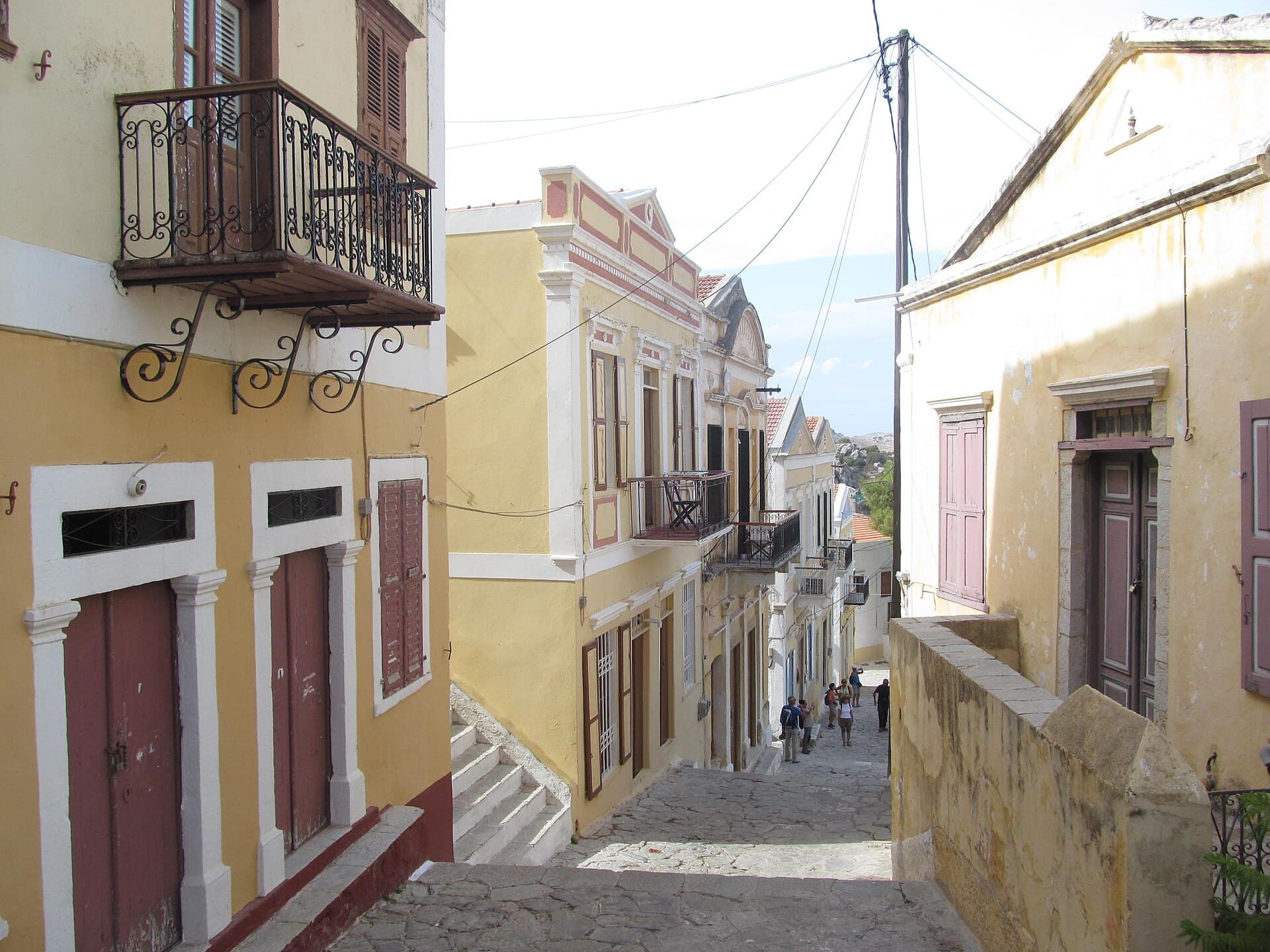
Chorio
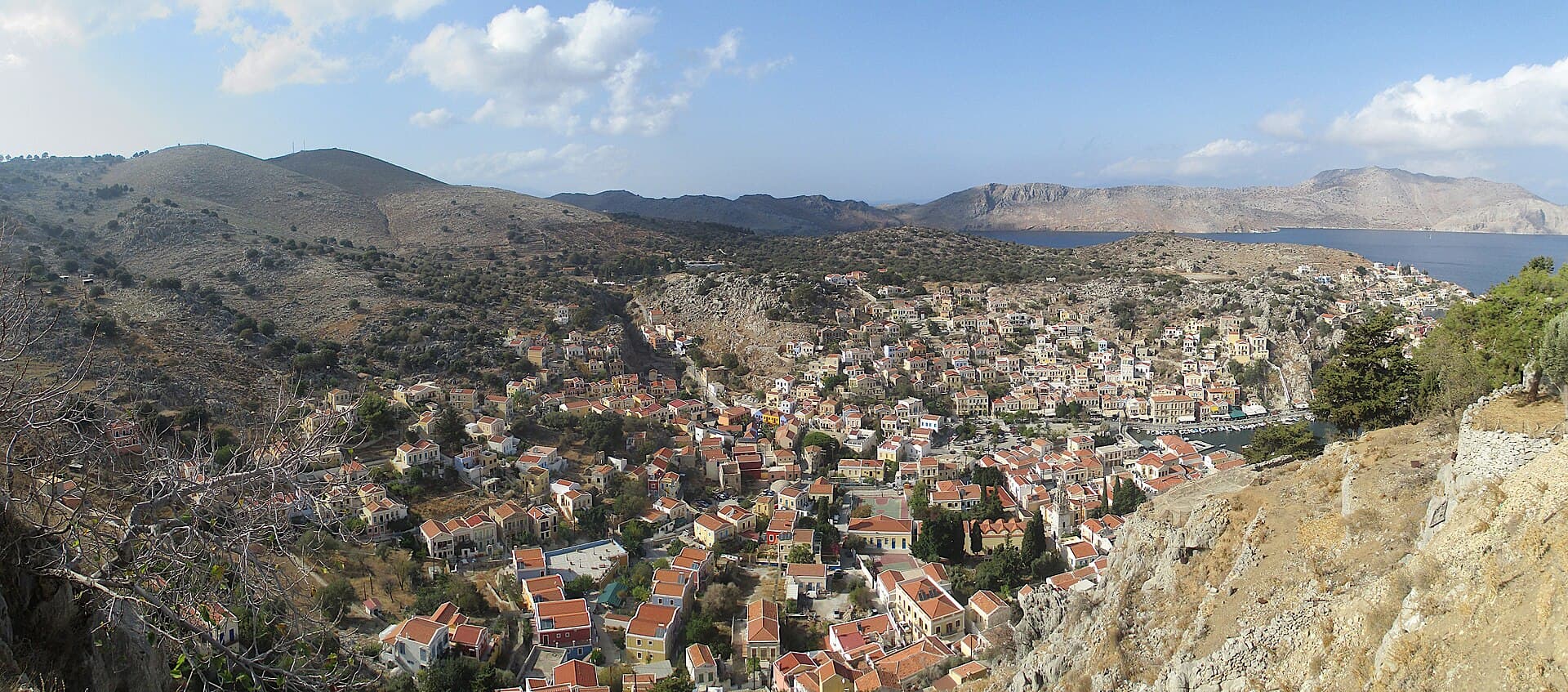
The old upper town, up the Kali Strata, with its lanes, windmills, museum and the castle on top of the hill.
Symi · Gialos & the harbour · Γιαλός
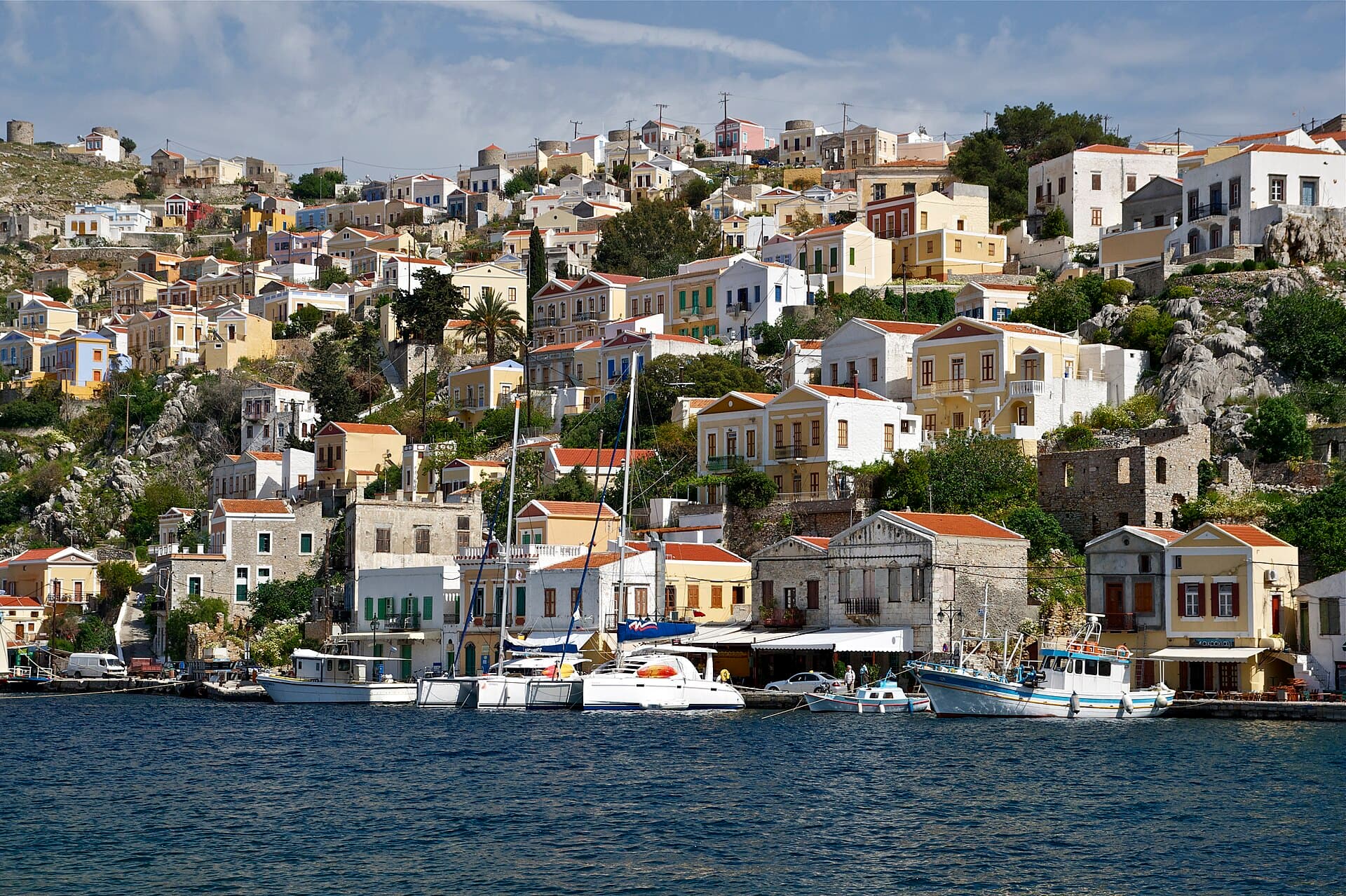
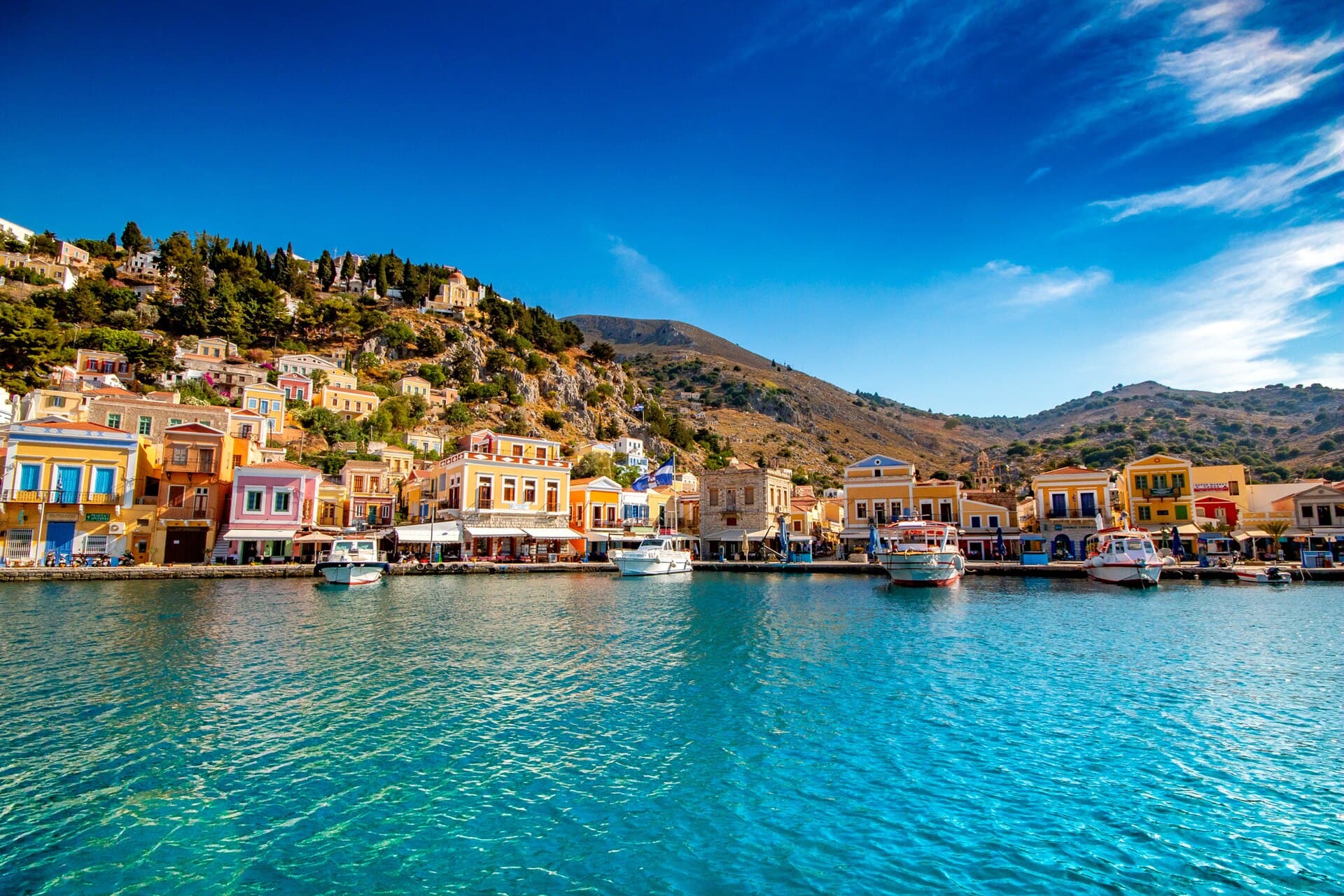
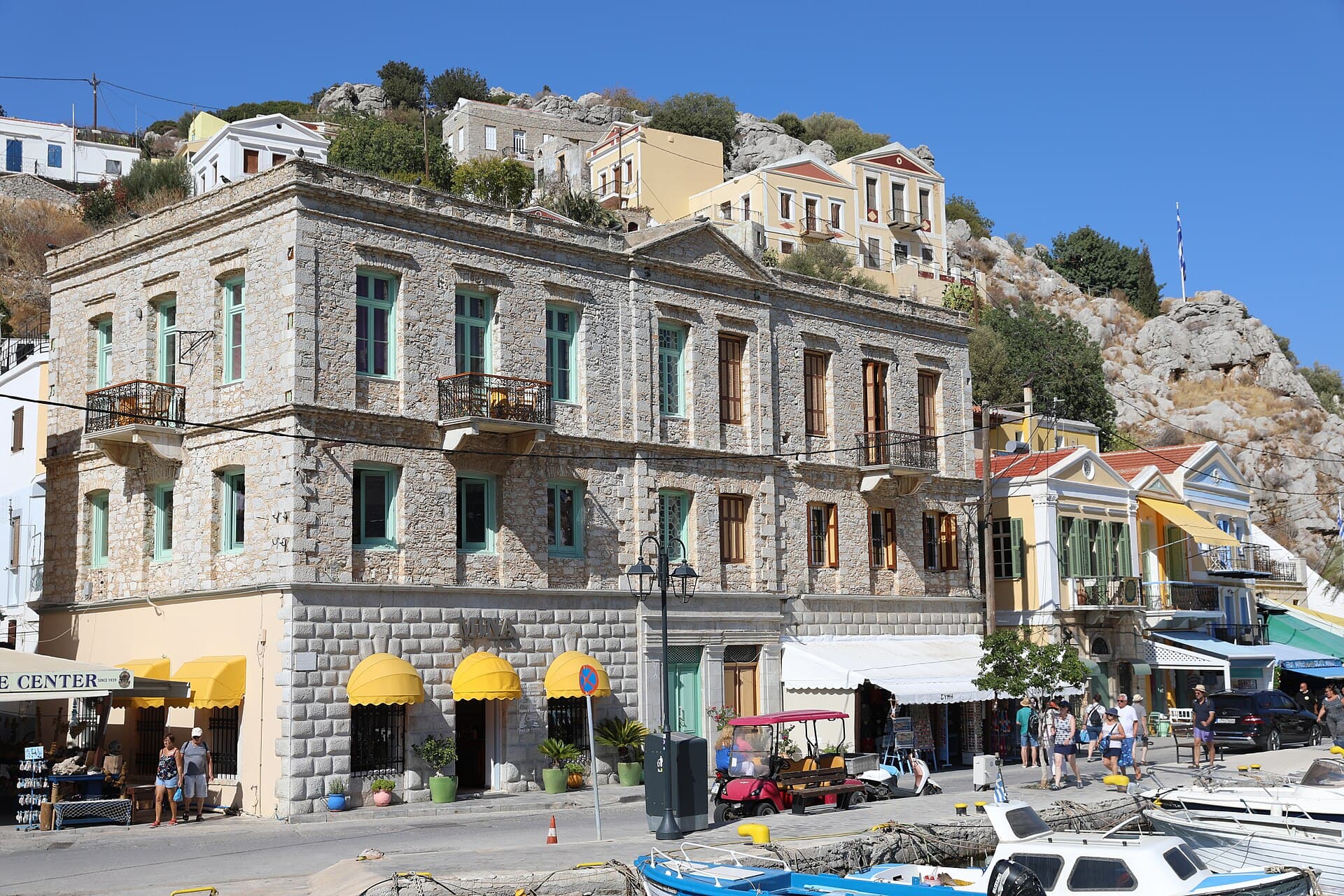
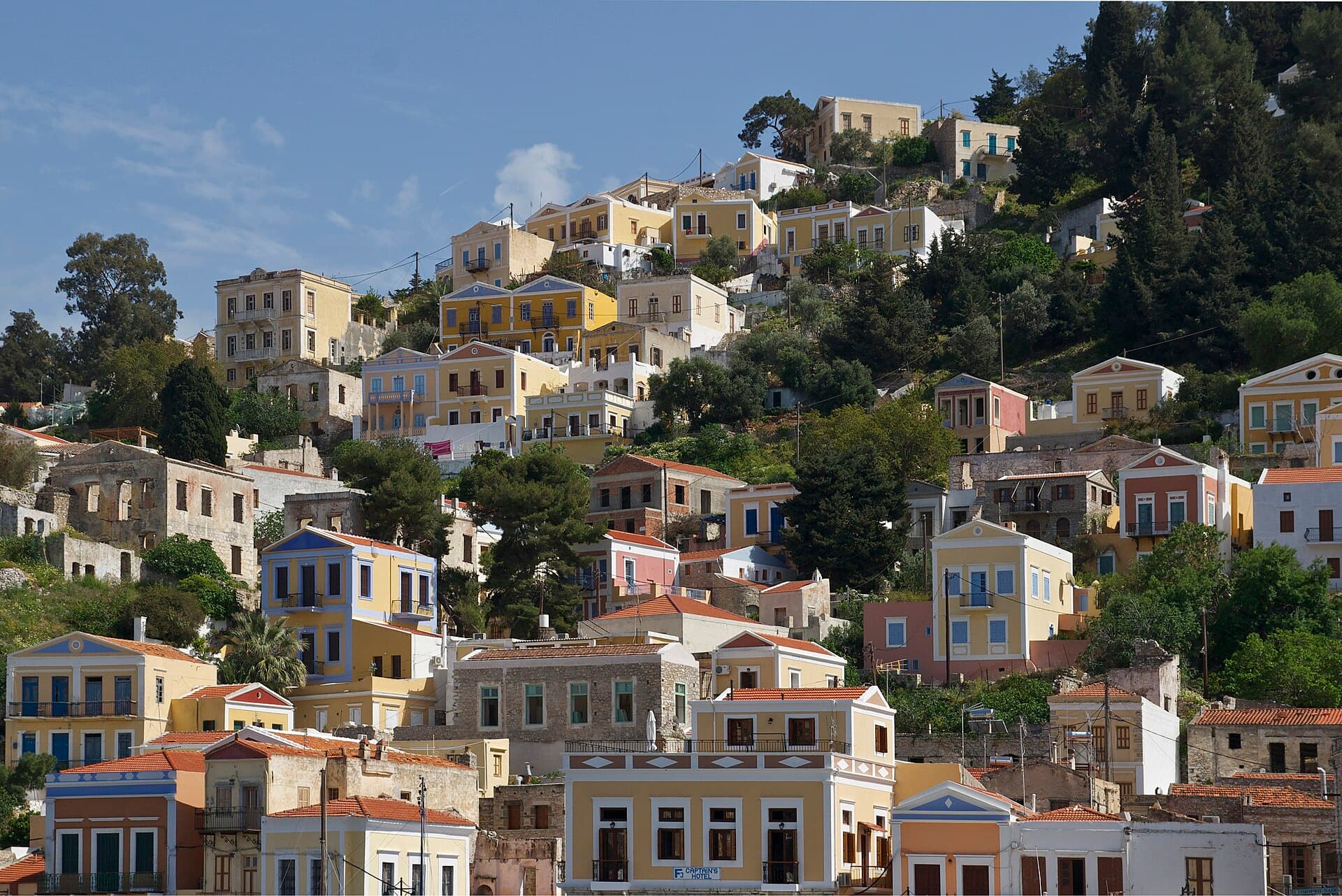
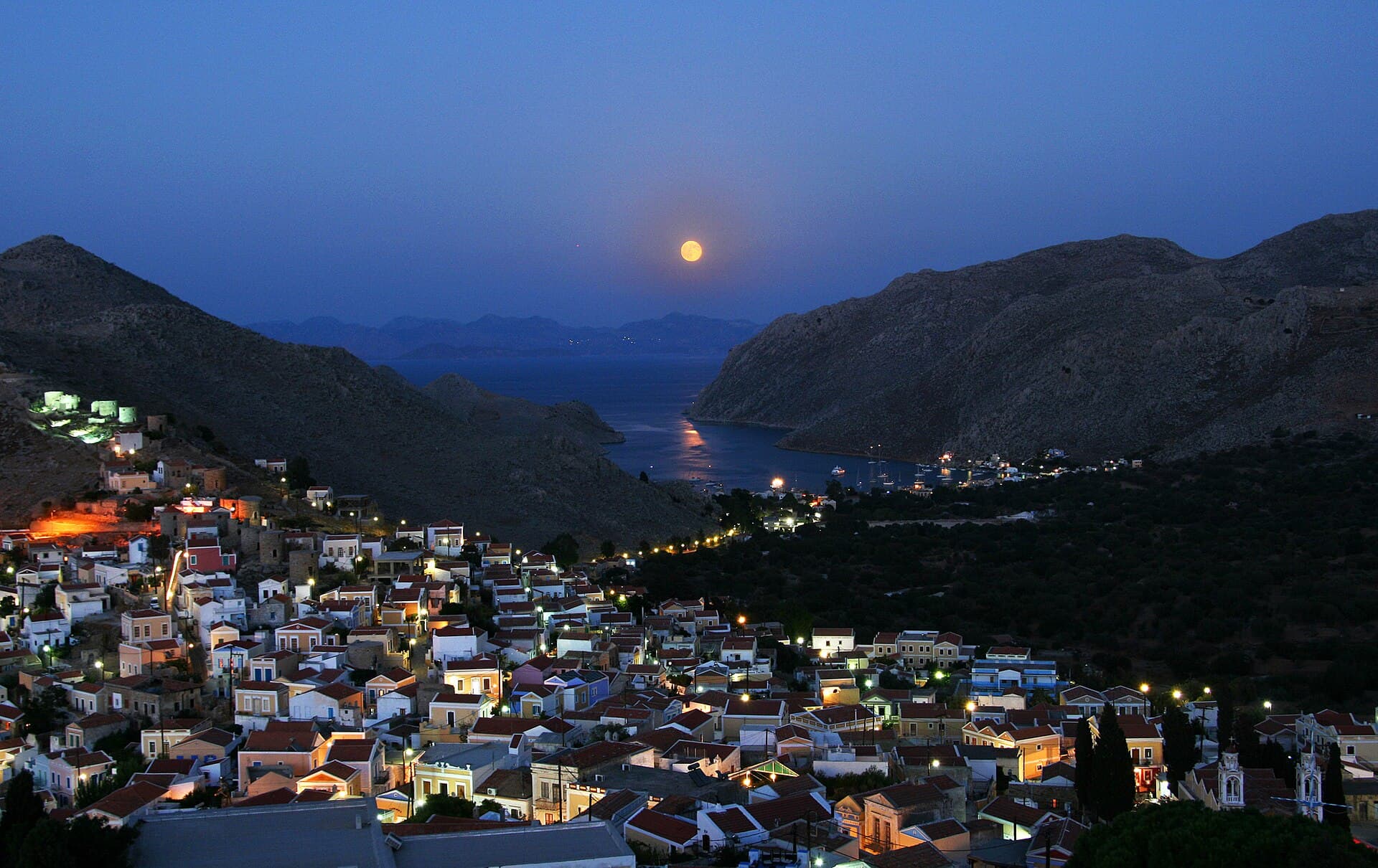
Gialos is the harbour of Symi and the first thing everyone sees: a deep, narrow bay with tall neoclassical houses in ochre, pink, cream and blue stacked up both hillsides, all built in the years when sponges and ships made the island rich. Fishing boats, yachts and the ferries from Rhodes tie up along the quay, tavernas put their tables at the water's edge, and the Kali Strata climbs from the back of the harbour to Chorio above. In the middle of the day it is busy with day boats; by evening it is one of the loveliest harbours in Greece.
Greetings from Gialos
Gialos
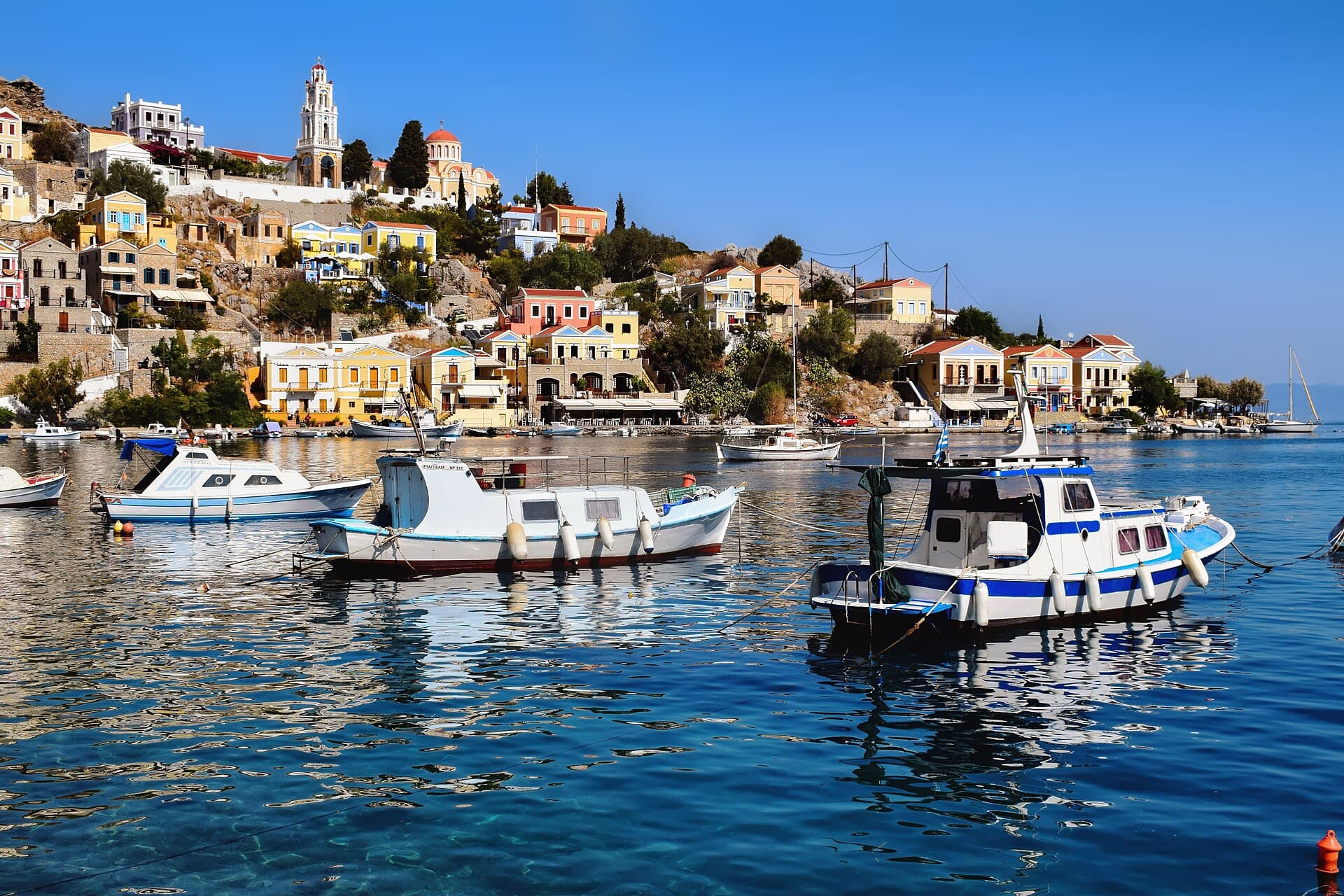
The boat from Rhodes swung round the headland this morning and there it was, the whole harbour in pink and ochre and blue, climbing straight up out of the water. We left our bags and walked round to the clock tower, bought a sponge we did not need and swam at Nos. Now the day boats have gone, the light is going gold on the houses across the bay, and we have a table so close to the water that the fish come for the bread.
A harbour of painted mansions, where the boats come in under a clock tower
Symi town is really two places joined by a staircase. Gialos is the harbour, Chorio is the old town on the hill above it, and the Kali Strata, the 'good street' of wide stone steps, links the two. For centuries people lived up the hill, away from pirates. When the seas became safer in the 18th and 19th centuries, the town spilled down to the water.
The wealth that built Gialos came from the sea floor and the slipways. Symiot divers worked the sponge beds across the eastern Mediterranean, and Symiot shipwrights built fast wooden boats in the yards of Harani, on the north side of the harbour. In the 19th century the island prospered, and families built the mansions you see today, with tiled roofs, pediments over the windows and ceilings painted inside.
Then the trade fell away. Under Italian rule from 1912, the island lost its markets on the nearby coast, the sponge fleets dwindled and many families left for Rhodes, Athens, Egypt, America and Australia. The Second World War left houses in ruins. For decades Gialos was half empty, its grand houses roofless. Since the 1970s many have been restored, and the island has strict rules to keep the colours and the shapes as they were.
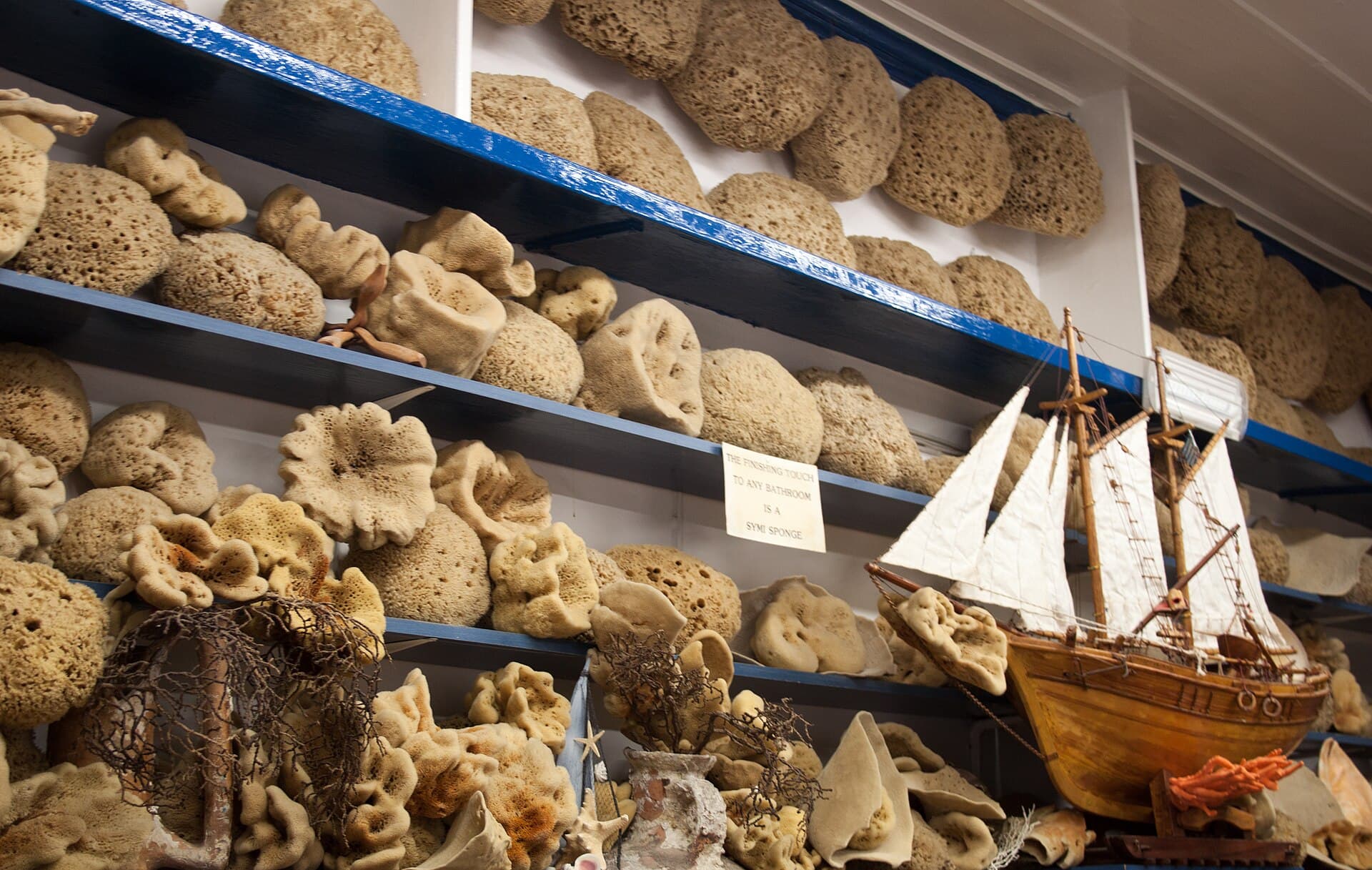
The harbour still carries its history in plain sight. The clock tower at the entrance dates from 1881. Shops sell natural sponges cut and cleaned on the island. The Nautical Museum, in an old house just back from the water, tells the story of the divers and the boatbuilders. And on the waterfront a marble plaque marks the building where, on 8 May 1945, the German forces in the Dodecanese signed their surrender to the Allies.
Hour by hour
A quiet harbour at breakfast, a boat to a wild cove, a museum, a climb to the old town and dinner by the water.
Before the day boats arrive, the harbour belongs to the fishermen and the cats. Take coffee by the water and watch the light reach the houses.
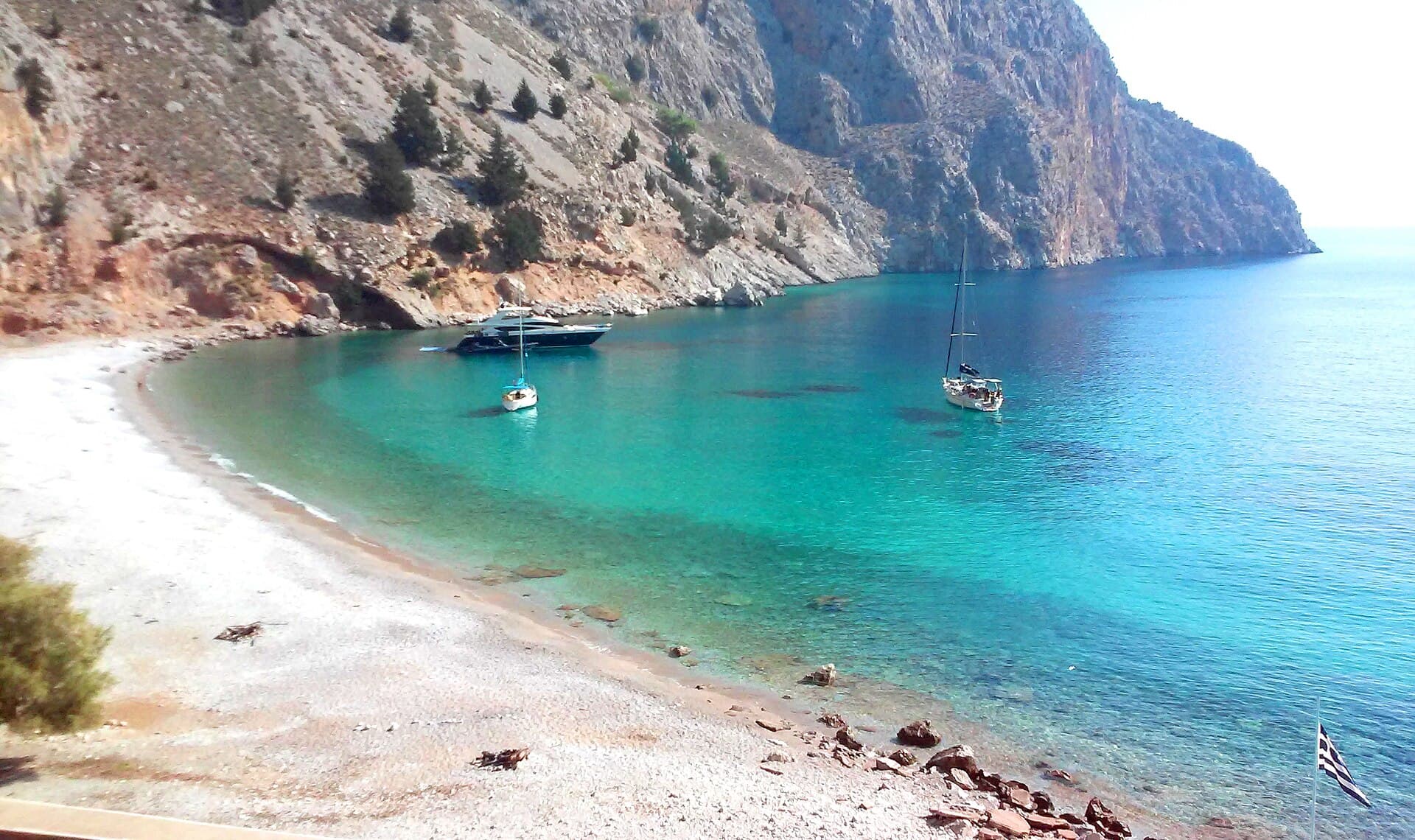
Catch a morning boat down the east coast to the pebble bay under its great cliff and swim in some of the clearest water in the Aegean.
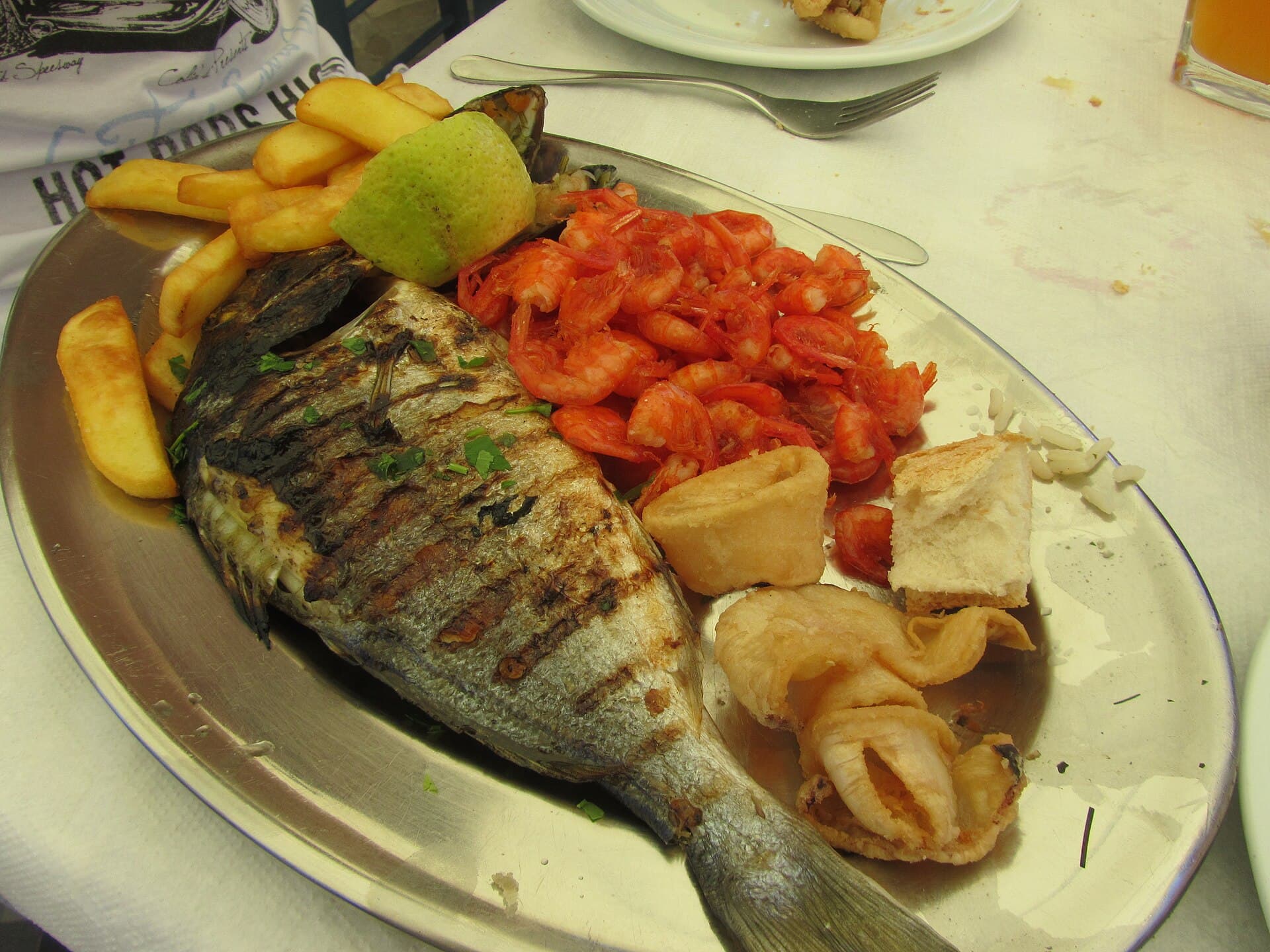
Back in town, order the little fried Symi shrimp, eaten whole, and grilled octopus at a table on the quay.
Step into the Nautical Museum for the old diving suits and ship models, then walk round to Harani and the clock tower.

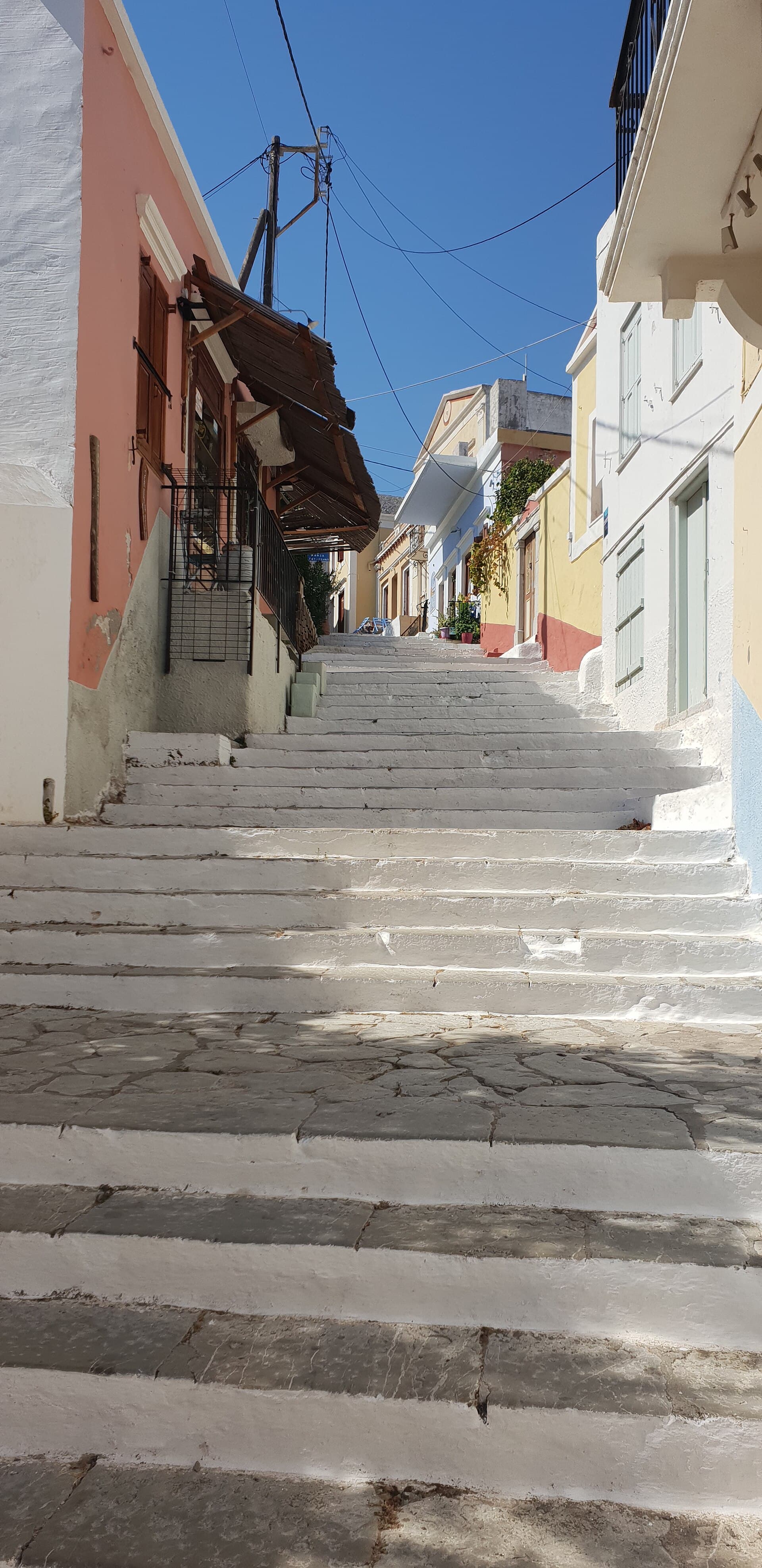
Climb the stone steps to Chorio as the heat goes, and look back over the harbour turning gold.
Walk back down for fish by the clock tower, where the tables sit right at the water and the church of Evangelistria glows across the bay.

Where to stay
Gialos
Hotel Aliki · Neoclassical boutique hotel · €€€
Gialos
Iapetos Village · Boutique hotel · €€€
Gialos · Gialos & the harbour
Where to eat
Gialos · Gialos & the harbour
Gialos · Gialos & the harbour
Gialos · Gialos & the harbour
Gialos · Gialos & the harbour
Gialos · Gialos & the harbour
Within an easy drive
The old upper town, up the Kali Strata, with its lanes, windmills, museum and the castle on top of the hill.

The closest swim, a small pebble beach past the boatyards of Harani, about 15 minutes' walk from the quay.
The fishing village in the next bay to the east, a short bus ride or a walk down from Chorio, with water taxis to Agios Nikolaos.
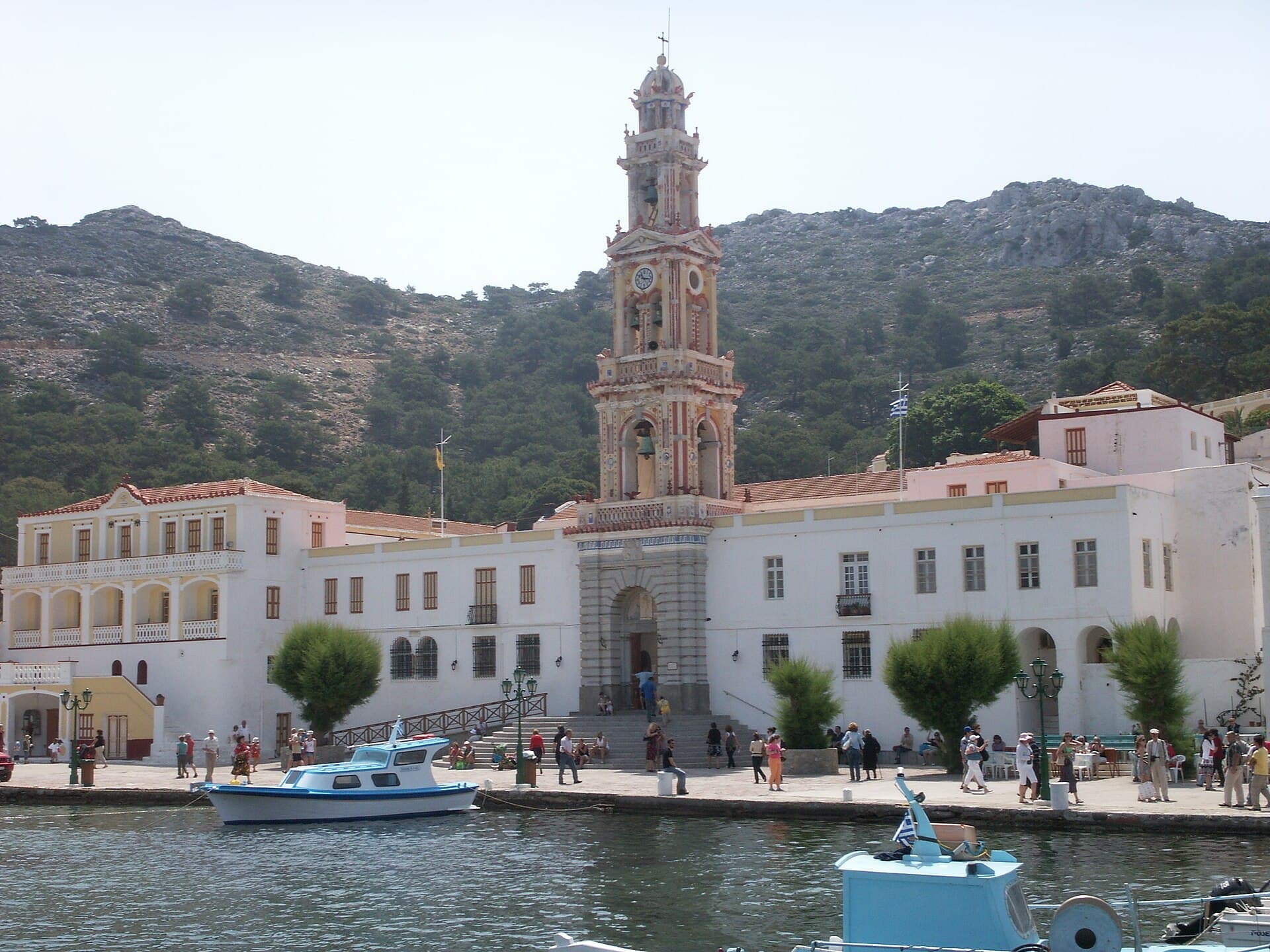
The great monastery of the Archangel Michael in its bay in the south-west, about 45 minutes by road over the mountain.


Good to know
Every boat from Rhodes ties up on the quay in Gialos, so you arrive in the middle of it. The harbour is flat and easy to walk; Chorio is up the Kali Strata or a short bus or taxi ride. Water taxis to the beaches leave from the quay in the morning.
May, June and September to mid-October are best: warm sea, fewer crowds and long evenings. July and August are hot, and the harbour is busy with day boats from late morning to mid-afternoon; the evenings stay lovely.
More of Symi
Chorio & the Kali Strata
The old town on the hill, up the Kali Strata, below a Knights' castle
Pedi & the east coast
A fishing village at the head of a long, calm bay, below the only fields on the island

Nimborios & the north-west
A quiet bay west of the harbour, with early Christian mosaics and a taverna under the trees
Every stay we recommend across Symi, from village guesthouses to rooms on the sea.
See all stays