
The castle of Chorio
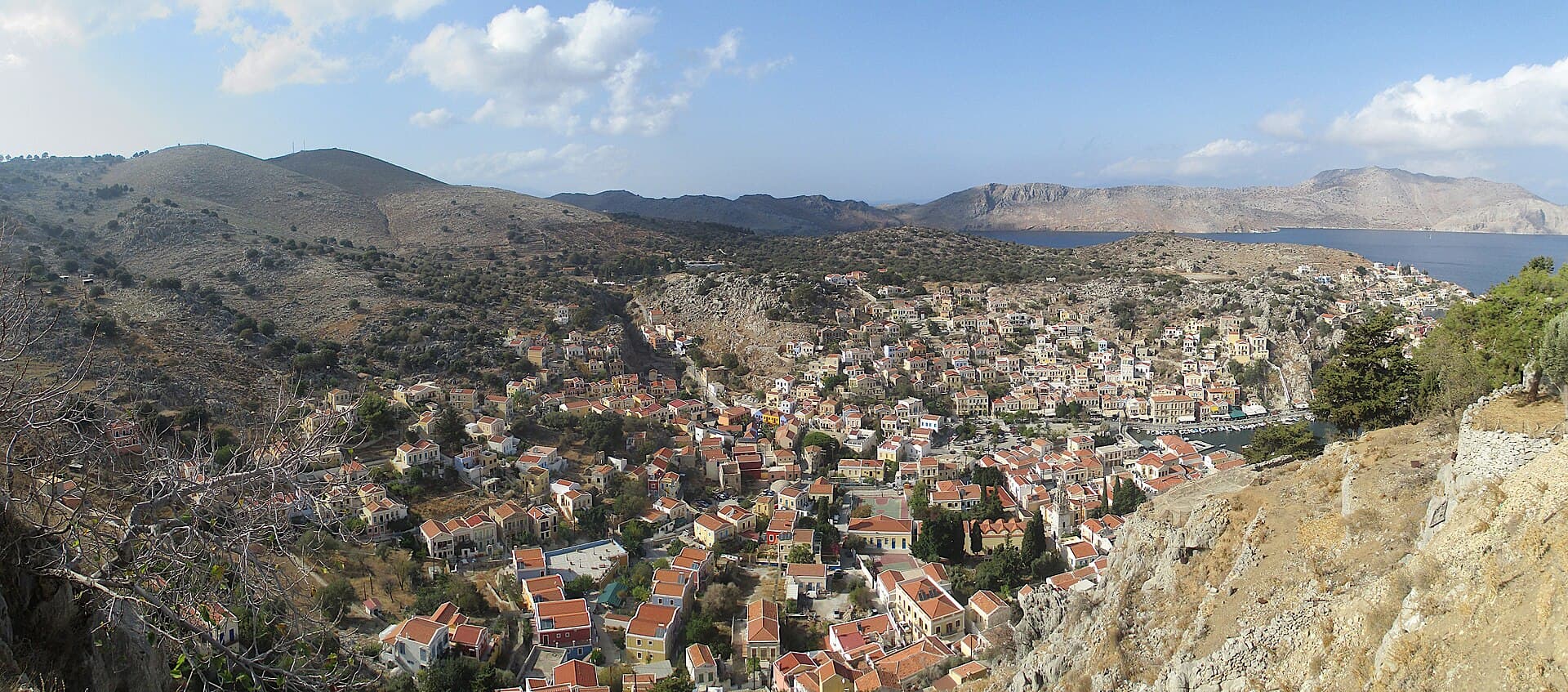
The Knights' castle on the site of the ancient acropolis at the top of Chorio, with the rebuilt church of the Megali Panagia inside and a view over both bays.

Symi · History
A king who sailed to Troy, a castle of the Knights, a golden age of sponges and ships, the Italian years, the surrender of the German forces in the Dodecanese on 8 May 1945 and, in 1948, union with Greece.
Timeline
Antiquity
In the Catalogue of Ships in the Iliad, Homer says that Nireus brought three ships from Syme to Troy, and calls him the most handsome of the Greeks after Achilles. Legend also links the island's name to the nymph Syme. In classical times Symi was a small island in the orbit of Rhodes, and parts of its ancient walls survive in the castle at Chorio.
1309–1522
After the Knights of St John took Rhodes, they held Symi too, and built a castle on the hill above the harbour, on the site of the ancient acropolis, to watch the sea lanes. The Symiots served them as boatbuilders and sailors. Inside the walls stood the church of the Megali Panagia.
1522–1912
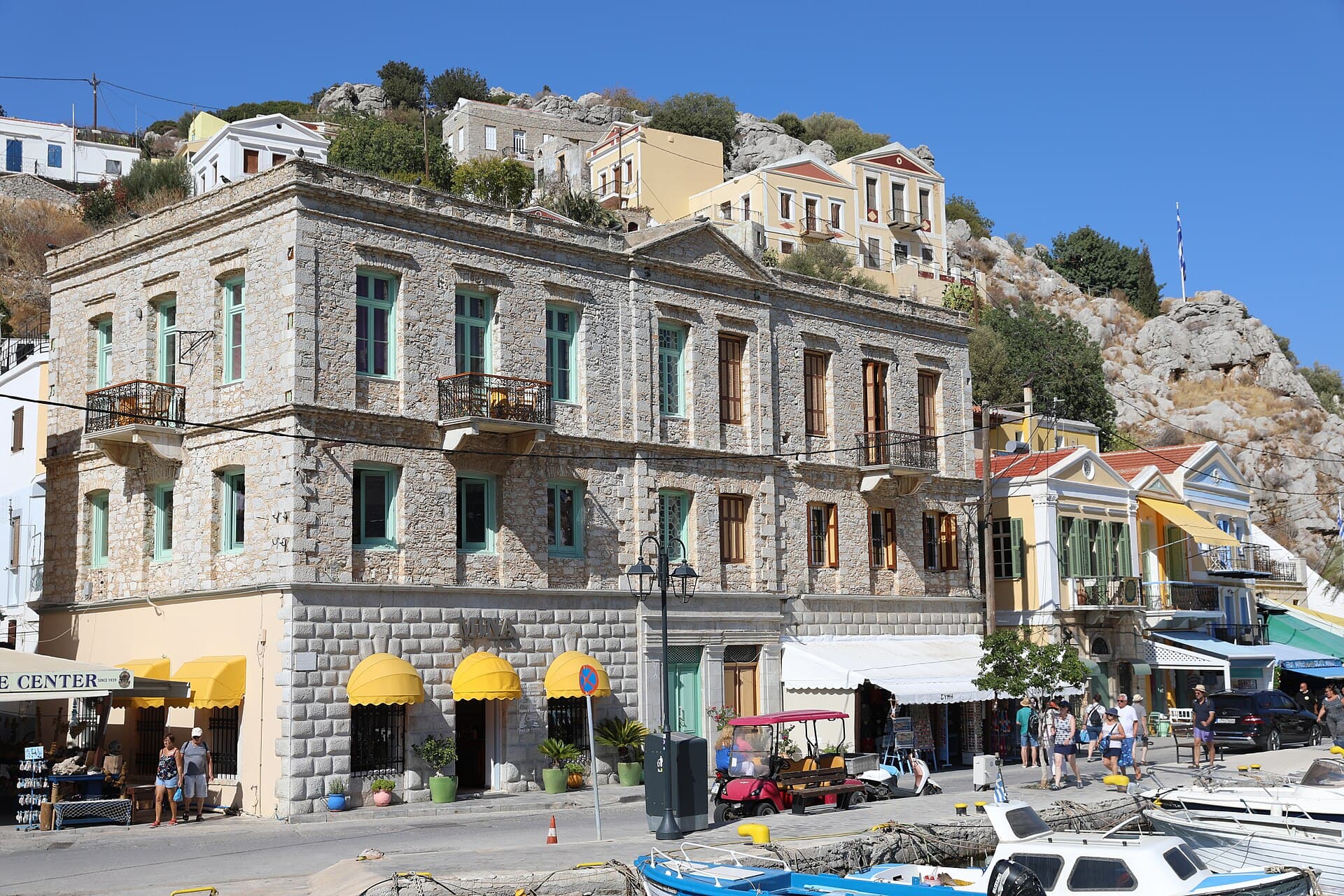
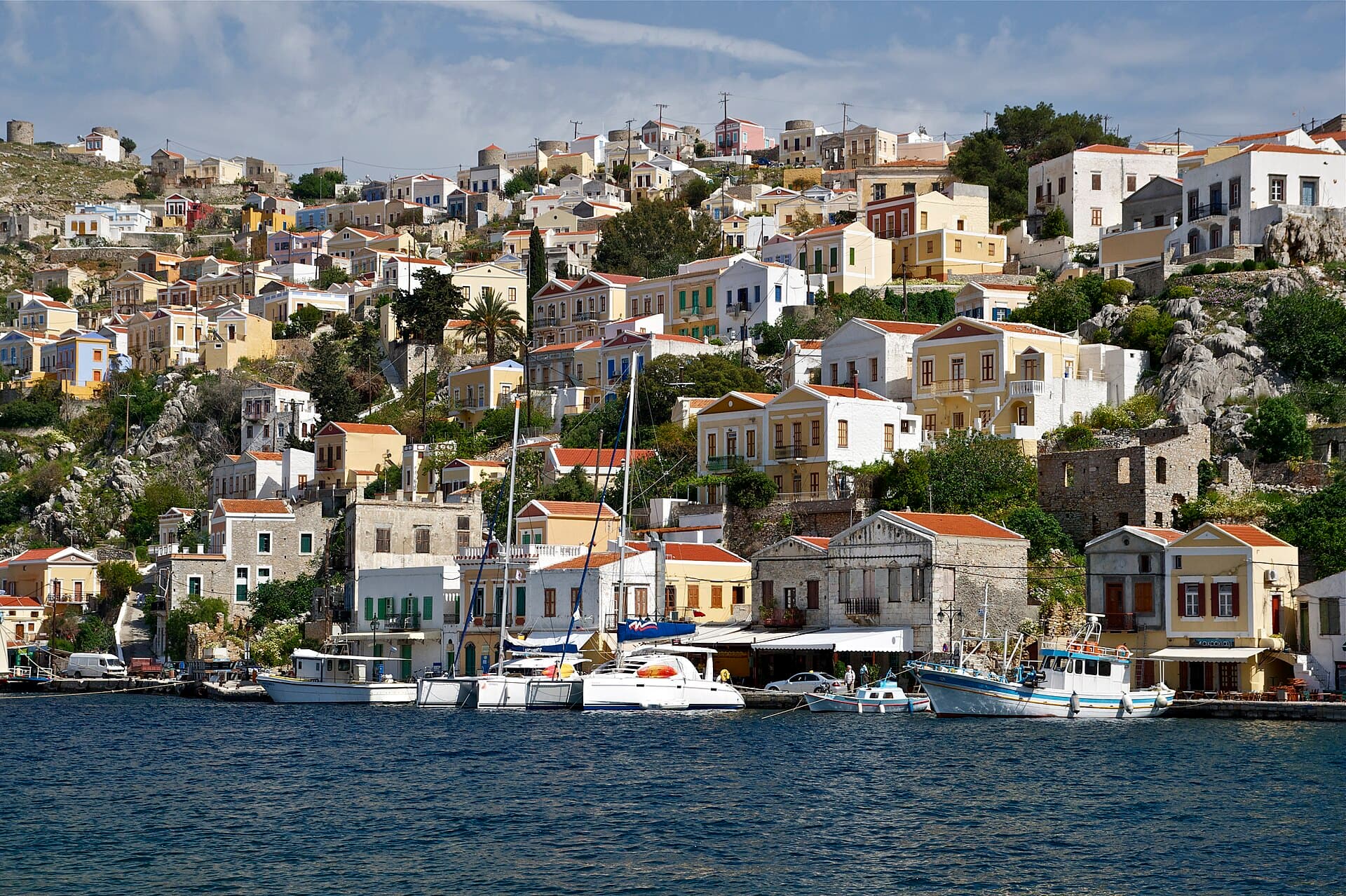
When Rhodes fell to the Ottomans in 1522, Symi submitted and kept wide privileges, including the right to dive for sponges across the eastern Mediterranean. Its boatyards and its divers made it rich. In the 19th century the islanders rebuilt Gialos in grand neoclassical style, and the clock tower went up at the harbour in 1881.
1912–1943
Italy took the Dodecanese from the Ottomans in 1912. The new border cut Symi off from its markets on the nearby coast, the sponge trade declined and thousands of islanders emigrated. Many of the great houses began to empty.

1943–1945
After Italy's armistice in 1943, German forces took the Dodecanese, and Symi saw raids and fighting. In 1944 an explosion of stored munitions wrecked the castle and the church inside it. On 8 May 1945, in a building on the harbour of Gialos, the German commander signed the surrender of the German forces in the Dodecanese to the Allies. A plaque on the waterfront marks the spot.
1948 to today
After a period of British administration, the Dodecanese were formally united with Greece on 7 March 1948. Symi had lost most of its people, and many houses stood roofless for decades. Since the 1970s the harbour has been carefully restored, the old trades live on in the sponge shops and boatyards, and the island has become one of the best-loved in the Aegean.
Visit
The Knights' castle on the site of the ancient acropolis at the top of Chorio, with the rebuilt church of the Megali Panagia inside and a view over both bays.
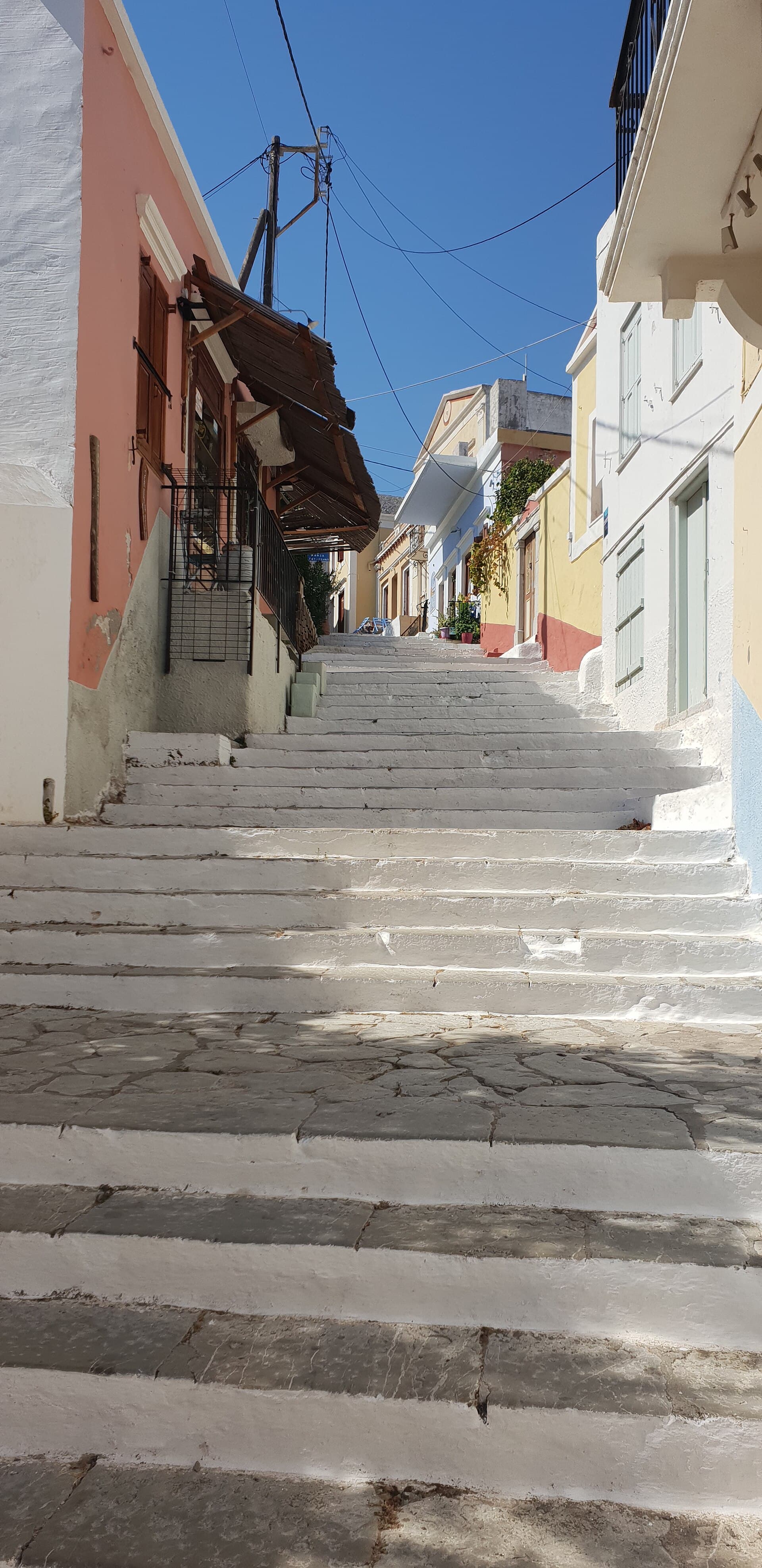
The great stone stairway from Gialos to Chorio, lined with the houses of old captains and merchants.

A row of old stone windmills on the ridge of Chorio, looking out over Pedi bay.

The 1881 clock tower at the entrance of the harbour, next to the old boatyards of Harani.
The plaque on the waterfront of Gialos marking the surrender of the German forces in the Dodecanese on 8 May 1945.

The monastery of the Archangel Michael in its bay in the south-west, with its bell tower, its pebbled courtyard and its silver icon.