
Agios Andreas
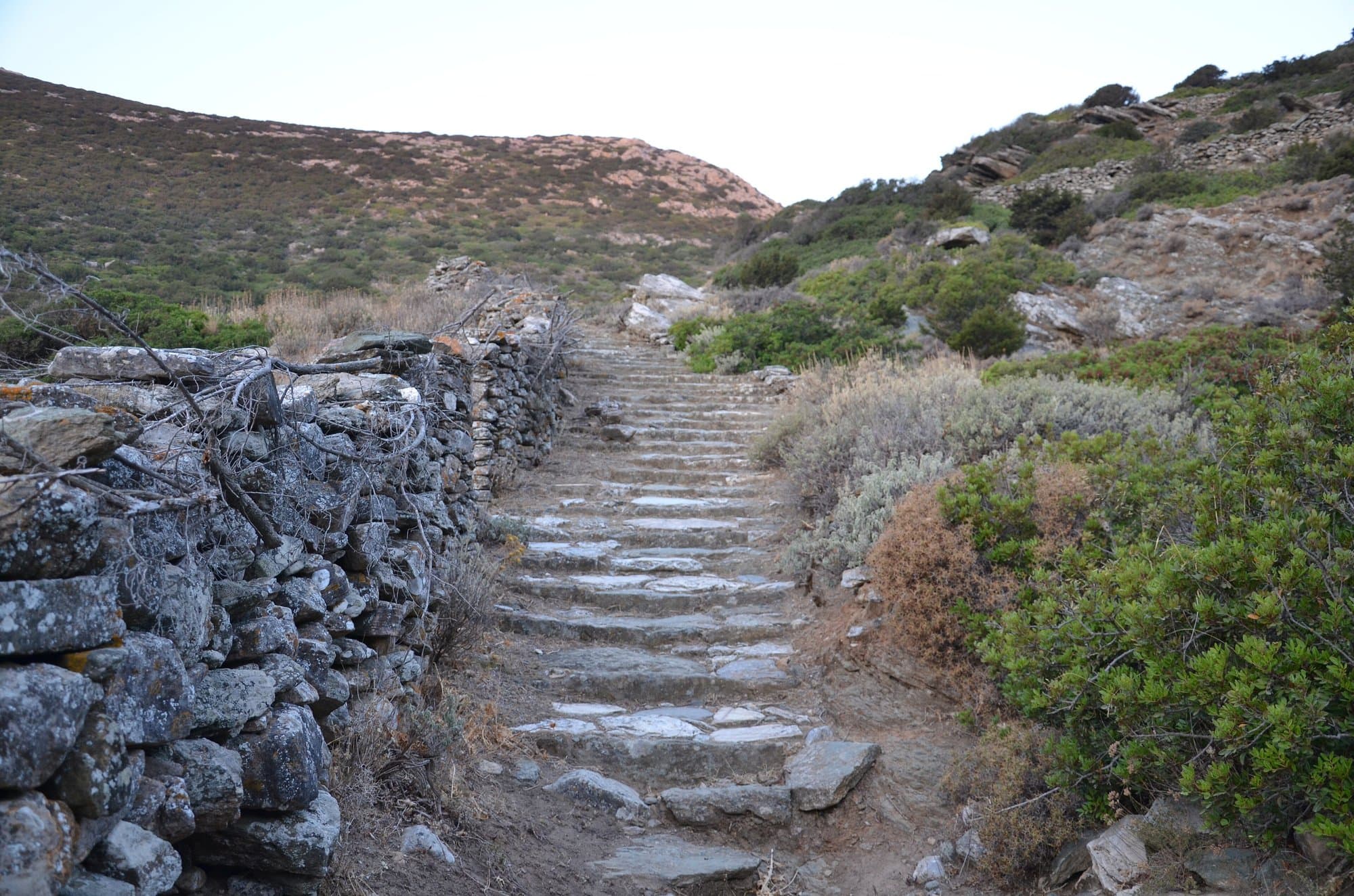
A Mycenaean acropolis on a hilltop between Apollonia and Vathi, with a monumental wall, streets and houses, a small museum of finds and a wide view over the island.
Sifnos · History
Some of the oldest silver mines in the world, a Mycenaean acropolis, a treasury at Delphi, Venetian lords in Kastro, then Ottoman rule, the War of Independence and a new capital at Apollonia.
Timeline
3rd millennium BC
People were mining silver and lead at Agios Sostis, in the north-east of the island, by the start of the third millennium BC, which makes these some of the oldest silver mines known anywhere. The first settlements grew on the hill of Kastro around the same time.
13th century BC
On a hilltop in the middle of the island, at Agios Andreas, the Mycenaeans built a fortified town with a great stone wall, streets, houses and a temple. The site was excavated over several decades and opened to visitors with a small museum of its finds.
6th century BC
Gold and silver made Sifnos so rich that Herodotus called its people the wealthiest of the islanders. They struck their own coins from around 600 BC, and with a tenth of their mining income they built the marble Treasury of the Siphnians at Delphi, whose carved frieze you can still see in the museum there. Herodotus tells how the oracle warned them of 'a wooden ambush and a red herald', and how Samian ships, painted red, came soon after and took a hundred talents.
6th–3rd century BC
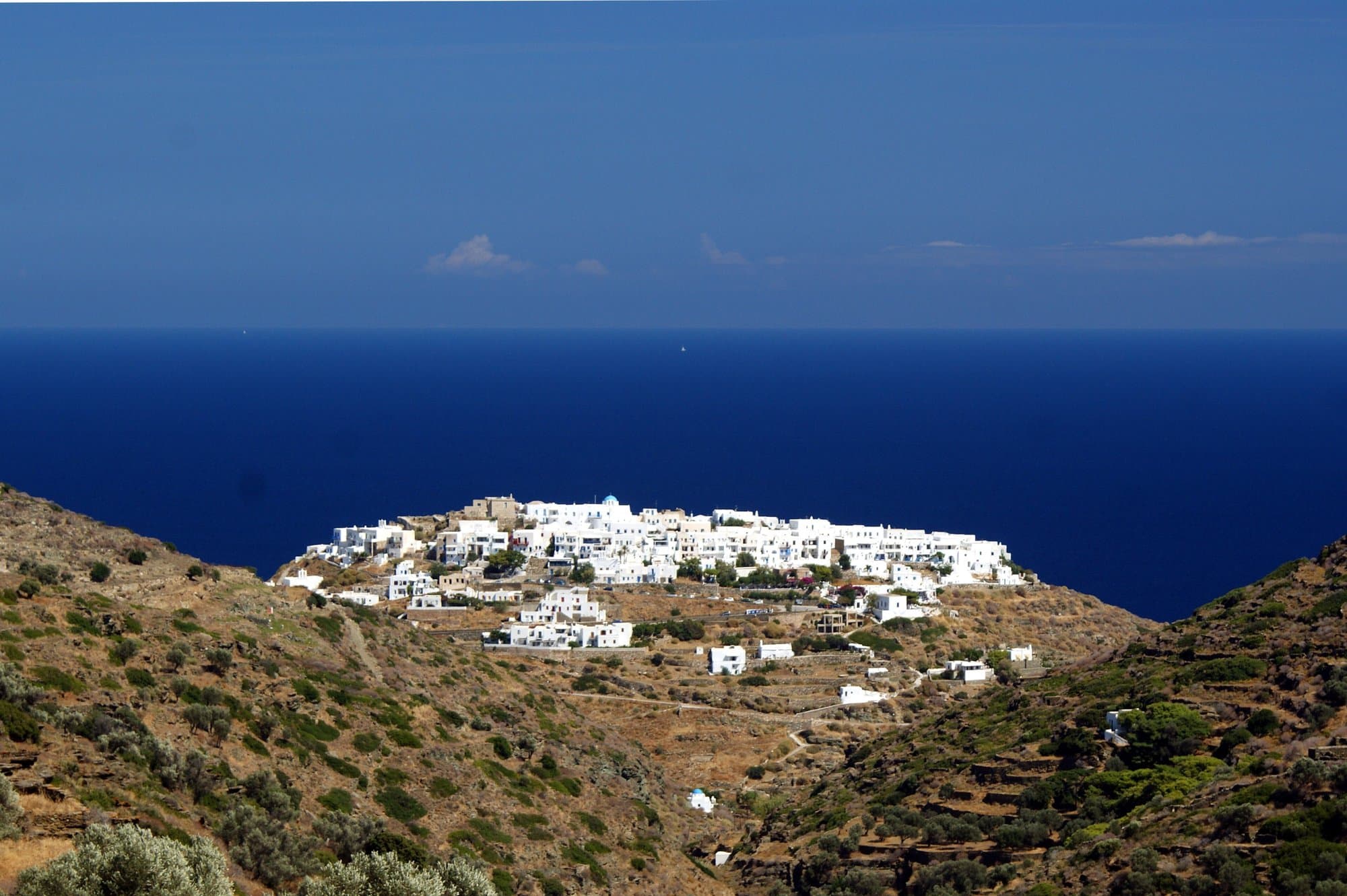
The islanders built dozens of round stone towers on the hills and capes, probably to guard the mines, the fields and the coast and to pass signals by fire. The municipality counts 77 of them. Pausanias later told how the Siphnians grew greedy, stopped sending their tithe to Delphi, and the sea flooded their mines. The real mines were most likely worked out.

1307–1617
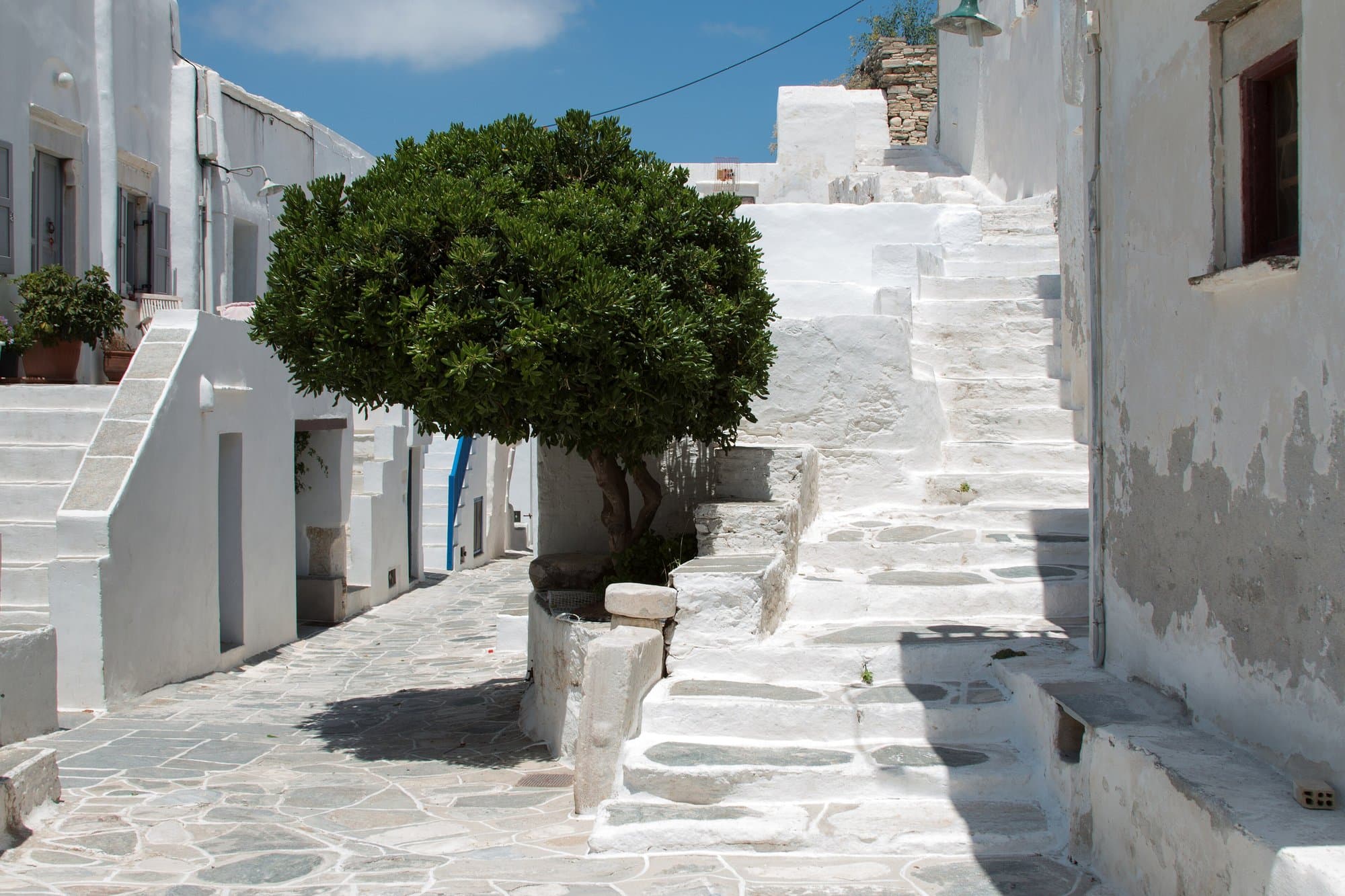
After the Fourth Crusade, Sifnos came under the Latin dukes of the Aegean. In the early 14th century Januli da Corogna took the island, and his family ruled from Kastro for more than a century. The Gozzadini of Bologna followed by marriage, and kept their seat in Kastro until the Ottomans took direct control in 1617. The walled village you walk through today took its shape in these years.
1617–1836
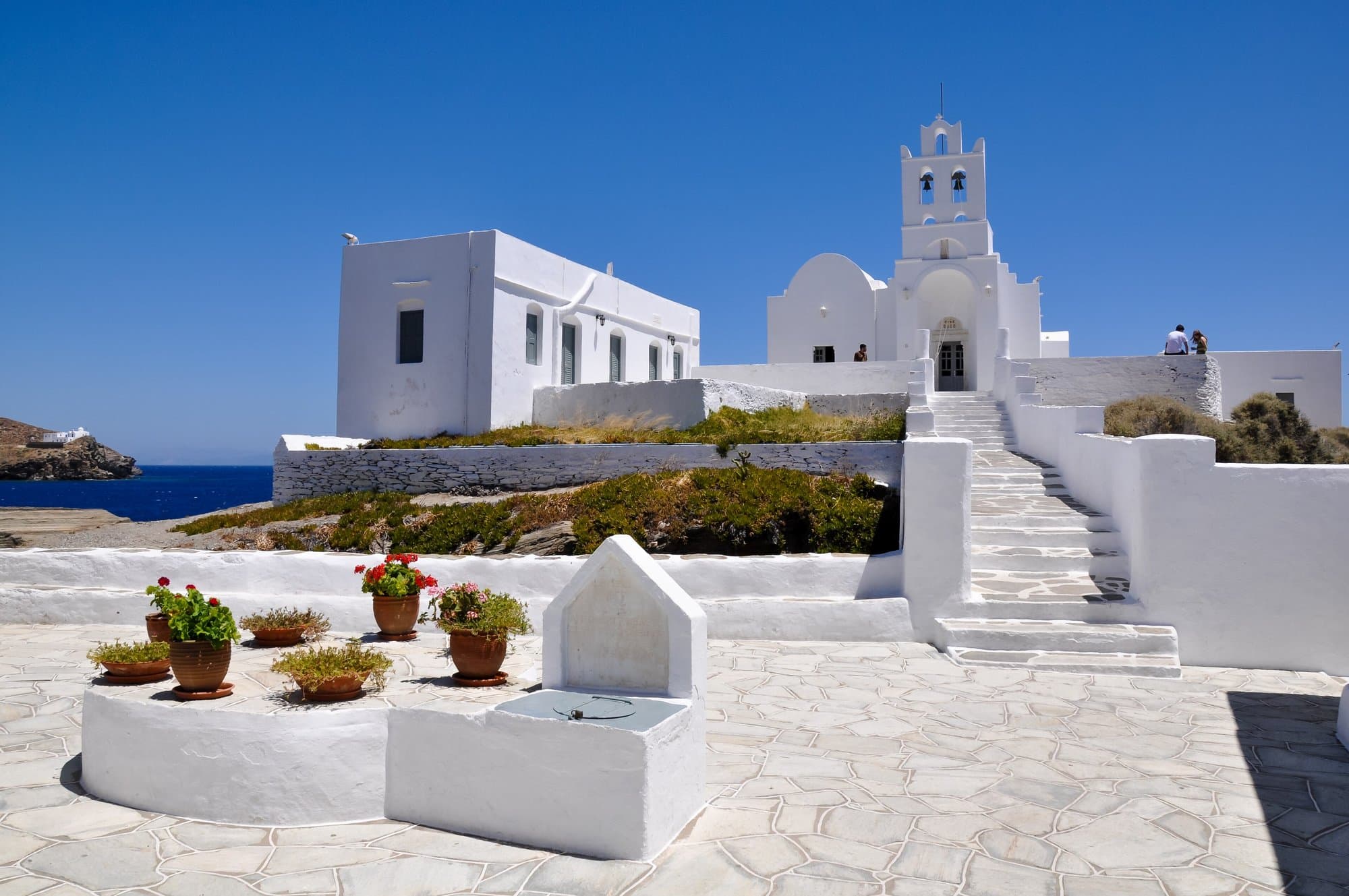
Under the Ottomans the islanders largely ran their own affairs. Churches and monasteries multiplied, Chrysopigi among them, and the School of the Holy Sepulchre became a centre of Greek learning on the island. Sifnos joined the War of Independence in 1821, and in 1836, in the new Greek state, the capital moved from Kastro inland to Apollonia.
1878 to today
Nikolaos Tselementes was born in Exambela in 1878 and became the most famous cook in Greece. The island was occupied in the Second World War and freed in 1944. Sifnian cooks and potters worked all over Greece, and at home the island kept its old ways. In recent years the island has restored its footpaths and become a place for people who come to walk and eat.
Visit
A Mycenaean acropolis on a hilltop between Apollonia and Vathi, with a monumental wall, streets and houses, a small museum of finds and a wide view over the island.
The ancient city and Venetian capital on its rock, with the ruins of the acropolis on top, ancient columns in the walls and the Archaeological Museum.
The White Tower, the best known of the island's ancient round towers, dating from the 6th century BC, near the road to the south coast.
The 17th-century monastery of the island's patron, on a rock split from the shore, reached by a small bridge.

A walled monastery on the highest peak of the island, about 680 m, reached on foot, with a view across the Cyclades.
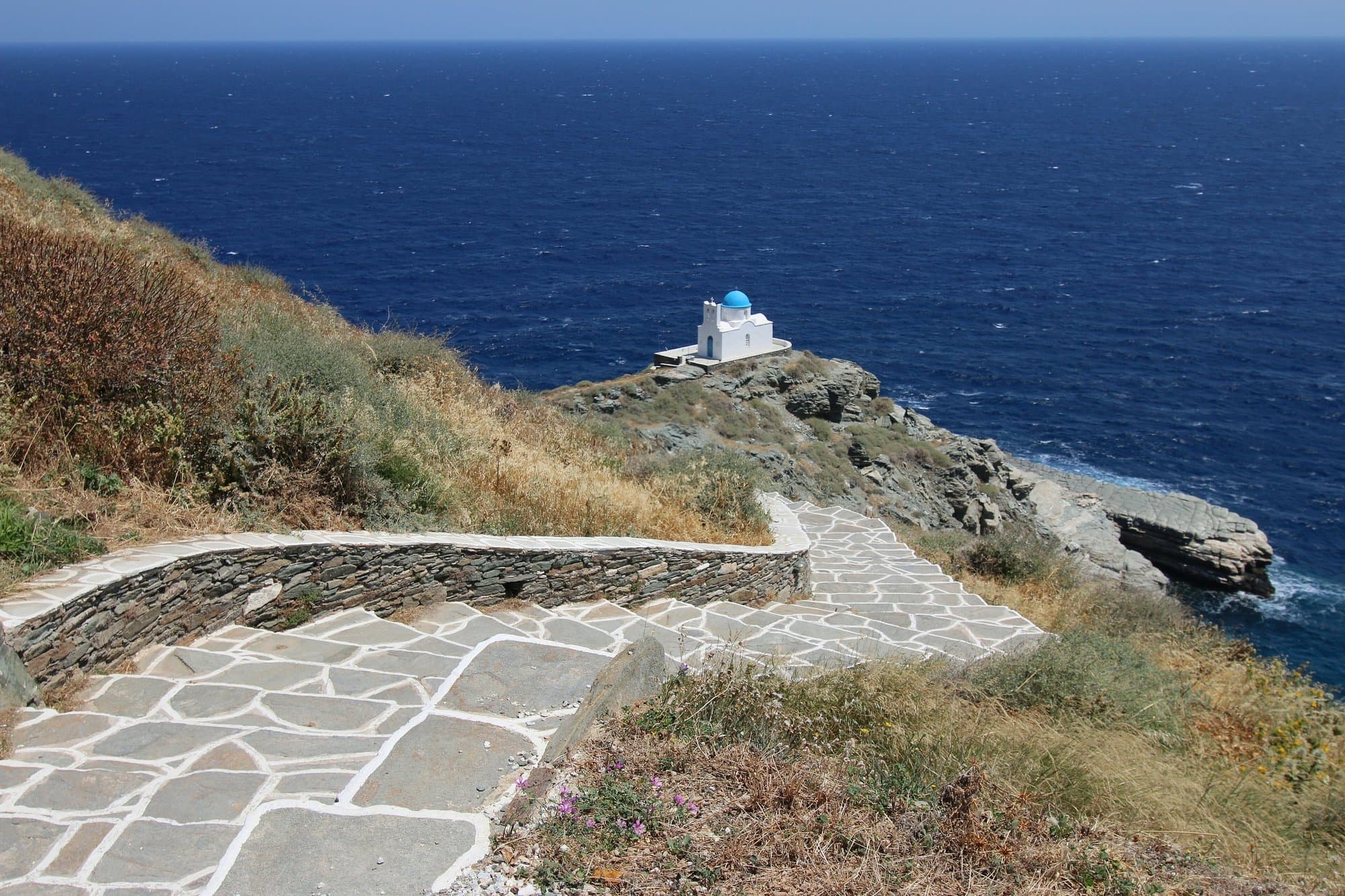
A small white chapel alone on a rock in the sea below Kastro, the most photographed place on the island.