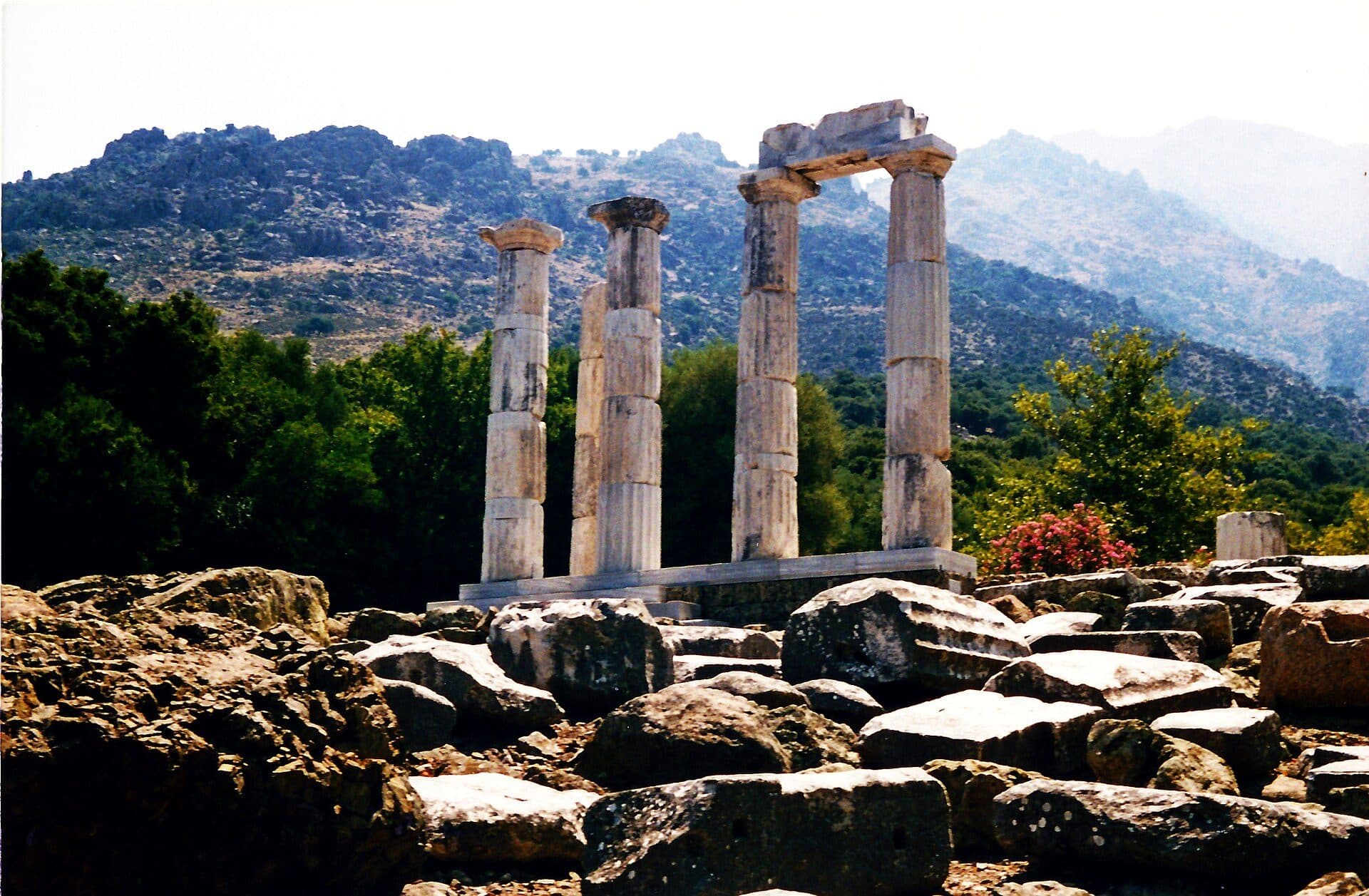
The Sanctuary of the Great Gods
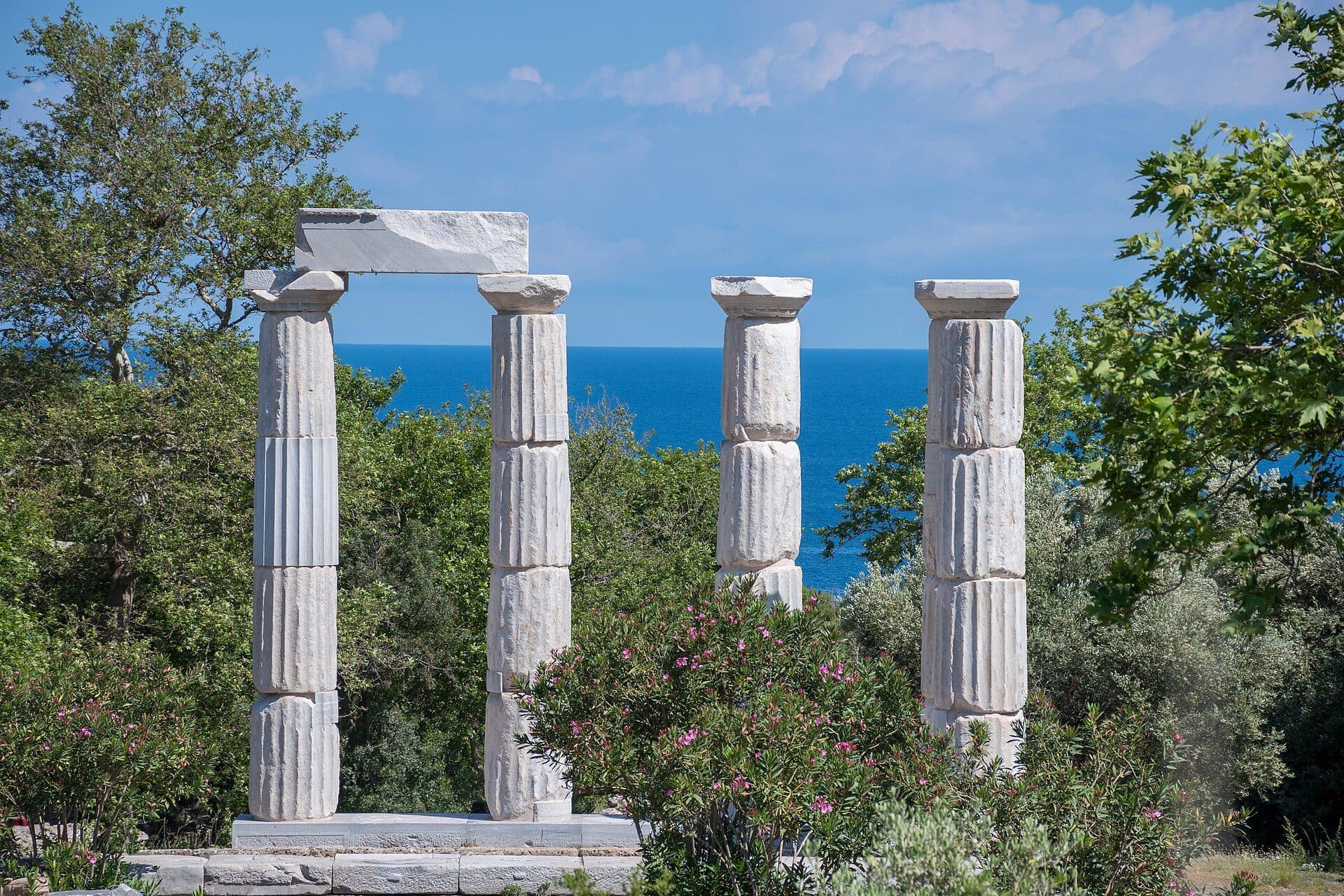
The ancient sanctuary of the Mysteries at Paleopoli, where the Winged Victory was found, about a quarter of an hour's drive away.
Samothraki · Chora & the hills · Χώρα
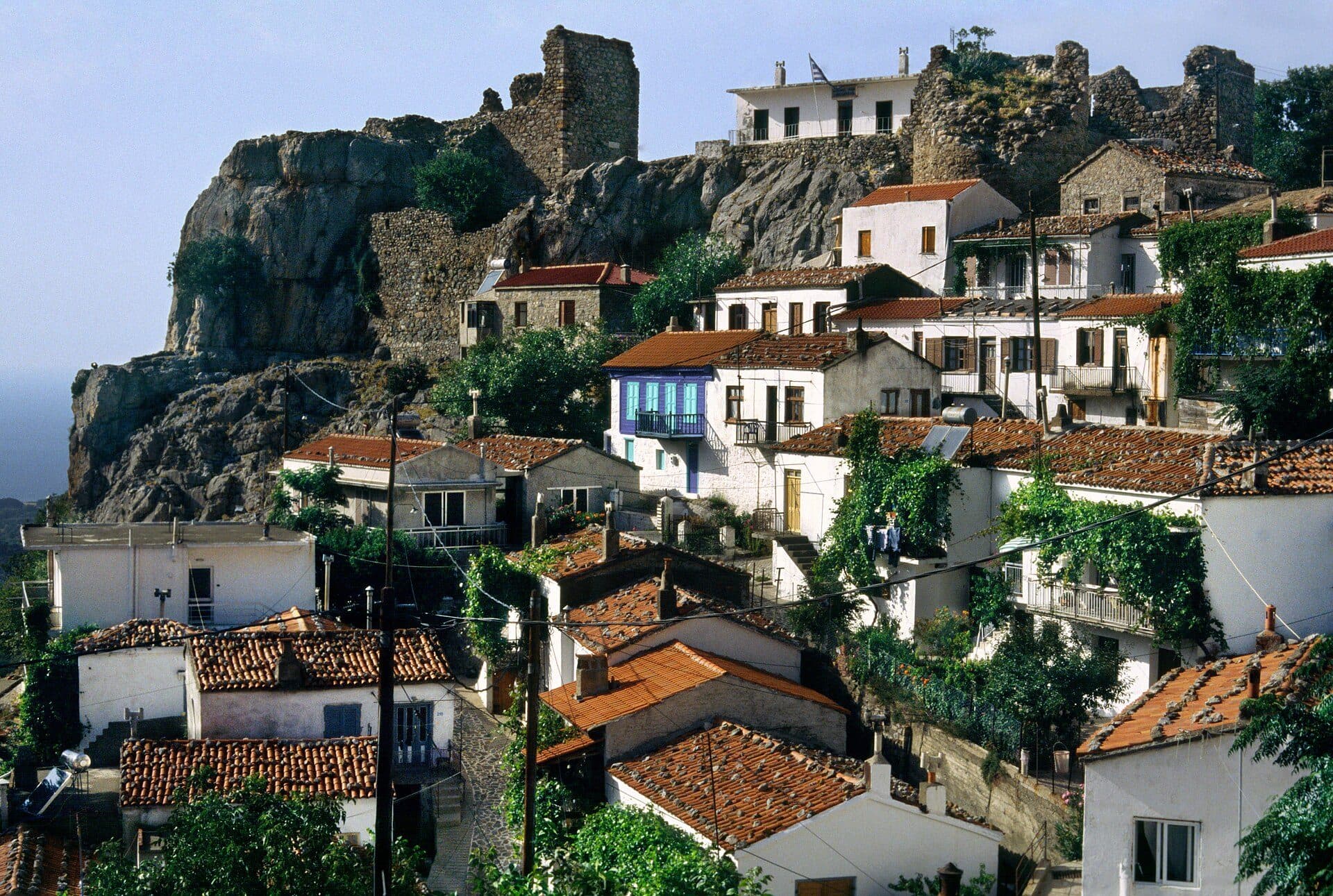
Chora is the old capital of Samothraki, a village of grey stone houses and red-tiled roofs climbing a steep fold of the mountain about 5 km inland from the port. It was built where pirates could not see it from the sea, and it is crowned by the ruins of the castle the Genoese Gattilusi lords raised in the 15th century. Its cobbled lanes wind past fountains, small churches, kafeneia and shops, the Folklore Museum and the square, and in the evening the whole island seems to come up the hill for dinner on a terrace that looks over the roofs to the sea.
Greetings from Chora
Chora
We drove up from the port in the late afternoon and lost the car park three times in the lanes. Then we climbed to the castle and sat on the old wall with the whole village below us, red roofs and grey stone and a church bell going, and beyond it the sea turning gold. Dinner was on a terrace above the square, a table of mezedes and a carafe of tsipouro, and when we walked down afterwards the fountains were still running and the cafes were full.
The old capital, hidden in a fold of the mountain below its Genoese castle
For most of its history the people of Samothraki lived away from the sea. The coast belonged to pirates and raiders, so the islanders built their main village high in a hollow on the western slopes of Mount Saos, where it is invisible from the water until you are almost on top of it. That village is Chora, and it was the capital of the island until the port of Kamariotissa grew in the 20th century.
The houses are built in the way of northern Greece rather than the Cyclades: grey stone walls, wooden balconies, small windows and roofs of red tile, packed tightly together up the slope so that one family's terrace is often the next one's roof. The lanes between them are steep and cobbled, with gutters running down the middle for the winter rain, and there are fountains of mountain water at the corners.
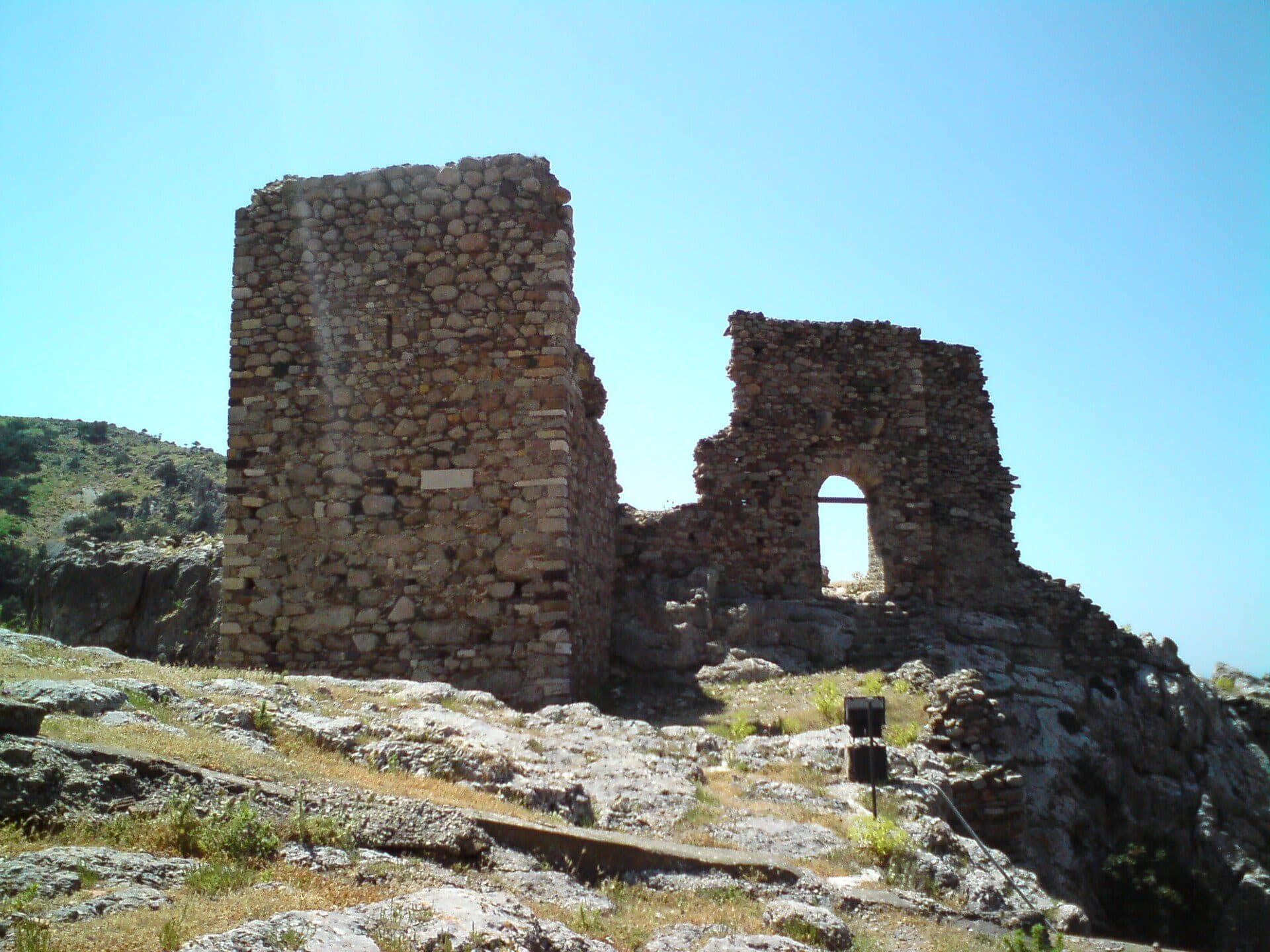
On the rock at the top stands the castle. Its towers were built in the 1430s by the Gattilusi, the Genoese family who ruled Lesbos and, for about a century, Samothraki and other islands of the northern Aegean, and you can still find their coat of arms on the walls. Little is left inside, but the walk up through the village is lovely, and the walls look out over the roofs, the olive groves and the sea, towards the mainland on a clear evening.
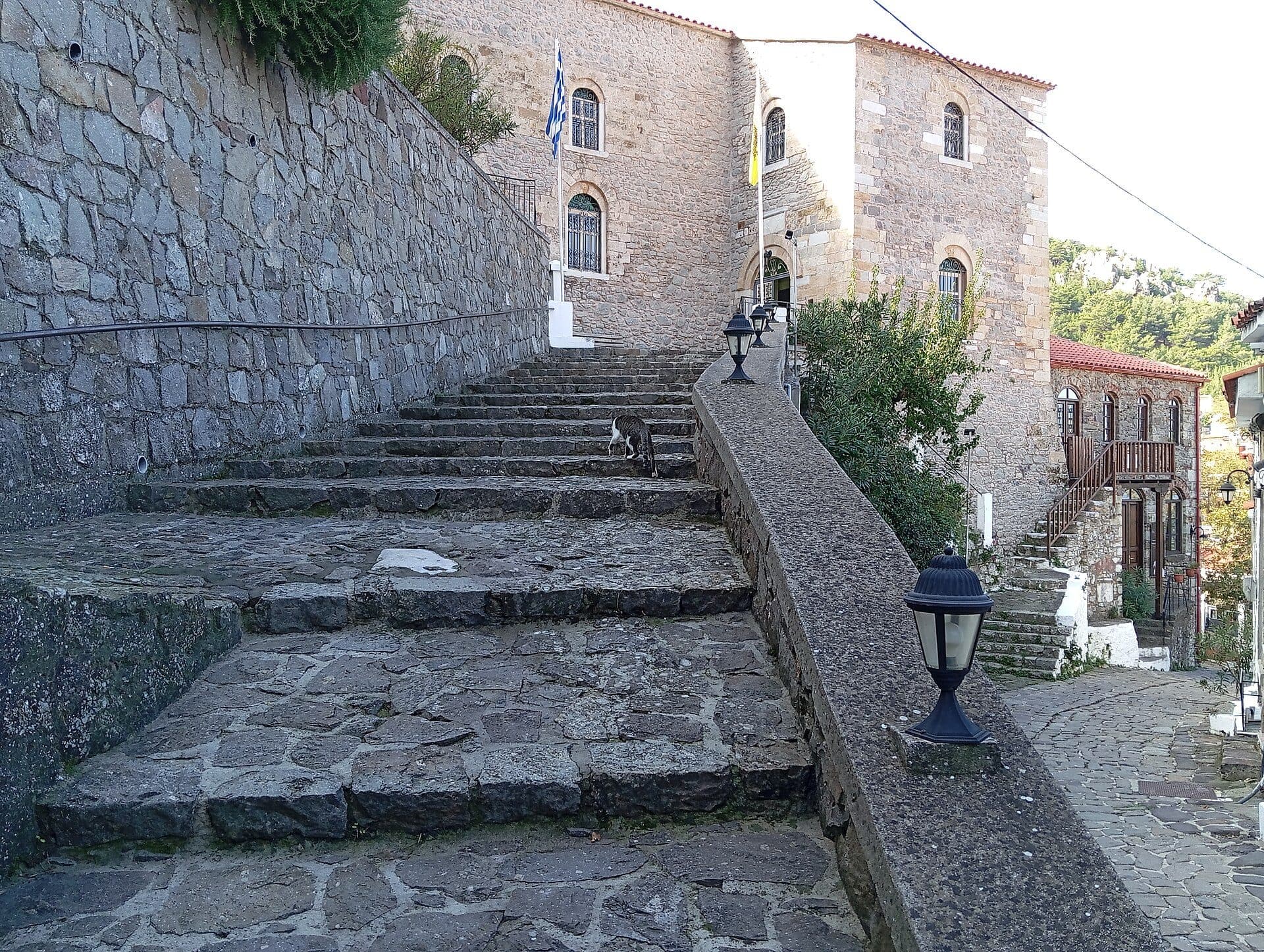
Below the castle, next to the church of the Dormition of the Virgin, a 19th-century stone house holds the Folklore Museum: the looms, farm tools and shepherds' gear, the costumes and the rooms of a family home from the days before tourism. It was once the island's first secondary school. Most of what you see was given by the people of the village.
Chora comes alive at night. Visitors who have spent the day at the waterfalls drive up for dinner, the tavernas put out tables on the terraces and in the lanes, and the cafes stay busy late with coffee, cake and drinks. It is the one place on the island that feels like a small town, and it is still very much the islanders' own village.
Hour by hour
A slow morning in the lanes, a museum, an hour at the Sanctuary, and a long evening back on the hill. Here is how we would spend a day here.
Start with a coffee and something sweet in the lanes, while the shopkeepers are still sweeping their steps and the air is cool.
Climb through the village to the Gattilusi castle on its rock and look out over the roofs to the sea before the sun gets high.
See how the island lived before tourism, in the old stone house by the church: looms, shepherds' tools and a family home laid out as it was.
Drive down to Paleopoli for the Sanctuary of the Great Gods and its museum, then a fish lunch by the sea.
Back in Chora, sit by the fountain with an ouzo and a few mezedes while the swallows go round the roofs.

Take a terrace table for a long dinner looking over the village to the sea, then wander the lanes while the cafes are still open.

Where to stay
Chora
Axiokersa Suites · Boutique suites · €€€
Where to eat
Chora · Chora & the hills
Chora · Chora & the hills
Chora · Chora & the hills
Within an easy drive
The ancient sanctuary of the Mysteries at Paleopoli, where the Winged Victory was found, about a quarter of an hour's drive away.
A quiet farming village in the olive groves just south of Chora, with stone houses and the old threshing floors that gave it its name.

The port town on the coast below, with its fish tavernas, its waterfront and the walk out to the lighthouse at the western tip of the island.
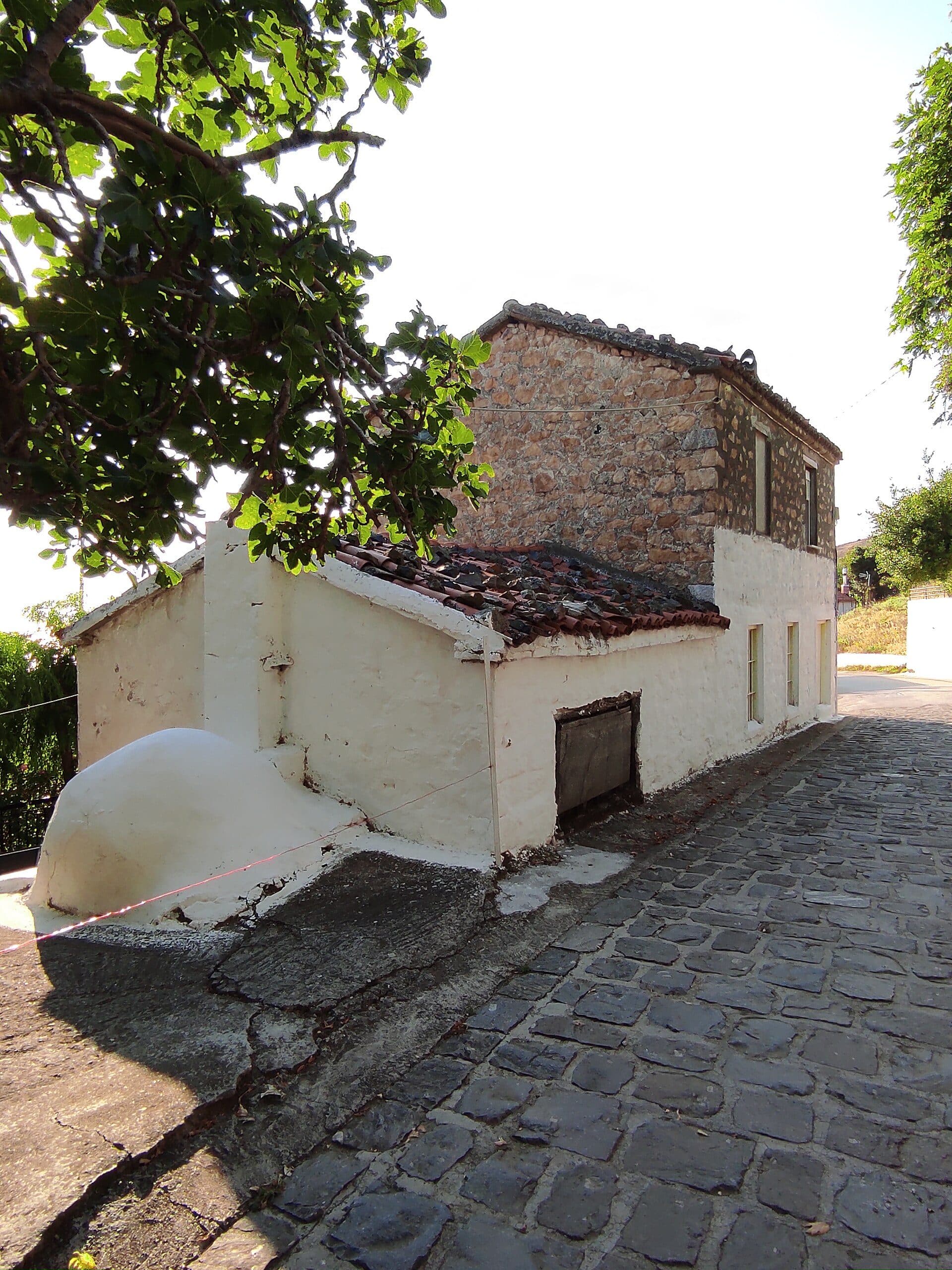
The hill village in the south-west, famous for its goat tavernas and its sunsets, about twenty minutes' drive away.
Good to know
Chora is about 5 km up a winding road from the port of Kamariotissa, a short bus or taxi ride. Buses run between the two through the day. The lanes are for walking: leave the car in the car parks at the edge of the village, which fill up on summer evenings.
Chora is lovely all summer, and at its liveliest in the evenings of July and August, when every terrace is full. In May, June and September it is quieter and the walk up to the castle is cooler. Some tavernas only open in high summer.
More of Samothraki
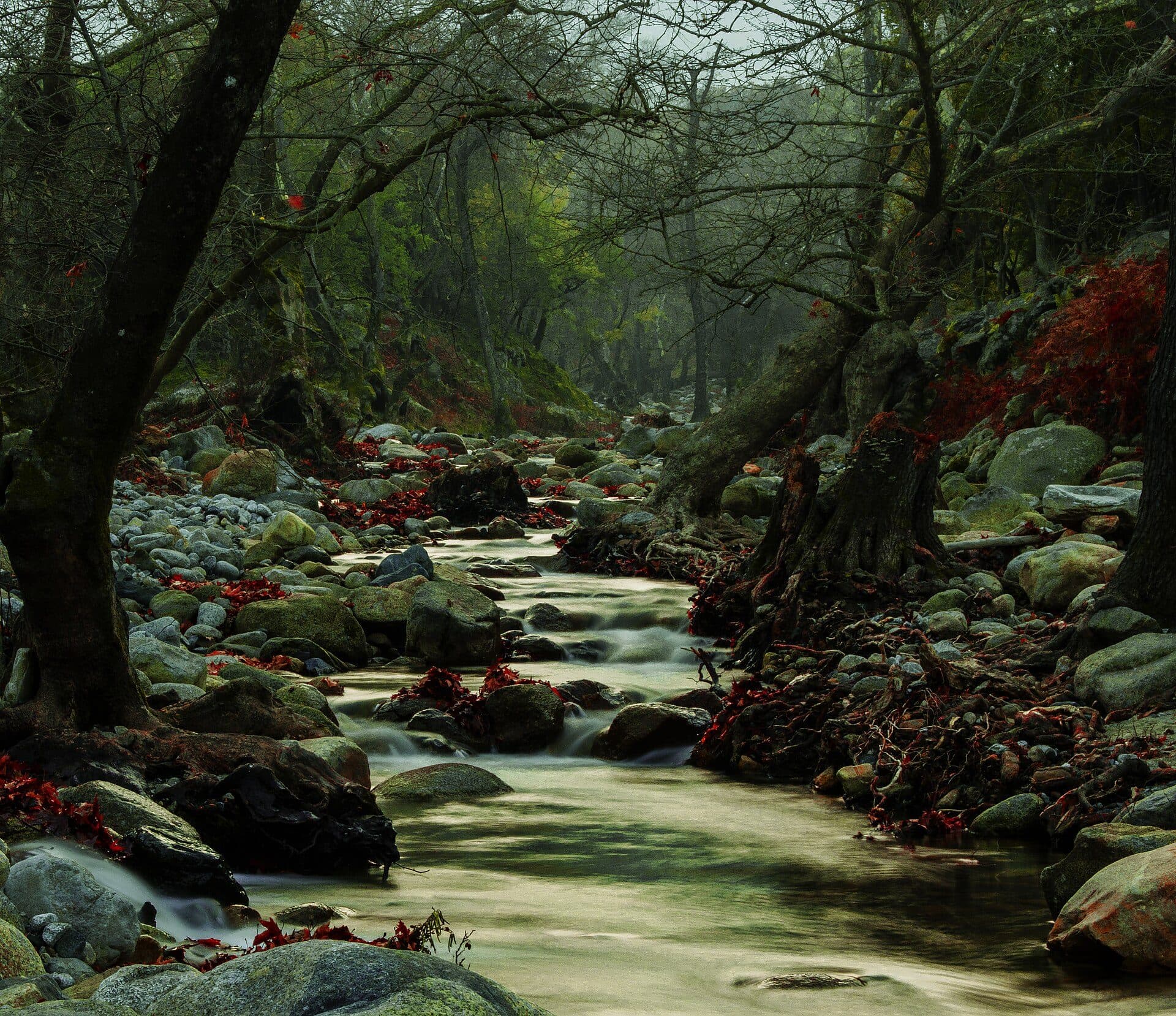
Therma & the forest
Hot springs, plane trees and running water at the foot of the mountain
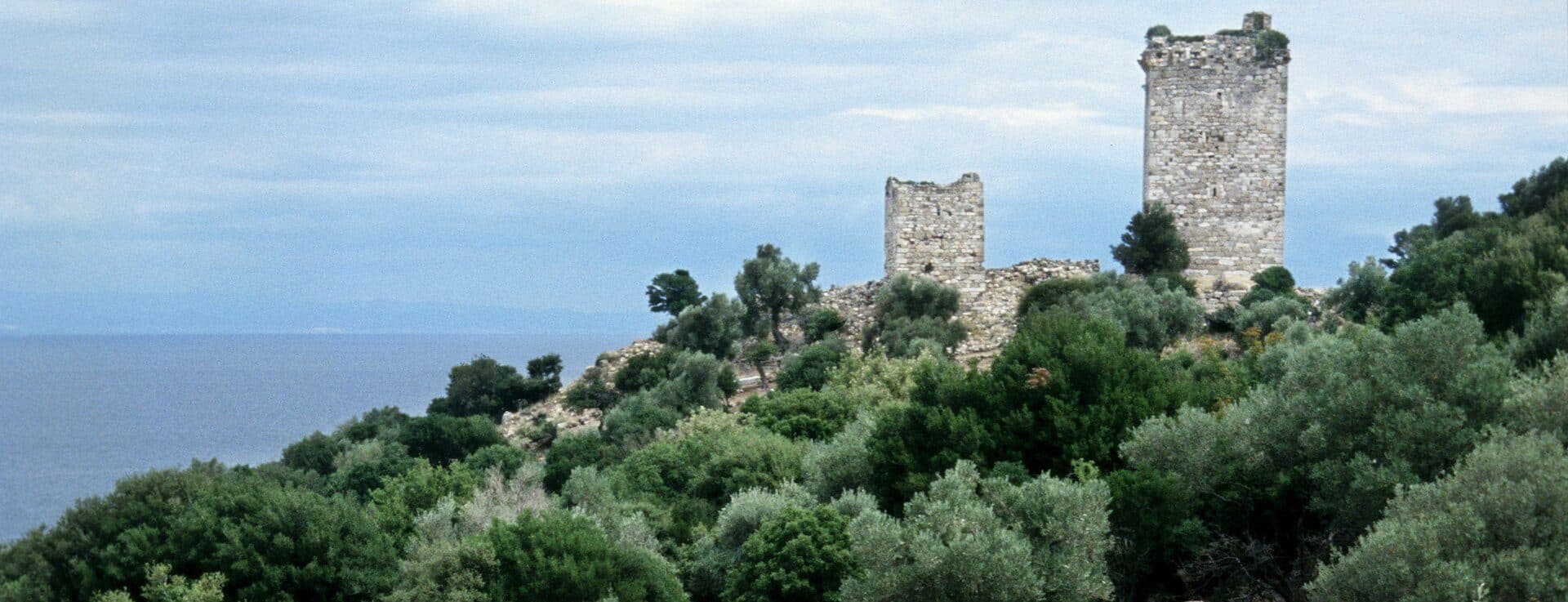
Paleopoli & the north coast
The ancient city and the sanctuary of the Mysteries, between the mountain and the sea
Kamariotissa & the west
The port where everyone arrives, with fish on the grill and the mountain behind
Every stay we recommend across Samothraki, from village guesthouses to rooms on the sea.
See all stays