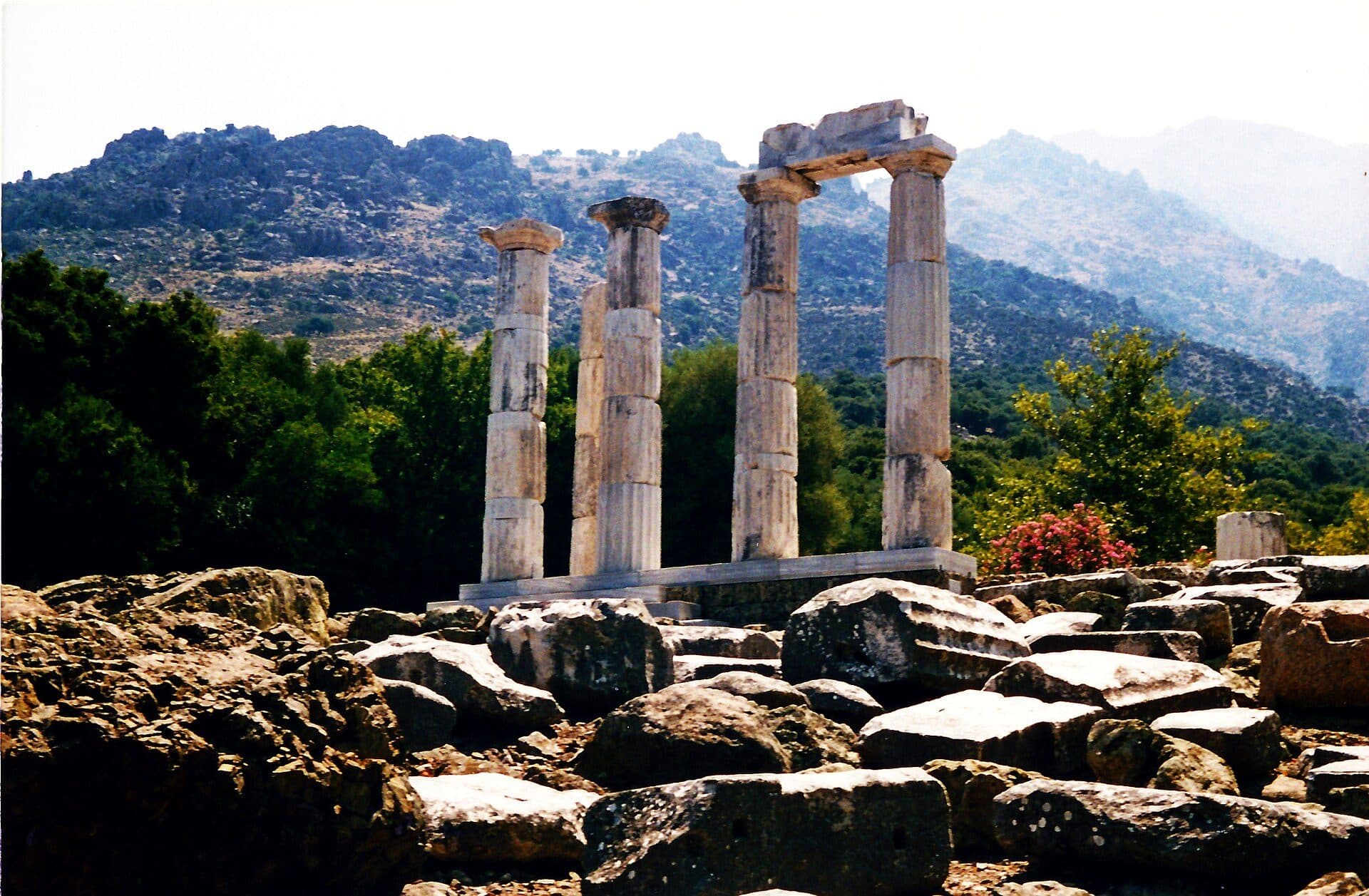
The Sanctuary of the Great Gods
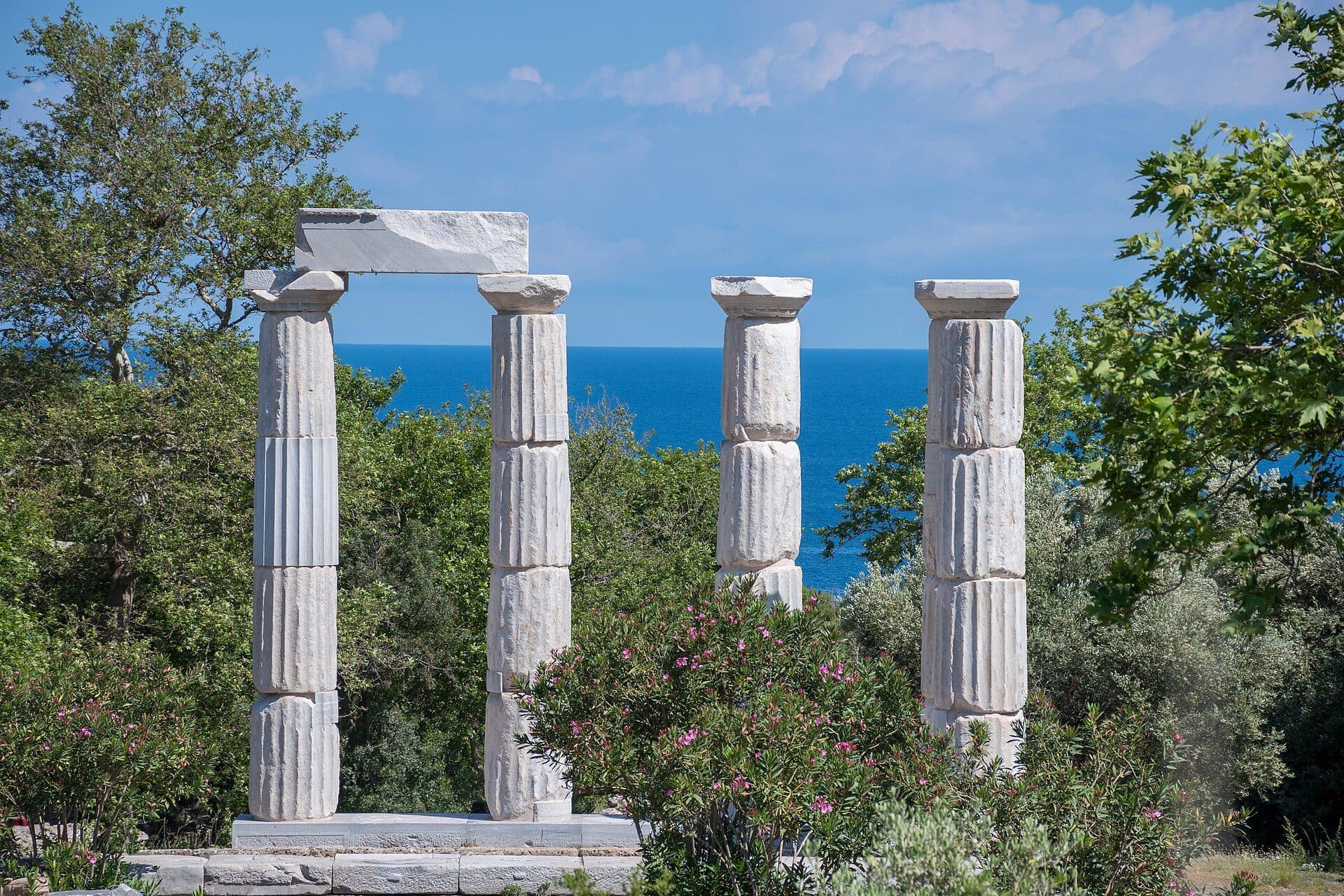
The sanctuary of the Mysteries in its green ravine at Paleopoli, with standing columns, the round Arsinoeion, the theatre and the niche where the Winged Victory stood.
Samothraki · History
A prehistoric hill town, Thracian gods and Greek settlers, a sanctuary of the Mysteries visited by kings, Genoese towers, a massacre in 1821, and a statue that made the island famous.
Timeline
From the Neolithic
People were living on Samothraki long before the Greeks arrived. On the low hill of Mikro Vouni, in the south-west, archaeologists have found one of the earliest settlements in the northern Aegean, lived in from the end of the Neolithic into the Bronze Age, with finds that show contacts across the Aegean, even with Minoan Crete. Later, the people of the island were Thracians, kin of the tribes of the mainland opposite, with gods of their own.

c. 700 BC
Around 700 BC Greek settlers, most likely from Lesbos and the coast of Asia Minor, founded a city on the north coast, at what is now Paleopoli. They mixed with the Thracians and adopted their gods, built a great wall up the slope, and the city grew prosperous, with a fleet and colonies on the mainland coast. Herodotus, in the 5th century BC, writes of the Samothracian Mysteries as something he knew from the inside.
4th–2nd century BC
In a ravine beside the city stood the sanctuary of the Great Gods: a Great Mother, underworld gods and the Kabeiroi, protectors of sailors. Initiation, held at night, was open to men and women, Greeks and foreigners, free people and slaves. Philip II of Macedon was initiated here and, says Plutarch, met Olympias, the mother of Alexander. Alexander's successors built some of its grandest buildings, among them the round Arsinoeion, given by Queen Arsinoe II.
c. 200–190 BC
Around the beginning of the 2nd century BC, probably to celebrate a victory at sea, a marble statue of Nike, the goddess of victory, was set up in a niche above the theatre of the sanctuary. She is shown landing on the prow of a warship, her wings still open and her robes pressed against her by the wind. In 168 BC Perseus, the last king of Macedon, fled to the sanctuary after his defeat by Rome, and was captured.

Roman and Byzantine times
Under Rome the sanctuary kept its fame, and Roman officials came to be initiated. Saint Paul stopped at Samothrace on his way to Macedonia, as the Acts of the Apostles record. As Christianity spread, the Mysteries faded and ended in late antiquity, and earthquakes brought the buildings down. Through the Byzantine centuries the islanders moved away from the exposed coast.
15th century
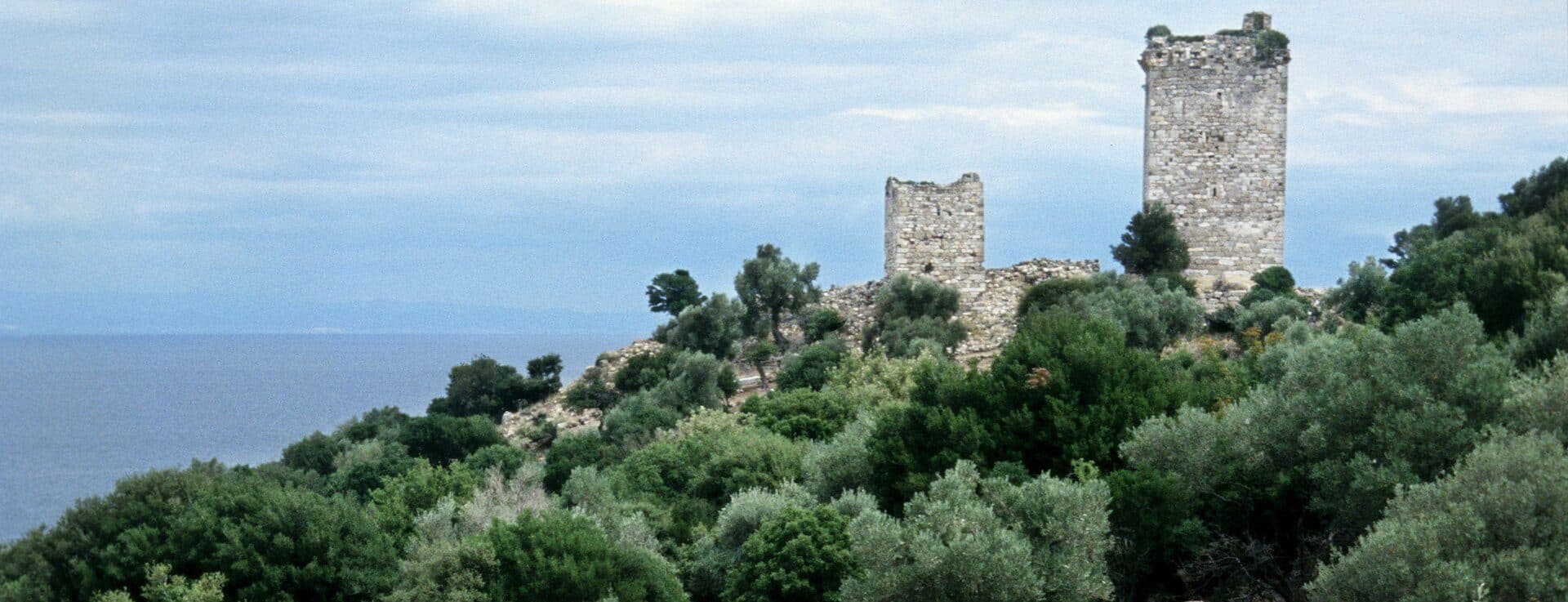
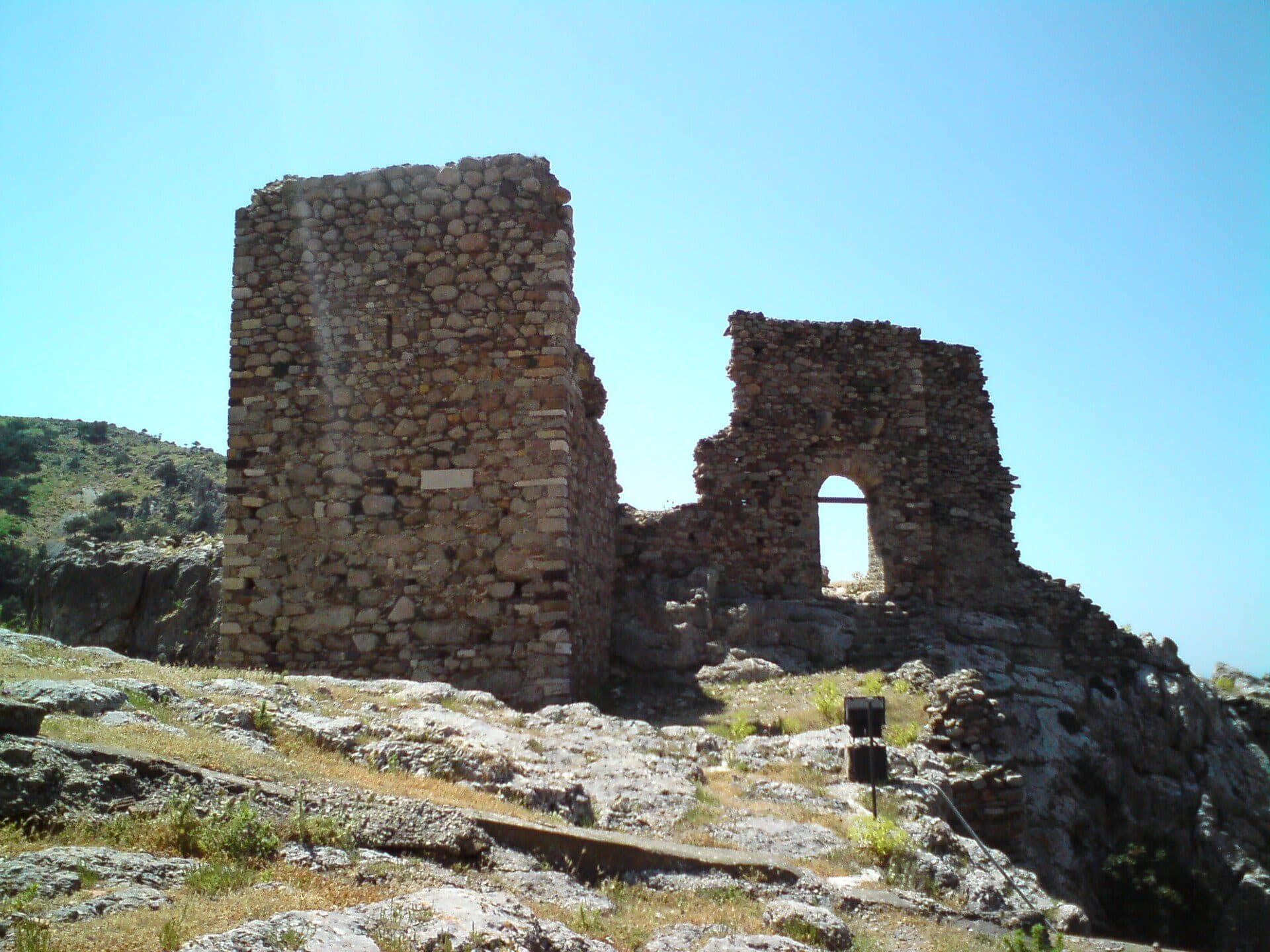
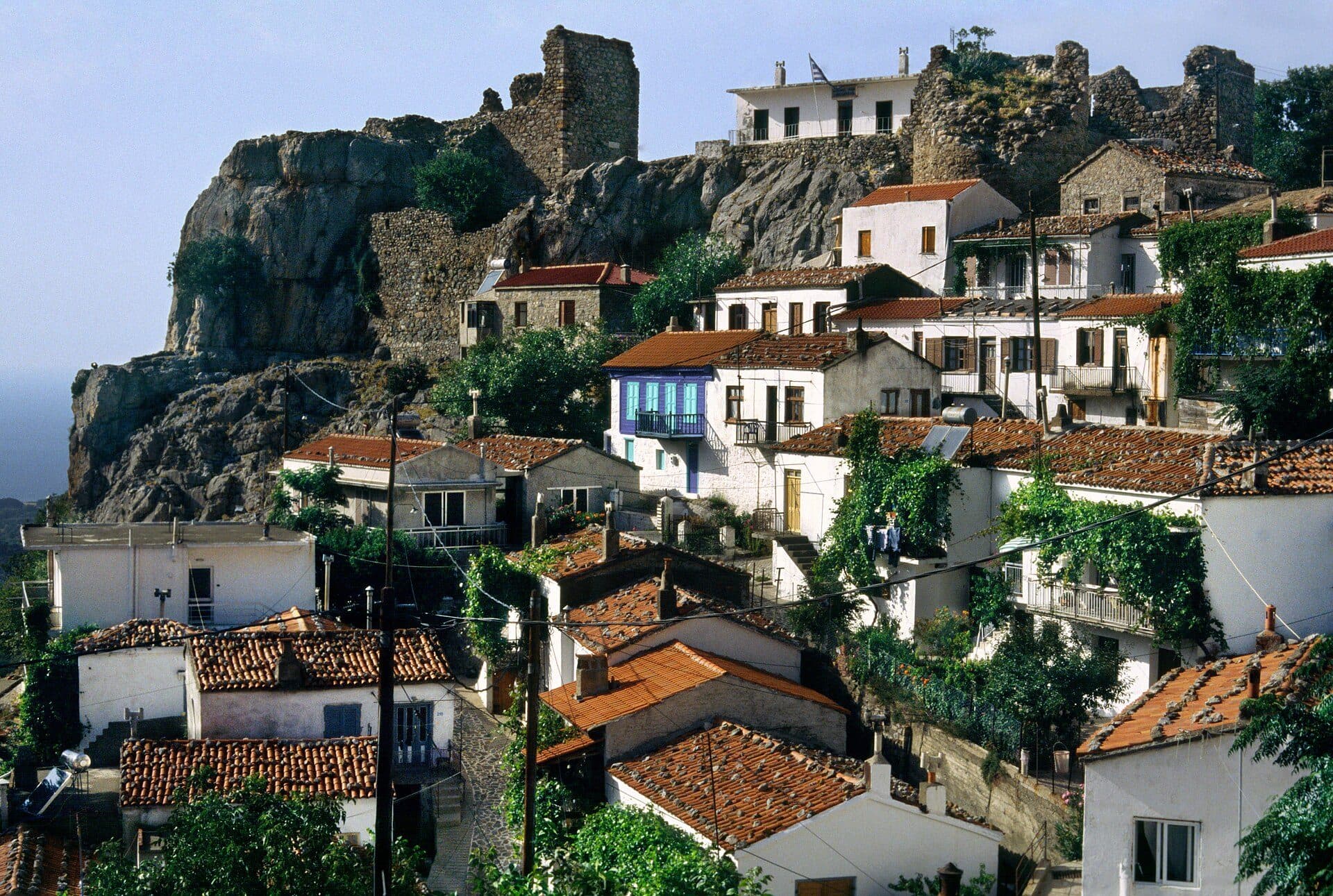
In the 15th century Samothraki was held by the Gattilusi, a Genoese family who ruled Lesbos and several islands of the northern Aegean under the last Byzantine emperors. They built the castle above Chora and towers at Paleopoli and along the coast, partly from the stones of the ancient city, against pirates and the advancing Ottomans. A few years after the fall of Constantinople, the island passed to the Ottoman Empire.
1821–1912
When the Greek War of Independence began in 1821, Samothraki joined it, and that autumn Ottoman forces took terrible revenge: many islanders were killed and others sold into slavery, a tragedy still remembered every year. The island stayed Ottoman and almost empty for decades. It became part of Greece only in 1912, during the First Balkan War. In the Second World War it was occupied by Bulgaria.
1863 to today
In 1863 the French consul Charles Champoiseau dug in the ruins of the sanctuary and found the Winged Victory in pieces. She was shipped to Paris, joined later by her stone ship, and stands at the top of the Daru staircase in the Louvre. Austrian, French and, from the 1930s, American archaeologists have excavated the site since, and the museum at Paleopoli holds their finds.

Visit
The sanctuary of the Mysteries in its green ravine at Paleopoli, with standing columns, the round Arsinoeion, the theatre and the niche where the Winged Victory stood.
The Gattilusi castle on its rock above the old capital, with the family's coat of arms on the walls and a wide view over the roofs to the sea.
Medieval towers on the hill above the ancient harbour, built from the stones of the ancient city, next to stretches of its great wall.
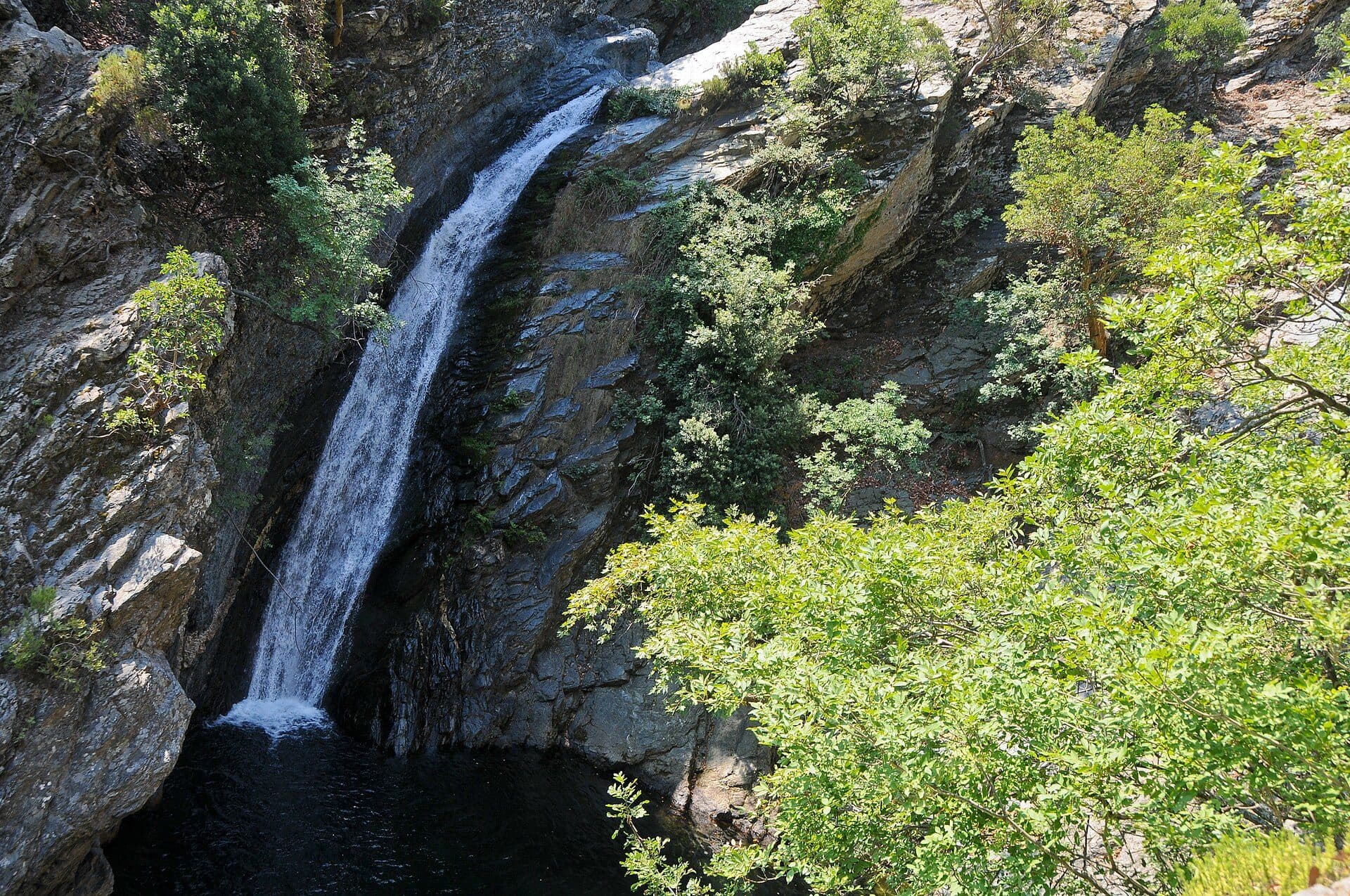
A medieval watchtower at the mouth of the Fonias river, by the beach and at the start of the gorge walk.