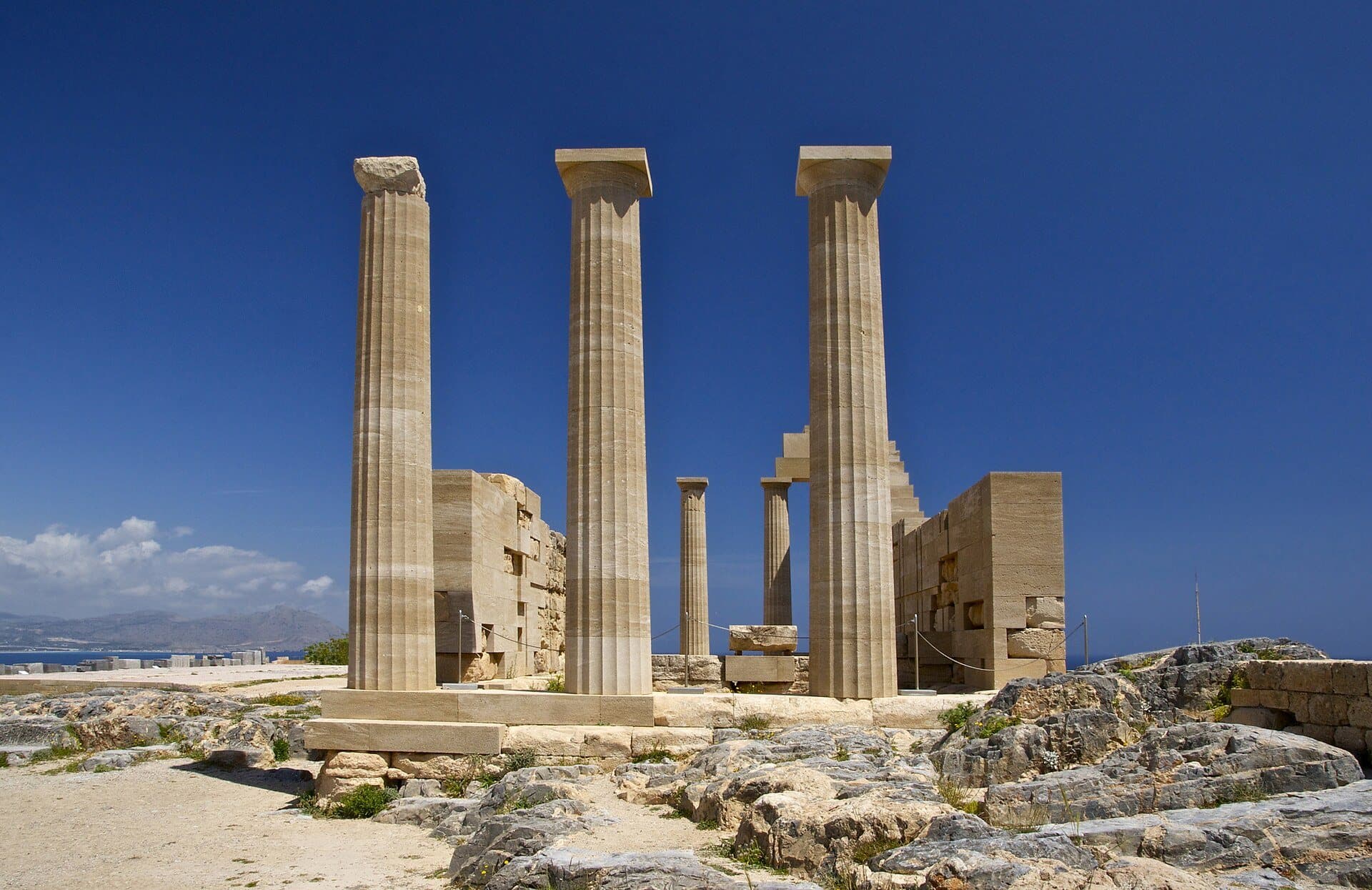
Acropolis of Lindos
The sanctuary of Athena Lindia and a Hellenistic colonnade inside the Knights' walls, 116 m above the sea. Go at opening time in summer.
Rhodes · History
Three ancient cities, a great sea power with a bronze colossus, the Knights of St John, the Ottomans and the Italians, before Rhodes joined Greece in 1948.
Timeline
c. 1000–408 BC
Dorian Greeks founded three cities on Rhodes. Lindos was the richest, with a sanctuary of Athena on its rock, and its ships traded and founded colonies across the Mediterranean.

408 BC – AD 1st century
In 408 BC the three cities joined to found a new capital at the northern tip of the island. Rhodes became a great sea power. After surviving a long siege in 305–304 BC, its people built the Colossus, a huge bronze statue of the sun god Helios, one of the Seven Wonders of the World. An earthquake brought it down around 226 BC.

1309–1522
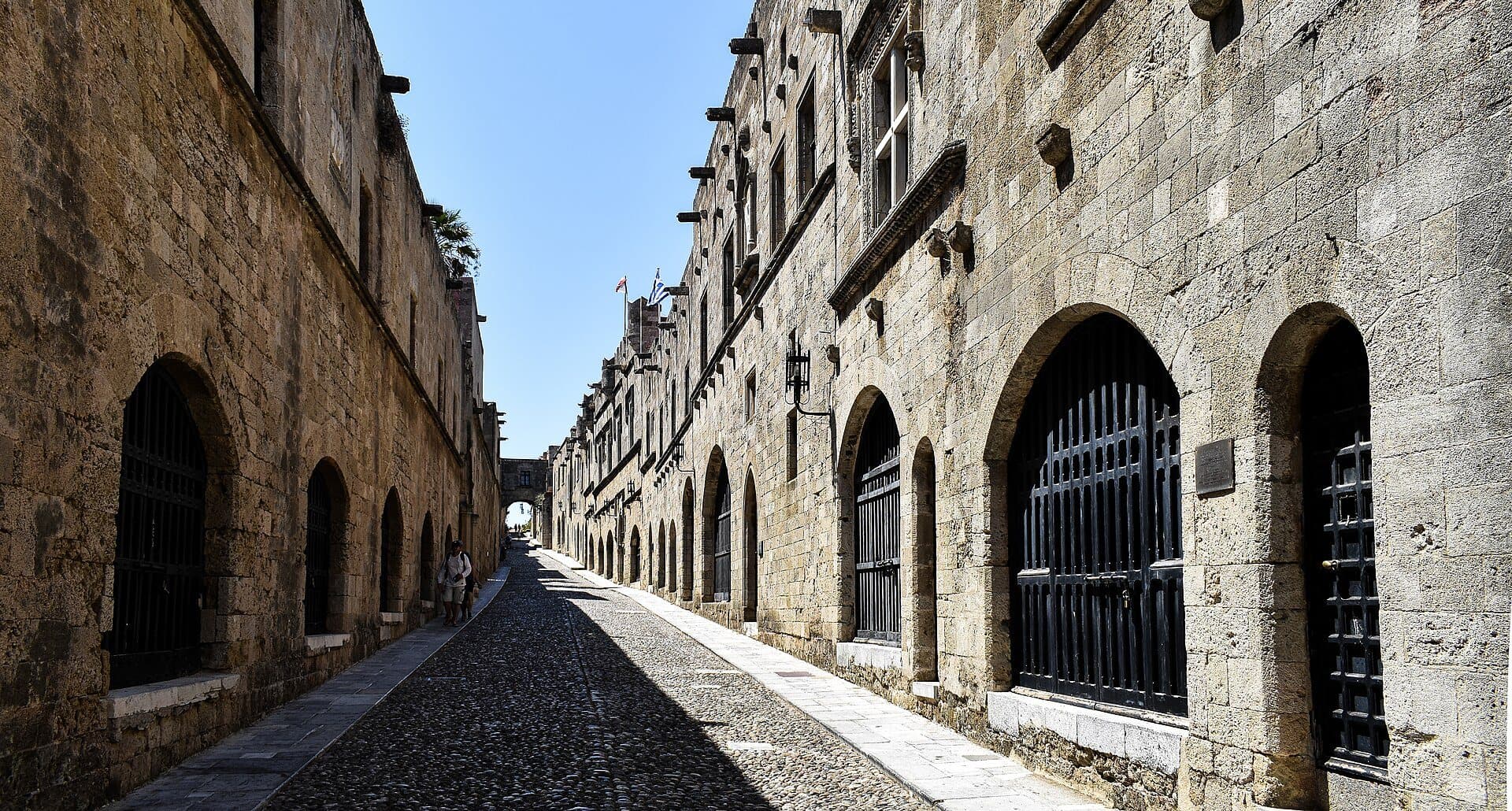
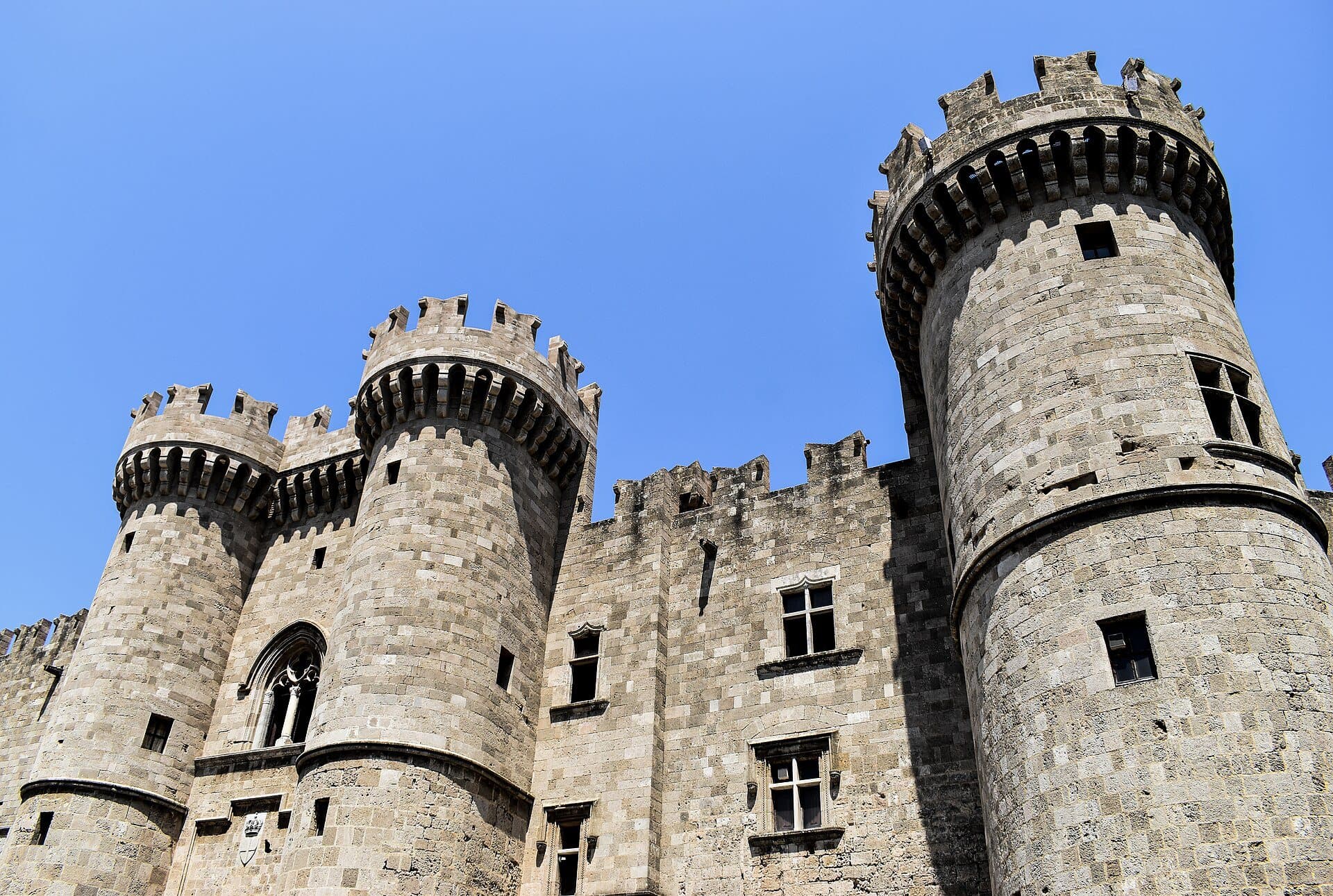
The Knights Hospitaller took Rhodes from the Byzantines and made it their base for two centuries. They built the walls, the Palace of the Grand Master, the hospital and the inns of the Street of the Knights. They beat off an Ottoman siege in 1480, but after a six-month siege by Suleiman the Magnificent they surrendered and left in January 1523.
1522–1912
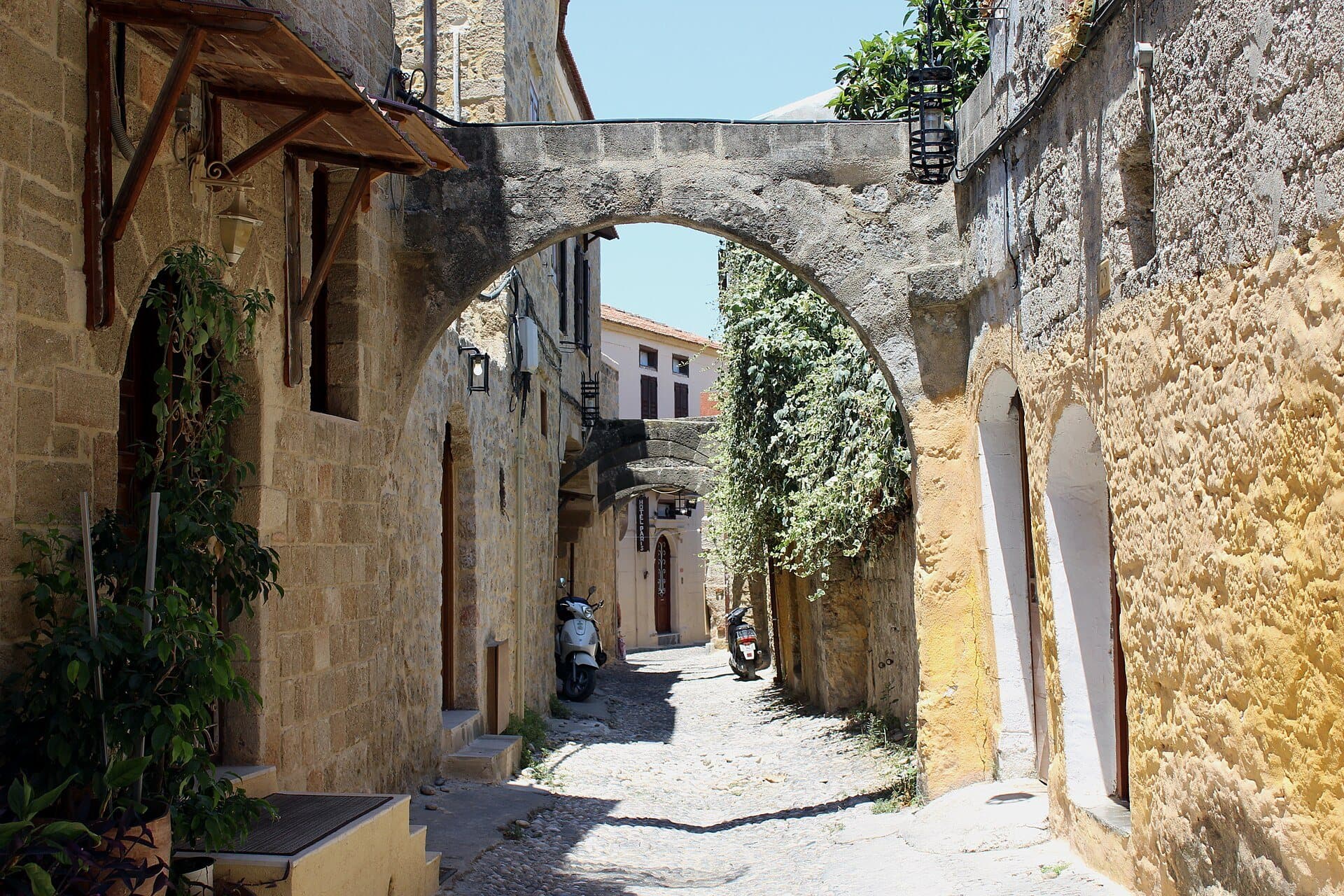
For almost four centuries Rhodes was part of the Ottoman Empire. Mosques, baths and fountains were added to the Old Town, and the Suleiman Mosque still stands at the top of Sokratous Street. Greek families had to live outside the walls.
1912–1948
Italy took the Dodecanese in 1912, restored the medieval town and rebuilt the Palace of the Grand Master. German forces took over in 1943, and in July 1944 they deported the Jewish community of Rhodes to Auschwitz. After British administration, Rhodes formally joined Greece on 7 March 1948.
Visit
The sanctuary of Athena Lindia and a Hellenistic colonnade inside the Knights' walls, 116 m above the sea. Go at opening time in summer.
The Knights' fortress-palace at the top of the Old Town, rebuilt by the Italians in the 1930s, with Roman mosaics laid on its floors.
A whole ancient town on a west-coast hillside, with streets, houses, a temple and a big water cistern, looking out to sea.

A hill above Ialysos with the remains of an acropolis and temple, a monastery restored by the Italians and a cypress-lined path of the Stations of the Cross.

A 15th-century castle of the Knights on a lone rock above the south-west coast, with a small chapel inside. Best at sunset.