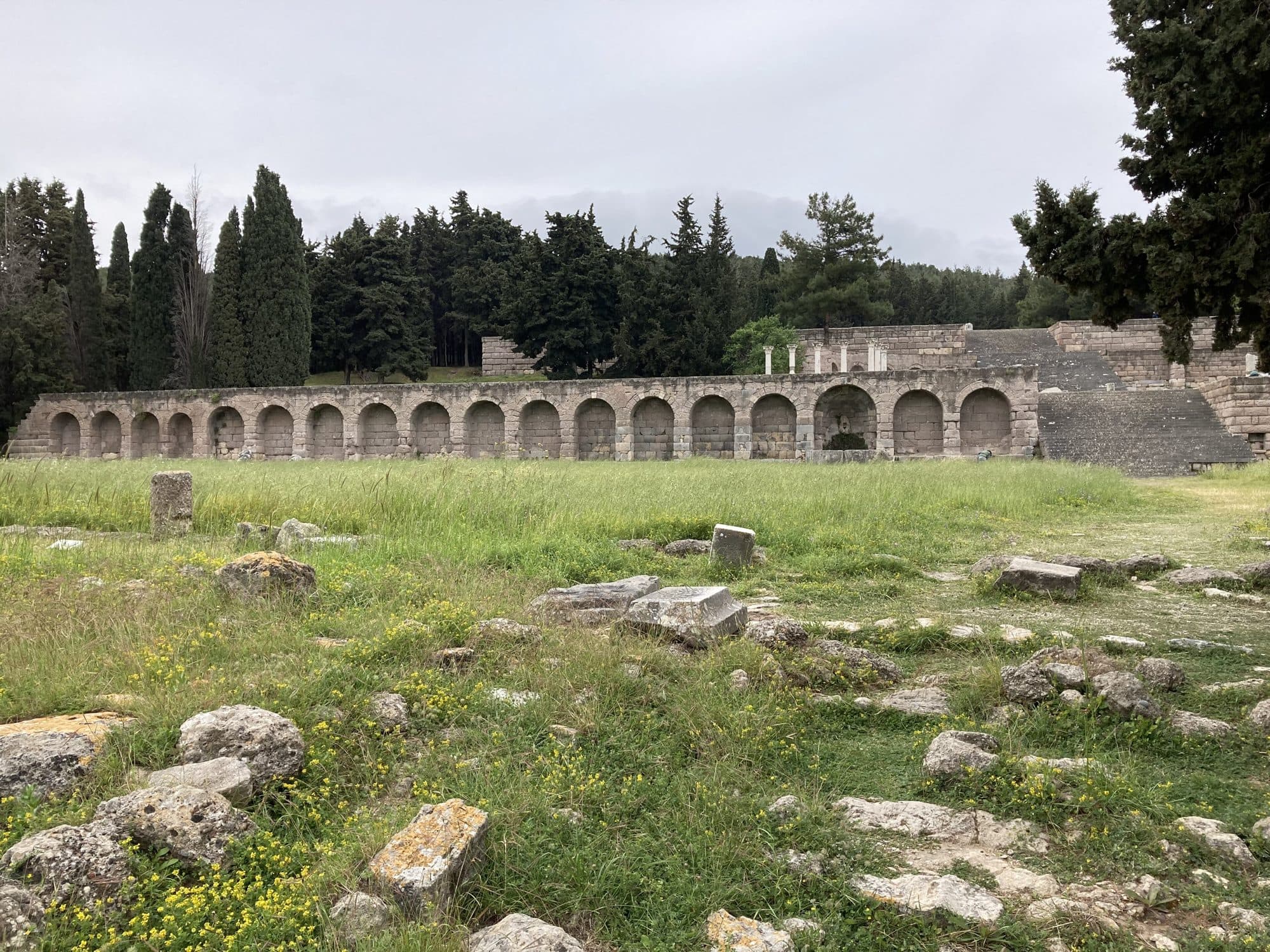
Asklepieion
The healing sanctuary on three terraces, about 4 km south-west of Kos Town. Its earliest temple dates from around 300 BC. Go early or late in the day, as there is little shade.
Kos · History
The island of Hippocrates, a fortress of the Knights of St John, an Ottoman province and an Italian colony, rebuilt after an earthquake before it finally joined Greece in 1948.
Timeline
c. 460–370 BC
Hippocrates was born on Kos and taught that illness had natural causes, not divine ones. In 366 BC the islanders founded a new capital on the site of today's Kos Town, and it became one of the great cities of the eastern Aegean.
c. 300 BC – AD 400
After Hippocrates' death a healing sanctuary of Asklepios grew on the hillside above the town, with temples, baths and treatment rooms on three terraces. Under Rome, Kos was a wealthy city with an odeon, baths and villas decorated with mosaics.
1315–1523
The Knights Hospitaller, who ruled from Rhodes, took Kos and built the castle of Neratzia at the harbour and the fortress of Antimachia. They held the island until Rhodes fell to the Ottomans, and handed Kos over in January 1523.

1523–1912
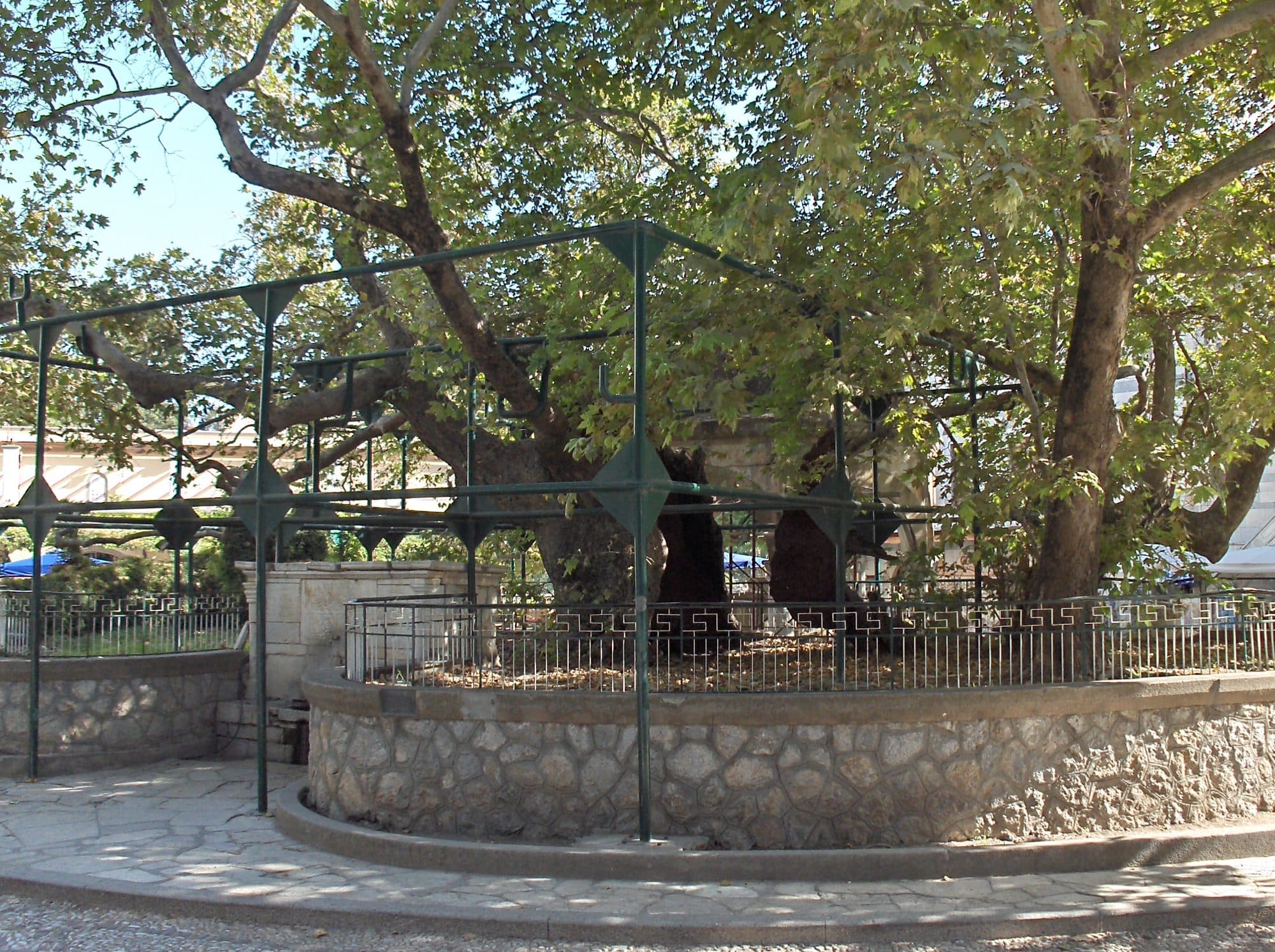
For almost four centuries Kos was part of the Ottoman Empire. Mosques, fountains and the Loggia mosque beside the plane tree date from this time, and Greek and Muslim communities lived side by side.

1912–1943
Italy took the Dodecanese in 1912. On 23 April 1933 an earthquake of magnitude 6.4 destroyed much of Kos Town. The Italians rebuilt it to a new plan, with wide streets and public buildings, and excavated the ancient city the quake had uncovered.

1943–1948
German forces captured Kos from the British in October 1943 and held it until May 1945. After a period of British administration, the Dodecanese formally joined Greece on 7 March 1948.
Visit
The healing sanctuary on three terraces, about 4 km south-west of Kos Town. Its earliest temple dates from around 300 BC. Go early or late in the day, as there is little shade.
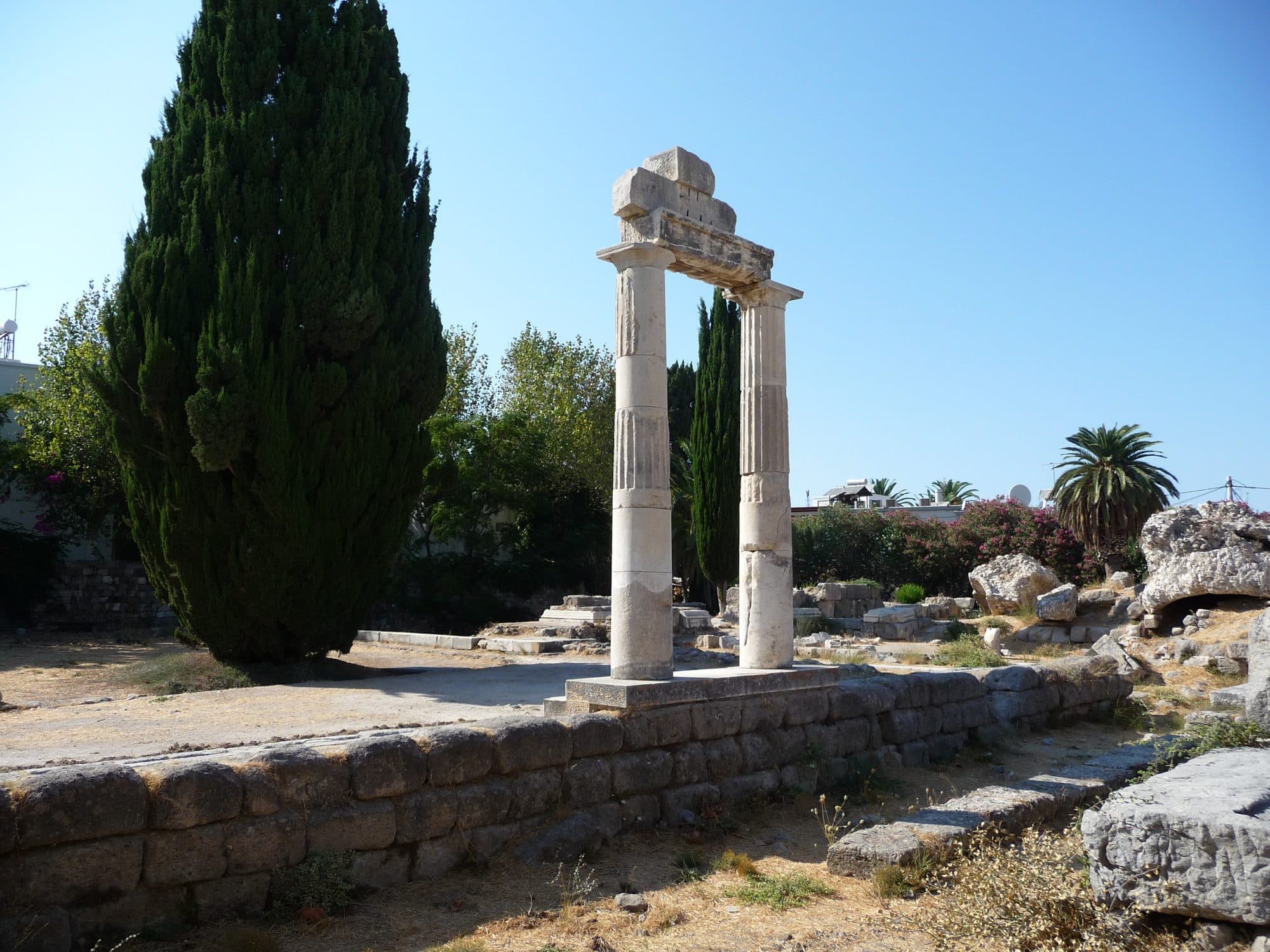
The market and harbour district of the ancient city, excavated by the Italians from 1935 to 1943, right in the middle of town.

Roman streets, baths and houses with mosaic floors, opposite a small restored Roman theatre.
The Knights' harbour fortress, reached by a bridge over Palm Tree Avenue. Closed after the 2017 earthquake, it reopened in summer 2026; check opening times locally.

A large 14th-century castle used by the Knights, with long walls over the south coast. Open all year, free to enter.