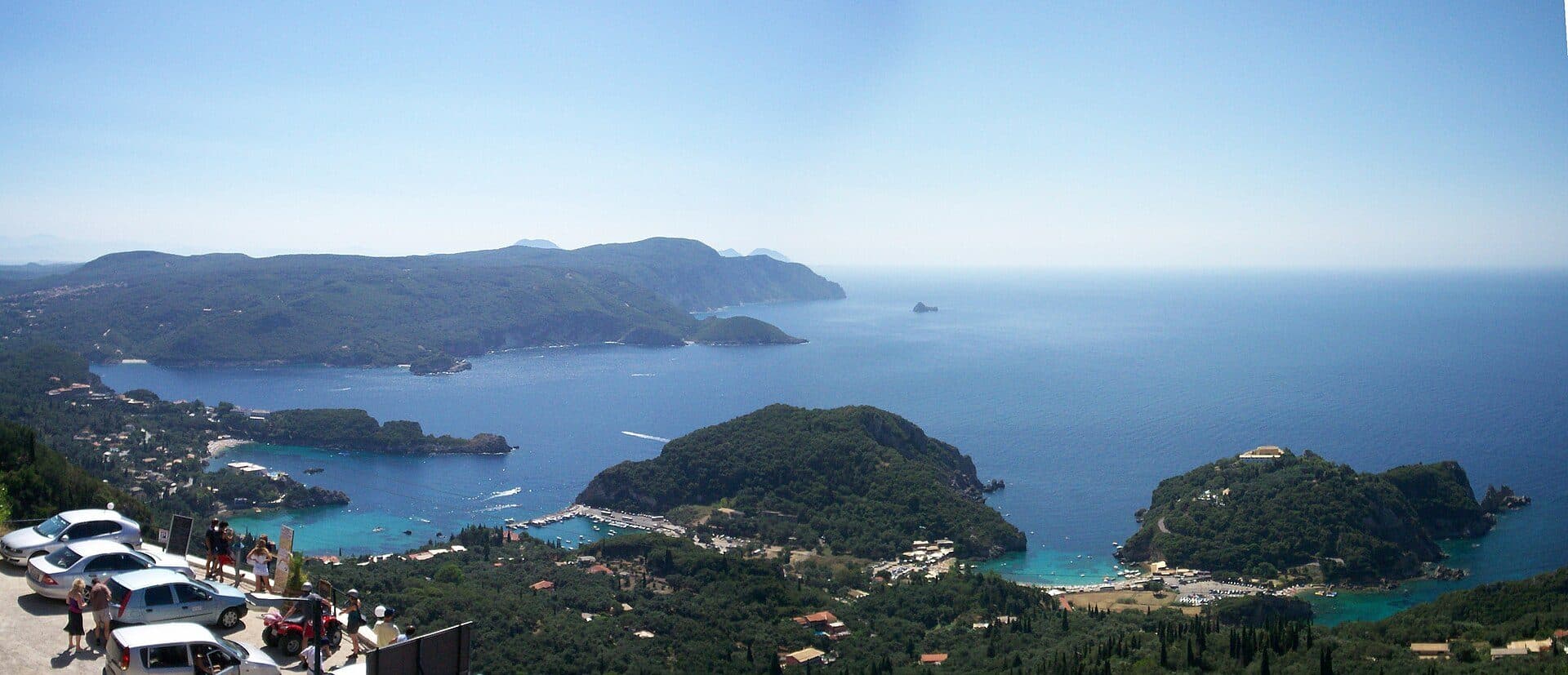
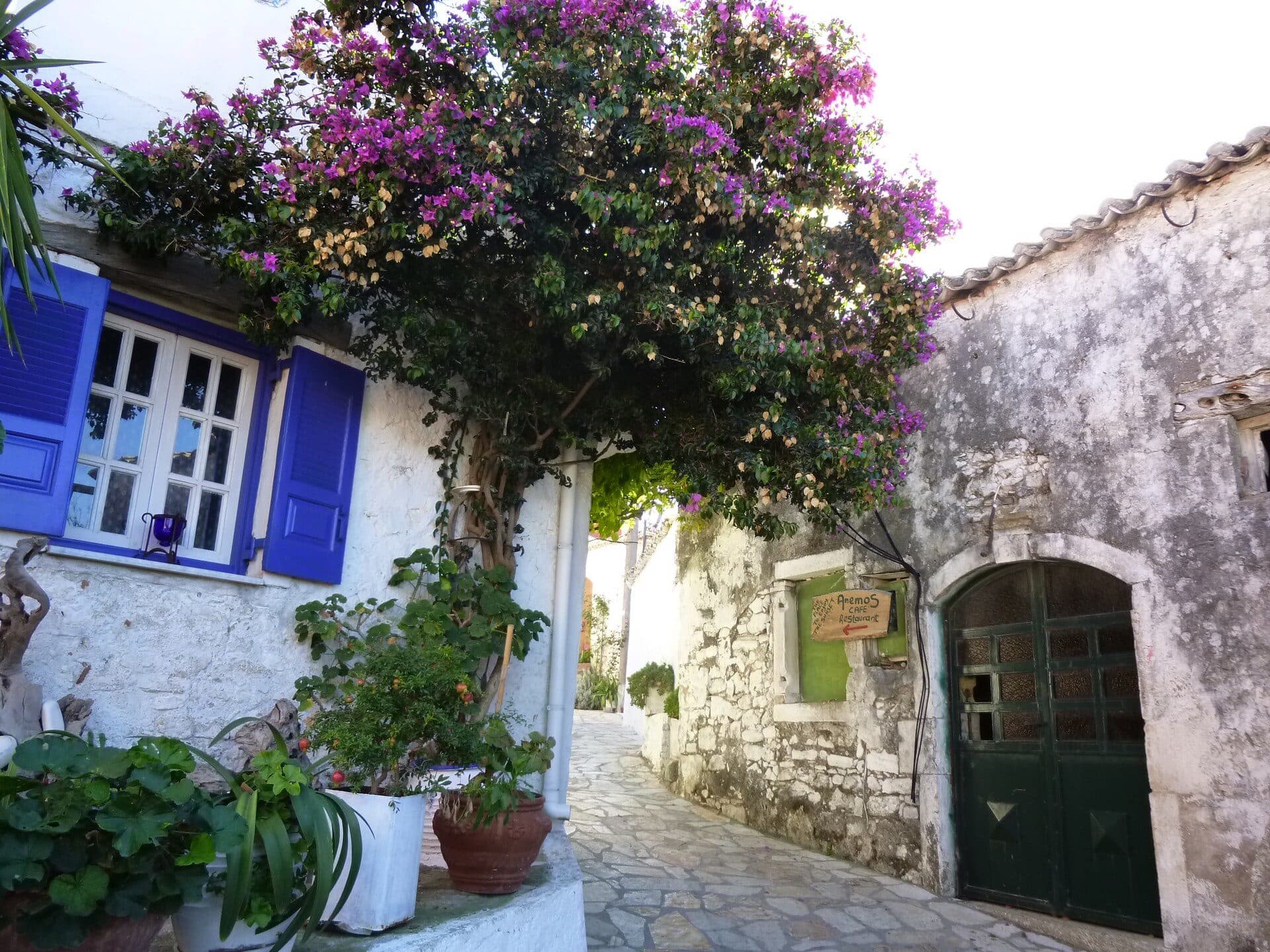
Mon Repos and Palaiopolis
The villa where Prince Philip was born in 1921, now a museum, set in a park with the ruins of the ancient city of Corfu.
Corfu · Corfu Town & Kanoni · Κέρκυρα
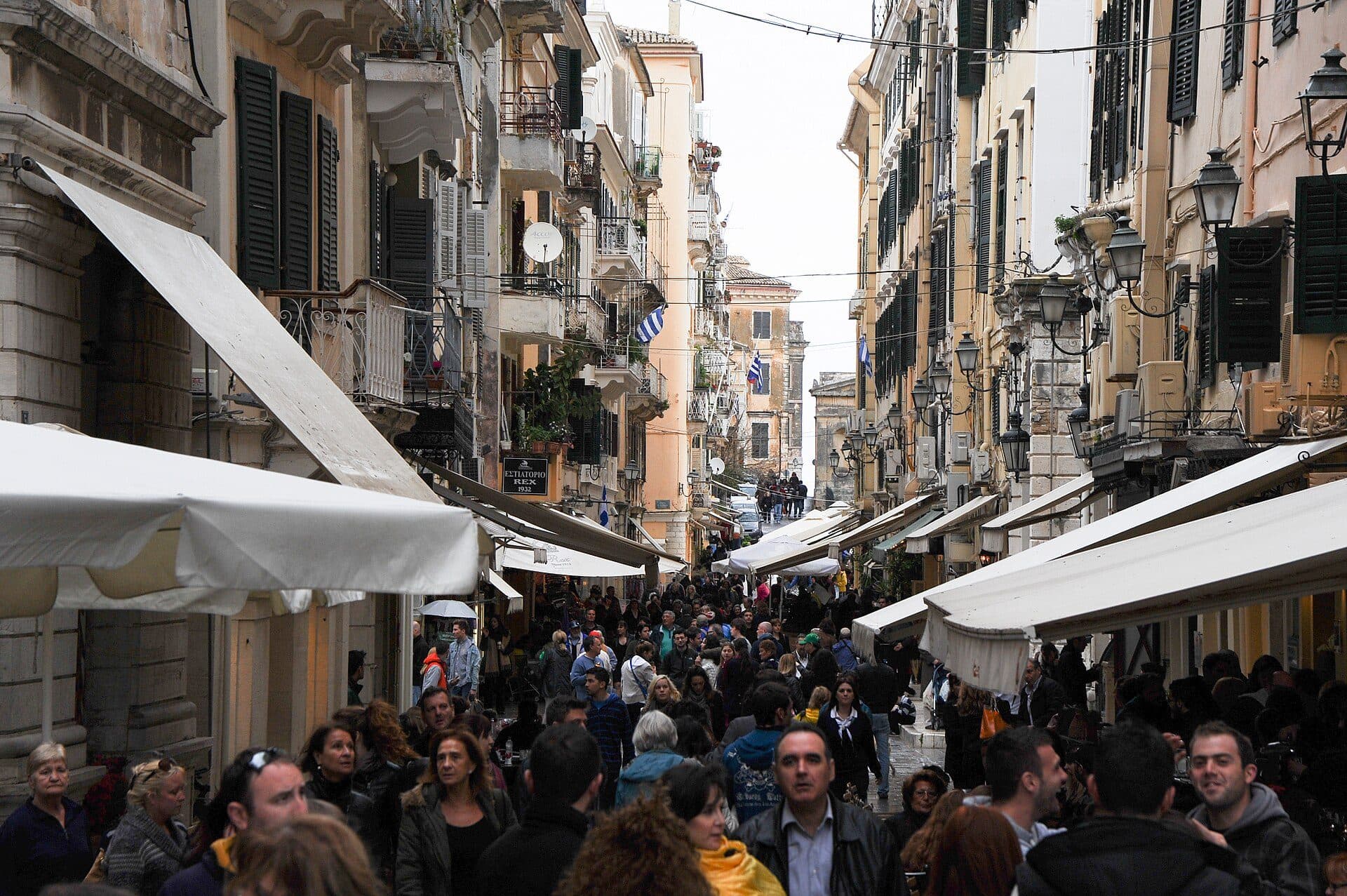
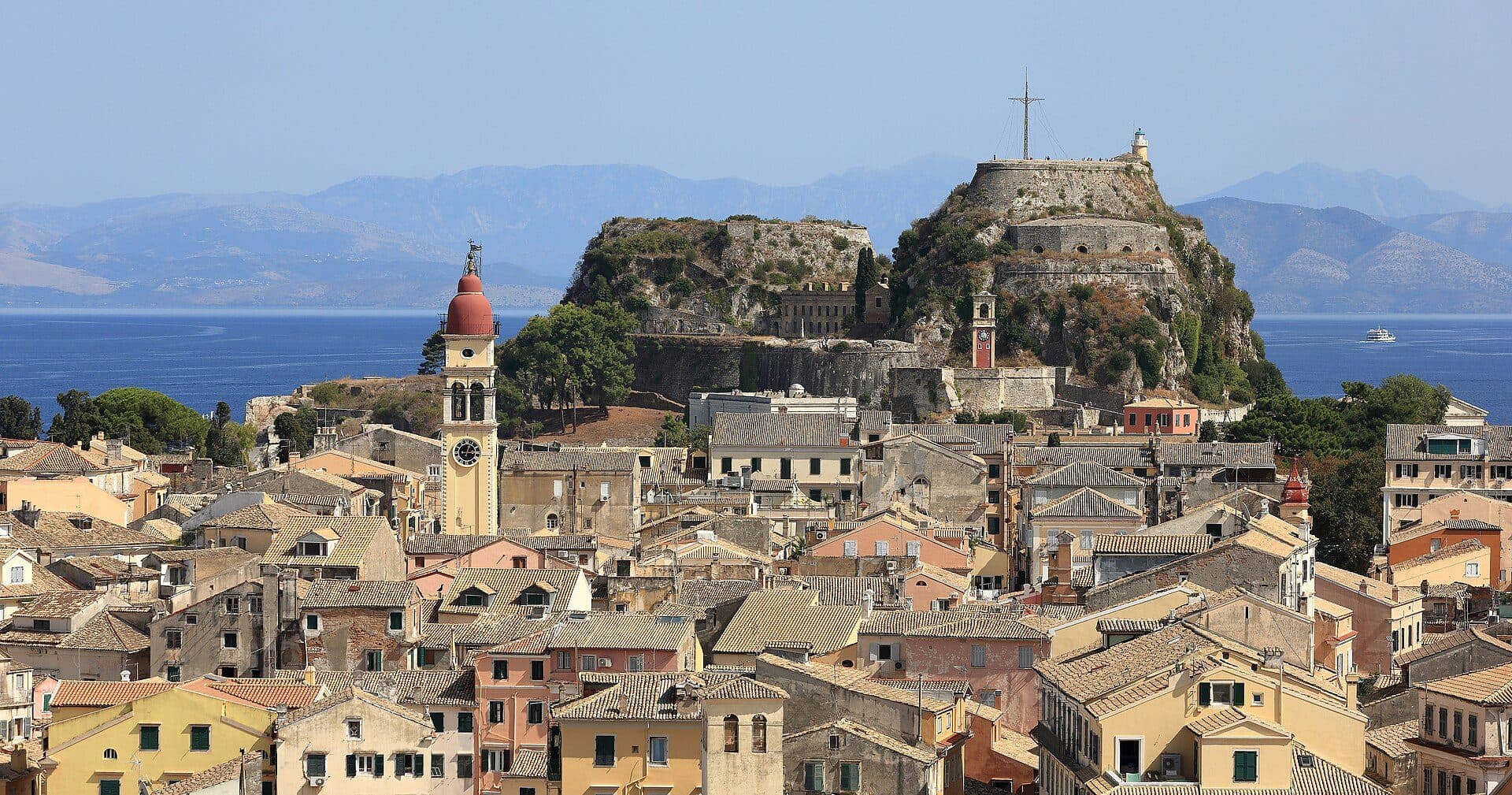
Corfu Old Town is a UNESCO World Heritage Site, and it feels like no other town in Greece. Tall Venetian houses crowd narrow stone lanes called kantounia, a French arcade runs along the Spianada, and cricket is played on the green below the old fortress. Church bells ring all day for Saint Spyridon, the island's protector. Cafes, small shops and good tavernas fill the lanes, and the sea is always at the end of one of them.
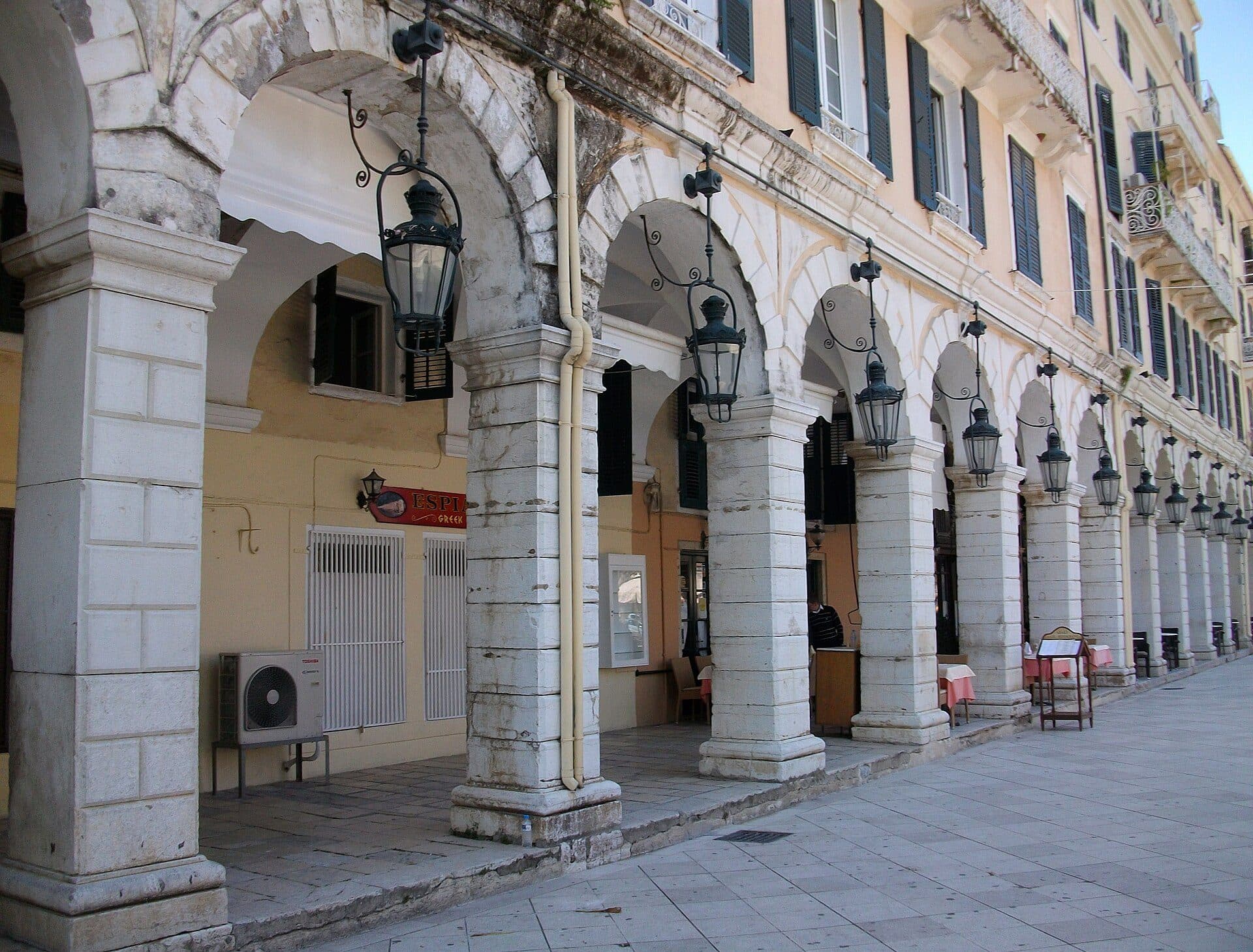
Greetings from Corfu Old Town
Corfu Town
We turned a corner in the lanes and found ourselves in the sun in front of a Venetian church. In the afternoon we had coffee under the arcades of the Liston and watched a cricket match on the Spianada, with the old fortress rising behind it. At night we walked back through the kantounia, where washing hung across the lanes and every window was lit, to a table where a woman brought us pastitsada and a small glass of kumquat liqueur.
A Venetian, French and British town of lanes, arcades and two fortresses
The town stands on a small peninsula on the east coast, with two hills that the Byzantines called koryphoi, the peaks, from which the island took its Greek name, Kerkyra. People have lived here since ancient times. The ruins of the old Corinthian city lie to the south at Palaiopolis, and on the hill there are traces of temples. The rest of what you see today was built much later.
Corfu belonged to Venice from 1386 to 1797, and never to the Ottomans, who besieged the town in 1537 and again in 1716 and failed both times. That is why the Old Town is so Venetian. The Venetians built the Old and New Fortresses and cut the moat, the Contrafossa, to defend the city, and the houses climbed higher and higher inside the walls. This is why the lanes are narrow, the buildings are six or seven storeys tall and the washing hangs high above your head.
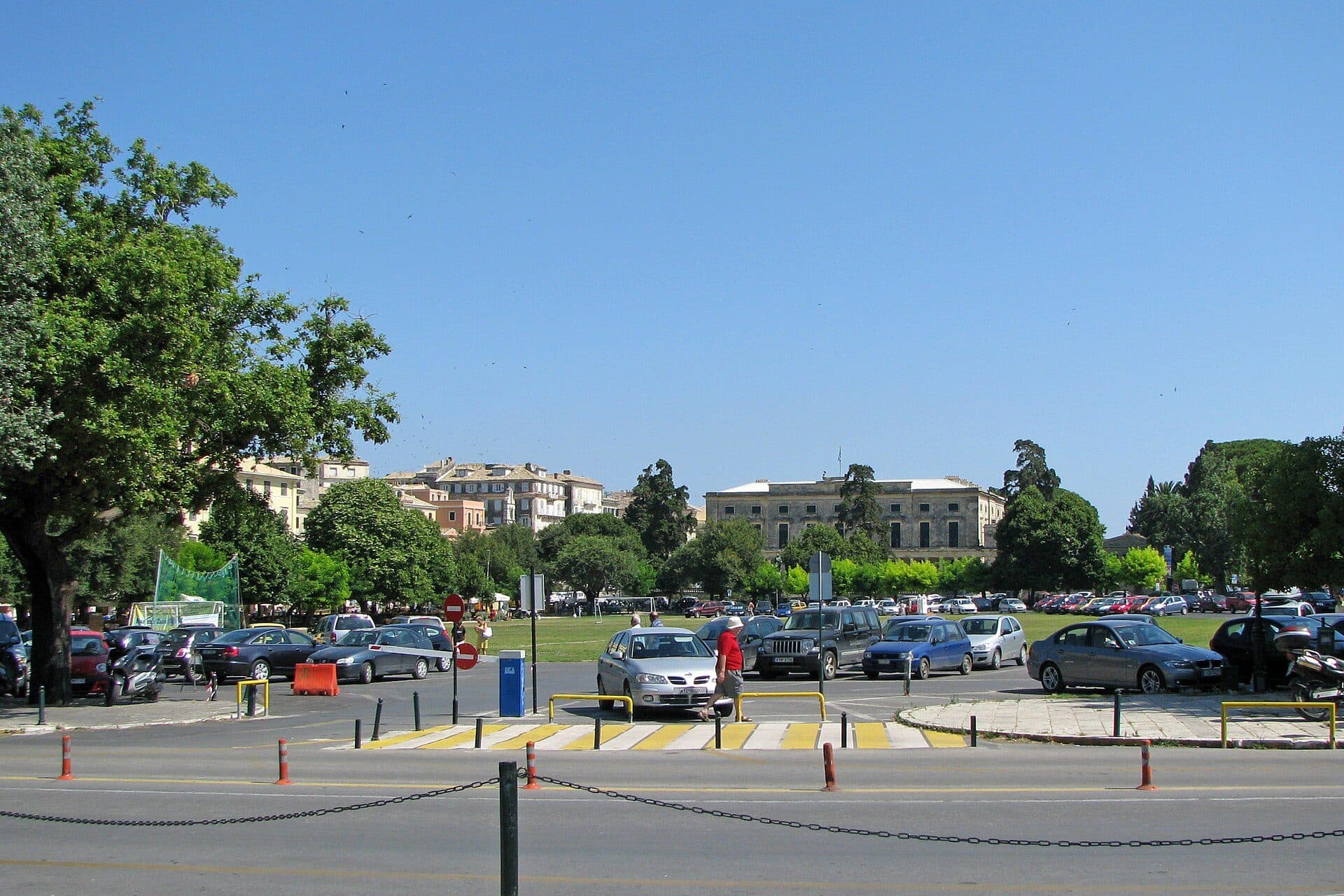
In 1797 the French arrived and, after a short period of Russian and Ottoman protection, came back in 1807. They left the arcade of the Liston, modelled on the Rue de Rivoli in Paris, and the elegant garden of the Spianada. Then the British ruled the Ionian Islands as a protectorate from 1815 to 1864. They gave the town its Palace of St Michael and St George, its cricket pitch, and a taste for ginger beer, which is still brewed on Corfu under the name tsitsibira.
The island joined Greece in 1864. Between those years Corfu produced the first governor of independent Greece, Ioannis Kapodistrias, born here in 1776. In 1921, Prince Philip, later Duke of Edinburgh, was born at the villa of Mon Repos, just south of the town. The Old Town was added to the UNESCO World Heritage list in 2007, for its mix of fortifications and the layers of Italian, French and British architecture.
Today the heart of the town beats around the church of Saint Spyridon, whose silver casket holds the relics of the island's patron saint. He is believed to have saved Corfu from famine, plague and siege, and four times a year, at Palm Sunday, Holy Saturday, in August and in November, his relics are carried through the streets in a procession with the town's brass bands. On Holy Saturday, people throw clay pots from their windows, to break out the old and welcome the new.
Hour by hour
A fortress, a palace, a saint, a cricket green and dinner in the lanes. Here is how we would spend a day here.
Start early under the arcades of the Liston, when the Spianada is quiet and the light is soft on the old buildings.
Cross the bridge over the moat and climb to the top of the Old Fortress for the lighthouse and the view across the roofs and the sea to Albania.
Walk along the north side of the Spianada to the British palace, now the Museum of Asian Art, and look at its Maltese stone and its gardens.

Find a table in a quiet lane for a lunch of sofrito, pastitsada or bourdeto, the island's own dishes.
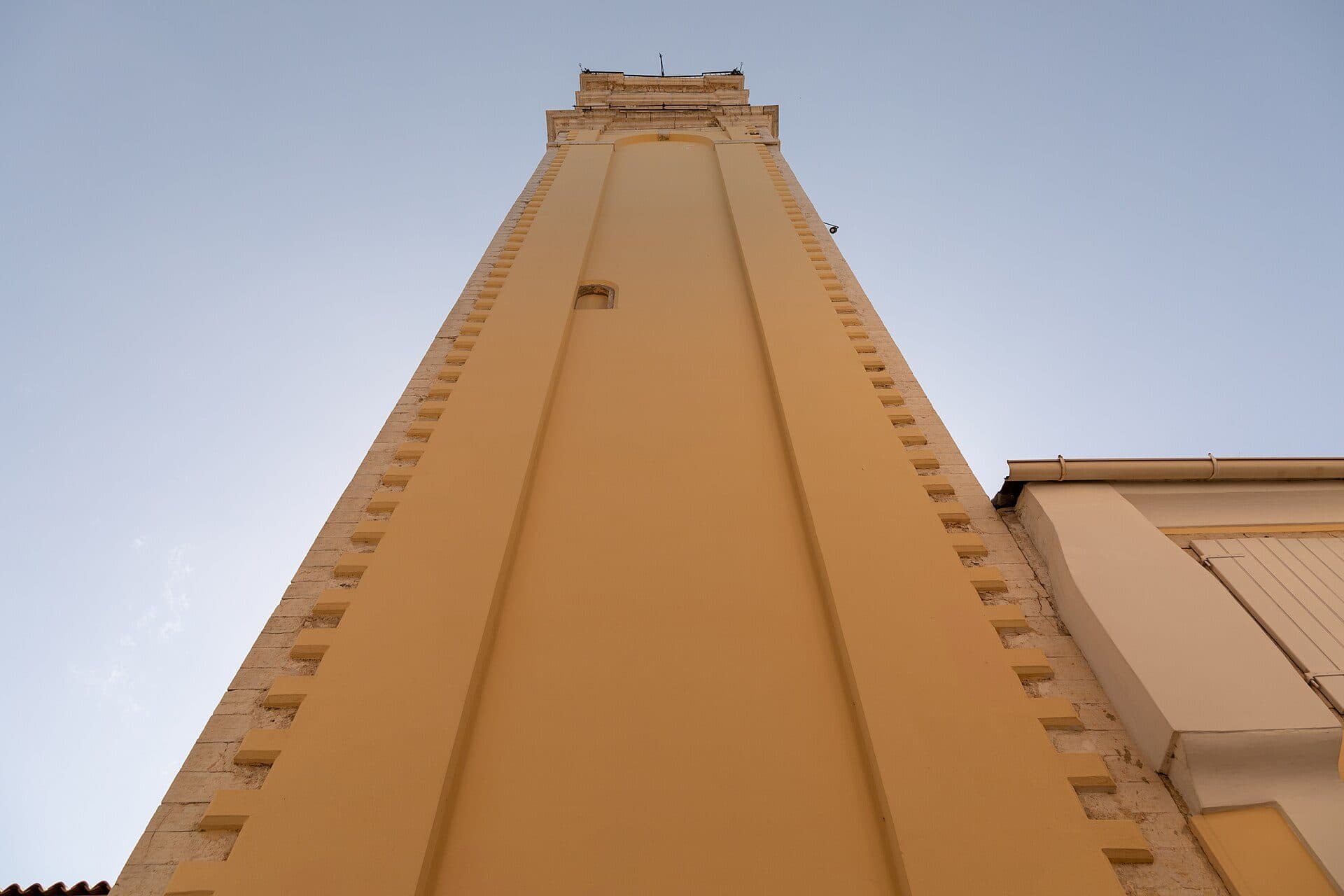
Step into the church with the red-topped bell tower, where the saint's silver casket lies near the altar, and light a candle with the islanders.
End the day on Kremasti Square, beside the old well, with a late dinner and a glass of kumquat liqueur.
Where to stay
Corfu Town
Bella Venezia · Neoclassical town hotel · €€€
Corfu Town
Cavalieri Hotel · Historic hotel · €€€
Corfu Town
Corfu Palace Hotel · Five-star hotel · €€€€
Corfu Town · Corfu Town & Kanoni
Corfu Town · Corfu Town & Kanoni
Kanoni · Corfu Town & Kanoni
Where to eat
Corfu Town · Corfu Town & Kanoni
Corfu Town · Corfu Town & Kanoni
Corfu Town · Corfu Town & Kanoni
Corfu Town · Corfu Town & Kanoni
Corfu Town · Corfu Town & Kanoni
Within an easy drive
The villa where Prince Philip was born in 1921, now a museum, set in a park with the ruins of the ancient city of Corfu.

The Mouse Island with its small chapel, seen from the terraces of Kanoni, right beside the end of the airport runway.

The palace Empress Sisi built in the 1890s, with a garden of statues and a view over the south of the island.

In the Archaeological Museum, the great stone pediment of Artemis from around 590 to 580 BC, one of the oldest of its kind in Greece.

Good to know
The airport is only 3 km from the Old Town, so a taxi takes about ten minutes. Ferries from Igoumenitsa and Italy dock at the new port, a short walk from the old centre. Cars are best left outside the Old Town, as the lanes are too narrow.
May, June and September are ideal, warm and bright. Holy Week, with its processions and pot-throwing on Holy Saturday, is the most memorable time but also the busiest. In July and August the lanes are hot, so explore early and late.
More of Corfu
Every stay we recommend across Corfu, from village guesthouses to rooms on the sea.
See all stays