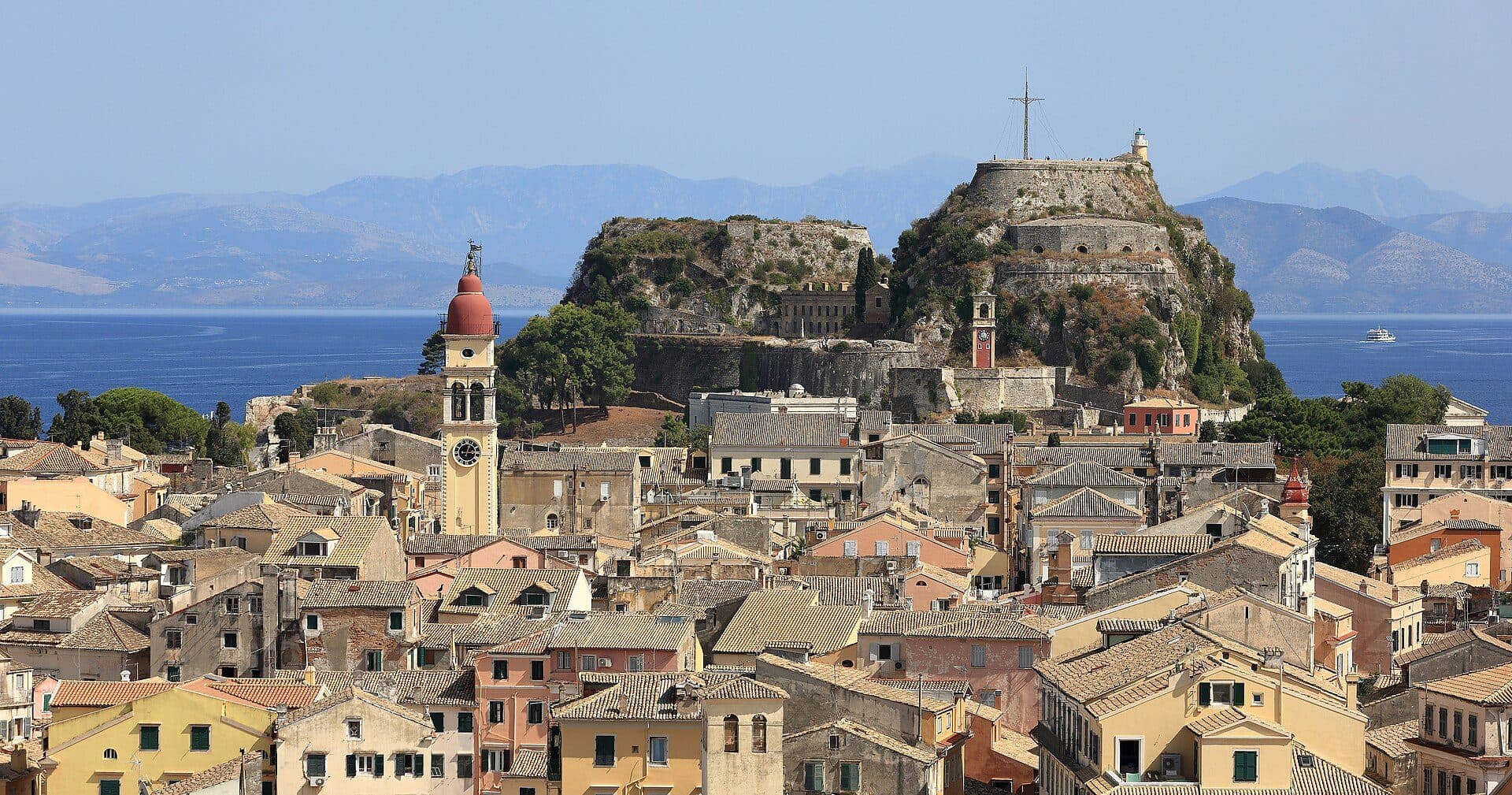
The Old Fortress
The Venetian fortress on a rocky peninsula at the east end of the Old Town, with a lighthouse and a view across the roofs.
Corfu · History
Homer's island of the Phaeacians, a Greek colony, four centuries of Venetian rule, then French and British protectors before union with Greece in 1864.
Timeline
8th century BC
Settlers from Corinth founded a city at Palaiopolis, south of today's old town, around 734 BC. The city became rich and powerful, and its temple of Artemis, built around 590 to 580 BC, carried the Gorgon pediment that you can see in the Archaeological Museum. Many believe Corfu was the Scheria of Homer, the island of the Phaeacians where Odysseus was washed ashore.

Roman and Byzantine eras
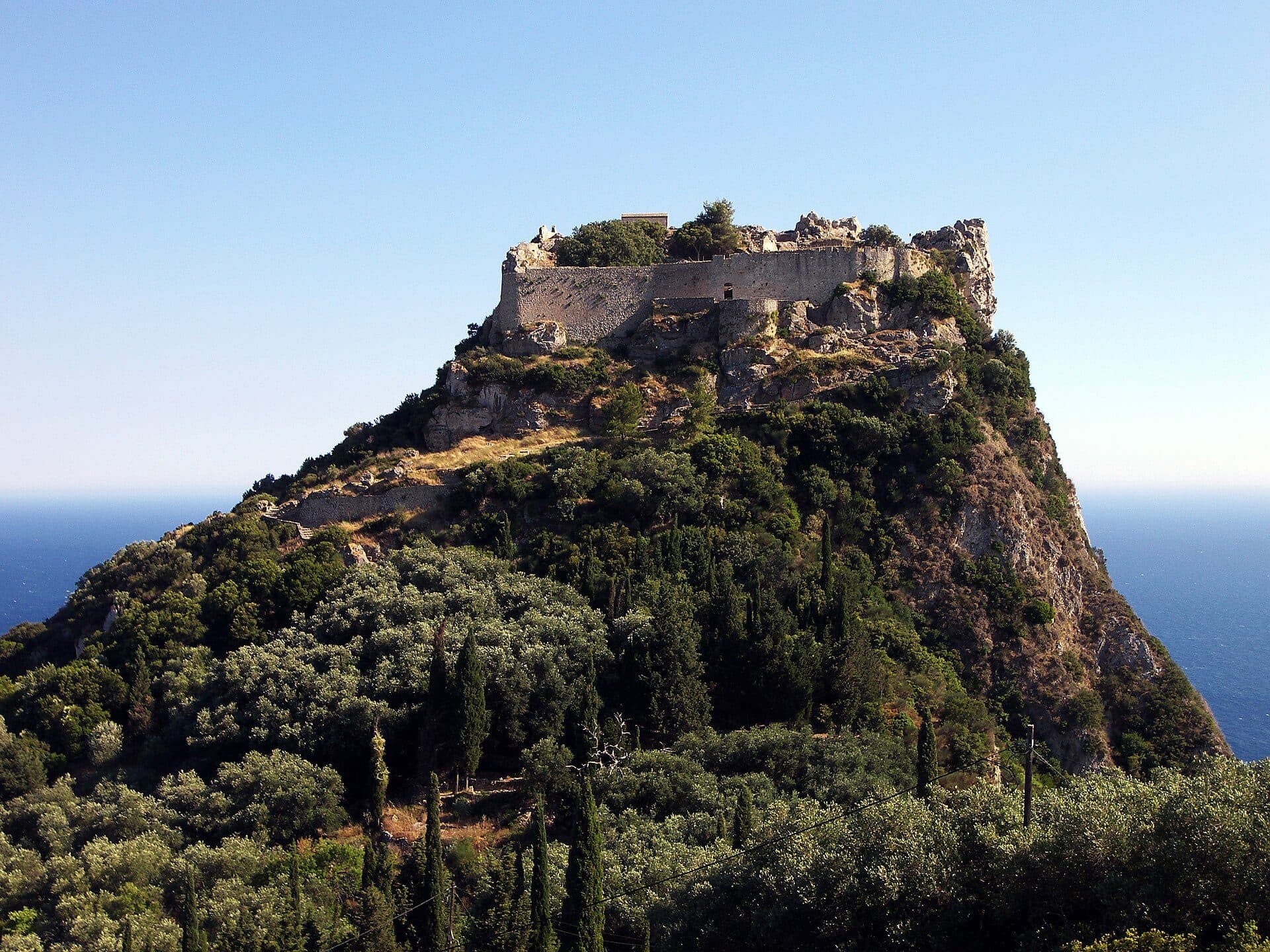
After Rome, the island passed to Byzantium, and its people moved to the hills for safety. They built Angelokastro on a cliff in the 13th century, and the old villages, such as Old Perithia, were hidden inland away from pirates.
1386–1797
Corfu asked Venice for protection in 1386 and stayed Venetian for over four centuries. The Ottomans besieged the town in 1537 and in 1716, and each time the defenders held. The Venetians built the Old and New Fortresses and planted the olive groves that cover the island today.
1797–1814
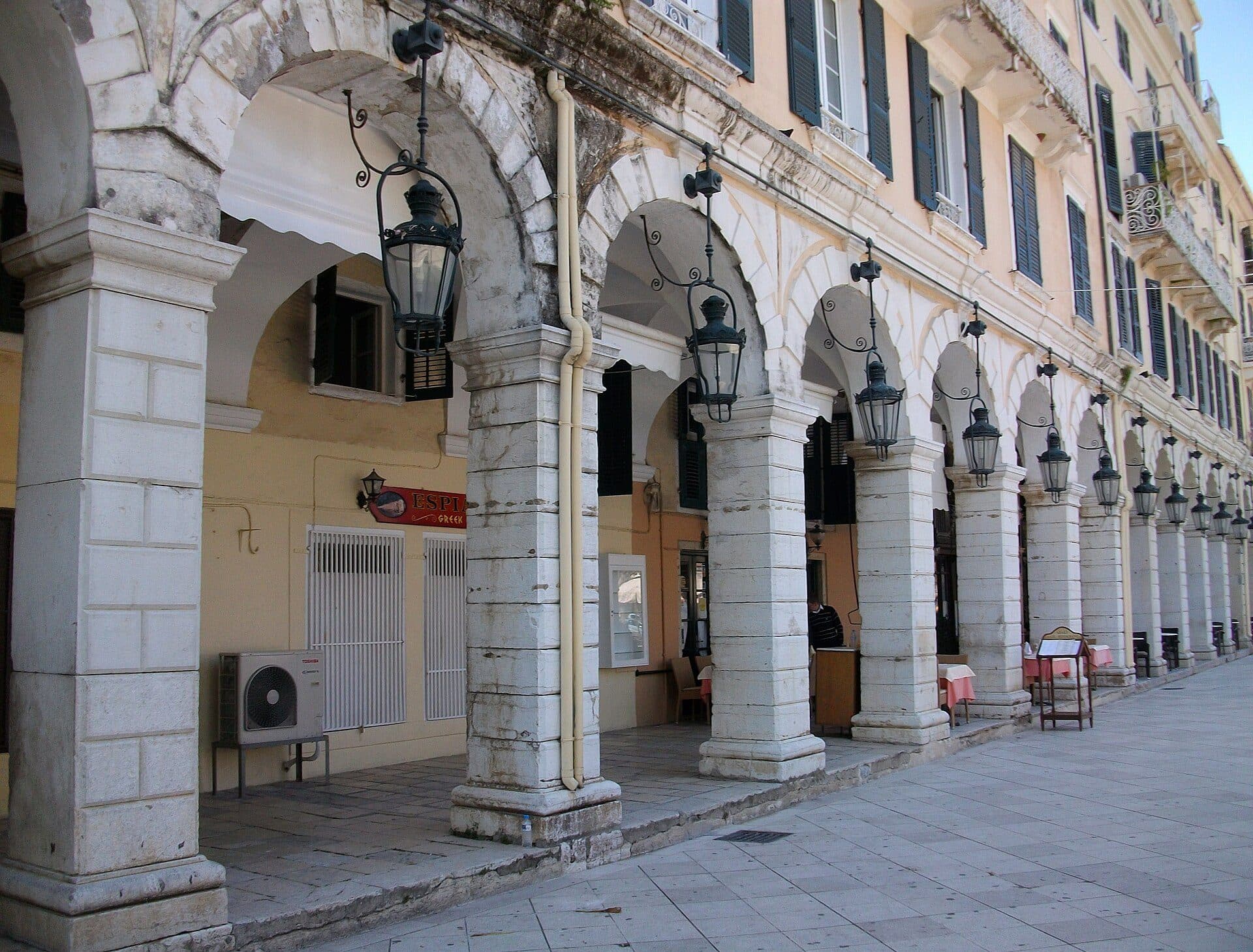
After the fall of Venice the French took Corfu, lost it briefly to a Russian and Ottoman fleet, and returned in 1807. They left behind the Liston, an arcade modelled on a Paris street, and the garden of the Spianada.
1815–1864
The Ionian Islands became a British protectorate in 1815. The British built the Palace of St Michael and St George, the roads and the reservoirs, and introduced cricket. Corfu joined Greece in 1864. The island's own Ioannis Kapodistrias, born here in 1776, had by then become the first governor of independent Greece.

1890s to today
Empress Elisabeth of Austria, known as Sisi, built the Achilleion palace in the 1890s. Prince Philip was born at Mon Repos in 1921, and in the 1930s the Durrell family lived on the island, which later gave the book My Family and Other Animals. The Old Town was added to the UNESCO list in 2007.

Visit
The Venetian fortress on a rocky peninsula at the east end of the Old Town, with a lighthouse and a view across the roofs.

A second Venetian fortress built in the 1500s above the old port, with long tunnels and sea views.
A Byzantine castle on a high cliff above the west coast, with a small church inside, built in the 13th century.

A neoclassical villa on the coast south of town, where Prince Philip was born in 1921, with a park and the ruins of the ancient city.
A palace of statues and terraces built for Empress Sisi, to the south of town near Gastouri.
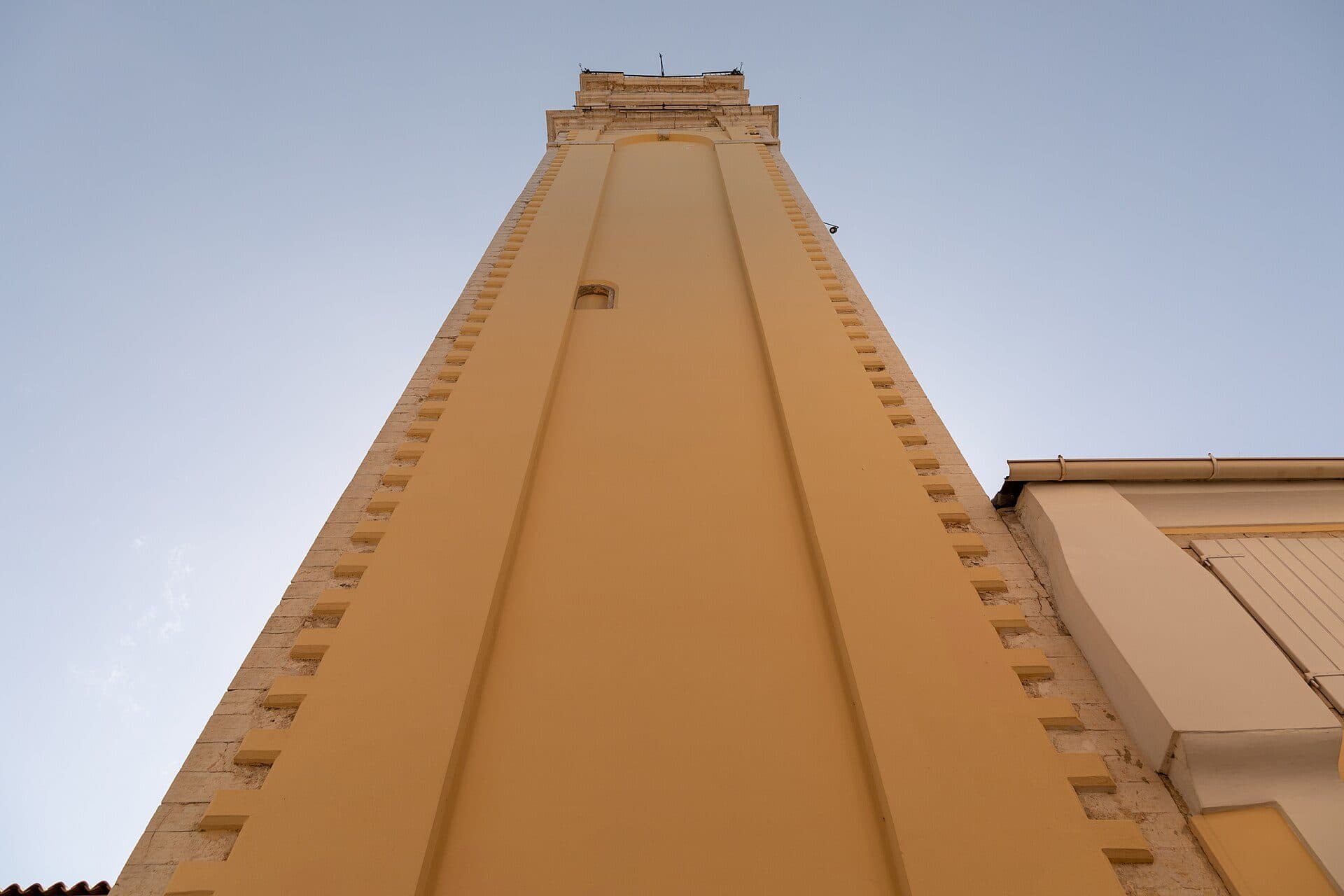
The church of the island's patron saint, with a red-capped bell tower, in the middle of the Old Town.