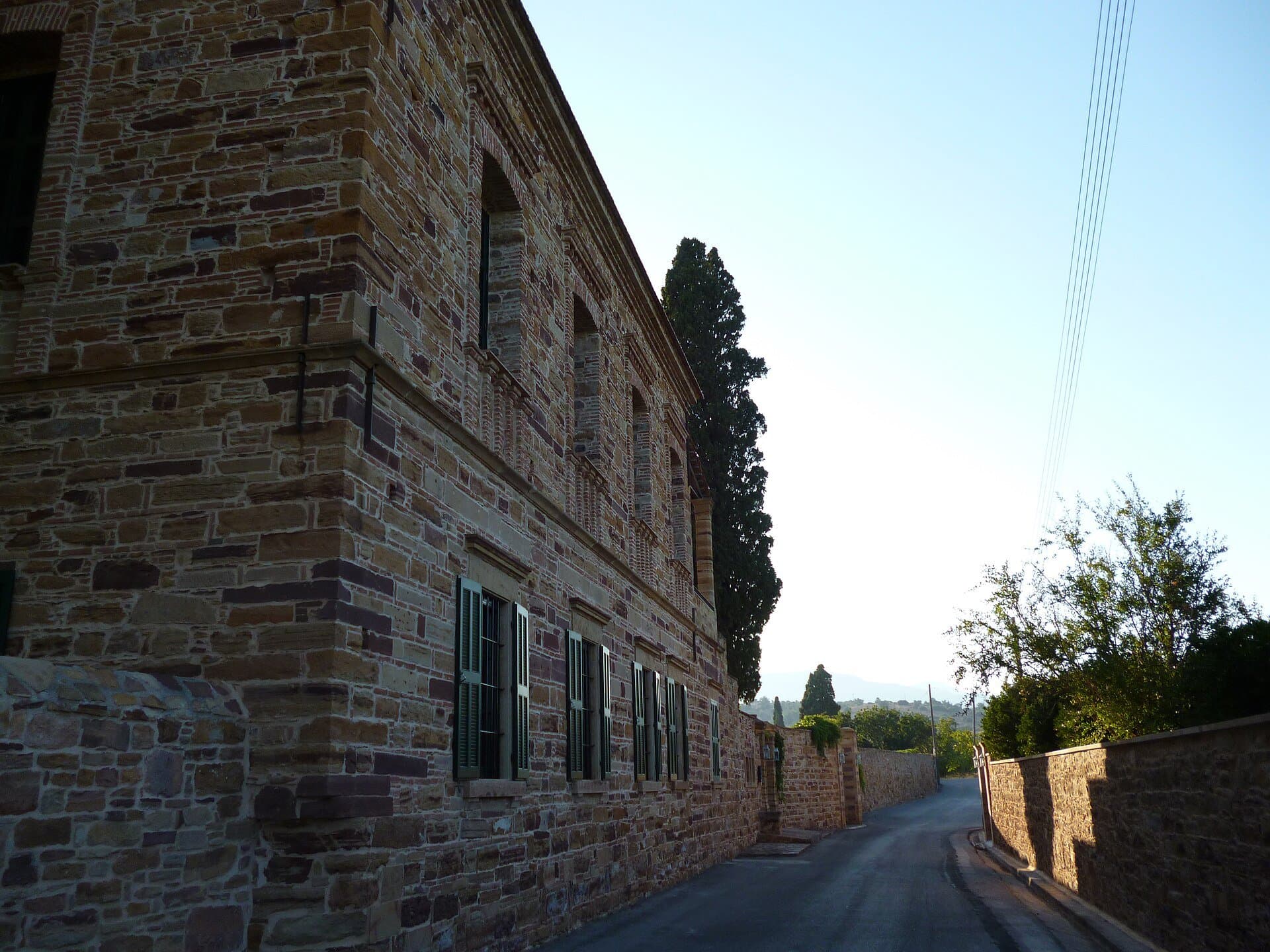
Pyrgi
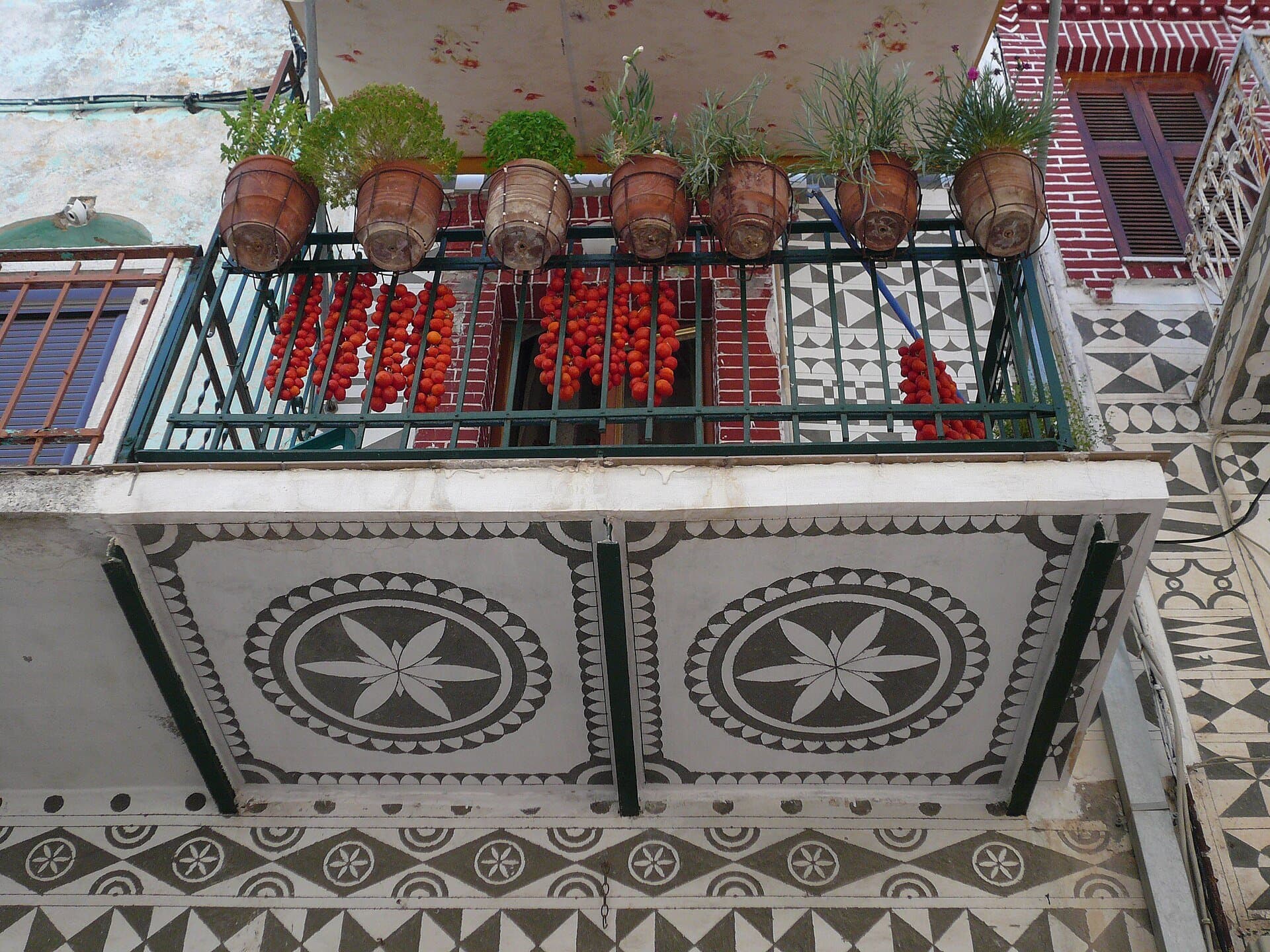
The painted village, 15 minutes away, where the houses are covered in black-and-white geometric patterns.
Chios · The mastic villages · Μεστά
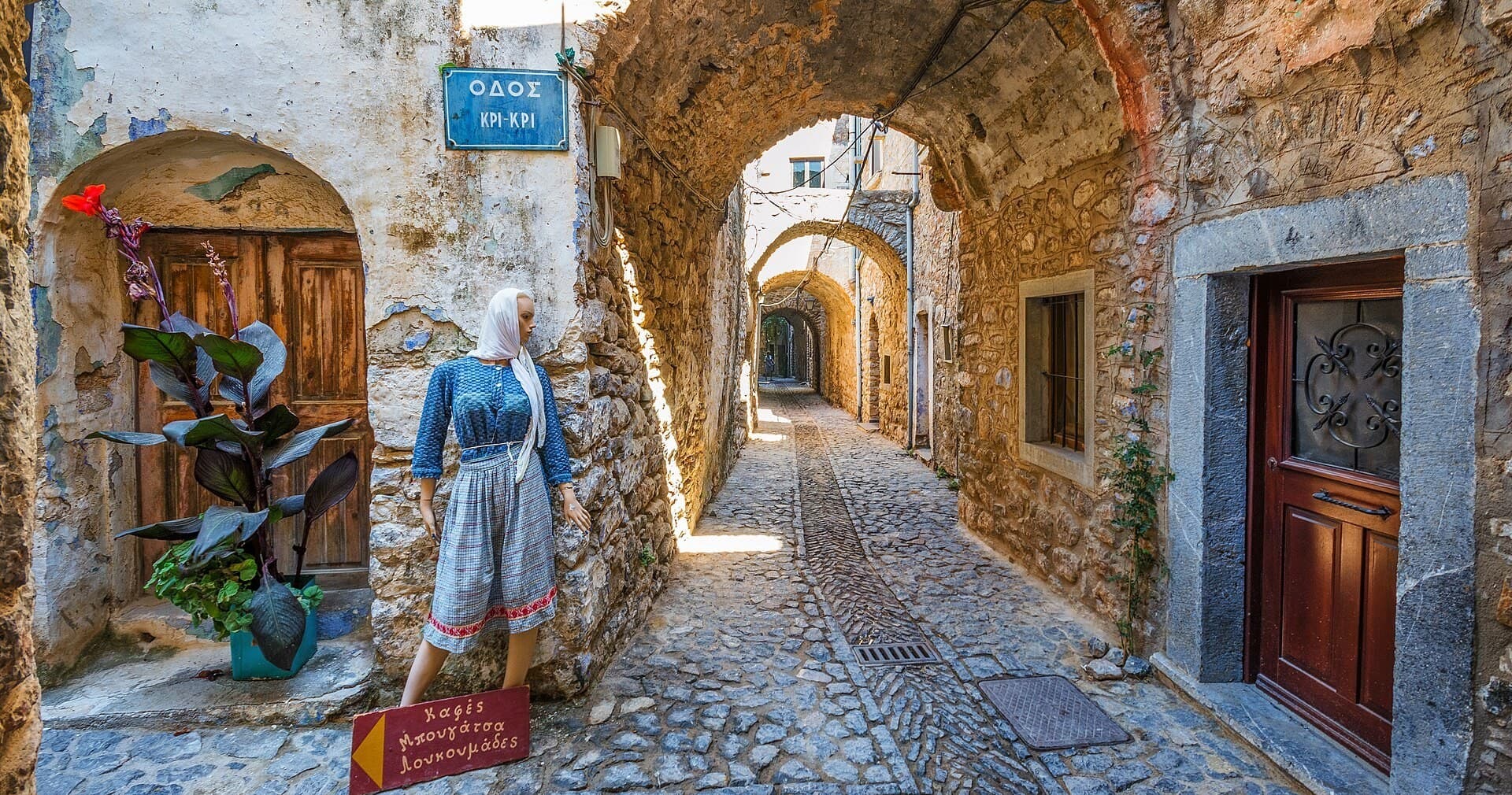
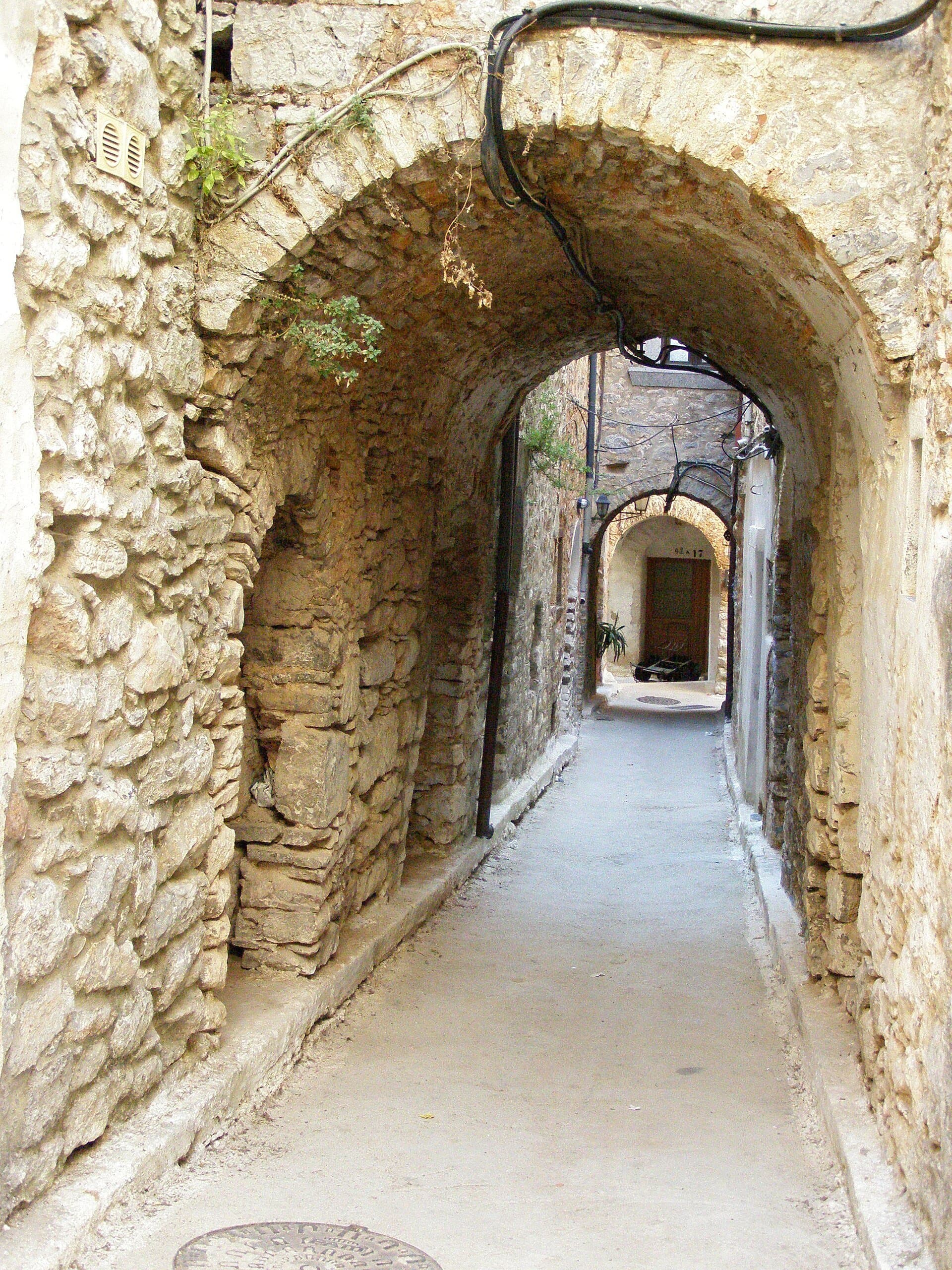
The best-preserved of the mastic villages, and one of the most remarkable villages in Greece. Mesta is a castle in the shape of a village: the outer houses form its walls, and inside, a maze of narrow stone lanes runs under arches and vaults, so you walk through it as if through one great building. Everything leads to the little square, where the tables of the tavernas sit beneath the big church of the Taxiarchis.
Greetings from Mesta
Mesta
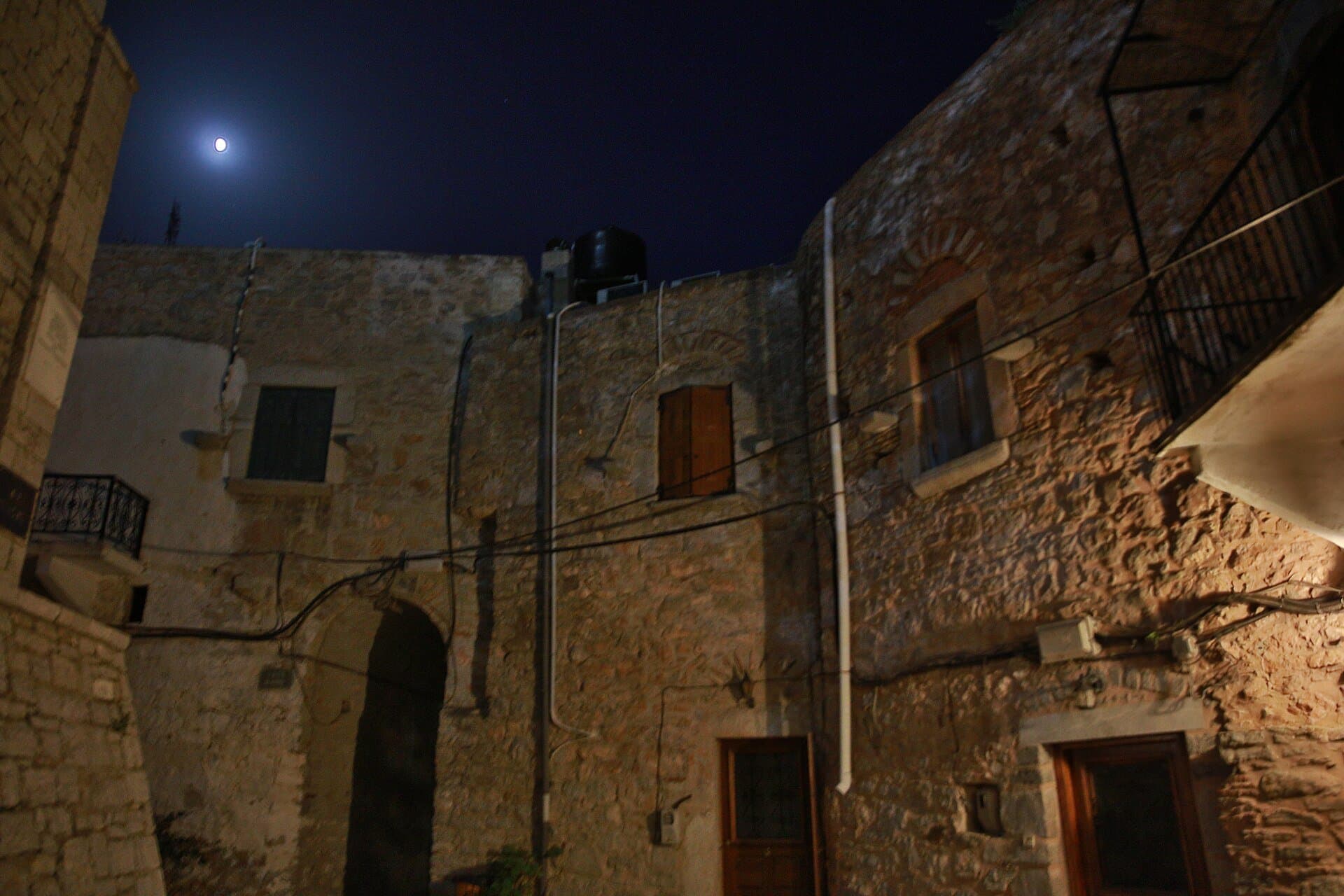
There are no streets in Mesta, only tunnels and arches and lanes so narrow we could touch both walls. We got lost three times before we found the square, where the tables were already set under the church and an old man was bringing out grilled meat and a carafe of souma. After dinner we wandered again in the dark, with the stone still warm and a smell of mastic in the air, and every turn felt like a secret.
A medieval fortress village of vaulted lanes, built to hide its mastic
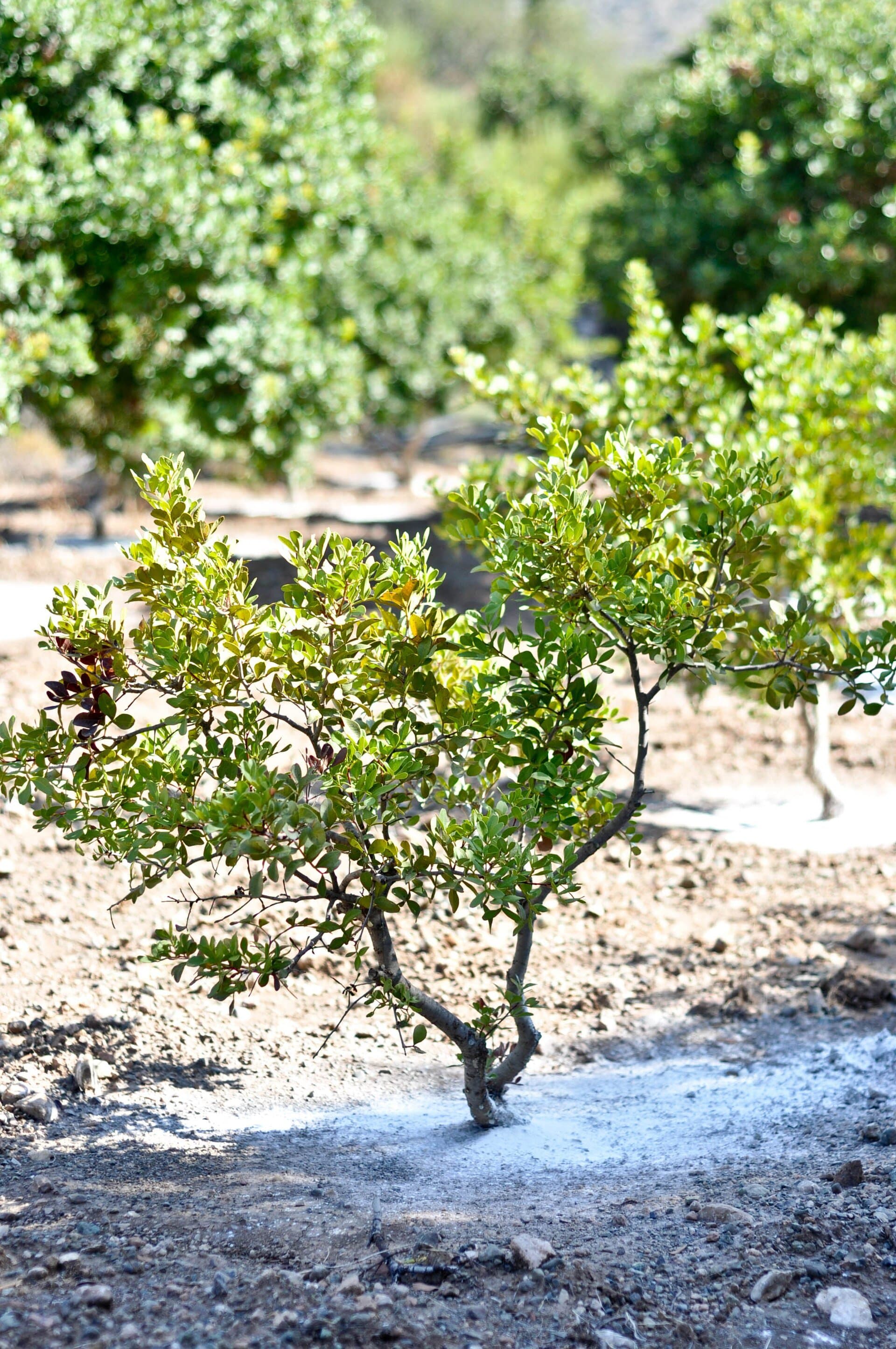
For centuries the south of Chios had one treasure that grew nowhere else in the world: mastic, the fragrant resin of the lentisk tree, prized from Constantinople to Venice as a medicine, a perfume and the first chewing gum. Whoever ruled the island guarded it closely, and the twenty or so villages that produced it, the mastichochoria, were built to protect both the harvest and the people who gathered it.
Mesta is the most complete of them. Its origins are Byzantine, and it was fortified under the Genoese, who held Chios from 1346 to 1566 and ran the mastic trade as a monopoly. The village was planned as a single fortress: the outer houses stand back to back to form a continuous wall with no doors to the outside, there were only a few gates, and in the middle rose a tall tower where everyone could shelter as a last refuge. The flat roofs connect, so the villagers could move across the whole village without going down into the lanes.
Under the Ottomans, who took the island in 1566, the mastic villages kept special privileges, because the sultan's harem wanted their mastic. In the massacre of 1822, when much of Chios was destroyed, they were largely spared for the same reason. That is why Mesta still looks so much as it did five centuries ago, its stone lanes barely wide enough for a loaded donkey.
Today the tower is gone, but the plan of the village is intact, and inside the walls you will find the old church of the Palaios Taxiarchis and the great 19th-century church of the Megas Taxiarchis, one of the largest on the island, with its carved wooden iconostasis. In late summer the farmers still go out to the groves to scrape the trees and gather the mastic tears from the white ground beneath them.
Hour by hour
A walk through the mastic groves, a cave, a swim in the south, and dinner on the village square. Here is how we would spend a day here.
Wake inside the walls and have coffee and a spoon sweet on the square while the village is quiet and the light is just reaching the stone.
Drive five minutes to the cave of Sykia near Olympi, discovered only in 1985, and walk down among its stalactites and pink and white formations.

Head down to the quiet coves of the south-west coast for clear water and almost nobody else, then have lunch by the boats at Limenas Meston, the village's little harbour.

Visit the Chios Mastic Museum near Pyrgi to learn how the resin is harvested, then walk out among the lentisk trees in the groves.
Stop in Pyrgi on the way back, where every house is scratched with black-and-white patterns, and step into the frescoed Byzantine church of the Holy Apostles.
Back in Mesta, take a table on the square under the great church for village cooking, mastic liqueur and the sound of swallows in the dark.
Where to stay
Mesta
Lida Mary · Medieval boutique hotel · €€€
Mesta
Mesta Medieval Castle · Medieval apartments · €€
Mesta · The mastic villages
Where to eat
Mesta · The mastic villages
Limenas Meston · The mastic villages
Within an easy drive
The painted village, 15 minutes away, where the houses are covered in black-and-white geometric patterns.
Another fortified mastic village, with a cave of stalactites in the hills just outside it.
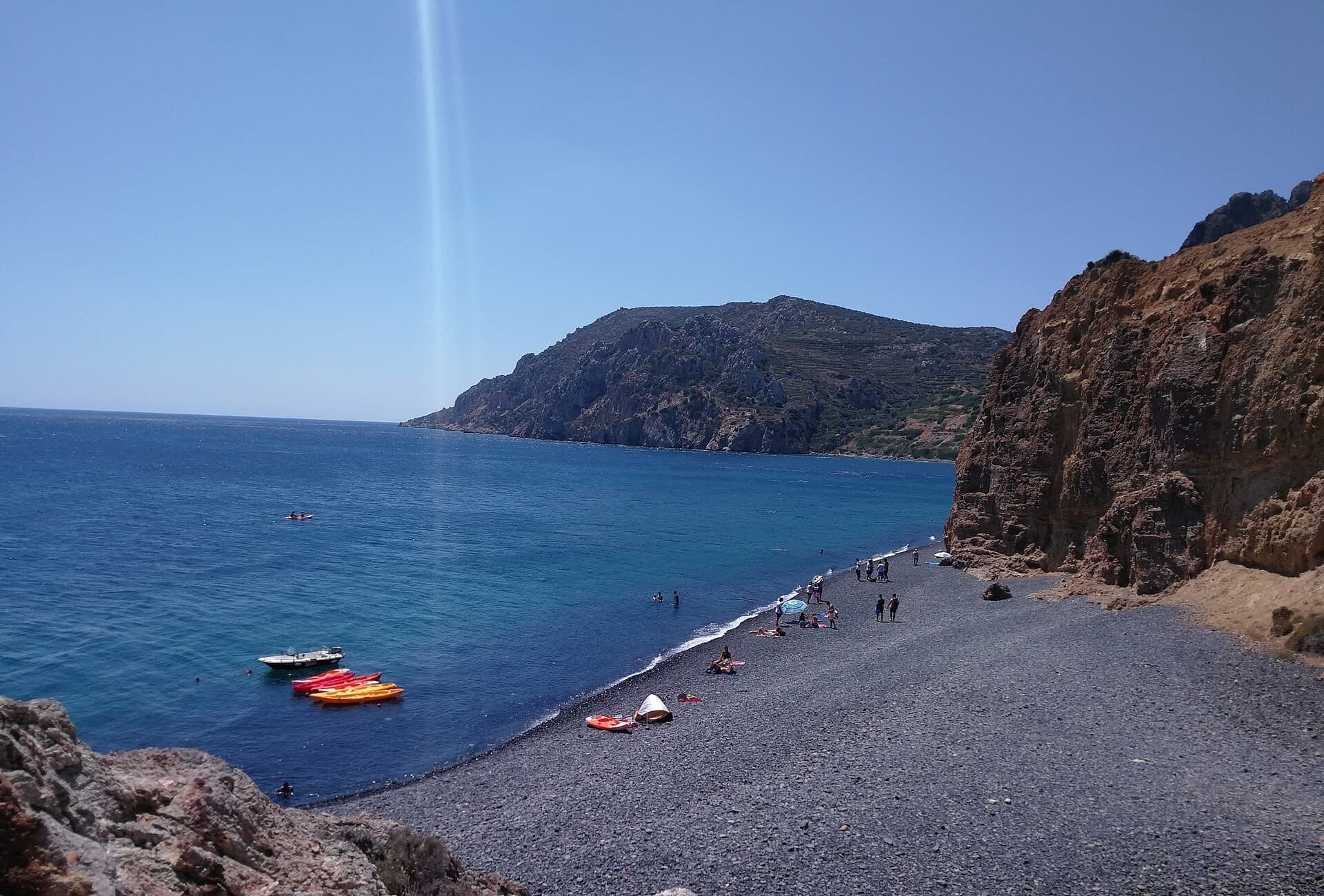
The beach of black volcanic pebbles at Emporios, in the far south, about 25 minutes by road.

A modern museum in the groves near Pyrgi, telling the story of the resin, with a view over the mastic trees to the sea.

Good to know
Mesta is about 35 km south-west of Chios Town, 45 minutes by car, and KTEL buses run several times a day in summer. Cars cannot enter the village; park outside the walls and walk in.
May, June and September are ideal, warm and quiet. In August and September you can see the mastic harvest in the groves. The village is lived in all year, so a few tavernas stay open in winter too.
More of Chios
Every stay we recommend across Chios, from village guesthouses to rooms on the sea.
See all stays