
Nea Moni
The 11th-century monastery in the pine-covered hills west of Chios Town, a UNESCO World Heritage Site for its golden mosaics.
Chios · History
A Bronze Age harbour, the island Homer is said to have called home, golden Byzantine mosaics, Genoese mastic lords, a massacre that moved Europe and a seafaring dynasty.
Timeline
c. 3000–1000 BC
People lived on Chios from the Neolithic, in the cave of Agio Gala in the north, and in the Bronze Age a settlement grew at the sheltered bay of Emporios in the south. Its harbour was used for thousands of years, and the Archaeological Museum keeps its finds.

8th–5th centuries BC
Chios was one of the twelve great cities of Ionia, rich from its ships and its wine, and one of several places that claimed to be the birthplace of Homer. A family of bards, the Homeridae, recited his poems here, and a rock at Vrontados is still called Homer's Stone.

1042
Tradition says three hermits found an icon of the Virgin in a burning myrtle bush in the hills, and foretold that the exiled Constantine Monomachos would become emperor. When he did, he founded Nea Moni, and its gold mosaics are now among the treasures of Byzantine art.
1346–1566
Genoa seized Chios in 1346 and a company of merchants, the Maona of the Giustiniani, ruled it for two centuries. They ran the mastic trade as a monopoly, fortified the villages of the south to protect it and built the first great estates of Kampos.

1566–1822
Under the Ottomans the mastic villages kept special privileges, because the resin was loved in the sultan's palace, and Chios grew wealthy from trade. In 1822, after the island joined the Greek revolution, an Ottoman army killed or enslaved tens of thousands of people. Delacroix's painting of the massacre shocked Europe, and that June Konstantinos Kanaris burned the Ottoman flagship in the strait.
1912 to today
Chios joined Greece in 1912. Its families, from Kardamyla, Vrontados and little Inousses, became some of the great shipowners of the world, and the Maritime Museum in Chios Town tells their story. The mastic villages still harvest their resin every summer.

Visit
The 11th-century monastery in the pine-covered hills west of Chios Town, a UNESCO World Heritage Site for its golden mosaics.
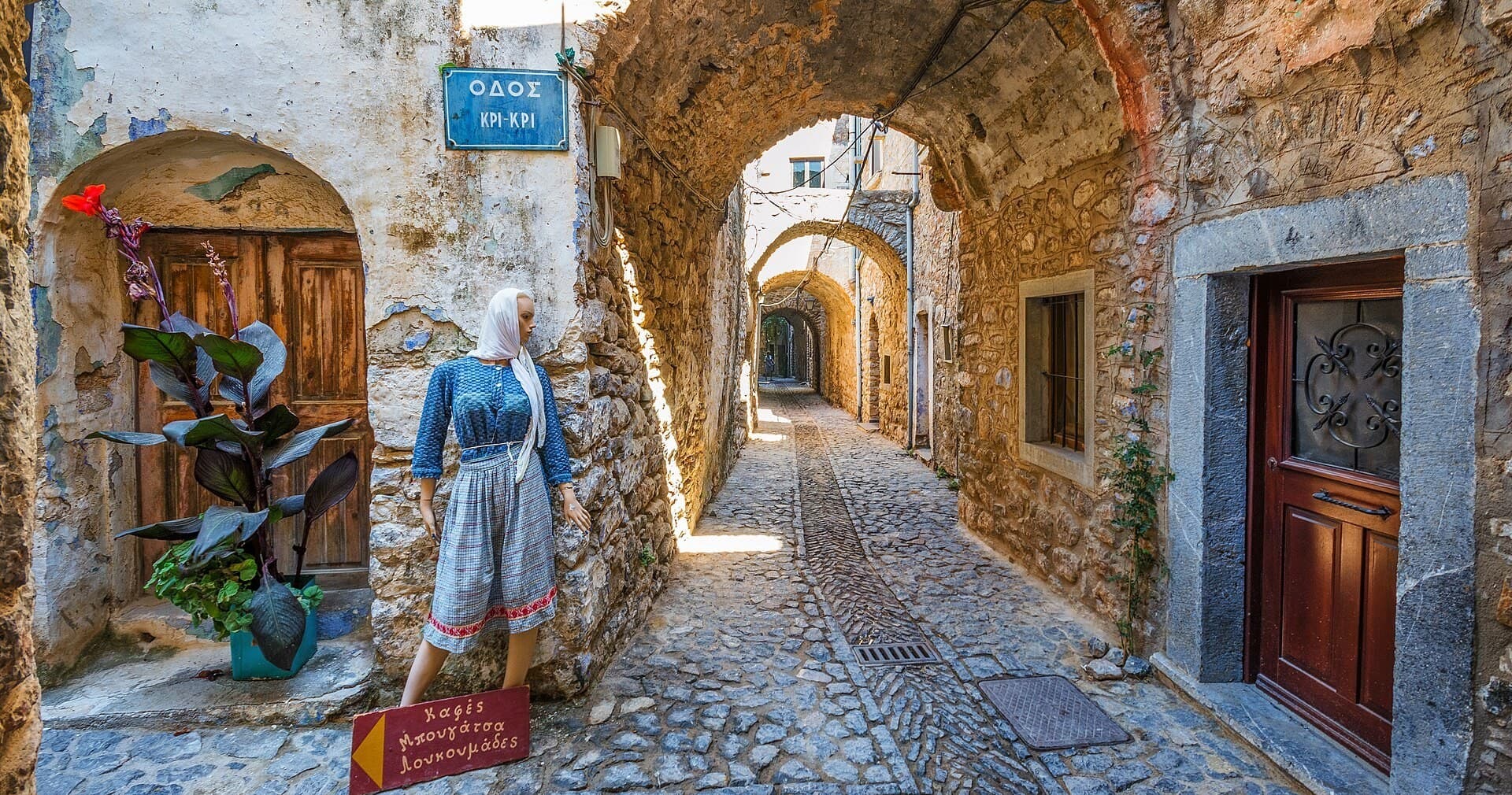
The best-preserved of the fortified mastic villages, built in the Byzantine and Genoese era as a single fortress of stone.
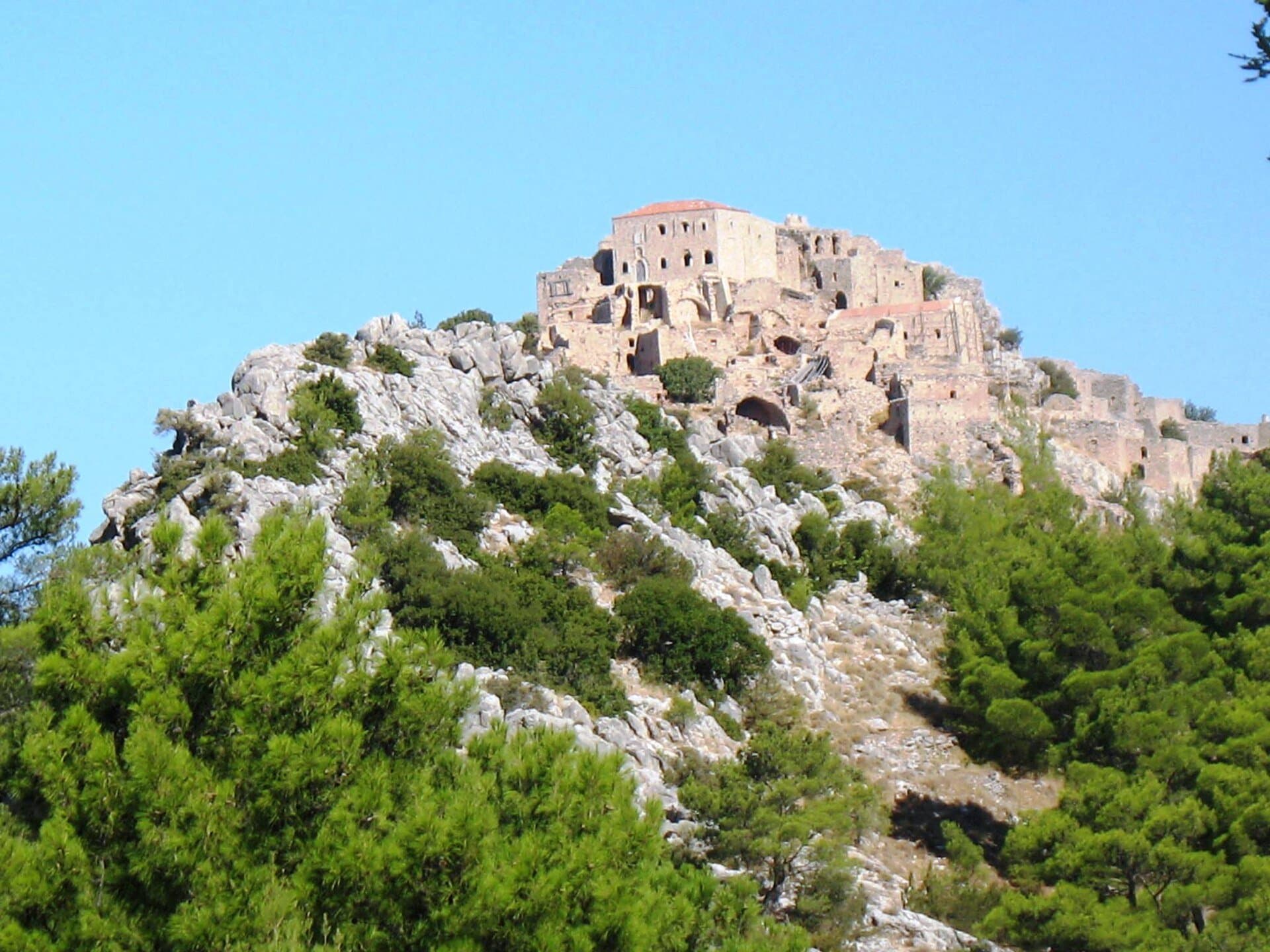
The abandoned medieval village on a cliff in the central hills, empty since the massacre of 1822. Wear good shoes for the climb.
Byzantine walls rebuilt by the Genoese around the old quarter by the harbour, with its lanes, fountains and old Ottoman baths.
A rock seat by the sea at Vrontados, just north of Chios Town, where tradition says Homer taught his pupils. It is probably an ancient shrine of Cybele.

A Byzantine fortress on the hill above Volissos in the north-west, with round towers and a view over the village to the sea.

A small 14th-century Byzantine church in the middle of Pyrgi, a copy in miniature of Nea Moni, with frescoes covering its walls.