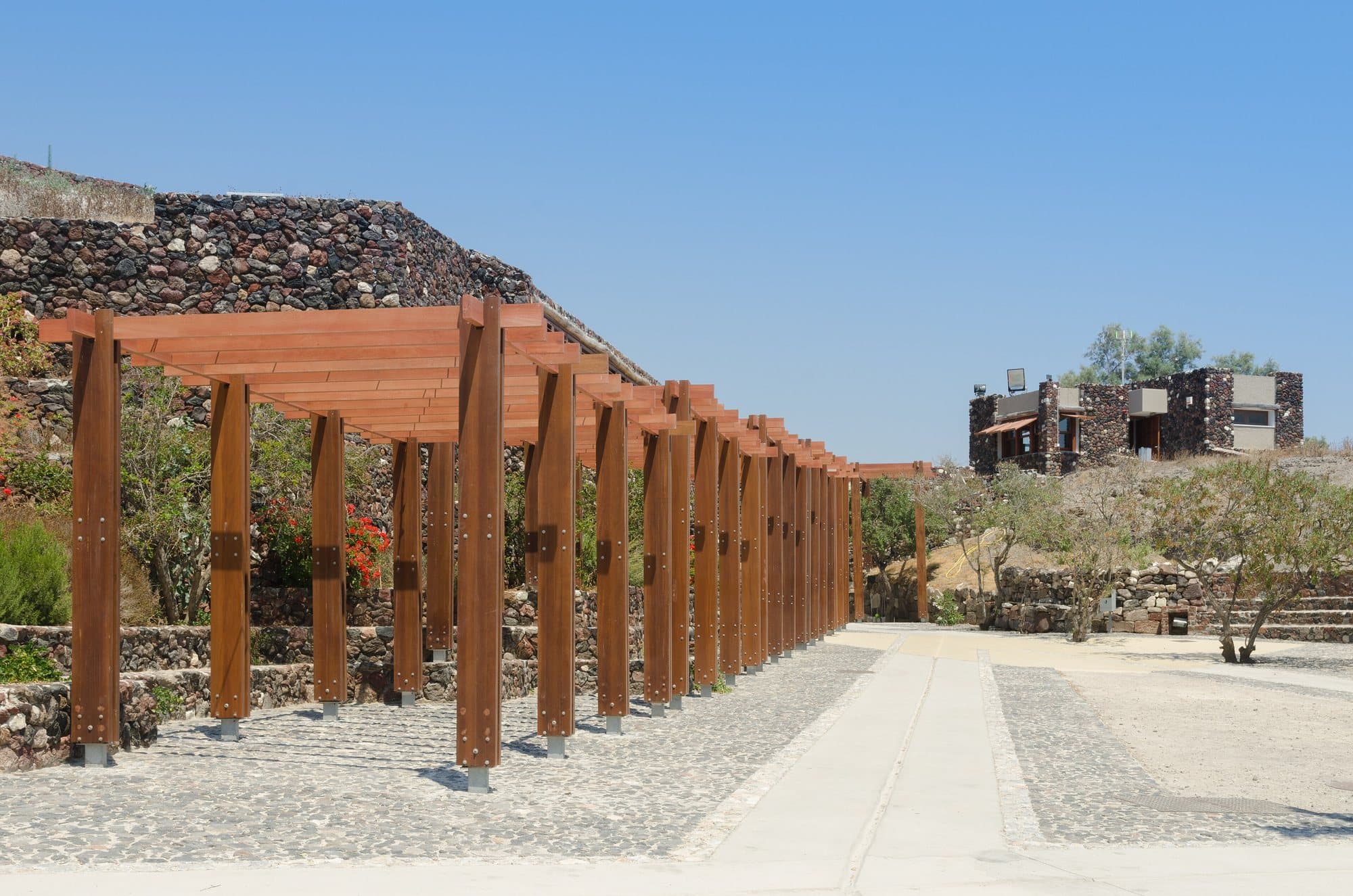
Akrotiri
The Bronze Age town buried by the eruption around 1600 BC, excavated from 1967 under a great roof. Walk its streets past houses still standing two storeys high.
Santorini · History
A painted town buried in ash, a Dorian city on a mountain top, Venetian castles against the pirates, an earthquake that emptied the villages, and the wine that never stopped.
Timeline
c. 3000–1600 BC
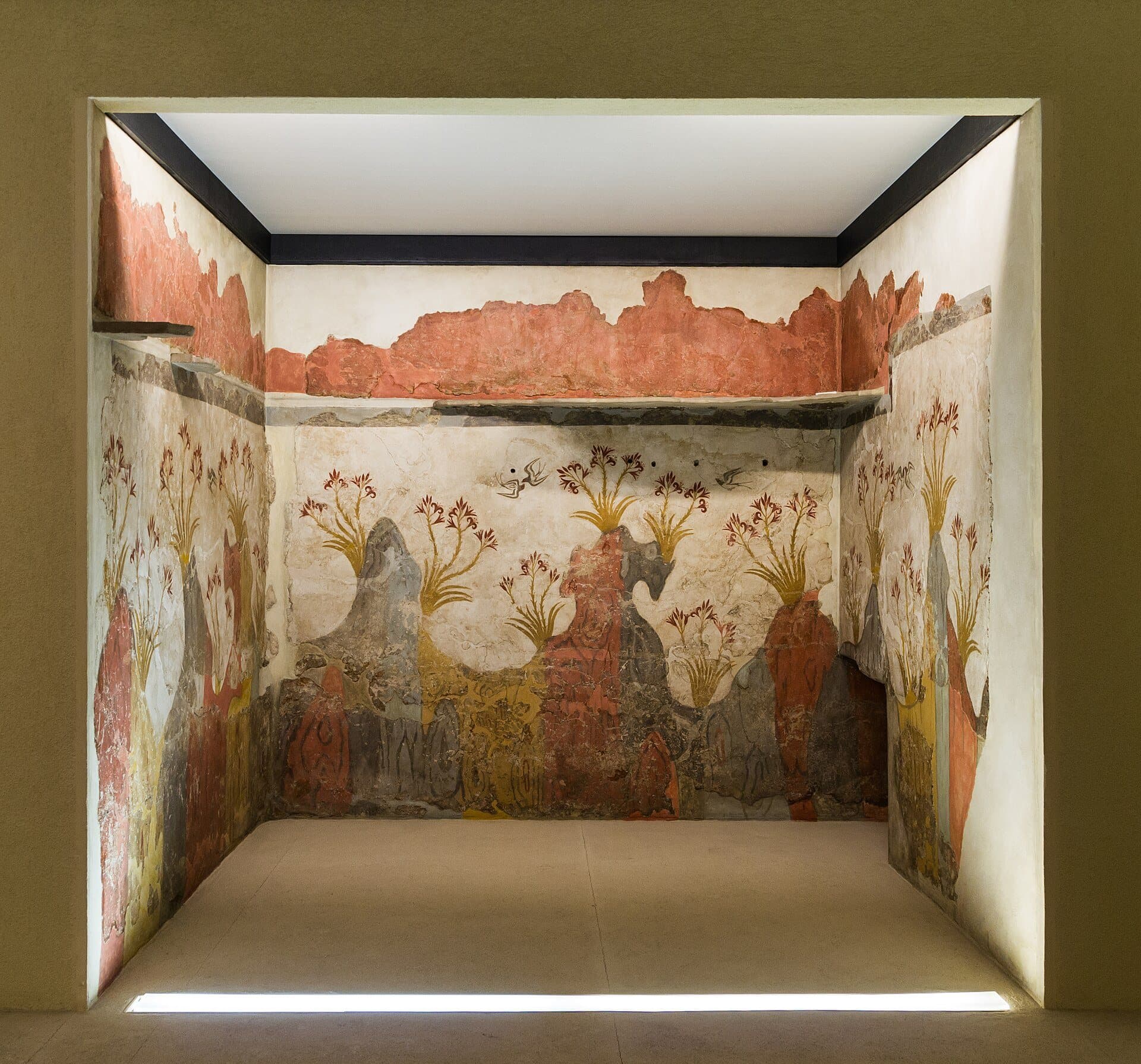
In the Bronze Age the island was round, and on its south coast grew Akrotiri, a harbour town of two- and three-storey houses with drains and painted walls. It traded across the Aegean and lived in the orbit of Minoan Crete, sharing its art, its writing in Linear A and its taste for frescoes of lilies, swallows and blue monkeys.
c. 1600 BC
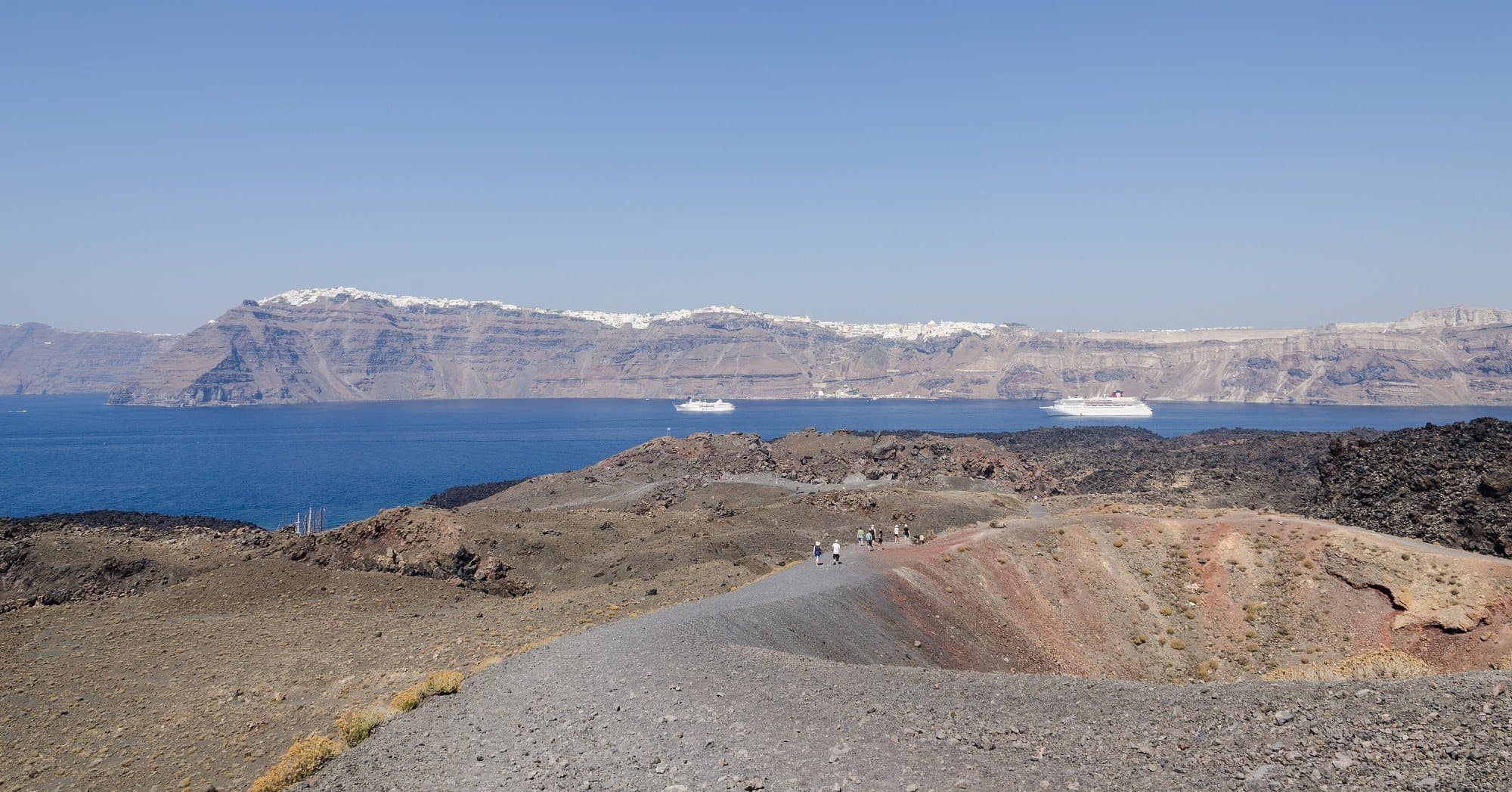
After warning earthquakes, the people of Akrotiri left, taking their valuables, and the volcano exploded in one of the largest eruptions of the last 10,000 years. The centre of the island collapsed into the sea, leaving the caldera. Ash fell as far as Crete, and some have seen in the disaster the origin of the legend of Atlantis.
9th century BC – AD 7th century
Dorian settlers, said to have come from Sparta under their leader Theras, built a city on the ridge of Mesa Vouno, high above the sea. In about 630 BC colonists from Thera founded Cyrene in Libya. Under the Ptolemies of Egypt the city became a naval base, and its theatre, temples and agora still line the ridge.

1207–1579
After the Fourth Crusade the island became part of the Venetian Duchy of the Archipelago and took the name Santorini, after its church of Saint Irene. Against pirates the islanders built five kastelia, fortified villages whose houses form the walls: Skaros, the main seat, and the castles of Oia, Pyrgos, Emporio and Akrotiri.

19th century – 1956
In the 19th century Oia was a town of sea captains, and the island shipped its sweet Vinsanto wine across the Black Sea and as far as Russia. On 9 July 1956 a strong earthquake ruined much of the caldera villages, and many families left for Athens or abroad.
1970s – today
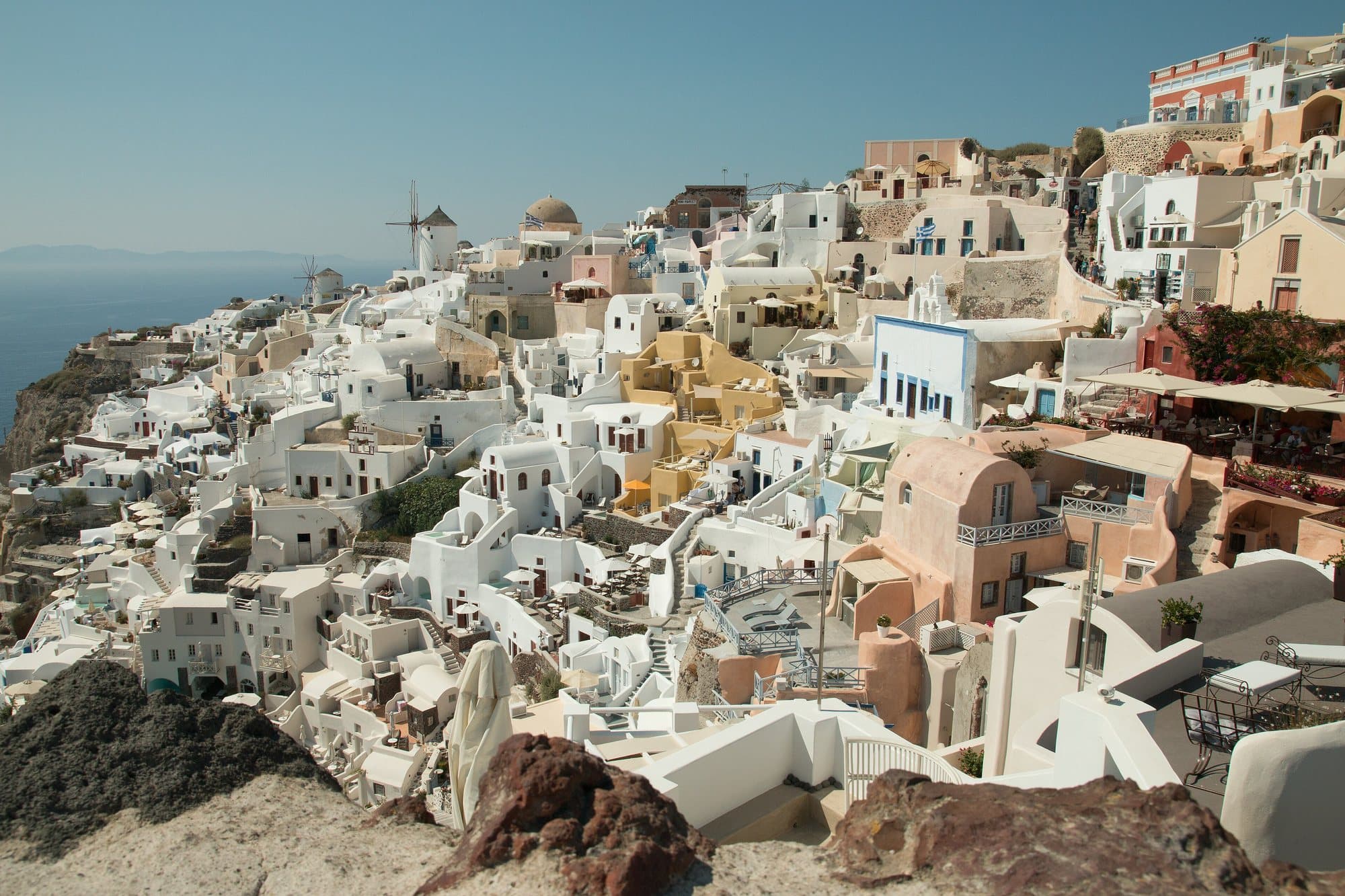
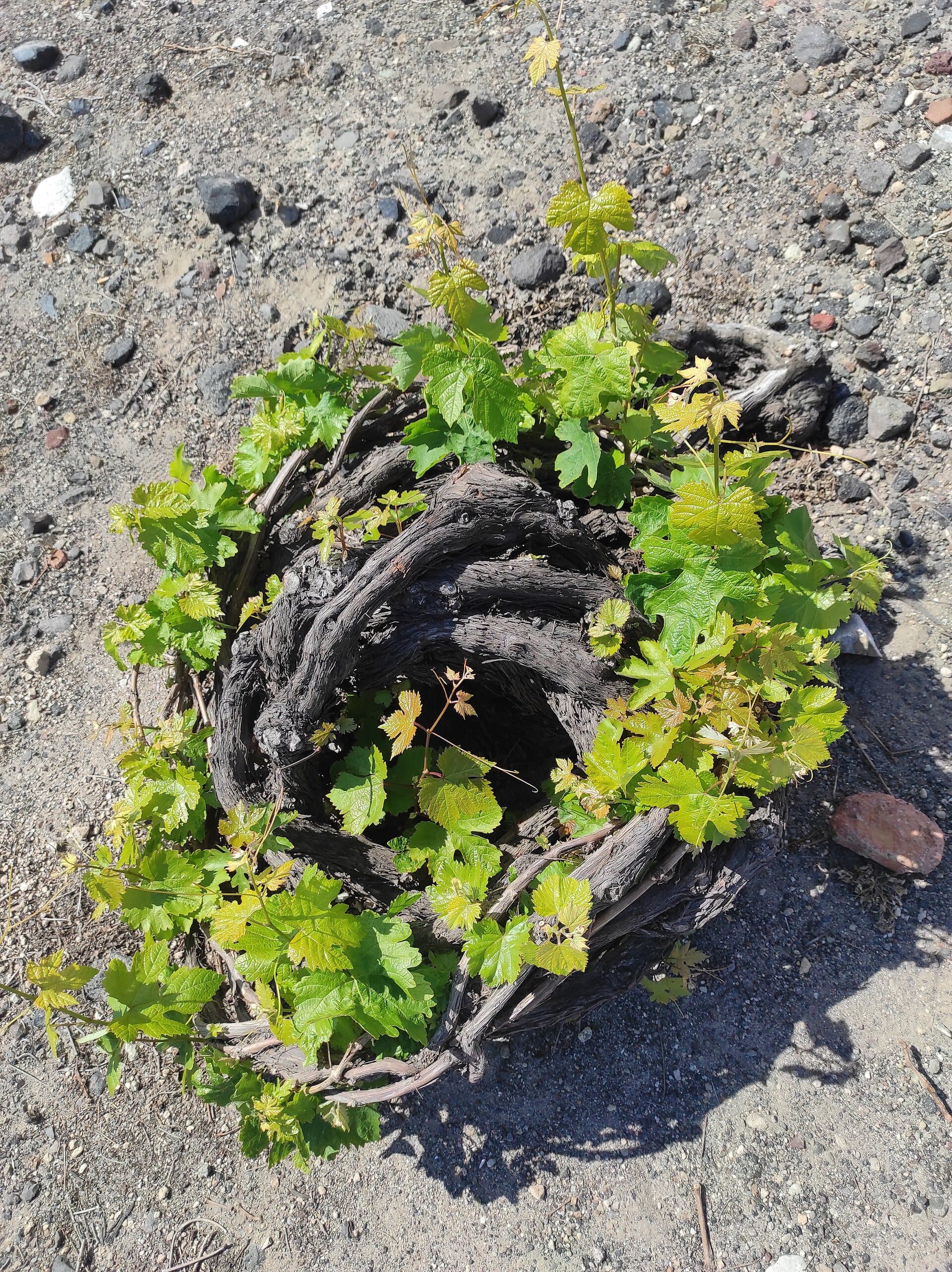
From the 1970s the ruined cave houses were restored and Santorini became one of the most visited islands in the world. The vineyards remain, with Assyrtiko and Vinsanto under their own designation of origin, and the excavation of Akrotiri goes on.
Visit
The Bronze Age town buried by the eruption around 1600 BC, excavated from 1967 under a great roof. Walk its streets past houses still standing two storeys high.
The Dorian, Hellenistic and Roman city on the ridge of Mesa Vouno, with its theatre, agora and temples. Reached by road from Kamari or a footpath from Perissa. Closed on Wednesdays, and on reduced days out of season.
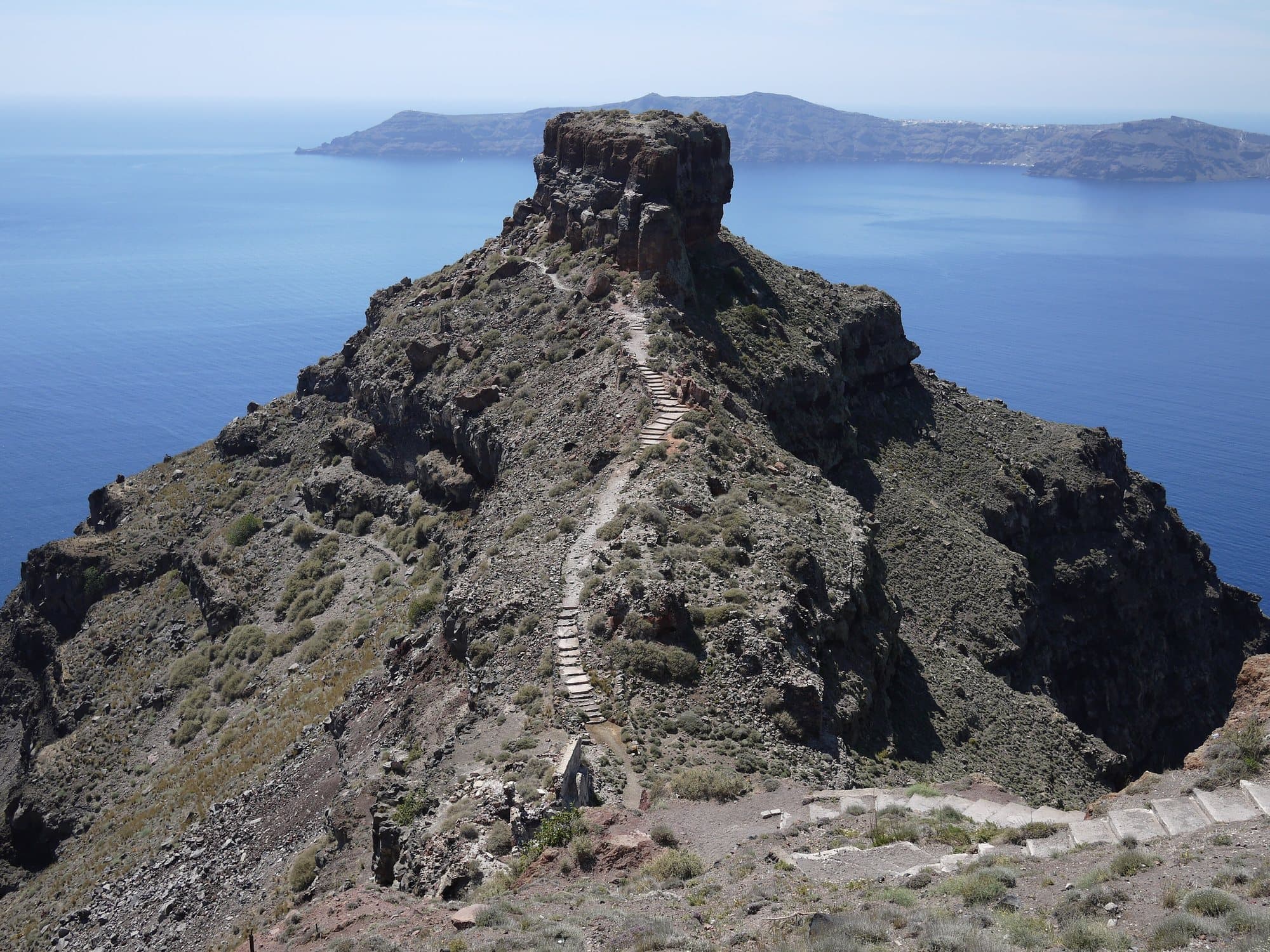
The rock below Imerovigli where the Venetian capital of the island once stood. Little remains of the castle, but the walk out is one of the finest on the caldera.
The ruins of the Venetian castle of Agios Nikolaos at the tip of Oia, the most famous sunset spot on the island.
The best-kept of the island's fortified villages, a maze of narrow lanes behind a wall of houses.